2022-2024 Toyota Camry Musty Odor TSB
Toyota has released Technical Service Bulletin T-SB-0055-24 to address musty odors in 2022-2024 Camry and other models caused by water intrusion. This bulletin details the inspection, cleaning, and reassembly procedures, including the use of an ozone machine, to eliminate the odor and prevent…
 Marcus Weber2023 Toyota Camry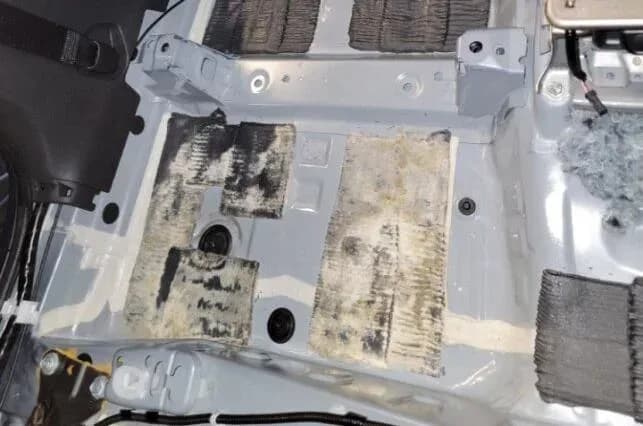
Also applies to
- Toyota 4Runner
- 2021–2024
- Toyota Avalon
- 2021–2022
- Toyota bZ4X
- 2023–2024
- Toyota C-HR
- 2021–2022
- Toyota Camry
- 2021, 2022, 2024
- Toyota Corolla
- 2021–2024
- Toyota Corolla Cross
- 2022–2024
- Toyota Crown
- 2023–2024
- Toyota GR Corolla
- 2023–2024
- Toyota Grand Highlander
- 2024
- Toyota Highlander
- 2021–2024
- Toyota Land Cruiser
- 2021–2023
- Toyota Mirai
- 2021–2024
- Toyota Prius
- 2021–2024
- Toyota RAV4
- 2021–2024
- Toyota Sequoia
- 2021–2022
- Toyota Supra
- 2021–2024
- Toyota Tacoma
- 2021–2024
- Toyota Tundra
- 2021–2024
- Toyota Venza
- 2021–2024
- Toyota Yaris
- 2023
▸ Show 15 more▾ Show fewer
Toyota has issued Technical Service Bulletin (TSB) T-SB-0055-24 (Revision 1, dated June 21, 2024, with an update on July 29, 2024) to address musty odors in certain 2005-2024 Toyota vehicles, including the 2022-2024 Toyota Camry. This condition typically arises from water intrusion into the vehicle's interior. The TSB provides comprehensive guidelines for dealers to remediate the odor and resolve the underlying water intrusion issue.
Symptoms
Owners of affected vehicles may notice a persistent "musty odor" inside the cabin. This smell is often a result of moisture accumulation and potential organic matter growth following water intrusion.
Important Warnings
Toyota's TSB includes several critical warnings for both technicians and owners:
- The procedures in this service bulletin are NOT applicable to vehicles that have undergone a severe freshwater or saltwater intrusion, such as those from floods, storms, hurricanes, or typhoons, where the vehicle has been submerged or a significant volume of water has entered the interior.
- This bulletin is NOT applicable for general HVAC odor concerns; it specifically addresses water intrusion-related odors ONLY.
- BEFORE beginning any remediation procedures, the source of water intrusion MUST be identified AND repaired. This bulletin does NOT apply if the water leak has not been identified and fixed.
- Dealers are instructed to ALWAYS use proper Personal Protective Equipment (PPE) as per current EPA guidelines during the remediation process.
- Soft parts (e.g., floor mats, carpet, insulated pads, dash panel insulator assembly) that have come into contact with moisture MUST be removed and replaced with NEW parts.
- There should NOT be a cabin air filter installed in the HVAC during the remediation process. A NEW high-performance charcoal filter should be installed AFTER the entire remediation process has been completed.
- If the dash panel insulator assembly requires replacement, it should be removed and replaced with a NEW part BEFORE remediation. Do NOT attempt to cut out affected areas or treat the dash panel insulator assembly.
- Remove HV or EV batteries prior to servicing or cleaning areas where they are present or exposed, following all recommended safety procedures.
Diagnosis / Trigger Conditions
To properly address the musty odor, technicians must first identify and repair the source of the water intrusion. This involves a thorough inspection of the vehicle's interior floorboard area to pinpoint all affected areas. Technicians will inspect both soft parts and hard parts for signs of organic matter growth or staining due to water contact. The dash panel insulator assembly, located behind the instrument panel, is a key area to inspect on both the driver and passenger sides for any signs of water or organic matter growth. If any signs are found, the dash panel insulator assembly MUST be replaced.
Repair Procedure Summary
The odor remediation process involves several key steps:
- Preparation: Technicians will apply painter's tape to door opening thresholds to protect painted surfaces during interior part removal and reinstallation.
- Disassembly: The cabin air filter is removed and discarded. All interior components covering the affected floor area are removed. If organic growth is present only in the trunk or cabin, only those specific components are removed. If the dash panel insulator assembly needs replacement, it is done at this stage.
- Cleaning: Any loose debris is removed from the floor pan. A heavy-duty cleaner (such as Spray Nine) is used to scrub and remove staining from the floor pan and other hard parts that will not be replaced. A 3M Quat Disinfectant product is then sprayed onto the floor pan and other affected hard parts, allowed to soak for at least 10 minutes, and then wiped dry after 30 minutes.
- Reassembly: The vehicle interior is reassembled using treated hard parts and NEW soft parts. A NEW high-performance charcoal filter is installed after reassembly and confirmation of proper function of all interior systems.
- Ozone Treatment: After reassembly, the vehicle's A/C is turned on in recirculation mode, and an ozone machine is run for one hour. The machine is then turned off, and the vehicle is aired out for two hours.
Required Tools or Parts
Dealers will utilize specific tools and materials for this remediation process:
- Personal Protective Equipment (PPE): 3M N95 Certified (or Higher) NIOSH Approved Respirator, Safety Goggles/Eye Protection, Protective Gloves.
- Parts: High Performance Charcoal Filter (QTY 1), Insulator Assy., Dash Panel (QTY 1). Specific part numbers for these items should be referenced in the Parts Catalog for the vehicle model/model year.
- Tools & Material: 3M Quat Disinfectant Cleaner Concentrate 5 (QTY 1), Heavy Duty Cleaner (like Spray Nine or similar) (QTY 1), Pump Spray Bottle (QTY 1), Scrub Brush (QTY 1), Painter's Tape (QTY 1), and an Ozone Machine (or Equivalent) (QTY 1, Part Number RBO521011).
Owner Action
If you detect a musty odor in your 2022-2024 Toyota Camry, especially after a known water intrusion event, contact your authorized Toyota dealer. This repair, identified by OP Code 743991, is covered under the Toyota Basic Warranty, which is in effect for 36 months or 36,000 miles, whichever occurs first, from the vehicle's in-service date. Warranty application is limited to the specific condition described in this bulletin. The dealer will perform the necessary inspection and remediation process to eliminate the Toyota Camry musty odor.
Source: NHTSA ID 11007455
Gallery
10 images
Frequently Asked Questions
- What causes a musty odor in my Toyota Camry?
- A musty odor in your 2022-2024 Toyota Camry is typically caused by water intrusion into the vehicle's interior, leading to moisture accumulation and potential organic matter growth. Toyota TSB T-SB-0055-24 addresses this specific issue.
- Is the musty odor remediation covered by warranty for my Toyota Camry?
- Yes, if your 2022-2024 Toyota Camry experiences a musty odor due to water intrusion, the remediation process (OP Code 743991) is covered under the Toyota Basic Warranty for 36 months or 36,000 miles from the vehicle's in-service date, as outlined in TSB T-SB-0055-24.
- What is involved in the odor remediation process for my Toyota Camry?
- The dealer-performed odor remediation process for your Toyota Camry involves identifying and repairing the water intrusion source, disassembling interior components, thoroughly cleaning and disinfecting affected areas, replacing soft parts like the dash panel insulator assembly and installing a new High Performance Charcoal Filter, and finally, an ozone machine treatment to eliminate residual odors.
- Can I fix the musty odor in my Toyota Camry myself?
- Toyota TSB T-SB-0055-24 specifies a dealer-performed remediation process due to the complexity of identifying and repairing water intrusion sources, proper cleaning, and the use of specialized tools like an Ozone Machine (RBO521011). It's recommended to have this service performed by an authorized Toyota dealer.
Related Articles
2021-2024 Toyota Low Oil Pressure DTCs P05202A P052477
An obsolete Lexus Technical Service Bulletin (L-SB-0021-25) addressed issues in certain 2021-2024 Toyota models, including the Toyota Camry, related to low oil pressure DTCs P05202A and P052477, a MIL ON, and milky/discolored engine oil in freezing temperatures. This bulletin was declared obsolete…
2023-2026 Toyota Models AC Leak Detection TSB
Toyota has issued T-SB-0058-23 Rev1 to detail procedures for identifying and repairing air conditioning refrigerant leaks using dye injection and O-ring joint inspections for various 2023-2026 models.
2018-2024 Toyota Head Unit Data Download Instructions TSB
Toyota's Tech Tip T-TT-0780-25 provides detailed instructions for technicians to download Multimedia Recorder (MMR) data from the head unit of various 2018-2024 models. This data helps diagnose audio, connectivity, and screen-related concerns.
2021-2024 Toyota Navigation Map Update TSB
Toyota has issued Technical Service Bulletin T-SB-0106-22 detailing the process for updating navigation maps and system software on 2021-2024 Toyota vehicles equipped with Premium Audio and Dynamic Navigation Systems. This update requires a Special Service Tool (SST) USB flash drive and may…
2023-2025 Toyota Wheel Film for Brake Rotor Rust
Toyota Technical Service Bulletin T-SB-0038-24 describes the use of wheel film on 2023-2025 Toyota vehicles to prevent brake rotor rust during transportation and storage. This film should remain on the wheels until just before customer delivery. Learn about its purpose and removal.
Leave a comment
Comments are moderated and may take a moment to appear. Only your first name and the initial of your last name are shown publicly.
Comments
Be the first to comment.