2021-2023 Audi AC Not Cooling TSB 2063575/2
Audi Technical Service Bulletin 2063575/2 addresses air conditioning systems that do not cool effectively in 2021-2023 A4, A5, Q5, S4, S5, RS 5, and SQ5 models. It outlines diagnostic steps for refrigerant leaks, including DTC B10AE21, and specifies repair procedures for evaporator core or…
 Sarah Mitchell2022 Audi A5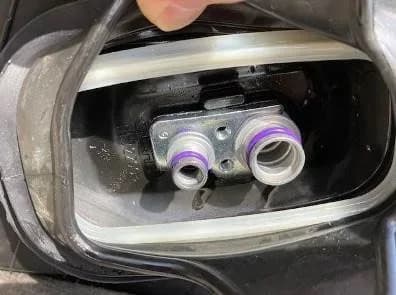
Şu araçlar için de geçerli
- Audi A4
- 2022–2023
- Audi A5
- 2023
- Audi Q5
- 2021
- Audi RS 5
- 2022–2023
- Audi S4
- 2022–2023
- Audi S5
- 2022–2023
- Audi SQ5
- 2021–2023
▸ 1 tane daha göster▾ Daha az göster
Audi has issued Technical Service Bulletin (TSB) 87 22 28 2063575/2, dated July 12, 2022, to address concerns regarding the air conditioning system in various 2021-2023 Audi models. This TSB, which supersedes Group 87 number 21-15 dated June 16, 2021, provides comprehensive guidance for diagnosing and repairing issues where the Audi AC not cooling properly or at all.
Symptoms
Owners of affected Audi vehicles may experience their air conditioning system not blowing cold enough, taking an extended period to cool the cabin, or failing to cool at all. Diagnostic checks often reveal insufficient refrigerant circuit head pressures and a low or empty refrigerant volume in the system.
Fault Codes / DTCs
When the refrigerant volume is very low or empty, the Heating/Air Conditioning Electronics control module (E87, address word 0008) may store the following diagnostic trouble code:
| Code | Description | Module |
|---|---|---|
| B10AE21 | High-pressure sensor Lower limit not reached | Heating/Air Conditioning Electronics (E87) |
Diagnosis / Trigger Conditions
Diagnosing the root cause of an Audi AC not cooling issue involves a thorough inspection of the refrigerant circuit. Initially, refrigerant circuit head pressures are checked, and the refrigerant volume is recovered. If the volume is found to be low or empty, leak identification dye is added along with a full refrigerant charge, and the vehicle is test-driven.
It's important to note that a halogen leak detector is not the most reliable method for precisely locating refrigerant leaks, especially within the evaporator core where direct access is limited. A false positive evaporator core leak reading can occur if free refrigerant migrates through the fresh air intake into the evaporator housing from a leak elsewhere in the cowl or engine compartment. Audi strongly recommends using calibration gas as the diagnostic method, following the procedures outlined in TSB 2064077 87 Air conditioning refrigerant circuit diagnostic method using calibration gas.
Important Warnings for Owners
This TSB provides crucial information for both technicians and owners regarding the proper repair of AC system leaks:
- Warranty Coverage: This Technical Service Bulletin is for informational purposes only and is not applicable to any Audi Warranty. Owners should discuss potential costs with their service center.
- Evaporator Core Replacement: Do not replace only the evaporator housing with the core assembly. Do not loosen or remove the expansion valve from the evaporator core connections, nor disassemble the evaporator housing assembly. If the complete evaporator housing assembly is returned for analysis incomplete, disassembled, or with non-original components, the warranty claim will be debited.
Repair Procedure Summary
- Initial Assessment: After confirming insufficient refrigerant volume and potential DTC B10AE21, add leak identification dye and a full refrigerant charge, then test drive the vehicle.
- Systematic Leak Check: Conduct a thorough visual inspection of the refrigerant circuit under UV lighting. Systematically check all components and connections for leaks. Pay close attention to the connection junction at the evaporator core, expansion valve, and refrigerant lines.
- Expansion Valve Repair (Primary Solution): If a refrigerant leak is detected specifically at the evaporator core/expansion valve/refrigerant line junction, the recommended repair is to replace the expansion valve and all four O-rings. The evaporator core itself should not be replaced at this stage. Technicians are required to document the leak with a video and photograph any damage to the expansion valve ports, damaged O-rings, or refrigerant line connections.
- Evaporator Core Replacement (Last Resort): Only if all other leak possibilities from the expansion valve connections and other refrigerant circuit components have been systematically excluded, and the evaporator core is definitively identified as the sole source of the leak, should the evaporator housing with evaporator core assembly be replaced. This replacement must include a new expansion valve, retaining plate, bolts (from small parts kit 4M0 898 037 A), and all four O-ring seals.
Required Tools or Parts
For proper diagnosis and repair of the Audi AC not cooling condition, technicians may require the following:
- Small parts kit: 4M0 898 037 A (for evaporator housing replacement)
- Electronic Refrigerant Leak Detector: Various types
- Automotive A/C Nitrogen Leak Test Kit: NITROKITG
- VAS tester with ODIS: VAS 6160/VAS 6150 (running the current version of ODIS on Windows 10)
Owner Action
If you are experiencing issues with your Audi AC not cooling, it is recommended to schedule an appointment with an authorized Audi service center. Inform them of the symptoms you are experiencing and mention Technical Service Bulletin 87 22 28 2063575/2. The diagnostic process can be complex, and specialized tools and procedures are required to accurately identify and repair the refrigerant leak.
Source: NHTSA ID: 10216020
Galeri
2 görsel
Frequently Asked Questions
- Why is my Audi AC not cooling properly?
- Your Audi AC not cooling issue is often caused by a refrigerant leak in the system, leading to insufficient refrigerant volume. This can sometimes trigger a diagnostic trouble code like B10AE21.
- What does DTC B10AE21 mean for my Audi's AC?
- DTC B10AE21, 'High-pressure sensor Lower limit not reached,' indicates that the high-pressure sensor in your Audi's air conditioning system is detecting pressure below its lower limit, typically due to a very low or empty refrigerant charge.
- How do technicians diagnose an AC refrigerant leak in an Audi?
- Audi technicians follow a specific procedure outlined in TSB 87 22 28 2063575/2. This involves checking refrigerant pressures, recovering refrigerant, adding leak identification dye, test driving, and systematically inspecting the circuit. They are advised to use calibration gas methods for precise leak detection, as halogen leak detectors can be unreliable for evaporator core leaks.
- Will replacing the evaporator core fix my Audi AC not cooling problem?
- Not necessarily. Audi's TSB 87 22 28 2063575/2 indicates that evaporator core leaks are often misdiagnosed. The actual leak might be at the expansion valve connections or other components. Technicians are instructed to first replace the expansion valve and O-rings if a leak is found at that junction, and only replace the evaporator core as a last resort if all other leak possibilities are ruled out.
- Is the repair for this AC issue covered under Audi's warranty?
- According to TSB 87 22 28 2063575/2, this bulletin is for informational purposes only and is not applicable to any Audi Warranty. You should consult with your Audi service center regarding potential costs for diagnosis and repair.
Bu TSB'nin diğer revizyonları
Related Articles
2022-2025 Audi A/C Control Buttons Not Working TSB 2078655/3
Audi has issued Technical Service Bulletin 2078655/3 to address issues with unresponsive A/C control unit buttons in 2022-2025 A4, A5, S4, S5, RS 5, Q5, and SQ5 models. This TSB outlines diagnosis for the 'B131207: Button(s) in control panel, mechanical fault' and repair procedures.
2022 Audi A4, A5, Q5 Lane Departure Warning Steering Input TSB
Audi Technical Service Bulletin 2079617/1 addresses an issue in 2022 A4, A5, and Q5 models where the 'Steering input' setting for the lane departure warning system is unavailable in the MMI. This TSB outlines a software update to resolve the problem.
2021-2025 Audi A4, A5, Q5 Cracking/Creaking Noises TSB
Audi Technical Service Bulletin (TSB) 2062633/5 addresses 'Cracking/creaking noises during load changes or severe vehicle body torsion' in 2021-2025 Audi A4, A5, and Q5 models. This issue stems from a loose bonded joint in the subframe connection, causing various noises in the footwells.
2021-2025 Audi A4/A5/Q5 Camera Coded Incorrectly TSB
Audi has released TSB 2076008/1 to address DTC U101400, "Control module coded incorrectly," in the Front Camera for Driver Assist Systems -R242- for 2021-2025 A4, A5, Q5, S4, S5, RS 5, and SQ5 models. This can lead to incorrect signals from driver assist systems.
2021-2025 Audi Whistling Noise from Turbocharger TSB 2071243/3
Audi Technical Service Bulletin 2071243/3 details a whistling noise that may come from the turbocharger in 2021-2025 Audi A4, A5, and Q5 models. This TSB clarifies that the noise is a comfort complaint and not indicative of a fault.
Yorum bırakın
Yorumlar moderasyondan geçer ve görünmesi biraz zaman alabilir. Sadece adınız ve soyadınızın baş harfi herkese açık olarak gösterilir.
Yorumlar
İlk yorum sizden olsun.