2021-2024 Audi A/C Not Cooling TSB 2063575/3
Audi has released Technical Service Bulletin 2063575/3 to address issues where the air conditioning does not cool sufficiently, often accompanied by DTC B10AE21. This TSB provides updated diagnostic and repair procedures for refrigerant leaks.
 Marcus Weber2024 Audi Q7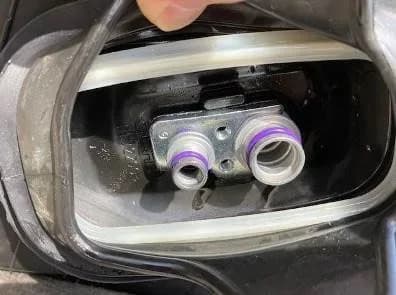
Also applies to
- Audi A4
- 2022–2024
- Audi A4 allroad
- 2022–2024
- Audi A5
- 2022–2024
- Audi Q5
- 2021–2024
- Audi Q5 e
- 2024
- Audi Q7
- 2022–2023
- Audi RS 5
- 2022–2024
- Audi S4
- 2022–2024
- Audi S5
- 2022–2024
- Audi SQ5
- 2021–2024
- Audi SQ7
- 2022–2024
▸ Show 5 more▾ Show fewer
Audi has issued Technical Service Bulletin (TSB) 2063575/3 to address customer complaints regarding the air conditioning system not cooling effectively in various 2021-2024 models. This issue can manifest as the air conditioning not blowing cold enough, taking an extended period to cool, or failing to cool at all. The TSB provides updated diagnostic and repair procedures for technicians to accurately identify and resolve refrigerant leaks.
Symptoms
Owners may experience their Audi A/C not cooling, with the following observations:
- The air conditioning does not blow cold enough.
- The system takes a long period of time to cool the cabin.
- The air conditioning does not cool at all.
These symptoms often indicate a low or empty refrigerant volume within the A/C circuit.
Fault Codes / DTCs
When diagnosing the issue of the Audi A/C not cooling, technicians may find the following diagnostic trouble code (DTC):
- B10AE21: High-pressure sensor Lower limit not reached (stored in the Heating/Air Conditioning Electronics control module, E87, address word 0008).
Diagnosis / Trigger Conditions
Initial diagnosis typically involves checking the refrigerant circuit head pressures. If these are insufficient, and the refrigerant volume is found to be very low or empty after recovery, a leak is suspected. Historically, technicians might add leak identification dye and test drive the vehicle. If an electronic refrigerant leak detector alerts at the central vents or condensate drain, the evaporator core might be incorrectly suspected as the source of the leak.
Audi notes that a halogen leak detector is not the most reliable method for pinpointing refrigerant leaks, especially in evaporator cores where direct access is limited. The TSB strongly recommends using the calibration gas method outlined in TSB 2064077 87 Air conditioning refrigerant circuit diagnostic method using calibration gas for suspected evaporator leaks. This ensures a more precise diagnosis when the Audi A/C not cooling issue is present.
Important Warnings
Audi has provided critical warnings for technicians regarding the repair process:
- Do not replace only the evaporator housing with core assembly.
- Do not loosen or remove the expansion valve from the evaporator core connections in any way.
- Do not disassemble the evaporator housing assembly in any way.
- For Q5 models, if evaporator replacement is performed, it is crucial to loosen and refasten the Relay and Fuse Carrier 3 -SR3- in its correct original position during reassembly. Failure to reinstall the Relay and Fuse Carrier 3 precisely will result in water intrusion and subsequent component damage.
- Any complete evaporator housing assembly, expansion valve, bolts, and o-ring seals submitted for warranty that are incomplete, disassembled, or confirmed not to be original components will be returned to the dealer, and the claim will be debited.
Repair Procedure Summary
The TSB outlines a systematic approach to resolving the Audi A/C not cooling problem:
- Initial Leak Check: Thoroughly check for refrigerant leaks at every component and connection in the refrigerant circuit. Systematically exclude potential causes.
- Expansion Valve Focus: If the evaporator core is still suspected as the sole leak source after other areas are ruled out, carefully inspect the connection junction at the evaporator core, expansion valve, and refrigerant lines for any overlooked leaks (as shown in figures 2 and 3 of the TSB).
- Expansion Valve Replacement: If a leak is confirmed at the evaporator core/expansion valve/refrigerant line junction (evidenced by residue from contrast agent, as in figure 4), technicians should record a short video. Then, replace only the expansion valve and all four O-rings. Re-test the system to confirm the leak is resolved without replacing the entire evaporator core.
- Evaporator Core Replacement (Last Resort): If all leak possibilities from the expansion valve connections and other refrigerant circuit components have been excluded, and the evaporator core is definitively the only remaining source of the leak, then the evaporator housing with evaporator core assembly, along with the expansion valve, retaining plate, and bolts (included in small parts kit 4M0 898 037 A) and four o-ring seals, should be replaced. The assembly must be carefully packaged as a single unit for submission and laboratory analysis.
- Relay and Fuse Carrier Reinstallation (Q5 Specific): For Q5 models, if the evaporator is replaced, the Relay and Fuse Carrier 3 -SR3- must be loosened and then precisely refastened in its original position during vehicle reassembly to prevent water intrusion and component damage.
Required Tools or Parts
To perform the diagnostic and repair procedures for the Audi A/C not cooling issue, the following tools and parts may be necessary:
- Small parts kit: 4M0 898 037 A (includes evaporator housing, expansion valve, retaining plate, bolts, and o-ring seals)
- Electronic Refrigerant Leak Detector
- Automotive A/C Nitrogen Leak Test Kit: NITROKITG
- VAS tester with current ODIS (Windows 10): VAS 6160 / VAS 6150
Owner Action
If you are experiencing symptoms of your Audi A/C not cooling, such as insufficient cooling or no cooling at all, and especially if you have received a diagnostic code like B10AE21, it is recommended to schedule an appointment with an authorized Audi service center. While this TSB provides detailed repair instructions for technicians, it is informational and not applicable to any Audi warranty. Your dealer can perform the necessary diagnostics and repairs using the procedures outlined in TSB 2063575/3.
Source: NHTSA ID: 10241434
Gallery
3 images
Frequently Asked Questions
- What does 'Air conditioning does not cool' mean for my Audi?
- This message, often accompanied by DTC B10AE21, indicates that your Audi's air conditioning system is not performing as expected. It might not be blowing cold air, taking too long to cool, or failing to cool at all, usually due to a refrigerant leak.
- What is DTC B10AE21 and how is it related to my Audi's A/C?
- DTC B10AE21, or 'High-pressure sensor Lower limit not reached,' is a diagnostic trouble code stored in the HVAC control module. It signifies that the refrigerant pressure in your A/C system is too low, pointing to a potential leak as the cause for your Audi A/C not cooling.
- Is there a specific repair for the Audi A/C not cooling issue?
- Yes, Audi Technical Service Bulletin 2063575/3 outlines a diagnostic and repair procedure. It focuses on identifying refrigerant leaks, often at the expansion valve connections, and may involve replacing the expansion valve and O-rings, or in some cases, the entire evaporator housing assembly.
- My Audi is a Q5 and needs A/C repair; are there any special considerations?
- For Audi Q5 models, if the evaporator core is replaced as part of the repair for the Audi A/C not cooling issue, technicians must ensure that the Relay and Fuse Carrier 3 -SR3- is correctly reinstalled. Failure to do so can lead to water intrusion and damage to other components.
- Will my Audi A/C not cooling repair be covered under warranty?
- Technical Service Bulletin 2063575/3 is informational and does not automatically guarantee warranty coverage. You should consult with your authorized Audi dealer to understand the specific warranty implications for your vehicle and the necessary repairs.
Other revisions of this TSB
Related Articles
2022-2025 Audi On-Car Analysis List for Various Faults
Audi has released an On-Car Analysis List for 2022-2025 models, addressing various issues including engine oil leaks, ECM DTC P060600, engine oil pressure switch problems, airbag warning lights (DTC B12251B), noisy belt tensioners, dislocated steering column switches, and binding sunroof shades.
2023-2024 Audi Thermostat Oil Seal Leak TSB 19PP
Audi Technical Service Bulletin 19PP addresses potential oil seal leaks in the thermostat of certain 2023-2024 Audi models. This proactively released update aims to prevent leaks caused by wear or deformation of the thermostat's internal oil seal, requiring replacement of the engine temperature…
2023-2024 Audi Thermostat Leak Update 19PP
Audi has issued UPDATE 19PP for certain 2023-2024 models, including the 2024 Audi Q7, to address potential oil seal wear or deformation within the thermostat, which can lead to leaks. This update requires the replacement of the engine temperature regulation actuator.
2021-2025 Audi Q7/SQ7 Second Row Seat Noise TSB
Audi has released Technical Service Bulletin (TSB) 72 24 60 2060719/3 to address customer complaints of creaking and rattling noises from the second row seats in 2021-2025 Audi Q7 and SQ7 models. The TSB outlines a repair procedure to adjust the seat locking mechanism.
2023-2024 Audi Q7 Airbag Light B12251B Issue
This Audi On-car analysis list from August 22, 2024, details various issues affecting 2023-2024 Audi models, including the 'Airbag light B12251B' for the Q7, 'ECM DTC P016900' for the Q5, and MIB3 system problems for A3/Q3.
Leave a comment
Comments are moderated and may take a moment to appear. Only your first name and the initial of your last name are shown publicly.
Comments
Be the first to comment.