2021-2025 Toyota Camry and Other Models Acid Rain Damage TSB
Toyota has released Technical Service Bulletin T-SB-0035-24 outlining procedures for the prevention and repair of acid rain damage on the paint finishes of various 2021-2025 Toyota models, including the Camry. This bulletin details methods for addressing minor, moderate, and severe damage.
 Sarah Mitchell2021 Toyota Camry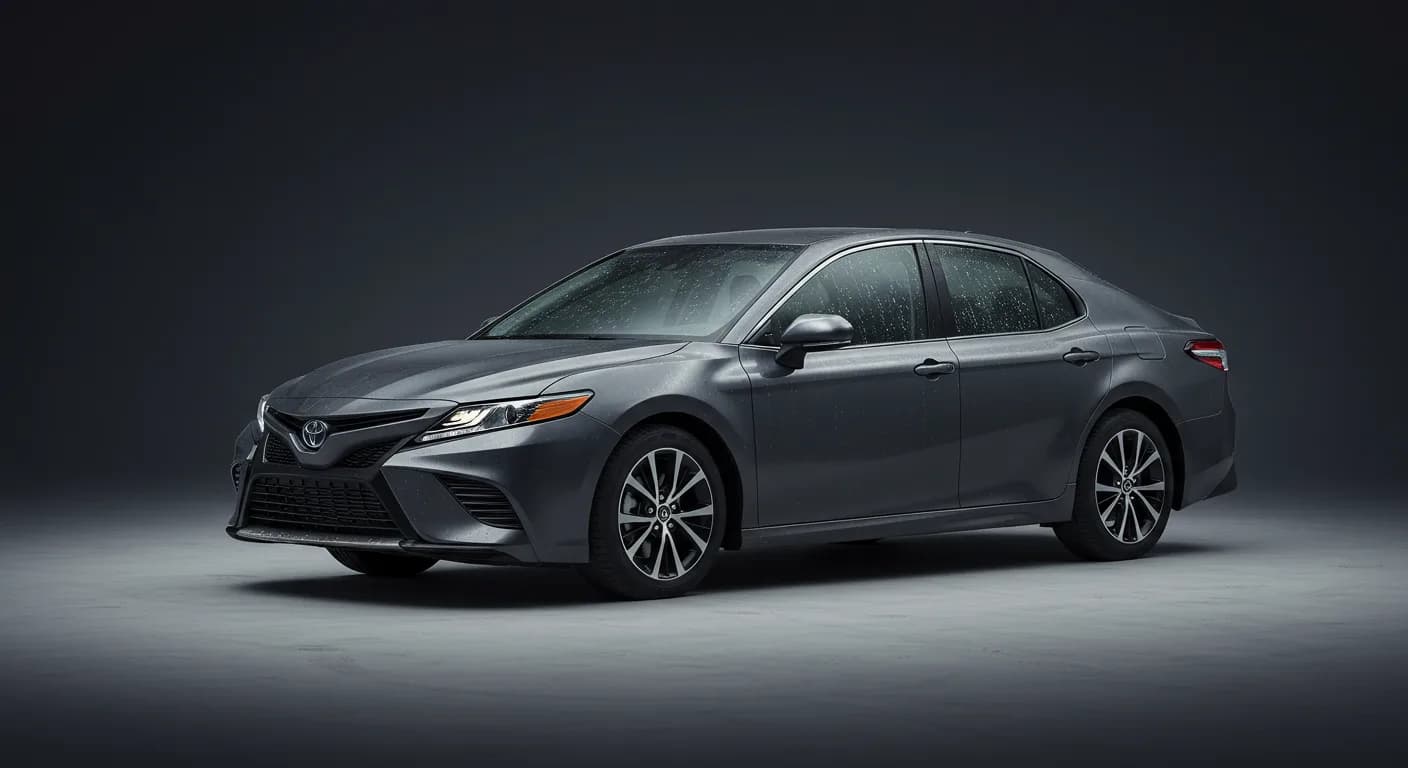
Também se aplica a
- Toyota 4Runner
- 2021–2024
- Toyota Avalon
- 2021–2022
- Toyota bZ4X
- 2023–2024
- Toyota C-HR
- 2021–2022
- Toyota Camry
- 2022–2024
- Toyota Corolla
- 2021–2024
- Toyota Corolla Cross
- 2022–2024
- Toyota Crown
- 2023–2024
- Toyota Crown Signia
- 2025
- Toyota GR Corolla
- 2023–2024
- Toyota Grand Highlander
- 2024
- Toyota Highlander
- 2021–2024
- Toyota Land Cruiser
- 2021–2022
- Toyota Mirai
- 2021–2024
- Toyota Prius
- 2021–2024
- Toyota RAV4
- 2021–2024
- Toyota Sequoia
- 2021–2022
- Toyota Supra
- 2021–2024
- Toyota Tacoma
- 2021–2024
- Toyota Tundra
- 2021–2024
- Toyota Venza
- 2021–2024
▸ Mostrar mais 15▾ Mostrar menos
Toyota has issued Technical Service Bulletin (TSB) T-SB-0035-24, which addresses the prevention and repair of acid rain damage on vehicle paint finishes. This bulletin, revised on April 19, 2024, supersedes Service Bulletin No. B091-020, which is now obsolete. The updated TSB includes applicability for 2025 model year 4Runner Hybrid and Crown Signia vehicles.
Acid rain damage is a common concern for vehicle owners, and this TSB provides comprehensive guidance for technicians to restore affected paintwork. The procedures are intended for use by qualified body/paint technicians and should not be attempted by inexperienced personnel.
Symptoms of Acid Rain Damage
Acid rain results from rainwater or airborne moisture that becomes acidic due to industrial chemical impurities. When these acidic compounds settle on exposed vehicle surfaces, especially horizontal areas like the hood, roof, and decklid, they can cause significant damage to the painted finish. Owners typically identify acid rain damage by the presence of stains on the paint surface that resemble hard water spots. However, unlike water spots, acid rain damage cannot be removed by regular washing.
Acid rain can etch and soften the paint, making normal buffing or polishing repair procedures ineffective and potentially causing further damage or visible depressions in the paint surface. The bulletin categorizes acid rain damage into three types:
- Minor damage: Typically requires only buffing for repair.
- Moderate damage: Usually necessitates neutralizing, color sanding, and buffing.
- Severe damage: Extends beyond 1/2 mil of clearcoat on pearl, metallic, or solid colors, requiring neutralization, sanding, and repainting.
Important Warnings for Owners and Technicians
Toyota emphasizes several critical points regarding acid rain damage repair:
- Matte Paint Finishes: "The following process can be followed but with matte paint finish safe products ONLY. Using materials listed in this document can lead to paint damage to matte paints."
- Buffing Procedures: "To minimize the possibility of burning through or hazing paint surfaces, the following buffing procedures should be performed only by personnel experienced in rotary power buffing." Additionally, "Use only LIGHT pressure on the buffer to prevent burn-through damage to the paint surface."
- Sanding Precautions: "While it is recommended to sand down into the primer coat, the underlying electro deposition coat should NOT be exposed, since it provides essential corrosion protection."
- Paint Type: "lacquer-type paint is NOT recommended for this application" for severe damage repair.
- Chemical Disposal: "Check with state and local ordinances regarding the use and disposal of all chemicals."
Repair Procedure Summary
The TSB outlines specific repair procedures based on the severity of the acid rain damage. All procedures begin with moving the vehicle out of direct sunlight to cool the paint surfaces and thoroughly washing the vehicle with automotive liquid soap and water.
Minor Damage Repair
For minor acid rain damage, the process involves neutralizing any remaining acid with a baking soda solution applied via a commercial-grade plastic garden sprayer, followed by a thorough rinse. Technicians then measure paint film thickness in several locations before buffing the affected areas using the least aggressive pads and liquid compounds. Paint film thickness is continuously monitored during buffing to prevent excessive material removal. Very lightly affected areas may also be buffed using 3M™ Perfect-It™ System or equivalent products.
Moderate Damage Repair
Moderate damage requires similar initial steps of cooling, washing, and neutralizing. However, this level of damage also includes color sanding using #1500 or #2000 grit wet-dry sandpaper with a soft foam rubber sanding pad. Technicians must frequently apply clean water and wipe down sanded areas to check for spot removal. Continuous measurement of paint film thickness is crucial throughout the sanding process, ensuring no more than 1/2 mil of clearcoat is removed on pearl, metallic, or solid colors. After sanding, the area is buffed to achieve a high-gloss finish.
Severe Damage Repair
When acid damage has penetrated more than 1/2 mil on metallic, pearl, or solid color paint after color sanding, severe damage repair is necessary. This involves washing, rinsing with deionized water, and cleaning affected areas with appropriate silicone/wax remover (such as DuPont 3939, PPG DX330/DX380). A dual-action sander is used to eliminate any depressions, sanding down into the primer coat without exposing the electro deposition coat. After finishing sanding with wet-dry sandpaper and re-cleaning, a quality urethane enamel color coat or base coat/clear coat is applied as required for maximum repair durability. Lacquer-type paint is not recommended for this application.
Required Tools or Parts
To perform these repairs, technicians will need specific tools and materials, including:
- Liquid Automotive Washing Soap, Baking Soda, Water Pail
- 3M™ Finesse-It™ II Machine Polish (or Equivalent)
- 3M™ Perfect-It™ System (or Equivalent)
- 3M™ Finesse-It™ II Wool Pad (or Equivalent)
- 3M™ Perfect-It™ Foam Pad (or Equivalent)
- #1500 or #2000 Grit Wet-Dry Sandpaper Pre-Soaked in Clean Water
- Variable Speed Rotary Buffer, Speed Range 1200–1800 rpm
- Elcometer® 211 Mechanical Coating Thickness Gauge, Magnetic (or Equivalent)
- Fischer® Deltascope DMP30, Digital (or Equivalent)
Owner Action
If you observe acid rain damage on your 2021-2025 Toyota Camry or other applicable Toyota model, it is recommended to contact your authorized Toyota dealership. They have access to this Technical Service Bulletin and the necessary specialized tools and trained personnel to properly diagnose and repair the damage according to Toyota's guidelines. Addressing acid rain damage promptly can prevent further deterioration of your vehicle's paint finish and maintain its aesthetic appeal and resale value.
NHTSA ID: 11007443
Frequently Asked Questions
- What is Toyota T-SB-0035-24 about?
- Toyota Technical Service Bulletin T-SB-0035-24 provides detailed instructions for diagnosing and repairing acid rain damage on the paint finishes of various Toyota vehicles, including the 2021-2025 Toyota Camry.
- How can I tell if my Toyota has acid rain damage?
- Acid rain damage typically appears as stains on the paint surface that resemble hard water spots. Unlike regular water spots, these cannot be removed by normal washing and may involve etching or softening of the paint.
- Can I repair acid rain damage on my Toyota myself?
- Toyota advises that the procedures outlined in T-SB-0035-24 are intended for qualified body/paint technicians due to the specialized tools and techniques required. Attempting repairs without proper experience can cause further damage, especially to matte paint finishes.
- What are the different types of acid rain damage described in the TSB?
- The TSB categorizes acid rain damage into minor, moderate, and severe. Minor damage usually requires only buffing, moderate damage involves neutralizing, color sanding, and buffing, while severe damage requires neutralization, sanding, and repainting.
Related Articles
2021 Toyota Camry Health Check: Common TSBs and Owner Concerns
While the 2021 Toyota Camry has no recalls or owner complaints, several manufacturer service bulletins address potential issues. Key concerns include engine coolant leaks, transmission whine, and Malfunction Indicator Lamp (MIL) illumination with reduced engine power, especially in cold weather.
2021-2026 Toyota Vehicles Musty Odor Remediation TSB
This Toyota Technical Service Bulletin (T-SB-0055-24 Rev2) addresses musty odors in 2021-2026 Toyota vehicles resulting from water intrusion. It outlines a dealer-performed remediation process, including inspection, cleaning, and ozone treatment.
2021 Toyota Camry Coolant Leak Customer Support Program
Toyota's Customer Support Program 24TE04 addresses a potential flow shut-off valve coolant leak in certain 2019-2021 Avalon, Camry, Corolla, Highlander, RAV4, Sienna, and Venza models. This leak can trigger an 'Engine Maintenance Required' warning or affect A/C function. Toyota will cover repairs…
2018-2021 Toyota Engine Maintenance Required TSB P268111 P268115
Toyota has issued Technical Service Bulletin T-SB-0112-24 Rev2 for certain 2018-2021 Toyota models that may display an "Engine Maintenance Required" message along with Diagnostic Trouble Codes P268111 or P268115. This bulletin outlines the procedure to address issues with the Engine Coolant Bypass…
2021-2022 Toyota MIL ON with DTCs P01201C, P210015
Toyota T-SB-0005-24 Rev2 addresses Malfunction Indicator Lamp (MIL) illumination and reduced engine power in 2021-2022 Toyota Avalon, Camry, and RAV4 vehicles. The issue is linked to specific throttle body DTCs (P01201C, P210015, P210019, P211172) occurring in freezing temperatures, requiring ECM…
Leave a comment
Comments are moderated and may take a moment to appear. Only your first name and the initial of your last name are shown publicly.
Comments
Be the first to comment.