Hyundai · Model Report
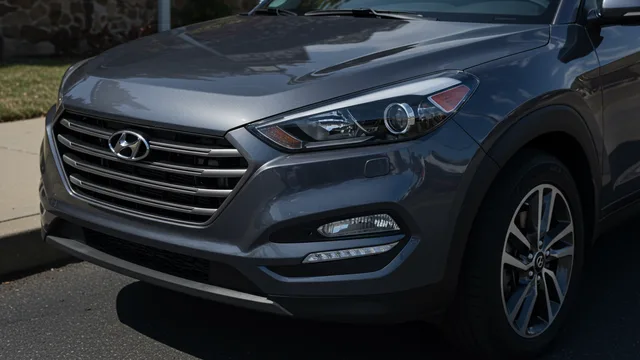
Hyundai Tucson2015
Showing safety data for the 2015 model year only.
Hyundai · Model Report
Showing safety data for the 2015 model year only.
Hyundai Motor America (Hyundai) is recalling certain 2011-2015 Elantra, Genesis Coupe, Sonata Hybrid, 2012-2015 Accent, Azera, Veloster, 2013-2015 Elantra Coupe, Santa Fe, 2014-2015 Equus, 2010-2012 Veracruz, 2010-2013 Tucson, 2015 Tucson Fuel Cell, and 2013 Santa Fe Sport vehicles. The Anti-Lock Brake System (ABS) module may leak brake fluid internally and cause an electrical short, which can result in an engine compartment fire while parked or driving.
Hyundai Motor America (Hyundai) is recalling certain 2016-2018 Santa Fe, 2017-2018 Santa Fe Sport, 2019 Santa Fe XL, and 2014-2015 Tucson vehicles. The Anti-Lock Brake System (ABS) module could malfunction and cause an electrical short, which could result in an engine compartment fire.
Warning lamp included oil for several months prior. I added oil often. No oil was ever seen under car or leaking in any way. Car had been serviced several times during the oil warning lamp warning. Nothing was ever found. I continued adding oil on a regular basis. Engine completely stopped in the middle of a busy street.
No injuries · No fire · No crash
Pulled out of a parking lot into the street and there was an unusual clunking noise coming from the drivetrain of the car. Had the car towed to the dealer for diagnostics. The diagnosis from the Dealer was the transfer case splines no longer are engaging with the transmission. This problem is already known to the Manufacture and for some reason nothing has been done to address the safety issue.
No injuries · No fire · No crash
ENGINE and RECALL NOTIFICATION MALFUNCTION: My 2015 Hundai Tuscon exerperienced a catastrophic engine failure/seizure while driving. Hyundai is denying an engine replacement under their extended warranty under the KSDS software update (Campaign 966) because the software update wasn't completed. However, Hyundai failed to notify me of this requirement; I purchased the automobile in Jan 2024. The KSDS recall was sent out in 2021. I recently received an official physical mailer from Hyundai Motor America titled 'IMPORTANT VEHICLE SERVICE REQUIRED' for my VIN. On that official notice, there is a dedicated section explicitly titled 'OTHER RECALLS AND/OR IMPROVEMENT REPAIRS NEEDED (associated with my VIN).' Hyundai corporate left this b ox completely blank, officially misinforming me that no other active campaigns existed for my vehicle. This represents a critical malfunction in Hyundai's automated recall and campaign notification mailing systems, which actively misleads consumers and keeps them in the dark about mandatory preservation updates. Either Hyundai's automated notification systems completely failed to inform me of mandatory nature of Campaign 966 - which is directly proven by my official printed mailer leaving the open campaign box completely blank - or the service was performed during a prior dealership visit and failed to register in the corporate database due to an administrative tracking error. I am requesting an audit of the vehicle's engine control module ROM ID to confirm if the calibration updates is physically present on the vehicle computer
No injuries · No fire · No crash
We have a 2015 Hyundai Tucson that we bought brand new. It has 80k miles on it. The car started using oil about three years ago. The dealer recommended replacement of the catalytic converter, which we did. The car continued to use oil, and the dealership had us replace the catalytic converter two more times, so three times total. Now the problem is occurring again and they are recommending replacement of the catalytic converter for a FOURTH time. We have filed a claim with the manufacturer and have been going in circles with the dealership for months. It is our position that the repeated catalytic converter failure is caused by an underlying motor issue, which should be covered by the manufacturers warranty, but the dealer treated the symptoms instead and waited for the warranty expiration. This car is owned by my father, an [XXX] disabled veteran. He bought this car thinking it would be a safe and reliable vehicle for him to drive into his retirement years. Instead, Hyundai is repeatedly making him pay to replace the same part when it is clearly not resolving the oil consumption issue. He is being taken advantage of. Hyundai should honor their warranty. INFORMATION REDACTED PURSUANT TO THE FREEDOM OF INFORMATION ACT (FOIA), 5 U.S.C. 552(B)(6)
No injuries · No fire · No crash
While driving on a US highway, the check engine light illuminated and the vehicle lost the ability to start/run normally, requiring the vehicle to be pulled off the road and towed to an authorized Hyundai dealership. Dealer diagnostic testing found the engine failed a bearing/performance test, consistent with connecting rod bearing wear. This failure mode — Check Engine light, DTC P1326, abnormal noise, or a no-crank/no-start condition caused by connecting rod bearing wear — is described in the manufacturer's own internal dealer service bulletin covering an engine warranty extension program for multiple engine families (Theta II MPI and Nu GDI engines) across several model years and vehicle lines. That bulletin acknowledges the failure as a known condition and extends coverage to 15 years/150,000 miles for original and subsequent owners. The failure occurred suddenly and without warning while the vehicle was in active use on a highway, creating a stall/loss-of-power hazard in moving traffic — the vehicle could not be restarted at the roadside. The dealership's own multi-point inspection performed shortly after intake confirmed engine fluid levels and oil grade were within normal range, indicating the failure was not attributable to a lack of lubrication at the time of failure. Despite this, the manufacturer denied warranty coverage for the repair, citing an inability to produce maintenance receipts for a prior period, even though the dealership's own inspection findings do not support a maintenance-related cause. This report is submitted because of the safety hazard posed by unwarned loss of engine power/starting capability while driving, and because this failure pattern appears consistent with a defect the manufacturer has already acknowledged for closely related engine platforms, raising the question of whether additional vehicles with this engine design should be included in that existing warranty/defect campaign.
No injuries · No fire · No crash