2021-2023 Audi Q5 e / A7 e Electrical System Fault TSB
Audi has released Technical Service Bulletin 2068630/5 to address an "Electrical System fault" that may appear in the instrument cluster of 2021-2023 Audi Q5 e and A7 e models. This issue is often linked to Diagnostic Trouble Code (DTC) U041300 and can prevent the vehicle from starting. The repair…
 Marcus Weber2021 Audi Q5 e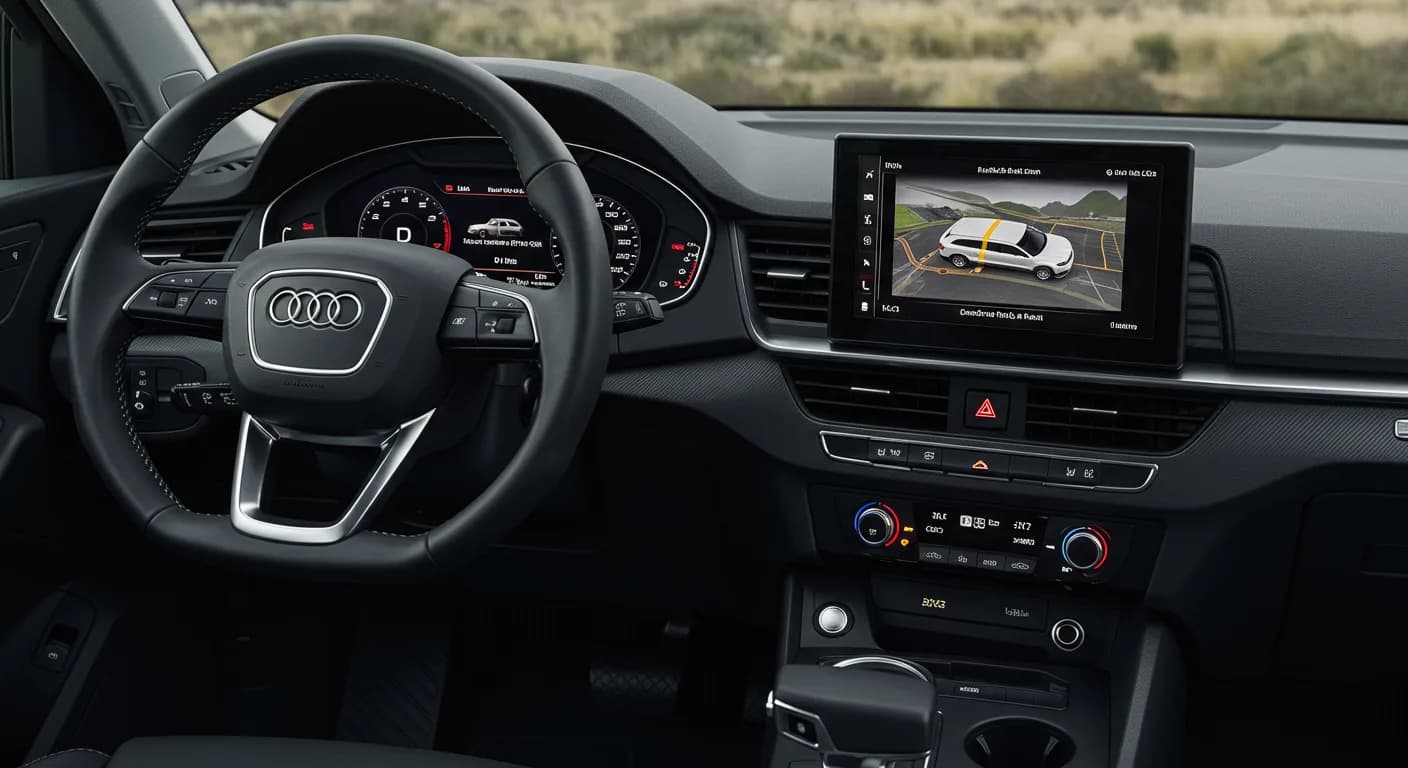
Gilt auch für
- Audi A7 e
- 2021–2022
- Audi Q5 e
- 2023
Audi has issued Technical Service Bulletin (TSB) 2068630/5 to address an "Electrical System fault" that may appear in the instrument cluster of certain 2021-2023 Audi Q5 e and A7 e models. This fault is primarily linked to Diagnostic Trouble Code (DTC) U041300 and can manifest as a yellow warning lamp or even prevent the vehicle from starting. This TSB, released on March 18, 2025, outlines a software-based solution to correct the underlying issue.
This TSB supersedes previous guidance, specifically Pending Service Solution (PSS) 2065722, also known as PSS 93, which also addressed DTC U041300 related to the Battery Energy Control Module "B" stored in the Engine Control Module (ECM) and/or Electric Drive Control Unit. The current bulletin provides updated procedures and information for resolving this specific Audi Q5 e electrical system fault.
Symptoms
Owners of affected Audi Q5 e and A7 e vehicles may observe specific symptoms indicating this electrical system fault. The most common sign is a "Yellow warning lamp in instrument cluster" illuminating on the dashboard. In more severe cases, the vehicle may experience a critical malfunction where "The vehicle can no longer be started."
Beyond these primary indicators, the TSB notes that customers may report various malfunction display symbols related to information, navigation, communication, and entertainment systems, indicating a general "vehicle electrical system malfunction indicator" or a "fault display for electric motor." These symptoms collectively point to an underlying issue with power, the vehicle electrical system, and data transfer within battery management.
Fault Codes / DTCs
Technicians diagnosing this Audi Q5 e electrical system fault will likely find one or more of the following Diagnostic Trouble Codes (DTCs) stored in various control modules:
| Diagnostic Address | DTC Code | Fault Symptom / Description | Symptom Code | Storage State |
|---|---|---|---|---|
| 0001 (ECM) / 0051 (Electric Drive) | U041300 | Invalid Data Received From Battery Energy Control Module "B" | 23085 | Intermittent / Static |
| 008C (Hybrid Battery Management) | P0A9500 | High Voltage Fuse | 28730 | Passive/Intermittent |
| 008C (Hybrid Battery Management) | P0E2E00 | Battery Charger "A" Fuse | 28733 | Passive/Intermittent |
| 008C (Hybrid Battery Management) | P0B1300 | Hybrid Battery Pack Current Sensor "A/B" Correlation | 14348 | |
| 008C (Hybrid Battery Management) | P0AC00 | Hybrid/EV Battery Pack Current Sensor "A" Circuit Range/Performance | 14340 | |
| 008C (Hybrid Battery Management) | P0A7E00 | Hybrid/EV Battery Pack Over Temperature | 28706 | (May be logged in some cases) |
Diagnosis / Trigger Conditions
The diagnosis for this electrical system fault typically begins when a customer reports the illuminated yellow warning lamp or a no-start condition. Technicians will confirm the customer's statement and then proceed to check for the presence of the DTCs listed above in the Engine Control Module (ECM) J623, Electric Drive control unit J841, or the Hybrid Battery Management control module J840. A key indicator for this TSB's applicability is finding that the switching unit for the high-voltage battery (SX6) has software version 106/206. This software version can be verified using the ODIS diagnostic system by navigating through Guided functions to Diagnostic address 008C, then selecting Guided Function and "Read identification" to display data from sub-systems. This process allows technicians to read and display additional identification data from sub-systems (slaves), with the results shown in the diagnostic log.
Important Warnings
It is crucial for technicians to understand that replacing the switching unit for the high-voltage battery (SX6), despite what Guided Fault finding might suggest, "will not solve the problem." The root cause is a software error, not a hardware malfunction of the SX6 unit itself. This warning is repeated multiple times in the TSB, emphasizing that a hardware replacement is an incorrect and ineffective solution for this specific Audi Q5 e electrical system fault.
Technical Background and Production Solution
The underlying cause of these electrical system faults is identified as a software error within the vehicle's systems. Audi has implemented improved software in production vehicles to prevent this issue from occurring in newer models. For existing vehicles, a software update is the prescribed remedy.
Repair Procedure Summary
The resolution for the Audi Q5 e electrical system fault involves updating the software on specific control units. The process requires following the instructions detailed in TSB 2011732: 00 Software Version Management (SVM), which covers the general operating procedures for software updates.
There are two main SVM Update Options, depending on the vehicle model and specific software versions:
SVM Update Option 1 Instructions
This option applies to certain Q5 TFSIe models. The update specifically targets the Hybrid Battery Management control unit (J840). Technicians must follow all instructions in TSB 2011732. The SVM action code to be used for this update is 8CA009. This procedure updates the software from an older version (e.g., 0371) to a newer version (e.g., 0373 or higher). The specific part numbers involved are:
| Model | Old Software Part Number | Old Software Version | New Software Part Number | New Software Version | SVM Code Input |
|---|---|---|---|---|---|
| Q5 TFSIe | 4M4915233G | 0371 | 4M4915233K | 0373 (or higher) | 8CA009 |
SVM Update Option 2 Instructions
This option is for both Q5 TFSIe and A7 TFSIe models and requires two SVM codes to be run sequentially. This update targets the Hybrid Battery Management control unit (J840), the Battery Junction Box (SX6), and the Cell Module Control units (CMC). Technicians must again follow all instructions in TSB 2011732. It is explicitly stated that for this repair option, two SVM codes must be run in a specific order. When flashing with SVM code 8CA011, it is essential that the code 8CA011KONF is run immediately afterwards.
| Model | Old Software Part Number | Old Software Version | New Software Part Number | New Software Version | SVM Code Input |
|---|---|---|---|---|---|
| Q5 TFSIe | 4M0915233R | 0273 | 4M0915233AE | 0278 (or higher) | 8CA011 |
| 4K0915233 | 0275 | 4K0915233A | 0278 (or higher) | 8CA011KONF | |
| A7 TFSIe | 4M4915233B | 0371 | 4M4915233J | 0373 (or higher) | 8CA011 |
Before initiating any software update, it is critical to unplug the high-voltage charging cable from vehicles with high-voltage components. This prevents the high-voltage battery from charging during the software update, which could otherwise cause damage to the high-voltage components.
Warranty Information
For vehicles still under warranty, claims for this repair should be submitted as a "Software Update" with Service Number 9327 and Damage Code 0040. The labor operation code is 0151 0010, with time based on the diagnostic protocol. The claim comment should reference TSB 2068630/5. If the vehicle is outside its warranty period, this Technical Service Bulletin serves as informational guidance only. All warranty claims must adhere to the Audi Warranty Policies and Procedures Manual and are subject to review or audit by Audi Warranty.
Revision History
Audi TSB 2068630/5 has undergone several revisions to ensure clarity and accuracy:
- Revision 5: The title of the bulletin was revised for improved clarity. Updates were also made to the Warranty and Labor Operations sections to reflect current procedures.
- Revision 4 (July 31, 2024): The Condition section was revised, including updated customer statements to better describe the symptoms experienced by owners.
- Revision 3 (May 30, 2023): The Service section was revised, incorporating an updated SVM Table, which details the specific software versions and SVM codes required for the repair.
Source: NHTSA ID 11016519
Weitere Revisionen dieses TSB
- 2022-2024 Audi e-tron GT P0B1300 Red Onboard Supply FaultP0B1300
- 2021 Audi Q8 DTC U041300 Battery Energy Control Module BU041300
- 2021-2024 Audi A7 e / Q5 e DTC U041300 Battery Control ModuleU041300, P0A9500, P0E2E00
- 2022-2024 Audi e-tron GT P0B1300 Red Onboard Supply FaultP0B1300
- 2022-2024 Audi e-tron GT / RS e-tron GT P0A9500 TSBP0A9500
- 2021-2022 Audi A7/Q5 Drive System Warning TSB U041300U041300
- 2021-2022 Audi PHEV Red Battery Symbol DTC P0B1300P0B1300
- 2021-2022 Audi A7/Q5 P0A9500 Yellow Warning Lamp TSBP0A9500
Related Articles
2021-2022 Audi Q5 e Electrical System Malfunction TSB
Audi has issued TSB 2081028/1 for 2021-2022 Q5 e models regarding an 'electrical system malfunction' warning light and a no-drive condition. This document details common diagnostic trouble codes (DTCs) such as U01A000 and advises technicians to contact the Technical Assistance Center.
2021-2024 Audi Q5 e High-Voltage Battery Deterioration TSB
This Technical Service Bulletin (TSB) 2079556/1 addresses issues in 2021-2024 Audi Q5 e PHEV models where the MIL light illuminates due to deterioration in various high-voltage battery modules, indicated by DTCs such as P0A7F00, P0EDD00, P0EDE00, P0EDF00, P0EE000, P0EE100, P2CCC00, and P2CCD00…
2021, 2023-2024 Audi Q5 e 3-Phase Wire Chafing TSB
Audi has released Technical Service Bulletin 2077614/2 for 2021, 2023-2024 Audi Q5 e vehicles, addressing potential chafing of the 3-phase wiring in the front underbody area on the passenger side. This issue, typically found during routine service, involves the high-voltage wiring contacting the…
2020-2023 Audi e-tron Models myAudi App AC Timeout TSB
Audi Technical Service Bulletin 2076636/2 details a solution for 2020-2023 Audi e-tron models where the myAudi app times out when attempting to start the auxiliary air conditioner. This issue is often accompanied by error messages like 'Auxiliary air conditioner could not be started: Timeout' with…
2021-2023 Audi Q5 e Fuel Tank Juddering TSB
Audi has released Technical Service Bulletin (TSB) 2077067/1 to address a condition where 2021-2023 Audi Q5 e vehicles may experience juddering from the fuel tank when the combustion engine engages. This TSB outlines a diagnostic and repair procedure involving a software update and inspection of…
Leave a comment
Comments are moderated and may take a moment to appear. Only your first name and the initial of your last name are shown publicly.
Comments
Be the first to comment.