2022-2024 Audi e-tron GT / RS e-tron GT P0A9500 TSB
Audi has issued Technical Service Bulletin 2071488/1 for 2022-2024 e-tron GT and RS e-tron GT models. This TSB addresses instances where the drive system cannot be activated and a red electrical system warning lamp illuminates, often accompanied by Diagnostic Trouble Code P0A9500 related to the…
 David Chen2022 Audi RS e-tron GT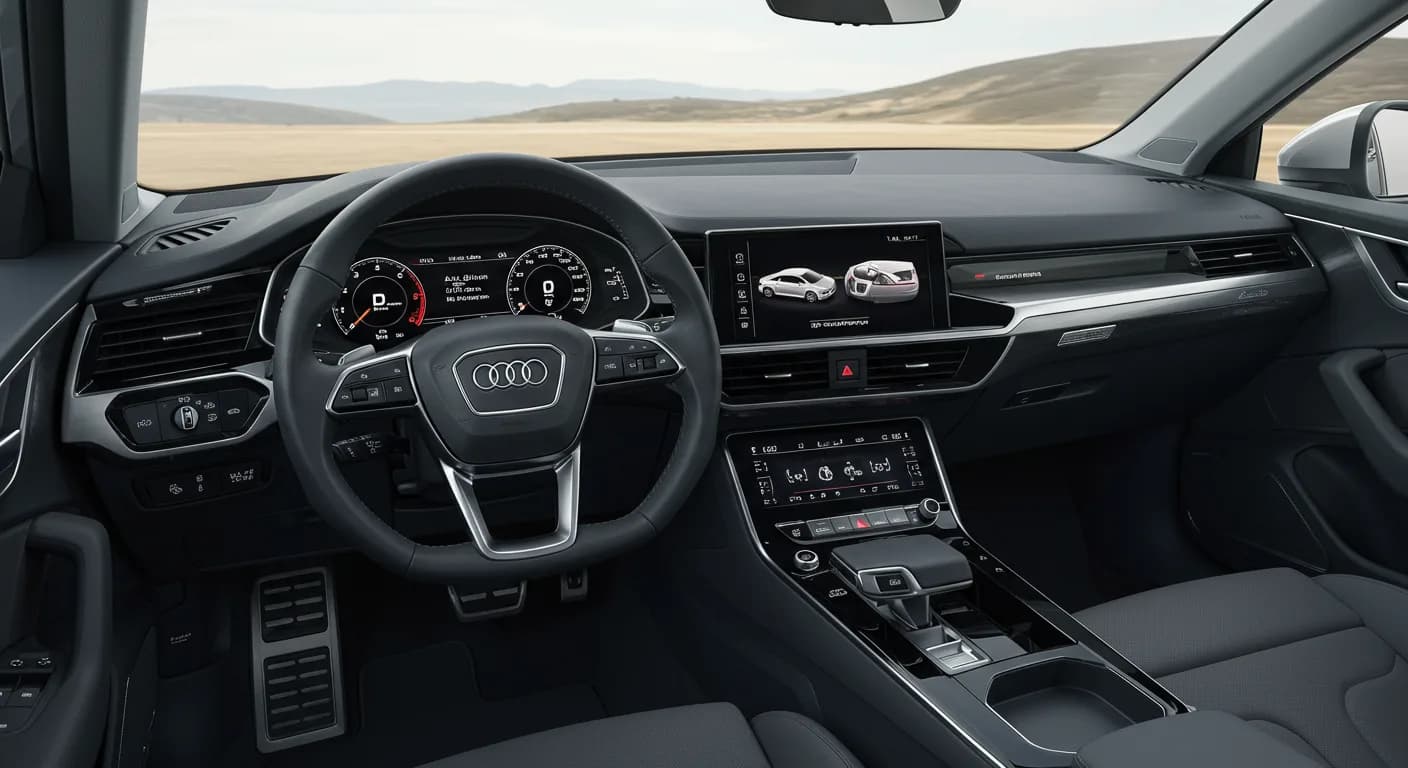
S'applique également à
- Audi e-tron GT
- 2022–2024
- Audi RS e-tron GT
- 2023–2024
Audi has released Technical Service Bulletin (TSB) 2071488/1 to address a specific issue affecting 2022-2024 Audi e-tron GT and RS e-tron GT vehicles. Owners may experience a situation where the vehicle's drive system cannot be activated, accompanied by a red electrical system warning lamp illuminating on the dashboard. This condition is typically associated with a Diagnostic Trouble Code (DTC) P0A9500.
This TSB provides detailed instructions for technicians to diagnose and resolve the problem, ensuring the safe and proper operation of the high-voltage system in affected vehicles. The focus keyword for this issue is Audi e-tron GT P0A9500.
Symptoms
Owners of 2022-2024 Audi e-tron GT and RS e-tron GT models may observe the following symptoms:
- The vehicle's drive system cannot be activated, preventing the car from moving.
- A red electrical system warning lamp illuminates on the instrument cluster.
Fault Codes / DTCs
When these symptoms occur, workshop findings indicate that the following Diagnostic Trouble Code (DTC) may be stored in the Battery Manager Control Unit (BMC), also known as -J840- (address word 008C):
- DTC P0A9500 (High Voltage Fuse) with symptom code 1310729 (active/static)
Other related fault codes may also be stored in conjunction with Audi e-tron GT P0A9500.
Diagnosis
If the customer reports the described symptoms and the DTC P0A9500 is found to be stored as either static or active in the Battery Manager Control Unit, the condition is confirmed. Technicians are instructed to proceed with the repair procedure outlined in the TSB.
Repair Procedure Summary
To resolve the issue associated with DTC P0A9500, technicians must replace specific high-voltage components. The repair involves following the detailed steps provided in the Audi Repair Manual and utilizing the ODIS test plans for proper execution. The primary components to be replaced are:
- The High-Voltage Battery Control Module (component code SX6), which is also known as the Battery Junction Box or Battery Isolator.
- The Power Output Protection with Boost Function (component code J1178), also identified as DC/DC Converter 2.
After replacing these parts, technicians are required to recheck the vehicle for proper operation to ensure the fault is resolved and the drive system functions correctly.
Required Parts
For the repair, the following parts are typically required. Technicians should always verify the latest information and part bulletins with their Parts Department and/or ETKA.
- Part Number 9J1915251: Battery isolator (SX6). Quantity: 1. This part should be ordered by VIN.
- Part Number 9J1915539: Voltage Transformer (J1178). Quantity: 1. This part should also be ordered by VIN.
Additionally, fasteners, bolts, coolant, nuts, and screws may be needed as specified in the Repair Manual, available via ETKA/ELSA.
Warranty Information
This repair falls under Claim Type 110 and is covered for up to 48 Months or 50,000 Miles. The Service Number for this bulletin is 9327, with a Damage Code of 0040. Labor operations involved include replacing the switching unit for the high-voltage battery (9327 5550) and replacing the DC/DC converter (9319 5555). These labor operations have specific predecessor and additional operations that may vary by vehicle equipment. All warranty claims must adhere to the Audi Warranty Policies and Procedures Manual.
Important Warnings
Owners should be aware that if their vehicle is outside of the specified warranty period, this Technical Service Bulletin 2071488/1 is provided for informational purposes only. The repair cost may not be covered by Audi in such cases.
Owner Action
If your 2022-2024 Audi e-tron GT or RS e-tron GT exhibits symptoms such as the drive system not activating or a red electrical system warning lamp, it is recommended to contact an authorized Audi dealership. Inform them about the symptoms and mention the potential relevance of TSB 2071488/1 and the Audi e-tron GT P0A9500 fault code. The dealership will be able to diagnose the issue accurately and perform the necessary repairs according to the manufacturer's guidelines.
Source: NHTSA ID: 10242974
Frequently Asked Questions
- What does DTC P0A9500 mean for my Audi e-tron GT?
- Diagnostic Trouble Code P0A9500 indicates an issue with the high voltage fuse within the Battery Manager Control Unit (BMC) of your Audi e-tron GT or RS e-tron GT. This can prevent the drive system from activating.
- What are the common symptoms associated with Audi TSB 2071488/1?
- Owners may experience the vehicle's drive system being unable to activate, and a red electrical system warning lamp illuminating on the dashboard. These symptoms are often linked to the P0A9500 fault code.
- How is the P0A9500 fault repaired in the Audi e-tron GT?
- The repair involves replacing the High-Voltage Battery Control Module (SX6), also known as the Battery Junction Box or Battery Isolator, and the Power Output Protection with Boost Function (J1178), or DC/DC Converter 2. This procedure is detailed in Audi Technical Service Bulletin 2071488/1.
- Is the repair for DTC P0A9500 covered under warranty?
- Yes, this repair is typically covered under Audi's warranty for up to 48 months or 50,000 miles, falling under Claim Type 110. However, if your vehicle is outside this warranty period, the TSB serves as informational guidance only, and costs may apply.
Autres révisions de ce TSB
Related Articles
2022-2024 Audi e-tron GT High-Voltage Battery TSB
Audi TSB 2077772/2 addresses the replacement of the high-voltage battery assembly in 2022-2024 e-tron GT and RS e-tron GT vehicles, detailing required parts and procedures for technicians.
2022-2024 Audi e-tron GT Radiator Fan Stuck DTC P2B3000 P2B3200
Audi has issued Technical Service Bulletin 2073599/3 for 2022-2024 e-tron GT and RS e-tron GT models. This TSB addresses issues with the thermal management system, specifically radiator fan 1 and/or 2 getting stuck, which can lead to DTCs P2B3000 or P2B3200, reduced heating/cooling, and lower…
2022-2024 Audi e-tron GT Charging Issue TSB 2078782/3
Audi has released Technical Service Bulletin (TSB) 2078782/3 for 2022-2024 e-tron GT and RS e-tron GT models experiencing charging complaints or diagnostic trouble codes (DTCs). Due to a temporary shortage of 22 kW high-voltage battery chargers, this TSB outlines a procedure to replace it with an…
2022 Audi e-tron GT Charging Flap Status TSB 2079475/2
This Technical Service Bulletin (TSB) 2079475/2 addresses an issue in 2022 Audi e-tron GT and RS e-tron GT vehicles where the virtual cockpit incorrectly displays the charging flap as open, even when it is closed. This software update resolves the misleading warning messages.
2022 Audi e-tron GT Charging Flap Status Warning TSB
Audi Technical Service Bulletin 2079475/1 addresses an issue in 2022 Audi e-tron GT and RS e-tron GT vehicles where the virtual cockpit incorrectly displays the charging flap as open, even when it's closed. This software update resolves the misleading warning messages.
Leave a comment
Comments are moderated and may take a moment to appear. Only your first name and the initial of your last name are shown publicly.
Comments
Be the first to comment.