2023-2026 Audi SOS Emergency Assist Malfunction TSB
A Technical Service Bulletin (TSB 2074059/3) has been issued for 2023-2026 Audi models regarding complaints related to the SOS Emergency Assist system. Owners may experience unjustified vehicle slowing, seat belt tugs, or warning messages like 'SOS Emergency assist: active. Please take over'.
 Marcus Weber2023 Audi e-tron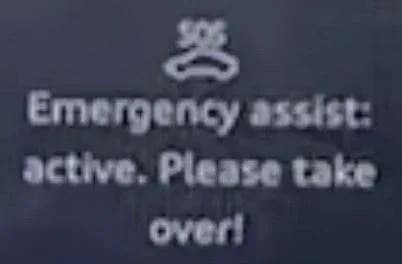
También aplica a
- Audi A6
- 2021–2025
- Audi A6 allroad
- 2021–2025
- Audi A7
- 2021–2025
- Audi A7 e
- 2021–2022
- Audi A8 L e
- 2021
- Audi e-tron
- 2021–2022
- Audi e-tron GT
- 2022–2026
- Audi e-tron Sportback
- 2021–2022
- Audi Q7
- 2021–2026
- Audi Q8
- 2021–2026
- Audi RS 6 Avant
- 2021–2025
- Audi RS 7
- 2021–2025
- Audi RS e-tron GT
- 2022, 2023, 2024, 2026
- Audi RS Q8
- 2021–2026
- Audi S e-tron GT
- 2026
- Audi S6
- 2021–2025
- Audi S7
- 2021–2025
- Audi S8
- 2021–2025
- Audi SQ7
- 2021–2026
- Audi SQ8
- 2021–2026
▸ Mostrar 14 más▾ Mostrar menos
Owners of certain 2023-2026 Audi vehicles may encounter issues with the SOS Emergency Assist system. This Technical Service Bulletin (TSB 2074059/3) addresses various complaints and provides information regarding the system's behavior and potential remedies.
Symptoms
Customers have reported several issues related to the SOS Emergency Assist system. These include:
- The vehicle slowing down unexpectedly or without justification due to emergency assist activation.
- The emergency assist system repeatedly tugging on the seat belt.
- The instrument cluster displaying messages such as "SOS Emergency assist: active. Please take over" (Figure 1 in the original document) or "SOS Emergency assist: canceled" (Figure 2 in the original document).
Even during a test drive, no abnormal behavior might be immediately detected, making diagnosis challenging. After deactivating the emergency assist, a white icon and the message "Emergency assist: off" may appear on the instrument cluster.
Diagnosis / Trigger Conditions
The emergency assist system is designed to detect driver incapacitation by monitoring driver activity. It activates if no input is detected on the steering wheel (torque), if a capacitive steering wheel is not firmly touched, if the brake pedal is not pressed, and if the accelerator pedal is not suddenly or significantly pressed.
There are two main operating modes for the emergency assist:
Manual Driving Mode
This mode applies when the adaptive cruise assist and lane departure warning are deactivated, and the vehicle speed is above 40 mph. If driver inactivity is detected, the system may engage. It can slow the vehicle to follow a vehicle in front or intervene to slow the vehicle if it leaves its lane without signaling. In this mode, the system may slow the vehicle without prior acoustic warning.
Assisted Driving Mode
This mode is active when the adaptive cruise assist or lane departure warning is activated. The emergency assist is automatically available regardless of vehicle speed. If driver inactivity is detected, the system engages.
Drivers can override emergency assist interventions by moving the steering wheel (for active steering) or firmly touching a capacitive steering wheel, or by pressing the brake pedal. Pressing the accelerator pedal suddenly and significantly will also override the system. However, hesitant or very slow accelerator pedal input will not be detected as driver activity.
Repair Procedure Summary
To address the Audi SOS Emergency Assist malfunction, technicians should first explain the technical background of the emergency assist system to the customer.
Next, the software version of the driver assist systems control unit (J1121, diagnostic address 00A5) must be checked. If the software version is lower than SW0352, a software update for the driver assist systems is available. This update is performed via TSB 2063497 and is designed to enhance the robustness of the emergency assist. If the software version is already SW0352 or above, no further measures are necessary, and TSB 2063497 will not be visible.
As an alternative measure, if a customer prefers not to use the emergency assist, it can be deactivated in the MMI. This involves pressing the button for driver assist systems E617 in the center console's switch module, opening the profile master, and deactivating the emergency assist within the "Individual" profile. This adjustment must be made for every user profile (MMI > Users > Profile selection > Profile 1 to 6).
Owner Action
If your 2023-2026 Audi exhibits an Audi SOS Emergency Assist malfunction, such as unexpected braking, seat belt tugs, or warning messages, it is recommended to contact your authorized Audi dealership. They can diagnose the issue and determine if a software update (TSB 2063497) is required for the J1121 control unit. Software updates are typically covered under warranty. If you wish to disable the system, your dealer can guide you through the MMI settings, or you can follow the instructions in your owner's manual.
Frequently Asked Questions
- What does the 'SOS Emergency assist: active. Please take over' message mean in my Audi?
- This message indicates that your Audi's SOS Emergency Assist system has detected driver inactivity and has engaged. It may be a symptom of an underlying software issue causing an **Audi SOS Emergency Assist malfunction**, as described in TSB 2074059/3.
- Can I deactivate the SOS Emergency Assist system in my Audi?
- Yes, if you do not wish to use the emergency assist, you can deactivate it through the MMI system. Navigate to MMI > Users > Profile selection > Profile 1 to 6, and within the 'Individual' profile, you can turn off the emergency assist feature. This adjustment needs to be made for each user profile.
- What is the fix for an Audi SOS Emergency Assist malfunction?
- The primary fix involves a software update for the J1121 control unit. If your vehicle's software version is below SW0352, a dealer can apply the update specified in TSB 2063497 to improve the robustness of the driver inactivity detection system.
Otras revisiones de este TSB
- 2023-2026 Audi Adaptive Light System Malfunction TSB 2054202/6B200FF9, B200FF3, C123FB
- 2016-2026 Audi Air Suspension System Fault TSB 2067531/7B200FF3
- 2016-2026 Audi J775 Suspension Control Unit DTCs B200FF0-B200FF5B200FF3
- 2022-2026 Audi Emergency Assist System Malfunctions TSBB200FF9, B200FF3, C123FB
- 2021-2026 Audi Adaptive Light System Malfunction TSBB200FF9
- 2017-2025 Audi Models Air Suspension System Fault TSBB200FF3
- 2021-2025 Audi Suspension System Fault DTCs B200FF0-B200FF5B200FF3
- 2022-2025 Audi: J775 Suspension Control Unit DTCs B200FF0-B200FF5B200FF3
Related Articles
Should 2023 Audi e-tron Owners Worry? Recall & TSB Roundup
The 2023 Audi e-tron faces significant safety concerns, including recalls for potential brake pedal detachment and charging cable overheating. Owners have also reported serious issues like unintended acceleration and electrical system malfunctions. This guide covers all known problems and solutions.
2023 Audi e-tron Brake Pedal Recall
Audi has issued a recall (NHTSA ID: 26V240000, Audi Recall 46P7) for certain 2019-2024 E-Tron and 2020-2024 E-Tron Sportback vehicles, including the 2023 Audi e-tron. The recall addresses a potential issue where the brake pedal may detach from the brake booster, leading to a loss of brake function.
2015-2027 Audi Noise Diagnosis with Frequency Analysis App TSB
Audi has released Technical Service Bulletin 2051095/11 detailing the Audi Frequency Analysis app. This app helps technicians diagnose noise complaints more precisely across 2015-2027 Audi models. Learn how the app works, where to download it, and its features for effective vehicle noise analysis.
2023 Audi e-tron AC/DC Charging Not Possible TSB
This manufacturer communication (NHTSA ID 11031035) provides critical information for 2023 Audi e-tron owners facing issues with AC/DC charging. It specifically highlights problems linked to software version 00C6: 0093/3119, which can prevent the vehicle from charging.
2023-2025 Audi Rear Seat Reminder Message TSB 2074943/2
Audi Technical Service Bulletin 2074943/2 explains the instrument cluster message 'Please check rear seats and be aware of door safelock' in various 2023-2025 Audi models. This informational TSB details the rear occupant detection system designed to prevent children and pets from being left in…
Leave a comment
Comments are moderated and may take a moment to appear. Only your first name and the initial of your last name are shown publicly.
Comments
Be the first to comment.