2022-2026 Audi Emergency Assist System Malfunctions TSB
Audi has released Technical Service Bulletin (TSB) 2074059/3 to address customer complaints regarding the Emergency Assist system in various 2022-2026 models. Owners may experience unintended braking, seatbelt tugging, or specific warning messages on the instrument cluster.
 Sarah Mitchell2022 Audi e-tron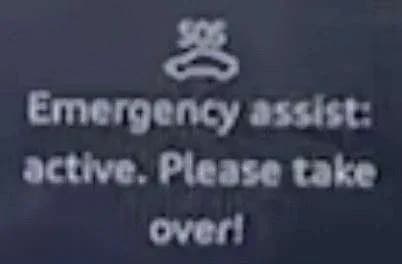
S'applique également à
- Audi A6
- 2021–2025
- Audi A6 allroad
- 2021–2025
- Audi A7
- 2021–2025
- Audi A7 e
- 2021–2022
- Audi A8 L e
- 2021
- Audi e-tron
- 2021, 2023
- Audi e-tron GT
- 2022–2026
- Audi e-tron Sportback
- 2021–2022
- Audi Q7
- 2021–2026
- Audi Q8
- 2021–2026
- Audi RS 6 Avant
- 2021–2025
- Audi RS 7
- 2021–2025
- Audi RS e-tron GT
- 2022, 2023, 2024, 2026
- Audi RS Q8
- 2021–2026
- Audi S e-tron GT
- 2026
- Audi S6
- 2021–2025
- Audi S7
- 2021–2025
- Audi S8
- 2021–2025
- Audi SQ7
- 2021–2026
- Audi SQ8
- 2021–2026
▸ Afficher 14 de plus▾ Afficher moins
Audi has issued Technical Service Bulletin (TSB) 2074059/3 to address various customer complaints related to the Emergency Assist system in certain 2022-2026 Audi A6, A7, A8, Q7, Q8, e-tron, and e-tron GT models. This bulletin provides comprehensive information on the system's functionality and outlines a software update to improve its robustness. Owners experiencing unexpected behavior from their 2022 Audi e-tron emergency assist system should be aware of this service action.
Symptoms of Emergency Assist Malfunction
Owners may notice several issues that suggest a problem with the Emergency Assist system. These include:
- The vehicle slowing down due to the emergency assist in situations where the driver believes it is unjustified.
- The emergency assist repeatedly tugging on the seat belt.
- Specific warning messages appearing on the instrument cluster.
Verbatim Owner-Facing Messages
Customers have reported seeing the following messages displayed on their instrument cluster:
- "SOS Emergency assist: active. Please take over"
- "SOS Emergency assist: canceled"
Additionally, after deactivating the emergency assist, a white icon indicating deactivation may appear, along with the message "Emergency assist: off".
Fault Codes
While TSB 2074059/3 primarily focuses on general information and symptoms, a related TSB (2063497) that provides the necessary software update mentions specific fault codes associated with driver assist system malfunctions. These include:
- B200FF9
- B200FF3
- C123FB
These codes are indicative of issues within the driver assist systems, which can impact the Emergency Assist function.
Understanding Audi Emergency Assist
Audi's Emergency Assist system is designed to detect driver incapacitation by monitoring driver activity. Within its operational limits, the system intervenes if it detects prolonged driver inactivity. This inactivity is determined if, for a certain period:
- No input is detected on the steering wheel (torque), or if the vehicle has a capacitive steering wheel, it is not touched firmly.
- The brake pedal is not pressed.
- The accelerator pedal is not suddenly and significantly pressed.
Upon detecting inactivity, the emergency assist gradually initiates visual, acoustic, and haptic warnings to regain the driver's attention. These warnings include speed reduction, driver messages, lowering infotainment system volume, a warning tone, seatbelt jerks, and brake jolts. If the driver remains inactive, the system will keep the vehicle within its lane and gradually bring it to a full stop.
Operating Modes
The emergency assist system operates differently depending on the driving mode:
- Manual driving mode: This mode is active when the adaptive cruise assist (ACA) and lane departure warning are both deactivated, and the vehicle speed is above 40 mph. If driver inactivity is detected, the system may slow the vehicle to follow a vehicle in front or intervene to slow the vehicle if it leaves its lane without signaling. Importantly, the emergency assist may slow the vehicle in manual operating mode without an acoustic warning beforehand.
- Assisted driving mode: This mode is active when either adaptive cruise assist (ACA) or lane departure warning is activated. In this case, the emergency assist is automatically available regardless of the vehicle's speed and engages if driver inactivity is detected by either system.
Overriding Emergency Assist
Drivers can override an intervention from the emergency assist at any time by:
- Moving the steering wheel (if equipped with active steering or a capacitive steering wheel).
- Pressing the brake pedal.
- Pressing the accelerator pedal suddenly and significantly.
Diagnosis and Trigger Conditions
Workshop findings indicate that often, no abnormal behavior can be detected during a test drive, even when customers report issues. The core of the problem lies in the system's sensitivity and how it interprets driver inactivity. The TSB highlights that a compromise must be found between the system's reliability in genuinely dangerous scenarios and avoiding false alarms. The 2022 Audi e-tron emergency assist system, like other affected models, relies on precise detection of driver input.
Repair Procedure Summary
The primary solution for addressing these Emergency Assist complaints is a software update. The production solution involves improving the robustness of driver inactivity detection within the Control Module for Driver Assist Systems (J1121, address word 00A5).
To resolve the issue, technicians are instructed to:
- Explain the technical background of the emergency assist system to the customer.
- Check the current software version of the J1121 control unit (diagnostic address 00A5).
- If the software version is lower than SW0352, a software update is available via TSB 2063497. This update specifically includes measures to enhance the robustness of the emergency assist system.
- If the software version is SW0352 or above, no further measures are necessary, as the issue should already be resolved.
Alternative Measures
If a customer prefers not to use the emergency assist system, it can be deactivated through the MMI (Multi Media Interface). This involves pressing the button for driver assist systems (E617) in the center console, opening the profile master for driver assist systems, selecting the "Individual" profile, and deactivating the emergency assist. This adjustment must be made for every user profile.
Important Warnings
Owners should be aware of specific conditions related to the Emergency Assist system:
- Accelerator Pedal Input: If you press down on the accelerator pedal hesitantly or very slowly, the system will not detect it as driver activity, potentially leading to an unwarranted Emergency Assist intervention.
- Warranty: This TSB is informational only and is not applicable to any Audi Warranty claims.
Owner Action
If you own a 2022-2026 Audi A6, A7, A8, Q7, Q8, e-tron, or e-tron GT and are experiencing any of the described symptoms with your 2022 Audi e-tron emergency assist system, it is recommended to contact your authorized Audi dealer. They can check the software version of your J1121 control unit and perform the necessary software update (TSB 2063497) if required. This update aims to improve the reliability and accuracy of the Emergency Assist system, preventing unintended interventions and enhancing overall driver confidence.
Related Resources
Further information about the emergency assist system can be found in the following resources:
- Your vehicle's Owner's Manual.
- The Audi Knowledge Tank (AKT), which includes an SoST video (Function sequence for emergency assist, SoST_0049) demonstrating how the emergency assist works in assisted operating mode.
- Elsa, Systems >> Campaigns/Actions >> Campaign.
- SSP: 668 – Audi A8 (type 4N) Driver assist systems.
Source: NHTSA ID: 11025338
Frequently Asked Questions
- What is Audi TSB 2074059/3 about?
- Audi TSB 2074059/3 addresses customer complaints regarding the Emergency Assist system in various 2022-2026 Audi models, including the 2022 Audi e-tron. It covers issues like unintended braking, seatbelt tugging, and specific warning messages on the instrument cluster.
- What are the common symptoms of an Emergency Assist malfunction?
- Owners may experience the vehicle slowing down unexpectedly, the seat belt tugging multiple times, or see instrument cluster messages such as "SOS Emergency assist: active. Please take over" or "SOS Emergency assist: canceled".
- Are there any fault codes associated with this issue?
- While TSB 2074059/3 is informational, a related TSB (2063497) that provides the software update mentions fault codes like B200FF9, B200FF3, and C123FB, which are related to driver assist system malfunctions.
- How is the Emergency Assist system issue resolved?
- The issue is resolved by a software update to the J1121 Control Module for Driver Assist Systems. If your vehicle's software version is below SW0352, your Audi dealer can perform the update via TSB 2063497.
- Can I deactivate the Emergency Assist system?
- Yes, if you prefer not to use the system, you can deactivate it through the MMI by accessing the driver assist systems profile master and selecting the "Individual" profile to turn off Emergency Assist. This must be done for each user profile.
Autres révisions de ce TSB
- 2023-2026 Audi Adaptive Light System Malfunction TSB 2054202/6B200FF9, B200FF3, C123FB
- 2016-2026 Audi Air Suspension System Fault TSB 2067531/7B200FF3
- 2016-2026 Audi J775 Suspension Control Unit DTCs B200FF0-B200FF5B200FF3
- 2023-2026 Audi SOS Emergency Assist Malfunction TSBB200FF9, B200FF3, C123FB
- 2021-2026 Audi Adaptive Light System Malfunction TSBB200FF9
- 2017-2025 Audi Models Air Suspension System Fault TSBB200FF3
- 2021-2025 Audi Suspension System Fault DTCs B200FF0-B200FF5B200FF3
- 2022-2025 Audi: J775 Suspension Control Unit DTCs B200FF0-B200FF5B200FF3
Related Articles
2022 Audi e-tron Problems: Electrical System & Braking Concerns
The 2022 Audi e-tron has faced significant owner complaints regarding its electrical system, including sudden power loss and charging hazards, as well as various braking malfunctions. This profile details these issues and relevant service bulletins.
2022-2026 Audi Guided Fault Finding Reporting Obligation
Audi has issued Technical Service Bulletin TPI 2033392, also known as Transaction No. 2081531/1, regarding a reporting obligation for technicians when Guided Fault Finding produces an unexpected result. This TSB outlines the process for contacting Audi Product Support for diagnostic assistance.
2022-2026 Audi Infotainment System Complaints
Audi has released Technical Service Bulletin (TSB) 2081405/1 to address various customer complaints regarding infotainment systems in 2022-2026 Audi vehicles. This TSB helps technicians diagnose issues often caused by external media or mobile devices, rather than vehicle technology.
2018-2026 Audi Models Cracking Noise TSB 2061464/11
Audi Technical Service Bulletin 2061464/11 describes a cracking noise from the front or rear axle when changing direction in various 2018-2026 Audi models. The issue is due to stub axle movement and is resolved by bonding the stub axle to the wheel bearing with locking fluid.
2022-2026 Audi Parking Aid False Warnings TSB 2024323/13
Audi has released Technical Service Bulletin 2024323/13 to address customer complaints of false parking aid warnings. This bulletin details various environmental and vehicle-specific conditions that can cause the parking aid system to issue alerts even when no obstacles are present. It provides…
Leave a comment
Comments are moderated and may take a moment to appear. Only your first name and the initial of your last name are shown publicly.
Comments
Be the first to comment.