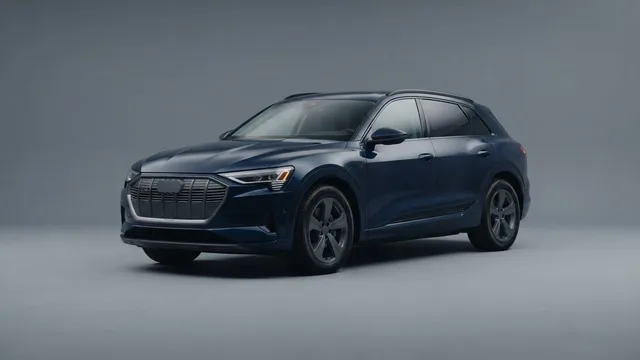
Owners of the 2022 Audi e-tron frequently report significant electrical system malfunctions, ranging from sudden power loss and charging hazards to software crashes. Braking issues and unexpected automatic emergency braking are also common concerns, alongside numerous technical service bulletins…
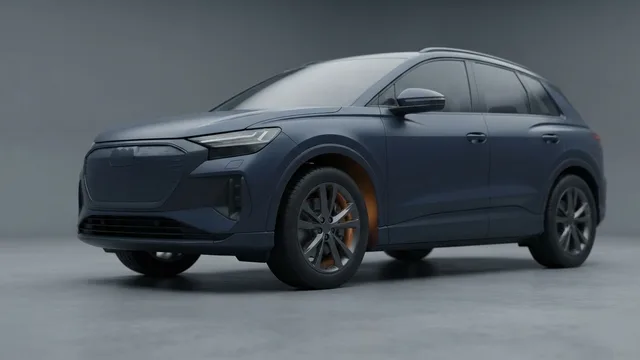
The 2023 Audi e-tron has faced several significant safety concerns, including recalls for potential charging cable overheating and brake pedal detachment. Owners have also reported serious issues like sudden unintended acceleration and electrical system malfunctions. This profile details these…
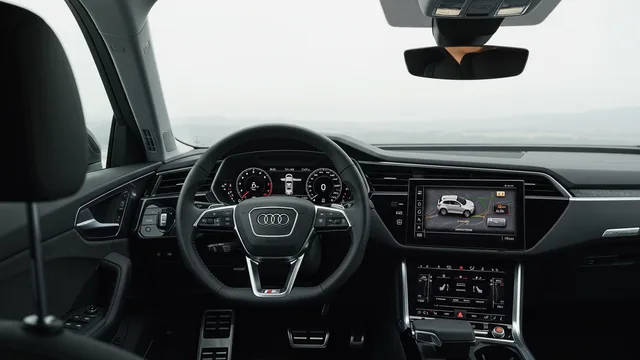
A 2021 Audi e-tron owner reported a severe 'Electrical Malfunction' resulting in complete loss of power on the highway. The issue has persisted despite dealer attempts to fix it over five months, posing significant safety risks.
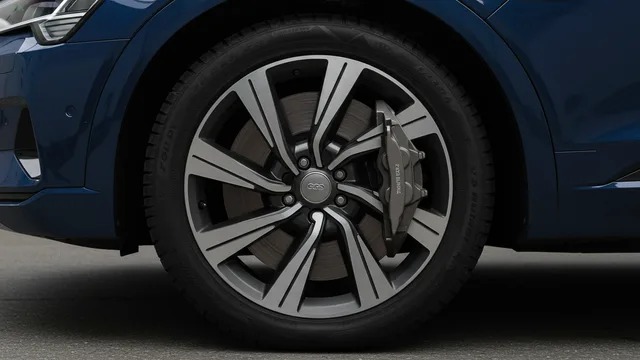
Audi has issued a recall (NHTSA ID: 26V240000, Audi Recall 46P7) for certain 2019-2024 E-Tron and 2020-2024 E-Tron Sportback vehicles, including the 2023 Audi e-tron. The recall addresses a potential issue where the brake pedal may detach from the brake booster, leading to a loss of brake function.
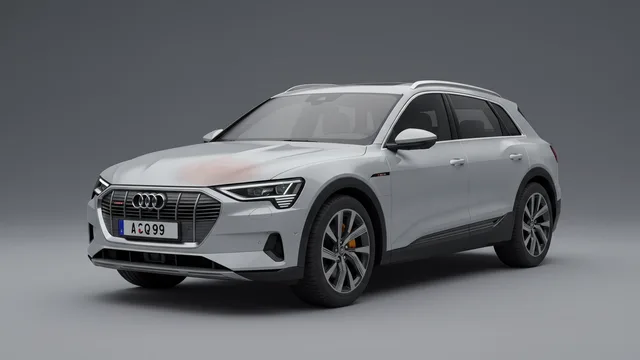
Audi has released Technical Service Bulletin 2051095/11 detailing the Audi Frequency Analysis app. This app helps technicians diagnose noise complaints more precisely across 2015-2027 Audi models. Learn how the app works, where to download it, and its features for effective vehicle noise analysis.
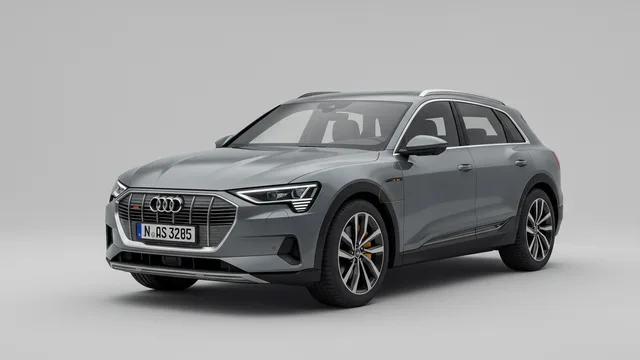
Audi has issued Technical Service Bulletin TPI 2033392, also known as Transaction No. 2081531/1, regarding a reporting obligation for technicians when Guided Fault Finding produces an unexpected result. This TSB outlines the process for contacting Audi Product Support for diagnostic assistance.
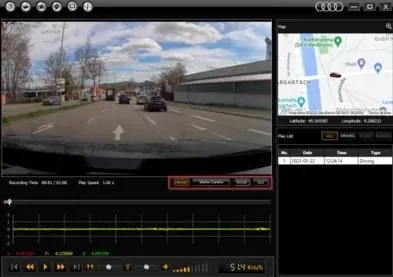
This Audi Technical Service Bulletin (TSB 2081409/1) provides comprehensive answers to frequently asked questions and troubleshooting steps for the Audi Universal Traffic Recorder (UTR) accessory, covering topics like SD card compatibility, video playback, Wi-Fi issues, and more.
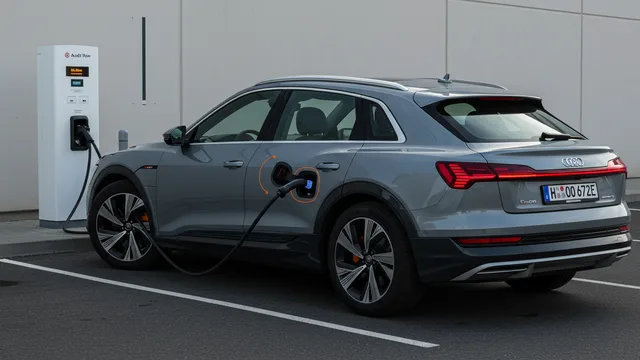
This manufacturer communication (NHTSA ID 11031035) provides critical information for 2023 Audi e-tron owners facing issues with AC/DC charging. It specifically highlights problems linked to software version 00C6: 0093/3119, which can prevent the vehicle from charging.
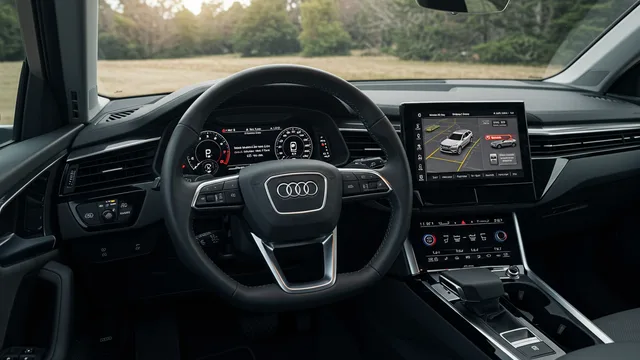
Audi has released Technical Service Bulletin (TSB) 2081405/1 to address various customer complaints regarding infotainment systems in 2022-2026 Audi vehicles. This TSB helps technicians diagnose issues often caused by external media or mobile devices, rather than vehicle technology.
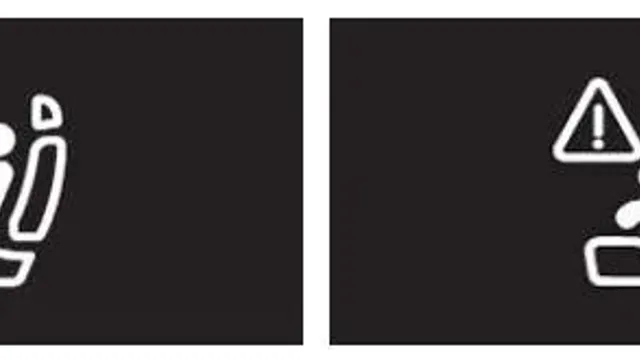
Audi Technical Service Bulletin 2074943/2 explains the instrument cluster message 'Please check rear seats and be aware of door safelock' in various 2023-2025 Audi models. This informational TSB details the rear occupant detection system designed to prevent children and pets from being left in…
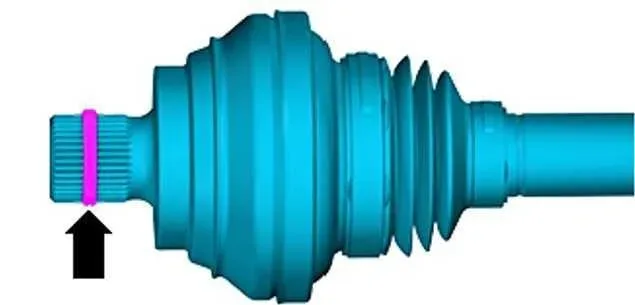
Audi Technical Service Bulletin 2061464/11 describes a cracking noise from the front or rear axle when changing direction in various 2018-2026 Audi models. The issue is due to stub axle movement and is resolved by bonding the stub axle to the wheel bearing with locking fluid.
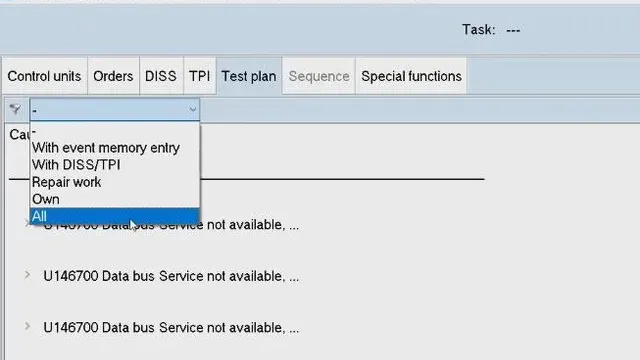
Audi has released Technical Service Bulletin 2059528/18 to address an "Emergency call function: malfunction! Function unavailable. Please contact service" warning, often accompanied by a red SOS LED and DTC B200000. This issue affects various 2021-2025 Audi models and is due to a software problem…
Volkswagen Group of America, Inc. (Audi) is recalling certain 2019-2024 Audi E-Tron and 2020-2024 Audi E-Tron Sportback vehicles. The fastener that connects the brake pedal and the brake booster may have been improperly assembled during manufacturing, which can cause the brake pedal to detach from the brake booster.
Volkswagen Group of America, Inc. (Audi) is recalling certain 2019-2026 vehicles. Please see the recall report for a complete list of models. A software error may prevent the rearview camera image from displaying as intended. As such, these vehicles fail to comply with the requirements of Federal Motor Vehicle Safety Standard number 111, "Rear Visibility."
Volkswagen Group of America, Inc. (Audi) is recalling certain 2019-2024 Audi E-Tron and 2020-2024 Audi E-Tron Sportback vehicles. The fastener that connects the brake pedal and the brake booster may have been improperly assembled during manufacturing, which can cause the brake pedal to detach from the brake booster.
Volkswagen Group of America, Inc. (Volkswagen) is recalling certain 2023 Audi S5 Cabriolet, A4 Allroad, Q5 Sportback, A3 Sedan, S5 Sportback, SQ7, TT Coupe, TT Roadster, RS5 Sportback, 2024 A8, E-Tron Quattro, E-Tron Sportback Quattro, Q8, RSQ8, 2023-2024 Q3, Q5, and Q7 vehicles. An electrical connection in the front passenger seat for the occupant detection system (ODS) control module may loosen and deactivate the front passenger air bag.
Volkswagen Group of America, Inc. (Audi) is recalling certain 2020-2022 E-Tron Sportback Quattro and 2019-2022 E-Tron Quattro vehicles. Certain high-voltage battery modules may overheat.
My 2019 Audi e-tron developed a sunroof leak. On [XXX], Audi Exchange in Highland Park, IL repaired it as a known issue partially covered by warranty; I paid $526.53. On [XXX] it leaked heavily again from the same area, soaking the headliner, dashboard, carpet, foot wells and seats. The dealer said a different issue caused it; I paid $388.88 more. I had never had an electrical problem before. While the car was at the dealer, they charged it, and an orange battery warning and “Electrical System Malfunction” message appeared. They confirmed a charging-system fault but refuse to diagnose it and expect me to pay. The service manager told me to pick up the car and that the matter was closed. SAFETY RISK: The e-tron has a high-voltage system. Water exposure this extensive can corrode wiring, connectors and control modules, causing failures that may not appear right away. A charging fault of unknown cause could lead to charging failure or electrical problems while driving. I do not consider the car safe until the cause is found and water damage is ruled out. Only Audi Exchange has inspected the car, and no one has checked whether the water caused the fault. The car is available for inspection; please preserve all parts and records. I REQUEST THAT AUDI OF AMERICA AND AUDI EXCHANGE: Inspect for water damage and corrosion to wiring, connectors, modules and charging components. Determine whether the water caused the fault. Explain why the car leaked again after the first repair. Provide all diagnostic reports, fault codes and repair records in writing. Repair any resulting damage under warranty or at their expense. Confirm in writing that the car is safe to drive. I should not pay to diagnose or repair this fault until it is determined whether the water caused it or potentially their own charging network and/or neglect. INFORMATION REDACTED PURSUANT TO THE FREEDOM OF INFORMATION ACT (FOIA), 5 U.S.C. 552(B)(6)
No injuries · No fire · No crash
What component or system failed or malfunctioned, and is it available for inspection upon request? The component that failed is high-voltage battery cell 6 (part of the lithium-ion traction battery pack assembly). The physical vehicle and its high-voltage battery system are currently held at Wilsonville Audi in Oregon and are fully available for physical or digital diagnostic inspection upon request. How was your safety or the safety of others put at risk? The terminal failure of the internal battery module triggered an abrupt high-voltage electrical system isolation fault, presenting an immediate risk of sudden propulsion loss while driving at highway speeds. Furthermore, according to the manufacturer’s open federal safety campaign (NHTSA Campaign 23V867 / 93V2), this exact internal module self-discharge condition creates a documented critical thermal runaway and vehicle fire risk. Has the problem been reproduced or confirmed by a dealer or independent service center? Yes. The failure has been formally reproduced, diagnosed, and confirmed by an authorized dealership, Wilsonville Audi. Their factory diagnostic equipment pulled a permanent, active safety lockout fault under Trouble Code B1D9EF1, confirming a catastrophic voltage drop and safety isolation breakdown at the cell level. Has the vehicle or component been inspected by the manufacturer, police, insurance representatives or others? The vehicle has been physically inspected and scanned by the manufacturer's authorized dealership technicians at Wilsonville Audi. It has not been inspected by the police or insurance representatives, as the component failed due to an inherent manufacturing defect rather than an accident or collision. Were there any warning lamps, messages or other symptoms of the problem prior to the failure, and when did they first appear? Yes. The vehicle displayed an explicit driver alert message on the digital instrument cluster stating: "Electrical system: malfunction! Please contact dealer"
No injuries · No fire · No crash
The component that failed is battery cell 6 within the internal high-voltage traction battery pack assembly. The vehicle is currently experiencing a severe high-voltage isolation/safety breakdown, flagging diagnostic trouble code B1D9EF1 while running on manufacturer software version 0490. The vehicle and its high-voltage battery pack are currently located at an authorized dealership and remain fully available for inspection upon request. The failure of an internal high-voltage battery cell creates an imminent risk of a sudden, uncommanded high-voltage electrical powertrain shutdown while traveling at highway speeds. This condition causes an immediate loss of motive propulsion, forcing the vehicle into a hazardous limp-mode or staging a complete shutdown on live roadways, drastically increasing the risk of a high-speed rear-end collision. Furthermore, internal cell failures and isolation faults of this nature present severe underlying thermal management risks within the high-voltage pack layout, endangering vehicle occupants and nearby property. Yes. The high-voltage failure and the specific failure of battery cell 6 were officially reproduced, diagnosed, and confirmed by the authorized dealership, Wilsonville Audi, under Repair Order 211793. The vehicle has been physically and electronically inspected by authorized factory technicians at Wilsonville Audi. No inspections have been conducted by police or insurance representatives at this time. Prior to the breakdown, the vehicle suddenly displayed a prominent "Electrical system: malfunction! Please contact dealer" warning lamp and safety message on the digital instrument cluster. This warning flag and its associated software safety lockouts first appeared on September 26, 2026, causing immediate degradation of vehicle functionality. This specific failure code exactly mirrors the systemic high-voltage battery cell defect characteristics currently subject to Audi's 93U9 safety recall campaign.
No injuries · No fire · No crash
I was entering the freeway at a metered on-ramp. During my wait, the vehicle warned of objects that were close even though none were close to the vehicle. I then entered the freeway and several seconds later automatic emergency braking activated at a low speed of about 20-30 miles per hour with no car in front of me for about 100 ft, and the car that was there was not braking or slowing down. There was no apparent reason for the system to activate other than the already known fault documented in a service bulletin NHTSA ID Number: 10245688
No injuries · No fire · No crash
The contact owns a 2019 Audi E-Tron Quattro. The contact stated that the messages "Electrical System Malfunction", "Please Stop Vehicle", and a message for the battery were displayed. The vehicle was taken to the dealer, where it was repaired under NHTSA Campaign Number: 23V867000 (Electrical System); however, the failure recurred a year later. The vehicle was taken back to the dealer, where it was diagnosed and determined that the high-voltage battery cells needed to be replaced. The manufacturer was notified of the failure by phone but provided no assistance. The contact received a response by email. The failure mileage was approximately 30,000.
No injuries · No fire · No crash