2023-2026 Audi Driveshaft Noises TSB 2074822/1
This Audi Technical Service Bulletin (TSB 2074822/1) details how to diagnose and address rattling, clacking, clicking, or hissing noises originating from the front wheel input shaft or driveshaft in 2023-2026 Audi models, especially when pulling away or cornering.
 Ahmet Topcu2023 Audi e-tron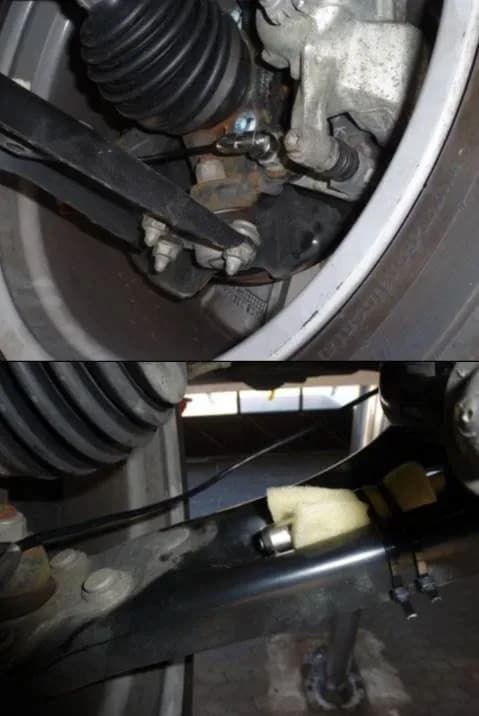
Also applies to
- Audi A3
- 2022–2025
- Audi A4
- 2021–2025
- Audi A4 allroad
- 2021–2025
- Audi A5
- 2021–2025
- Audi A6
- 2021–2025
- Audi A6 allroad
- 2021–2025
- Audi A7
- 2021–2025
- Audi A7 e
- 2021–2022
- Audi A8 L e
- 2021
- Audi e-tron
- 2021–2022
- Audi e-tron GT
- 2022–2025
- Audi e-tron Sportback
- 2021–2022
- Audi Q3
- 2021–2025
- Audi Q5
- 2021–2025
- Audi Q5 e
- 2021, 2023, 2024, 2025
- Audi Q7
- 2021–2025
- Audi Q8
- 2021–2025
- Audi R8
- 2021–2023
- Audi RS 3
- 2022–2025
- Audi RS 5
- 2021–2025
- Audi RS 6 Avant
- 2021–2025
- Audi RS 7
- 2021–2025
- Audi RS e-tron GT
- 2022–2024
- Audi RS Q8
- 2021–2025
- Audi S e-tron GT
- 2026
- Audi S3
- 2022–2025
- Audi S4
- 2021–2025
- Audi S5
- 2021–2025
- Audi S6
- 2021–2025
- Audi S7
- 2021–2025
- Audi S8
- 2021–2025
- Audi SQ5
- 2021–2025
- Audi SQ7
- 2021–2025
- Audi SQ8
- 2021–2025
- Audi TT
- 2021–2023
- Audi TT RS
- 2021–2022
- Audi TTS
- 2021–2023
▸ Show 31 more▾ Show fewer
Symptoms
Owners of affected Audi models may experience various noises emanating from the front of the vehicle. These include rattling, clacking, clicking, or hissing sounds. These Audi e-tron driveshaft noises are most noticeable when the vehicle is pulling away from a stop or when cornering.
Diagnosis / Trigger Conditions
Audi Technical Service Bulletin 37 24 21 2074822/1 outlines two primary cases for these noises:
- Case 1: External Damage. The boot of the wheel input shaft or drive shaft may be damaged by external factors such as stones, branches, or animals. This damage can allow water to enter, leading to corrosion and damage to the constant velocity joint of the wheel input shaft.
- Case 2: Internal Issue. In some instances, no visible external damage is found, yet the wheel input shaft or drive shaft is confirmed to be the source of the noise.
To diagnose the issue, technicians are advised to perform a road test to localize the complaint. They should observe if the noise or vibration changes when turning the steering wheel at different speeds. If the noise persists across various speeds, swapping components from a similar vehicle (ensuring not to swap left-to-right) may help isolate the problem. Specialized noise detection equipment, such as the PICO tool VAS 611015 or a Combiscope, can also be used to precisely identify the noise source. For detailed analysis with the VAS 611015, technicians should also refer to TSB 2070568, titled "00 Professional noise analysis with the VAS 611 015 PICO-NVH tool."
Repair Procedure Summary
The TSB 37 24 21 2074822/1 primarily focuses on the diagnostic process to accurately identify the root cause of the noises. Once the specific component causing the Audi e-tron driveshaft noises is identified through the prescribed diagnostic steps, the necessary repair, which may involve component replacement, can be performed. The bulletin emphasizes thorough diagnosis to avoid unnecessary part replacements.
Required Tools or Parts
For accurate diagnosis, technicians may utilize specific noise detection equipment:
- PICO tool VAS 611015
- Combiscope
Important Warnings
- A certain amount of play (vertical/horizontal) on the right gearbox flange in vehicles with a longitudinal gearbox is design-related and does not constitute a technical issue. This play should not be mistaken for a fault.
- For Case 1, where external influences cause damage to the boot and constant velocity joint, the repair is generally not covered by warranty.
- Audi reserves the right to charge back for parts that have been replaced without a valid reason.
Owner Action
If your 2023-2026 Audi is exhibiting rattling, clacking, clicking, or hissing noises from the front, especially when pulling away or cornering, it is recommended to contact an authorized Audi dealer. Reference Technical Service Bulletin 37 24 21 2074822/1 when discussing the issue with your service advisor to ensure proper diagnosis and resolution.
Source: NHTSA ID 11005884
Gallery
3 images
Frequently Asked Questions
- What causes rattling noises in my Audi's driveshaft?
- Rattling, clacking, clicking, or hissing noises from your Audi's front end, often referred to as Audi e-tron driveshaft noises, can stem from two main causes: external damage to the wheel input shaft/driveshaft boot allowing water to damage the constant velocity joint, or an internal issue with the shaft itself without visible external damage.
- Is Audi TSB 37 24 21 2074822/1 related to squeaking noises?
- While TSB 37 24 21 2074822/1 primarily addresses rattling, clacking, clicking, and hissing noises, it does refer to TSB 2023187, which covers "40 Squeaking noises when steering or maneuvering." So, while not its main focus, there is a related bulletin for squeaking sounds.
- Will my Audi driveshaft repair be covered under warranty?
- Warranty coverage depends on the cause of the issue. If the damage to the wheel input shaft or driveshaft boot is due to external influences (like stones or animal damage), it is generally not covered under warranty. However, if the noise is due to an internal component issue without external damage, it may be covered under warranty according to SAGA/APOS procedures.
- What is the PICO tool VAS 611015 used for in Audi diagnosis?
- The PICO tool VAS 611015, along with a Combiscope, is specialized noise detection equipment used by Audi technicians to accurately pinpoint the source of rattling, clicking, or other noises coming from the wheel input shaft or driveshaft. This helps in precise diagnosis as outlined in TSB 37 24 21 2074822/1 and TSB 2070568.
Related Articles
Should 2023 Audi e-tron Owners Worry? Recall & TSB Roundup
The 2023 Audi e-tron faces significant safety concerns, including recalls for potential brake pedal detachment and charging cable overheating. Owners have also reported serious issues like unintended acceleration and electrical system malfunctions. This guide covers all known problems and solutions.
2023 Audi e-tron Brake Pedal Recall
Audi has issued a recall (NHTSA ID: 26V240000, Audi Recall 46P7) for certain 2019-2024 E-Tron and 2020-2024 E-Tron Sportback vehicles, including the 2023 Audi e-tron. The recall addresses a potential issue where the brake pedal may detach from the brake booster, leading to a loss of brake function.
2015-2027 Audi Noise Diagnosis with Frequency Analysis App TSB
Audi has released Technical Service Bulletin 2051095/11 detailing the Audi Frequency Analysis app. This app helps technicians diagnose noise complaints more precisely across 2015-2027 Audi models. Learn how the app works, where to download it, and its features for effective vehicle noise analysis.
2023 Audi e-tron AC/DC Charging Not Possible TSB
This manufacturer communication (NHTSA ID 11031035) provides critical information for 2023 Audi e-tron owners facing issues with AC/DC charging. It specifically highlights problems linked to software version 00C6: 0093/3119, which can prevent the vehicle from charging.
2023-2025 Audi Rear Seat Reminder Message TSB 2074943/2
Audi Technical Service Bulletin 2074943/2 explains the instrument cluster message 'Please check rear seats and be aware of door safelock' in various 2023-2025 Audi models. This informational TSB details the rear occupant detection system designed to prevent children and pets from being left in…
Leave a comment
Comments are moderated and may take a moment to appear. Only your first name and the initial of your last name are shown publicly.
Comments
Be the first to comment.