2021-2026 Toyota Vehicles Musty Odor Remediation TSB
This Toyota Technical Service Bulletin (T-SB-0055-24 Rev2) addresses musty odors in 2021-2026 Toyota vehicles resulting from water intrusion. It outlines a dealer-performed remediation process, including inspection, cleaning, and ozone treatment.
 Marcus Weber2021 Toyota Camry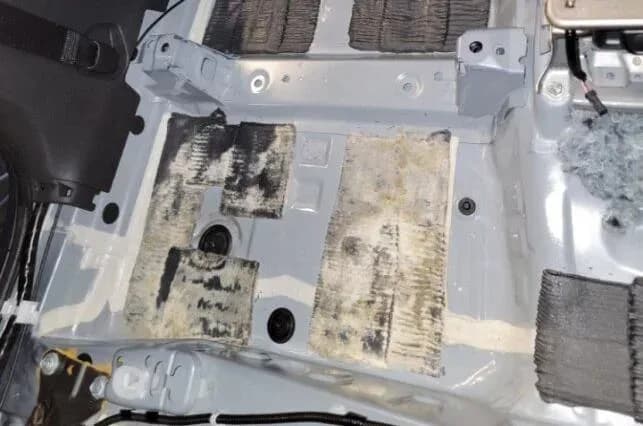
Şu araçlar için de geçerli
- Toyota 4Runner
- 2021–2026
- Toyota Avalon
- 2021–2022
- Toyota bZ
- 2026
- Toyota bZ4X
- 2023–2025
- Toyota C-HR
- 2021–2022
- Toyota Camry
- 2022–2024
- Toyota Corolla
- 2021–2026
- Toyota Corolla Cross
- 2022–2026
- Toyota Crown
- 2023–2026
- Toyota Crown Signia
- 2025–2026
- Toyota GR Corolla
- 2023–2026
- Toyota Grand Highlander
- 2024–2026
- Toyota Highlander
- 2021–2026
- Toyota Land Cruiser
- 2021–2023
- Toyota Mirai
- 2021–2026
- Toyota Prius
- 2021–2026
- Toyota RAV4
- 2021–2025
- Toyota Sequoia
- 2021–2022
- Toyota Supra
- 2021–2026
- Toyota Tacoma
- 2021–2026
- Toyota Tundra
- 2021–2026
- Toyota Yaris
- 2023–2026
▸ 16 tane daha göster▾ Daha az göster
Toyota Technical Service Bulletin (TSB) T-SB-0055-24 Rev2, issued on June 21, 2024, addresses a common concern for owners of certain 2021-2026 Toyota vehicles: a persistent musty odor in the cabin. This condition typically arises from water intrusion into the vehicle's interior. The TSB provides comprehensive guidelines for dealers to perform an odor remediation process.
This bulletin was revised on January 07, 2026 (Rev2) to expand its applicability to include additional 2025 and 2026 model year vehicles. An earlier revision on July 29, 2024 (Rev1) updated the reassembly procedure section.
Symptoms
Owners may notice a distinct musty odor inside their 2021-2026 Toyota Camry or other affected models. This odor is a direct result of water intrusion, which can lead to the growth of organic matter within the vehicle's interior components.
Important Warnings
Toyota has issued several critical warnings regarding this odor remediation process:
- The procedures in this service bulletin are NOT applicable to vehicles that have undergone severe freshwater or saltwater intrusion, such as those involved in floods, storms, or typhoons.
- This bulletin is NOT for general HVAC odor concerns; it specifically addresses odors related to water intrusion.
- Before starting any remediation, the source of the water intrusion MUST be identified and repaired. This bulletin does NOT apply if the water leak has not been fixed.
- Soft parts, including floor mats, carpet, carpet padding, jute padding, insulated pads, Styrofoam pads, and the dash panel insulator assembly, that have contacted moisture MUST be removed and replaced with NEW parts. They should NOT be reused.
- Hard parts, such as plastic garnishes, trim panels, scuff plates, kick panels, center consoles, and plastic ductwork, do NOT need to be replaced.
- If the dash panel insulator assembly requires replacement, it MUST be removed and replaced with a NEW part BEFORE vehicle remediation. Do NOT attempt to cut out affected areas or treat this assembly.
- A cabin air filter should NOT be installed in the HVAC system during the remediation process.
- A NEW high-performance charcoal filter should be installed AFTER the entire remediation process is completed.
- HV or EV batteries must be removed prior to servicing or cleaning areas where they are present or exposed, following all recommended safety procedures.
- Technicians must ALWAYS use proper Personal Protective Equipment (PPE) as per current EPA guidelines.
Diagnosis / Trigger Conditions
The primary condition triggering this service is the presence of a musty odor caused by water intrusion. The diagnostic process involves:
- Water Leak Source Identification: The initial and most crucial step is to identify and repair the source of the water leak. The TSB emphasizes that remediation cannot proceed until the leak is fixed.
- Interior Inspection: A thorough inspection of the entire interior floorboard area is required to identify all affected areas. This includes checking soft parts for organic matter growth or staining, as well as hard parts.
- Dash Panel Insulator Inspection: The dash panel insulator assembly, located along the base of the instrument panel and floorboard area, must be inspected on both the driver and passenger sides for any signs of water contact or organic matter growth.
Repair Procedure Summary
The odor remediation process is a multi-step procedure performed by a Toyota dealer:
- Preparation: Technicians apply two layers of blue painter's tape to all door opening thresholds (door sills, B and C pillars) to protect painted surfaces during interior component removal and reinstallation.
- Disassembly: The cabin air filter is removed and discarded. All interior components covering the affected floor area are removed. This may include front and rear seat assemblies and lower trim panels. If organic growth is present only in the trunk or cabin, only those specific components are removed. If the dash panel insulator assembly is affected, it is removed and replaced with a new part before proceeding with remediation.
- Cleaning Procedure: Any loose debris is removed from the floor pan. The floor pan and other non-replaced components are then sprayed and scrubbed with a heavy-duty cleaner (such as Spray Nine) to remove stains. Following this, a 3M™ Quat Disinfectant product is sprayed and allowed to soak for at least 30 minutes, ensuring the surface remains visibly wet. After soaking, all moisture is carefully wiped dry.
- Clearance Test (Optional): While not mandatory, a clearance test can be performed if the dealer or customer desires. Options include using Inspector Lab or Mold Inspection Network services.
- Reassembly: The vehicle interior is reassembled using treated hard parts and NEW soft parts. If a clearance test was conducted, reassembly occurs only after successful test results are received. A NEW high-performance charcoal filter is installed, and vehicle operation is confirmed, with any Diagnostic Trouble Codes (DTCs) cleared.
- Ozone Machine Treatment: After reassembly, the vehicle's A/C is set to recirculation mode. An ozone machine is run for one hour, then turned off, and the vehicle is allowed to air out for two hours.
Required Tools or Parts
Specific tools and parts are required for this remediation process:
- High Performance Charcoal Filter (QTY 1)
- Insulator Assy., Dash Panel (QTY 1) (part number determined from Parts Catalog)
- 3M™ (or Equivalent) N95 Certified (or Higher) NIOSH Approved Respirator
- Safety Goggles/Eye Protection
- Protective Gloves
- 3M™ Quat Disinfectant Cleaner Concentrate 5 (QTY 1)
- Heavy Duty Cleaner (like Spray Nine or similar) (QTY 1)
- Pump Spray Bottle (QTY 1)
- Scrub Brush (QTY 1)
- Painter's Tape (QTY 1)
- Ozone Machine (or Equivalent) (Part Number: RBO521011)
Warranty Information
This odor remediation repair, identified by OP Code 743991, is covered under the Toyota Basic Warranty. This warranty is valid for 36 months or 36,000 miles, whichever occurs first, from the vehicle's in-service date. The warranty application is limited to instances of the specific condition described in this bulletin.
Owner Action
If your 2021-2026 Toyota Camry or other applicable Toyota model exhibits a musty odor, particularly after any incident involving water intrusion, it is recommended to contact your authorized Toyota dealer. They can diagnose the source of the water leak and perform the necessary odor remediation process as outlined in TSB T-SB-0055-24 Rev2. Be sure to mention any previous water exposure. This repair, including addressing the Toyota Camry musty odor, is covered under the Toyota Basic Warranty if your vehicle is within the specified coverage period.
NHTSA ID: 11028712
Galeri
10 görsel
Frequently Asked Questions
- What causes a musty odor in my 2021-2026 Toyota Camry?
- A musty odor in your 2021-2026 Toyota Camry is typically caused by water intrusion into the vehicle's interior, leading to organic matter growth as described in Toyota TSB T-SB-0055-24 Rev2.
- Is the odor remediation process covered by warranty?
- Yes, the Odor Remediation Process (OP Code 743991) is covered under the Toyota Basic Warranty for 36 months or 36,000 miles from the vehicle's in-service date, provided the condition is as specified in TSB T-SB-0055-24 Rev2.
- What parts are replaced during the odor remediation?
- Soft parts like floor mats, carpet, insulated pads, and the dash panel insulator assembly that have come into contact with moisture must be replaced with new parts. A new high-performance charcoal filter is also installed as part of the remediation for the Toyota Camry musty odor.
- Can I perform the odor remediation myself?
- Toyota recommends that the Odor Remediation Process be performed by an authorized dealer due to the specialized tools, materials (like 3M Quat Disinfectant and Ozone Machine RBO521011), and procedures required to ensure proper and safe remediation.
Related Articles
2021 Toyota Camry Health Check: Common TSBs and Owner Concerns
While the 2021 Toyota Camry has no recalls or owner complaints, several manufacturer service bulletins address potential issues. Key concerns include engine coolant leaks, transmission whine, and Malfunction Indicator Lamp (MIL) illumination with reduced engine power, especially in cold weather.
2021 Toyota Camry Coolant Leak Customer Support Program
Toyota's Customer Support Program 24TE04 addresses a potential flow shut-off valve coolant leak in certain 2019-2021 Avalon, Camry, Corolla, Highlander, RAV4, Sienna, and Venza models. This leak can trigger an 'Engine Maintenance Required' warning or affect A/C function. Toyota will cover repairs…
2018-2021 Toyota Engine Maintenance Required TSB P268111 P268115
Toyota has issued Technical Service Bulletin T-SB-0112-24 Rev2 for certain 2018-2021 Toyota models that may display an "Engine Maintenance Required" message along with Diagnostic Trouble Codes P268111 or P268115. This bulletin outlines the procedure to address issues with the Engine Coolant Bypass…
2021-2022 Toyota MIL ON with DTCs P01201C, P210015
Toyota T-SB-0005-24 Rev2 addresses Malfunction Indicator Lamp (MIL) illumination and reduced engine power in 2021-2022 Toyota Avalon, Camry, and RAV4 vehicles. The issue is linked to specific throttle body DTCs (P01201C, P210015, P210019, P211172) occurring in freezing temperatures, requiring ECM…
2021-2022 Toyota MIL ON with DTCs P01201C, P210015
A Technical Service Bulletin (T-SB-0005-24) from Toyota addresses a condition where the Malfunction Indicator Lamp (MIL) illuminates and reduced engine power is experienced in 2021-2022 Toyota Avalon, Camry, and RAV4 vehicles. This issue is linked to specific Diagnostic Trouble Codes (DTCs)…
Yorum bırakın
Yorumlar moderasyondan geçer ve görünmesi biraz zaman alabilir. Sadece adınız ve soyadınızın baş harfi herkese açık olarak gösterilir.
Yorumlar
İlk yorum sizden olsun.