2023-2025 Toyota Vehicles Iron Particle Rust Contamination Repair
Toyota has issued Technical Service Bulletin T-SB-0062-23 Rev2 addressing iron particle rust contamination on the paint surfaces of 2023-2025 Toyota vehicles. This bulletin outlines a specific cleaning procedure to remove small, red or brown particles caused by airborne industrial debris.
 David Chen2025 Toyota Camry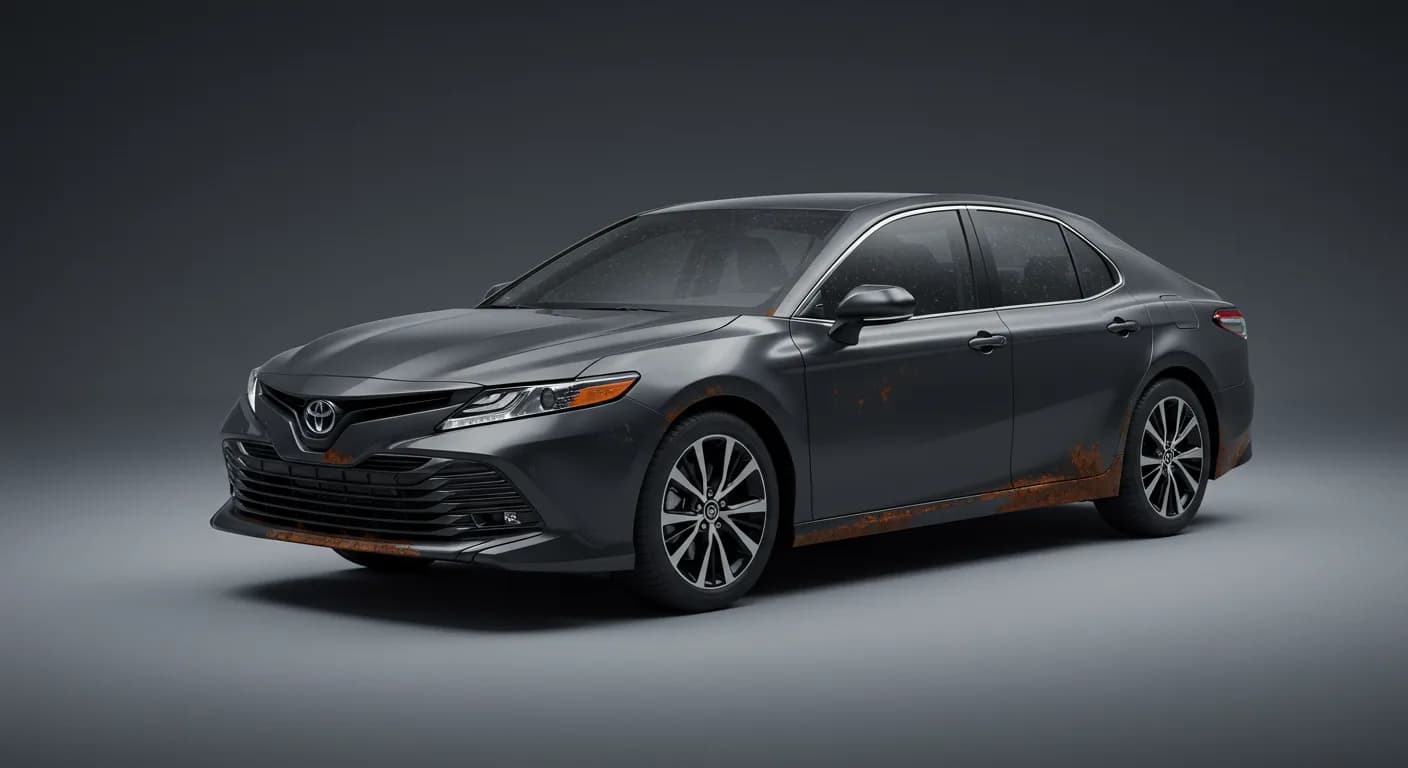
Si applica anche a
- Toyota 4Runner
- 2021–2025
- Toyota Avalon
- 2021–2022
- Toyota bZ4X
- 2023–2025
- Toyota C-HR
- 2021–2022
- Toyota Camry
- 2021–2024
- Toyota Corolla
- 2021–2025
- Toyota Corolla Cross
- 2022–2025
- Toyota Crown
- 2023–2025
- Toyota Crown Signia
- 2025
- Toyota GR Corolla
- 2023–2025
- Toyota Grand Highlander
- 2024–2025
- Toyota Highlander
- 2021–2025
- Toyota Land Cruiser
- 2021–2023
- Toyota Mirai
- 2021–2025
- Toyota Prius
- 2021–2025
- Toyota RAV4
- 2021–2025
- Toyota Sequoia
- 2021–2022
- Toyota Supra
- 2021–2025
- Toyota Tacoma
- 2021–2025
- Toyota Tundra
- 2021–2025
- Toyota Venza
- 2021–2025
- Toyota Yaris
- 2023
▸ Mostra altri 16▾ Mostra meno
Symptoms of Iron Particle Rust Contamination
Vehicles may experience contamination from airborne iron particles originating from sources like railroad tracks, train wheels, heavy machinery, grinding, or welding. This contamination manifests as "small, red or brown particles on the paint surface." While these particles can be difficult to spot on dark-colored paint, they can often be easily felt by brushing a hand across horizontal body surfaces such as the hood, roof, or deck lid. If you notice this on your Toyota Camry iron particle rust may be the cause.
Important Warnings and Precautions
Toyota outlines several critical warnings for both technicians and owners regarding the iron particle rust contamination repair:
- Corrosive Material: Meguiar's D2002 Iron Removing Spray Clay (or equivalent) is a corrosive material. Appropriate personal protection equipment (PPE) MUST be worn to protect individuals performing the contamination removal procedure. Always refer to the precautions on the product label prior to use.
- Environmental Conditions: Under NO circumstances should contamination removal be performed in direct sunlight or allowed to dry on vehicle surfaces. Doing so may result in staining of plastic, rubber, or painted parts.
- Avoid Polishing or Buffing: Because of the abrasive nature of these small iron particles, polishing or buffing procedures should NOT be attempted to repair the paint surface of an affected vehicle. This will result in further paint damage and detract from the vehicle's appearance.
- Disposal: Consult local or state regulations regarding the handling, use, and disposal of Meguiar's D2002 Iron Removing Spray Clay (or equivalent) prior to use.
Repair Procedure Summary
The repair for iron particle rust contamination involves a multi-step cleaning process:
- Preparation: Move the vehicle out of direct sunlight to prevent premature drying of cleaning solutions.
- Initial Rinse & Wash: Rinse the vehicle with cool water, then wash it with a liquid car wash detergent. Rinse again thoroughly with cool water.
- Cleaner Dilution: Dilute the Meguiar's D2002 Iron Removing Spray Clay (or equivalent) concentrate with water to achieve a 1:8 ratio for painted surfaces. It's crucial to use the recommended dilution ratio when applying to any other surface.
- Application & Agitation: Apply the diluted cleaner evenly over the affected areas. Use an appropriate mitt or sponge to agitate the surface, ensuring thorough contact with the contaminants.
- Final Rinse & Inspection: Thoroughly rinse the vehicle with cool water. Carefully inspect the vehicle both visually and by feel to ensure all iron particles have been removed. If necessary, repeat the wash several times to achieve complete removal.
- Finishing: Dry the vehicle with a soft terry cloth towel. For a high-gloss finish, apply a non-abrasive, non-silicone glaze.
Required Tools or Parts
To perform the iron particle rust contamination repair, the following tools and materials are required:
- Meguiar's D2002 Iron Removing Spray Clay (or Equivalent) - Quantity: 1
- Rubber Gloves, Aprons, Boots - Quantity: As Needed
- Eye Protection - Quantity: As Needed
- Sponges or Wash Mitts - Quantity: As Needed
- Pail or Bucket - Quantity: As Needed
Owner Action
If you notice "small, red or brown particles on the paint surface" of your 2023-2025 Toyota vehicle, indicating iron particle rust contamination, you can follow the detailed repair procedure outlined in this bulletin. However, due to the corrosive nature of the cleaning product and the specific steps involved, some owners may prefer to have this service performed by a qualified technician. This repair is generally considered a maintenance item and is "Not Applicable to Warranty."
This bulletin, T-SB-0062-23 Rev2, supersedes Service Bulletin No. TS-PA005-04. The information has been updated to include all 2025 model year Toyota vehicles, including the 2025 RAV4 PHV, and specifically addresses the Toyota Camry iron particle rust issue among others.
Source: NHTSA ID 11012727
Frequently Asked Questions
- What causes iron particle rust on my Toyota's paint?
- Iron particle rust contamination on your Toyota's paint is caused by airborne iron particles from sources like railroad tracks, train wheels, heavy machinery, grinding, or welding, which settle on the vehicle's surface.
- Can I remove iron particle rust contamination myself?
- Yes, you can remove iron particle rust contamination yourself by following the detailed cleaning procedure outlined in Toyota TSB T-SB-0062-23 Rev2. However, it requires specific materials like Meguiar's D2002 Iron Removing Spray Clay and adherence to safety precautions.
- What should I avoid when dealing with Toyota Camry iron particle rust?
- When addressing Toyota Camry iron particle rust, you should avoid performing the cleaning in direct sunlight, allowing the cleaning solution to dry on the vehicle, and attempting to polish or buff the affected paint, as these actions can cause further damage or staining.
- Is the iron particle rust repair covered under warranty?
- According to Toyota Technical Service Bulletin T-SB-0062-23 Rev2, the iron particle rust contamination repair is listed as "Not Applicable to Warranty," meaning it is typically not covered under the vehicle's standard warranty.
Related Articles
2025 Toyota Camry Health Check: Service Bulletins
The 2025 Toyota Camry shows a strong reliability outlook with no recalls or owner complaints reported to NHTSA. This profile details manufacturer service bulletins addressing smart key immobilizer resets, protective film removal, and iron particle rust contamination.
2023-2025 Toyota Camry Smart Key Immobilizer Reset TSB
This Technical Service Bulletin (T-SB-0013-24 Rev1) from Toyota outlines the procedures for performing a Smart Key Immobilizer Reset, adding new keys, and permanently erasing lost or stolen keys for a wide range of 2023-2025 Toyota models, including the Camry.
2023-2025 Toyota Rapgard Protective Film Removal TSB
Toyota has issued T-SB-0061-23 Rev2 detailing the proper procedure for removing Rapgard™ protective film from new 2023-2025 vehicles. This film protects painted surfaces during transport but must be removed within 90 days to prevent issues. Learn the steps and important warnings.
2024 Toyota Camry Health Check: Engine Leaks and Service Bulletins
The 2024 Toyota Camry has no recalls or owner complaints reported to NHTSA, but several service bulletins address potential issues like engine oil leaks, HVAC blower noise, and specific diagnostic trouble codes. This guide details common concerns and what owners should know.
2021 Toyota Camry Health Check: Common TSBs and Owner Concerns
While the 2021 Toyota Camry has no recalls or owner complaints, several manufacturer service bulletins address potential issues. Key concerns include engine coolant leaks, transmission whine, and Malfunction Indicator Lamp (MIL) illumination with reduced engine power, especially in cold weather.
Leave a comment
Comments are moderated and may take a moment to appear. Only your first name and the initial of your last name are shown publicly.
Comments
Be the first to comment.