2023-2026 Jeep, Ram EVAP System Module Parts QIR
Mopar has issued a Quality Inspection Request (ID 108461) for specific Evaporative System Integrity Module parts. This communication instructs dealers to identify and return suspect stock of part numbers 68403000AA, 68403001AA, 68403002AA, and 68403003AA, particularly those packaged before…
 Marcus Weber2025 Jeep Wrangler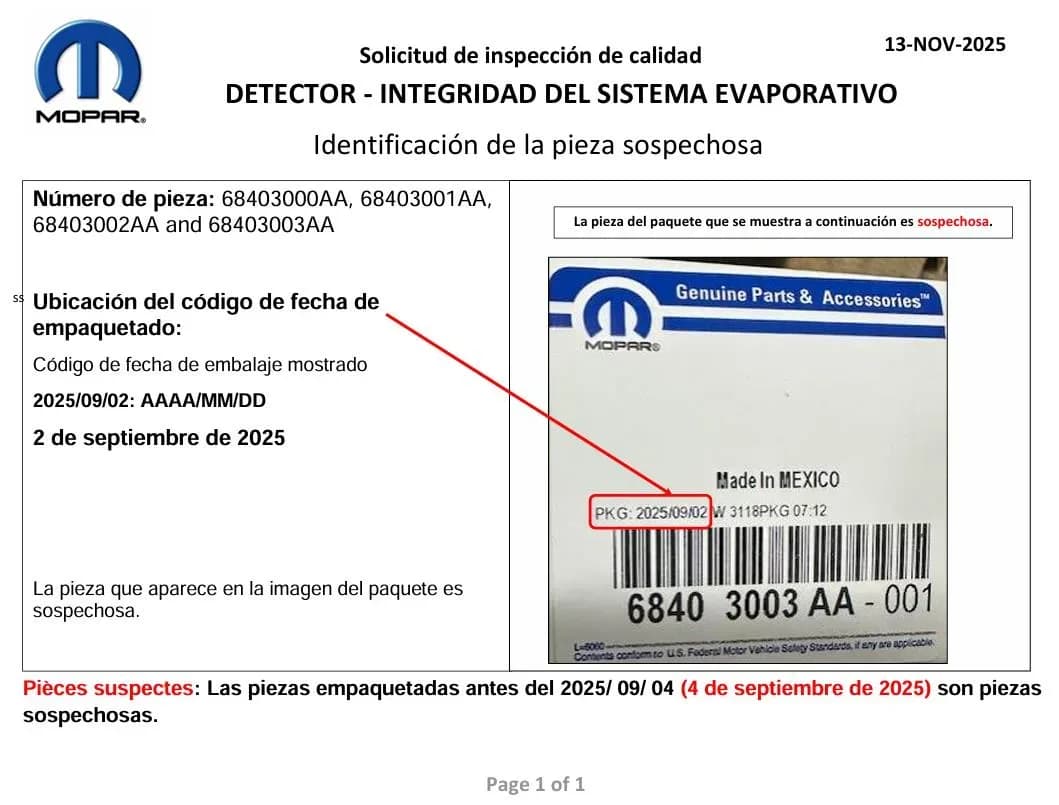
Gilt auch für
- Jeep Cherokee
- 2023, 2026
- Jeep Compass
- 2023–2026
- Jeep Gladiator
- 2023–2026
- Jeep Grand Wagoneer
- 2023–2026
- Jeep Renegade
- 2023–2026
- Jeep Wagoneer
- 2023–2025
- Jeep Wrangler
- 2023, 2024, 2026
- Dodge Challenger
- 2023
- Dodge Charger
- 2023–2026
- Ram 1500
- 2023–2026
- Ram 2500
- 2023–2026
- Ram 3500
- 2023–2026
- Ram 4500
- 2023–2026
- Ram 5500
- 2023–2026
▸ 8 weitere anzeigen▾ Weniger anzeigen
Mopar has issued a critical Quality Inspection Request (QIR), identified as Communication ID 108461 (NHTSA ID 11025722), concerning specific Evaporative System Integrity Module parts. This communication, dated November 13, 2025, is a proactive measure directed at dealerships that may have these suspect components in their inventory or currently in transit. The primary objective of this QIR is to ensure that only verified, high-quality components are utilized for service and repairs across various 2023-2026 Jeep and Ram models. This includes popular vehicles such as the Jeep Wrangler, Jeep Compass, Jeep Gladiator, Ram 1500, Ram 2500, Ram 3500, Ram 4500, Ram 5500, and Dodge Charger, all of which could potentially use the affected Jeep Wrangler evaporative system integrity module or its variants. The instruction is clear: identify and return all suspect stock to prevent future issues.
Understanding the Evaporative System Integrity Module
The Evaporative Emission Control (EVAP) system is a vital component in modern vehicles, designed to prevent harmful fuel vapors from escaping into the atmosphere. At the core of this system is the DETECTOR - EVAPORATIVE SYSTEM INTEGRITY MODULE, often referred to simply as the EVAP module. This sophisticated component continuously monitors the fuel tank, fuel lines, and associated components for any leaks or breaches in the system's integrity. By maintaining a sealed environment, the EVAP module ensures that volatile organic compounds (VOCs) from gasoline do not evaporate and contribute to air pollution.
A properly functioning EVAP module is essential for several reasons. Firstly, it helps vehicles comply with strict environmental regulations by significantly reducing hydrocarbon emissions. Secondly, it contributes to optimal fuel efficiency by preventing the loss of fuel vapors. Thirdly, a fault in this module can trigger the illumination of the "Check Engine" light on the dashboard, indicating a potential emissions system problem. If a faulty module is installed, it could lead to persistent diagnostic trouble codes (DTCs), difficulty passing mandatory state emissions inspections, and potentially even a noticeable fuel odor. Therefore, ensuring the integrity of the DETECTOR - EVAPORATIVE SYSTEM INTEGRITY MODULE is paramount for both environmental protection and vehicle reliability.
Identifying Suspect Parts
This Quality Inspection Request specifically targets four distinct part numbers for the Evaporative System Integrity Module. Dealerships are under strict instructions to meticulously check their current stock, including any parts that have recently arrived or are expected to arrive, for these particular components. The identification of suspect parts hinges on a critical detail: the packaging date.
The specific part numbers identified in this QIR are:
- 68403000AA
- 68403001AA
- 68403002AA
- 68403003AA
The crucial factor for identifying a suspect part among these numbers is its packaging date code. Any part from the listed numbers that was packaged before September 4, 2025 (specifically, any date prior to 2025/09/04), is to be considered suspect and must not be used. This date code is prominently displayed on the part's packaging label. It is typically marked with "PKG" followed by the date in a YYYY/MM/DD format. For instance, a label showing "PKG: 2025/09/02" would clearly indicate a suspect part that needs to be returned. Dealership personnel are required to carefully examine the packaging of all relevant stock to determine if it falls within this suspect date range, ensuring no non-compliant parts are inadvertently used.
Dealer Actions and Part Returns
Mopar's Communication ID 108461 outlines a precise and mandatory protocol for dealerships regarding the handling of these suspect Evaporative System Integrity Module parts. Dealerships that have been identified as having these components in their current inventory or in transit are required to take immediate and decisive action to comply with the QIR.
The primary directive is the prompt return of all suspect parts to the designated facing depot. This return process is standardized and must be executed using "Return Code 02." This specific code ensures proper tracking and processing of the returned components. The deadline for completing these returns is firm: December 4, 2025. Furthermore, dealers are explicitly instructed to return any open orders for these specific part numbers that are currently in process, preventing the delivery of additional suspect stock. To acquire replacement parts that meet Mopar's quality standards, dealers must initiate new orders. This ensures that any new components received are from a verified production batch. For any inquiries or clarifications regarding this return procedure, dealerships are directed to contact [email protected] via email. This comprehensive and proactive measure is designed to completely remove any potentially faulty DETECTOR - EVAPORATIVE SYSTEM INTEGRITY MODULE components from the supply chain, safeguarding both dealer operations and customer satisfaction.
Why This Matters to Owners
While this Quality Inspection Request (QIR) is primarily a dealer-facing communication, its implications directly benefit owners of affected 2023-2026 Jeep and Ram vehicles. The proactive identification and mandatory return of suspect Evaporative System Integrity Module parts mean that if your vehicle ever requires a replacement of this critical component, the part installed by a certified Mopar dealership will be guaranteed to be free from the quality concern identified in this communication. This significantly reduces the risk of encountering future problems related to the EVAP system, such as an unexpected "Check Engine" light illumination, difficulty passing required emissions inspections, or even a noticeable fuel smell emanating from the vehicle.
This QIR is a testament to Mopar's commitment to maintaining high quality standards for its parts and ultimately, for the vehicles on the road. It serves as a preventative measure to ensure the integrity of the parts supply chain, rather than a recall for vehicles already in customer hands. Therefore, if your vehicle is currently operating without any EVAP system-related symptoms, there is no immediate action required on your part. However, if you do experience any issues that might point to an EVAP system malfunction, such as a persistent Check Engine light, it is always recommended to have your vehicle thoroughly inspected by a certified Mopar service center. This QIR ensures that any necessary repairs involving the Jeep Wrangler evaporative system integrity module or similar components in other affected models, including the Ram 1500, Jeep Compass, and Dodge Charger, will be performed using only validated and reliable parts, providing peace of mind and ensuring long-term vehicle performance and compliance.
Important Warnings for Dealers
Mopar has issued explicit and non-negotiable instructions to dealers to prevent the installation of any suspect Evaporative System Integrity Module parts. These warnings are critical for maintaining quality control and avoiding potential issues for customers. Dealers are strictly advised to adhere to the following directives:
- "Please check and return suspect stock of part numbers:68403000AA, 68403001AA, 68403002AA and 68403003AA." This emphasizes the comprehensive nature of the inspection and return.
- "Please return all parts back to your facing depot using Return Code 02, before 4th December 2025." This sets a clear deadline and specifies the required return procedure.
- "Return any open orders in process too." This ensures that even parts awaiting delivery are intercepted and returned if they fall within the suspect category.
These directives underscore the urgency and importance of this Quality Inspection Request. Dealers must not install any DETECTOR - EVAPORATIVE SYSTEM INTEGRITY MODULE parts that were packaged before September 4, 2025, to uphold Mopar's quality standards and ensure customer satisfaction.
NHTSA ID: 11025722
Galerie
4 Bilder
Frequently Asked Questions
- What is Mopar Communication ID 108461 about?
- Mopar Communication ID 108461 is a Quality Inspection Request (QIR) issued to dealerships concerning specific Evaporative System Integrity Module parts. It instructs dealers to identify and return suspect stock to ensure only quality components are used for repairs in 2023-2026 Jeep and Ram vehicles.
- Which specific Evaporative System Integrity Module parts are affected?
- The affected part numbers for the DETECTOR - EVAPORATIVE SYSTEM INTEGRITY MODULE are 68403000AA, 68403001AA, 68403002AA, and 68403003AA. Parts with these numbers are considered suspect if their packaging date code indicates they were packaged before September 4, 2025 (2025/09/04).
- How can dealers identify suspect Evaporative System Integrity Module parts?
- Dealers identify suspect parts by checking the packaging date code, typically marked as "PKG" followed by YYYY/MM/DD, on the part's label. Any of the specified part numbers packaged before 2025/09/04 are considered suspect and must be returned using Return Code 02 by December 4, 2025.
- What should owners do if they are concerned about their vehicle's EVAP system?
- This QIR is a dealer-facing quality control measure and not a recall for vehicles already on the road. If your 2023-2026 Jeep or Ram vehicle, including the Jeep Wrangler evaporative system integrity module, is operating normally, no immediate action is required. However, if you experience any EVAP system-related symptoms like a persistent Check Engine light, it is recommended to have your vehicle inspected by a certified Mopar service center.
Related Articles
2025 Jeep Wrangler Health Check: Recalls and Bulletins
The 2025 Jeep Wrangler faces a single recall related to its Tire Pressure Monitoring System (TPMS) warning light, alongside a series of manufacturer service bulletins addressing issues from engine misfires and transmission warnings to driver assist system faults and electrical glitches. This…
2024-2026 Jeep/RAM/Dodge Cylinder Head Cover Bolt Quality Check
A manufacturer communication (ID 111406) addresses a quality inspection request for cylinder head cover bolts, part number 04893799AJ, for various 2024-2026 Jeep, RAM, and Dodge models. Dealers are instructed to identify and return suspect bolts with a chamfered flange by April 29, 2026.
2025-2026 Jeep/Ram Radio Stays On After Ignition Off
If your 2025-2026 Jeep, Ram, or Chrysler vehicle's radio stays on after you turn off the ignition or open the door, it's likely due to a configurable 'Radio Off Delay' feature, not a defect. This TSB (S268A000011) provides steps to adjust the setting.
2025-2026 Jeep Wrangler Seat EZ Entry Inoperable TSB
This manufacturer communication, TSB S2623000013, details diagnostic and repair steps for 2025-2026 Jeep Wrangler models experiencing an inoperable EZ Entry seat or one that doesn't slide forward. It focuses on inspecting and potentially replacing the EZ Entry cable (68715023AA).
2025 Jeep Wrangler Heated Steering Wheel Not Working TSB
Owners of 2025 Jeep Wrangler vehicles may experience their heated steering wheel not getting hot enough or not working at all. Technical Service Bulletin (TSB) 08-122-26 provides a software update for the Comfort Seat Wheel Module (CSWM) to resolve this issue.
Leave a comment
Comments are moderated and may take a moment to appear. Only your first name and the initial of your last name are shown publicly.
Comments
Be the first to comment.