2023-2024 Audi High-Voltage Battery Energy Content TSB
Audi Technical Service Bulletin 2074808/3 provides guidance for dealerships on how to determine the energy content of high-voltage lithium-ion batteries in 2023-2024 Audi models. This TSB helps address customer concerns about decreased electrical range or increased petrol consumption and outlines…
 Sarah Mitchell2023 Audi e-tron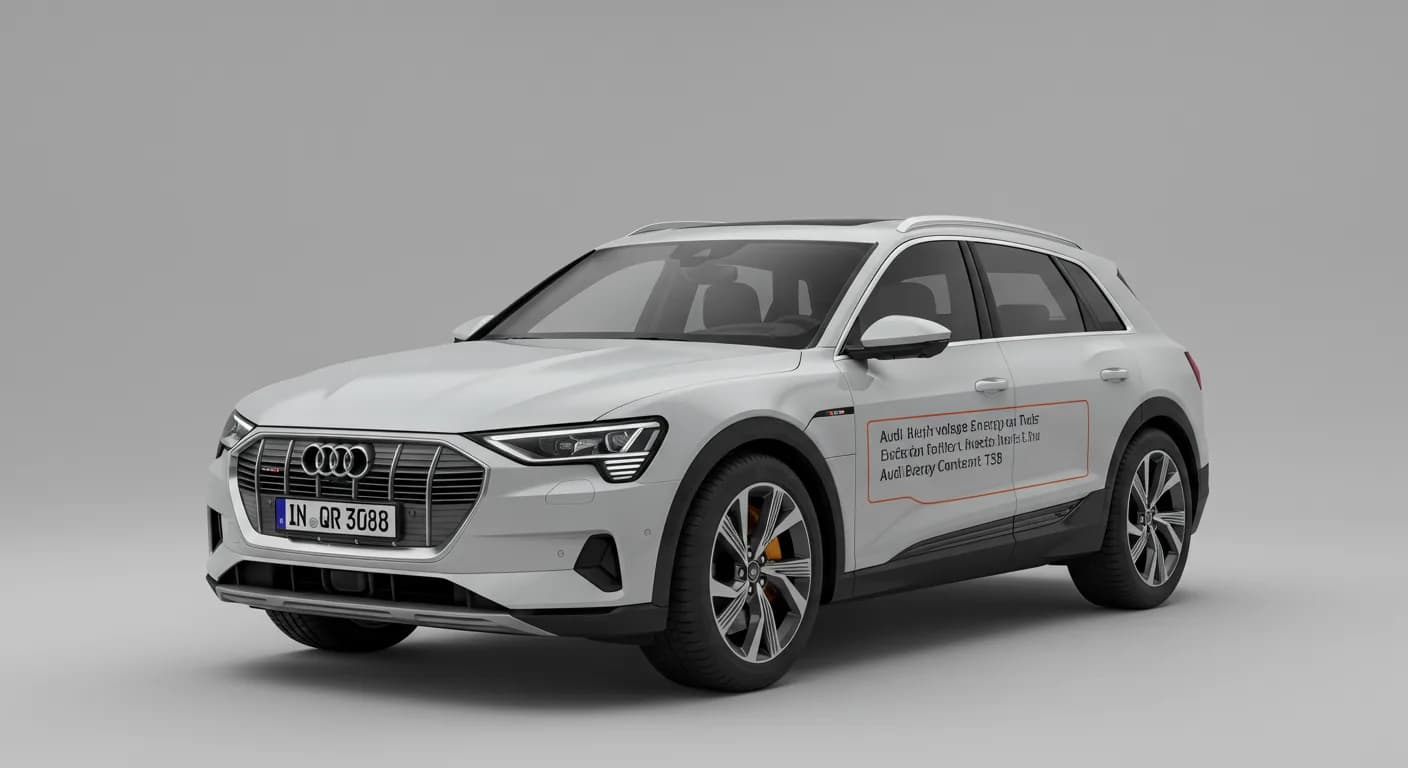
Gilt auch für
- Audi A3
- 2022–2024
- Audi A4
- 2021–2024
- Audi A4 allroad
- 2021–2024
- Audi A5
- 2021–2024
- Audi A6
- 2021–2024
- Audi A6 allroad
- 2021–2024
- Audi A7
- 2021–2024
- Audi A7 e
- 2021–2022
- Audi A8 L e
- 2021
- Audi e-tron
- 2021–2022
- Audi e-tron GT
- 2022–2024
- Audi e-tron Sportback
- 2021–2022
- Audi Q3
- 2021–2024
- Audi Q5
- 2021–2024
- Audi Q5 e
- 2021, 2023, 2024
- Audi Q7
- 2021–2024
- Audi Q8
- 2021–2024
- Audi R8
- 2021–2023
- Audi RS 3
- 2022–2024
- Audi RS 5
- 2021–2024
- Audi RS 6 Avant
- 2021–2024
- Audi RS 7
- 2021–2024
- Audi RS e-tron GT
- 2022–2024
- Audi RS Q8
- 2021–2024
- Audi S3
- 2022–2024
- Audi S4
- 2021–2024
- Audi S5
- 2021–2024
- Audi S6
- 2021–2024
- Audi S7
- 2021–2024
- Audi S8
- 2021–2024
- Audi SQ5
- 2021–2024
- Audi SQ7
- 2021–2024
- Audi SQ8
- 2021–2024
- Audi TT
- 2021–2023
- Audi TT RS
- 2021–2022
- Audi TTS
- 2021–2023
▸ 30 weitere anzeigen▾ Weniger anzeigen
Audi has issued Technical Service Bulletin (TSB) 2074808/3 to provide dealerships with comprehensive information on determining the energy content of lithium-ion high-voltage batteries. This TSB is crucial for addressing customer concerns related to battery performance in 2023-2024 Audi models, specifically those equipped with an electric drive motor or high-voltage lithium-ion battery (fully electric and hybrid vehicles).
Symptoms
Owners of affected Audi vehicles may notice the following symptoms related to their high-voltage battery:
- Decreased Electrical Range: The vehicle's electric driving range may be noticeably shorter than expected.
- Increased Petrol Consumption (Hybrid Models): Hybrid vehicles might experience higher fuel consumption due to the high-voltage battery not contributing as effectively.
- Desire for Battery Status Information: Some owners may simply require reliable information about their vehicle's high-voltage battery status, for example, when considering selling the vehicle.
Dealership technicians investigating these complaints typically find that the customer's statement can be reproduced. Importantly, there are often no relevant active or static event memory entries logged in the control unit for hybrid battery management (diagnostic address 008C) indicating a fault with the high-voltage battery, making diagnosis challenging without specific procedures.
Diagnosis / Trigger Conditions
The underlying cause for these symptoms is the natural aging process of high-voltage batteries, which can lead to a reduction in energy content or energy density over time. This reduction is considered normal.
To accurately determine the Audi battery energy content, technicians use specific test plans available in the Guided Fault Finding system. These test plans are accessed via diagnostic address 008C under paths such as "Hybrid Battery Energy Management," "Battery management, functions," and "Determining remaining energy content of the high-voltage battery."
There are three primary test plans:
- Battery Health Status (BHS): Provides a general indication without a precise numerical percentage.
- Battery Health Certificate (BHC): Offers a numerical value in percentage with a tighter measurement tolerance.
- Battery Health Quick Test (BHQ): Also provides a numerical value in percentage, similar to BHC but with different application scenarios.
For warranty-related checks, the BHS and BHC tests are primarily used. If the BHS test indicates a battery capacity of 70% or above (marked as "OK"), no fault is considered present. If a long measurement is recommended, the BHC test is performed to get a precise percentage. If the capacity is below 70%, further warranty conditions must be checked.
Repair Procedure Summary
The TSB outlines specific procedures for checking the Audi battery energy content, depending on whether the check is performed under warranty or at the customer's request.
For Warranty Claims:
- Initial Check: Technicians first perform the Battery Health Status (BHS) test plan using Guided Fault Finding.
- Capacity Assessment: If the BHS test shows a battery capacity of 70% or above, the test concludes, as this is not considered a fault under warranty.
- Detailed Measurement (if needed): If Guided Fault Finding recommends a long measurement, the Battery Health Certificate (BHC) test plan is then performed. This test provides a numerical percentage value for the battery capacity.
- Warranty Conditions: If the BHC test reveals a battery capacity below 70%, technicians must consult the vehicle's specific warranty conditions to determine coverage. Contacting the importer before any high-voltage battery replacement is required.
For Customer-Requested Checks:
If a customer requests a battery energy content check for reasons such as selling the vehicle, technicians can use either the Battery Health Quick Test (BHQ) or the Battery Health Certificate (BHC) test plans. It is important to note that these customer-requested checks are generally not billable to the manufacturer under warranty.
Preconditioning the High-Voltage Battery:
To improve the accuracy of measurements and potentially reduce the time the vehicle spends in the workshop, preconditioning the high-voltage battery is recommended. This can lead to a more precise measurement tolerance of +/- 5 percentage points, compared to +/- 10 percentage points without preconditioning.
Owner Action
If you are experiencing decreased electrical range, increased petrol consumption in your hybrid Audi, or simply wish to know your Audi battery energy content, it is recommended to schedule an appointment with an authorized Audi dealership. They will be able to perform the necessary diagnostic tests using the procedures outlined in TSB 2074808/3.
If your vehicle is still under warranty and a justified customer complaint is established, the diagnostic work for the Battery Health Status (BHS) and Battery Health Certificate (BHC) tests may be covered. However, if the check is performed solely at your request without a warranty-covered fault, it may not be billable to the manufacturer.
Source: NHTSA ID 11027358
Frequently Asked Questions
- What is Audi TSB 2074808/3 about?
- Audi TSB 2074808/3 provides instructions for dealerships to determine the energy content of lithium-ion high-voltage batteries in 2023-2024 Audi electric and hybrid vehicles, addressing concerns about decreased electrical range or increased fuel consumption.
- How can I tell if my Audi's high-voltage battery is losing capacity?
- You might notice a decreased electrical driving range or, in hybrid models, an increase in petrol consumption. These symptoms suggest a potential reduction in your Audi battery energy content.
- Will checking my Audi's high-voltage battery energy content be covered under warranty?
- If you have a justified customer complaint (e.g., decreased range) and your vehicle is under warranty, the Battery Health Status (BHS) and Battery Health Certificate (BHC) diagnostic tests may be covered. However, checks performed solely at your request are typically not billable to the manufacturer.
- What diagnostic tests are used to check the Audi battery energy content?
- Audi dealerships use specific test plans within the Guided Fault Finding system, including the Battery Health Status (BHS), Battery Health Certificate (BHC), and Battery Health Quick Test (BHQ), all accessed via diagnostic address 008C.
Related Articles
Should 2023 Audi e-tron Owners Worry? Recall & TSB Roundup
The 2023 Audi e-tron faces significant safety concerns, including recalls for potential brake pedal detachment and charging cable overheating. Owners have also reported serious issues like unintended acceleration and electrical system malfunctions. This guide covers all known problems and solutions.
2023 Audi e-tron Brake Pedal Recall
Audi has issued a recall (NHTSA ID: 26V240000, Audi Recall 46P7) for certain 2019-2024 E-Tron and 2020-2024 E-Tron Sportback vehicles, including the 2023 Audi e-tron. The recall addresses a potential issue where the brake pedal may detach from the brake booster, leading to a loss of brake function.
2015-2027 Audi Noise Diagnosis with Frequency Analysis App TSB
Audi has released Technical Service Bulletin 2051095/11 detailing the Audi Frequency Analysis app. This app helps technicians diagnose noise complaints more precisely across 2015-2027 Audi models. Learn how the app works, where to download it, and its features for effective vehicle noise analysis.
2023 Audi e-tron AC/DC Charging Not Possible TSB
This manufacturer communication (NHTSA ID 11031035) provides critical information for 2023 Audi e-tron owners facing issues with AC/DC charging. It specifically highlights problems linked to software version 00C6: 0093/3119, which can prevent the vehicle from charging.
2023-2025 Audi Rear Seat Reminder Message TSB 2074943/2
Audi Technical Service Bulletin 2074943/2 explains the instrument cluster message 'Please check rear seats and be aware of door safelock' in various 2023-2025 Audi models. This informational TSB details the rear occupant detection system designed to prevent children and pets from being left in…
Leave a comment
Comments are moderated and may take a moment to appear. Only your first name and the initial of your last name are shown publicly.
Comments
Be the first to comment.