2022-2026 Audi Ceramic Brake Piston Inserts TSB
Audi has released Technical Service Bulletin 2069078/3 for 2022-2026 models equipped with ceramic brakes. This TSB addresses instances where zirconium inserts in the brake pistons may become loose. While not affecting brake function, technicians are advised on the simple procedure to re-seat these…
 Sarah Mitchell2022 Audi e-tron
Gilt auch für
- Audi A3
- 2022–2026
- Audi A4
- 2021–2025
- Audi A4 allroad
- 2021–2025
- Audi A5
- 2021–2024
- Audi A6
- 2021–2025
- Audi A6 allroad
- 2021–2026
- Audi A7
- 2021–2025
- Audi A7 e
- 2021–2022
- Audi A8 L e
- 2021
- Audi e-tron
- 2021, 2023
- Audi e-tron GT
- 2022–2026
- Audi e-tron Sportback
- 2021–2022
- Audi Q3
- 2021–2025
- Audi Q5
- 2021–2025
- Audi Q5 e
- 2021, 2023, 2024, 2025
- Audi Q7
- 2021–2026
- Audi Q8
- 2021–2026
- Audi R8
- 2021–2023
- Audi RS 3
- 2022–2026
- Audi RS 5
- 2021–2024
- Audi RS 6 Avant
- 2021–2026
- Audi RS 7
- 2021–2026
- Audi RS e-tron GT
- 2022, 2023, 2024, 2026
- Audi RS Q8
- 2021–2026
- Audi S e-tron GT
- 2026
- Audi S3
- 2022–2026
- Audi S4
- 2021–2025
- Audi S5
- 2021–2024
- Audi S6
- 2021–2025
- Audi S7
- 2021–2025
- Audi S8
- 2021–2026
- Audi SQ5
- 2021–2025
- Audi SQ7
- 2021–2026
- Audi SQ8
- 2021–2026
- Audi TT
- 2021–2023
- Audi TT RS
- 2021–2022
- Audi TTS
- 2021–2023
▸ 31 weitere anzeigen▾ Weniger anzeigen
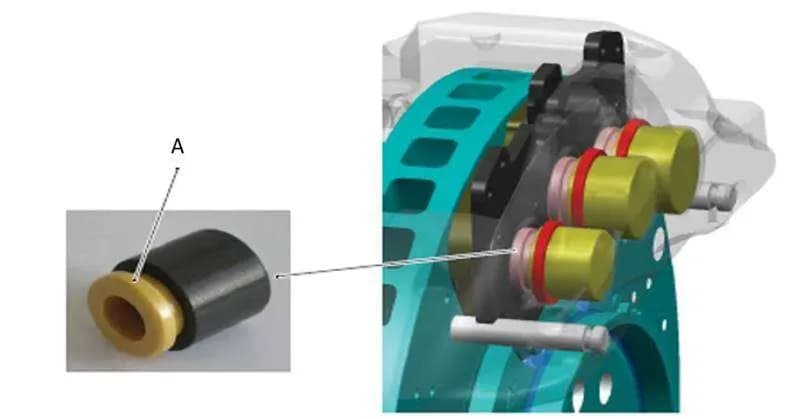
Audi has released Technical Service Bulletin (TSB) 2069078/3, addressing a specific condition concerning the ceramic brake systems in various 2022-2026 models. This bulletin highlights instances where zirconium inserts within the brake pistons may become loose. While the TSB states that the brake system's function is not affected, this condition can lead to various brake-related noises and vibrations.
Symptoms
Owners of affected Audi models with ceramic brakes might notice several symptoms related to the brake system. These are typically noises or vibrations originating from the front of the vehicle. Common complaints include:
- Brake noises described as too loud, whistling, buzzing, crunching, groaning, crackling, pinging, chattering, snapping, thumping, squeaking, or general noise and vibrating.
- Appearance issues such as coating flaws, corrosion, rust, or material detaching from brake components.
- Contamination or dirty brake rotors and pads.
- In some cases, technicians might observe 'wear too high' on automotive fluid components.
Diagnosis / Trigger Conditions
Unlike many issues that prompt an owner to visit the dealership, the condition of Audi e-tron loose brake inserts is often not reported by the customer. According to TSB 2069078/3, there are typically no customer concerns directly related to this issue. Instead, the loose zirconium inserts are usually discovered by technicians during routine diagnostic work or when performing other brake system services, such as replacing brake pads. During these procedures, it may be noticed that the zirconium inserts are not firmly attached to the brake piston and can be turned or moved.
Repair Procedure Summary
The repair for loose zirconium inserts in the ceramic brake pistons is straightforward and does not require replacing major components. The TSB specifies the following steps:
- Technicians are instructed to simply fit the zirconium insert back into the brake piston, ensuring it is properly seated.
- The bulletin explicitly states that it is not necessary or justified to replace the entire brake caliper for this condition.
- Importantly, the TSB clarifies that the brake system's overall functions are not affected by loose zirconium inserts, meaning safety or performance is not compromised.
Frequently Asked Questions
- What is TSB 2069078/3 about?
- Audi Technical Service Bulletin 2069078/3 addresses the issue of zirconium inserts becoming loose within the brake pistons of ceramic brake systems on various 2022-2026 Audi models.
- How do I know if my Audi has loose zirconium brake inserts?
- Owners typically won't notice this issue directly, as it doesn't affect brake function. It's usually discovered by a technician during routine maintenance or other diagnostic work on the ceramic brake system.
- Does the Audi e-tron loose brake inserts issue affect braking performance or safety?
- No, according to Audi TSB 2069078/3, the loose zirconium inserts do not impact the overall function or safety of the brake system.
- What is the repair for loose zirconium inserts in Audi ceramic brakes?
- The repair involves simply re-seating the zirconium insert back into the brake piston. It does not require replacing the brake caliper or other major components.
Related Articles
2022 Audi e-tron Electrical System Problems: Complaints & TSBs
Owners of the 2022 Audi e-tron frequently report significant electrical system malfunctions, ranging from sudden power loss and charging hazards to software crashes. Braking issues and unexpected automatic emergency braking are also common concerns, alongside numerous technical service bulletins…
2022-2026 Audi Guided Fault Finding Reporting Obligation
Audi has issued Technical Service Bulletin TPI 2033392, also known as Transaction No. 2081531/1, regarding a reporting obligation for technicians when Guided Fault Finding produces an unexpected result. This TSB outlines the process for contacting Audi Product Support for diagnostic assistance.
2022-2026 Audi Infotainment System Complaints
Audi has released Technical Service Bulletin (TSB) 2081405/1 to address various customer complaints regarding infotainment systems in 2022-2026 Audi vehicles. This TSB helps technicians diagnose issues often caused by external media or mobile devices, rather than vehicle technology.
2018-2026 Audi Models Cracking Noise TSB 2061464/11
Audi Technical Service Bulletin 2061464/11 describes a cracking noise from the front or rear axle when changing direction in various 2018-2026 Audi models. The issue is due to stub axle movement and is resolved by bonding the stub axle to the wheel bearing with locking fluid.
2022-2026 Audi Parking Aid False Warnings TSB 2024323/13
Audi has released Technical Service Bulletin 2024323/13 to address customer complaints of false parking aid warnings. This bulletin details various environmental and vehicle-specific conditions that can cause the parking aid system to issue alerts even when no obstacles are present. It provides…
Leave a comment
Comments are moderated and may take a moment to appear. Only your first name and the initial of your last name are shown publicly.
Comments
Be the first to comment.