2016-2026 Audi Wiring Harness Repair TSB
Audi has released Technical Service Bulletin (TSB) 2061976/4, outlining proper procedures for diagnosing and repairing wiring harness issues across various 2016-2026 Audi models. This bulletin emphasizes thorough documentation for electrical system faults.
 David Chen2022 Audi e-tron
Gilt auch für
- Audi A3
- 2022–2026
- Audi A4
- 2021–2025
- Audi A4 allroad
- 2021–2025
- Audi A5
- 2021–2024
- Audi A6
- 2021–2025
- Audi A6 allroad
- 2021–2026
- Audi A7
- 2021–2025
- Audi A7 e
- 2021–2022
- Audi A8 L e
- 2021
- Audi e-tron
- 2021, 2023
- Audi e-tron GT
- 2022–2026
- Audi e-tron Sportback
- 2021–2022
- Audi Q3
- 2021–2025
- Audi Q5
- 2021–2025
- Audi Q5 e
- 2021, 2023, 2024, 2025
- Audi Q7
- 2021–2026
- Audi Q8
- 2021–2026
- Audi R8
- 2021–2023
- Audi RS 3
- 2022, 2023, 2024, 2026
- Audi RS 5
- 2021–2024
- Audi RS 6 Avant
- 2021–2026
- Audi RS 7
- 2021–2026
- Audi RS e-tron GT
- 2022, 2023, 2024, 2026
- Audi RS Q8
- 2021–2026
- Audi S e-tron GT
- 2026
- Audi S3
- 2022–2026
- Audi S4
- 2021–2025
- Audi S5
- 2021–2024
- Audi S6
- 2021–2025
- Audi S7
- 2021–2025
- Audi S8
- 2021–2026
- Audi SQ5
- 2021–2025
- Audi SQ7
- 2021–2026
- Audi SQ8
- 2021–2026
- Audi TT
- 2021–2023
- Audi TT RS
- 2021–2022
- Audi TTS
- 2021–2023
▸ 31 weitere anzeigen▾ Weniger anzeigen
Audi has issued Technical Service Bulletin (TSB) 2061976/4 to provide guidance for technicians on properly repairing and documenting wiring harness issues across a wide range of its vehicles. This TSB, released on August 26, 2025, aims to improve the quality of repairs and documentation for electrical system faults.
Symptoms
Owners may notice a warning light on the dashboard or experience a general malfunction within the vehicle's electrical system. These symptoms often indicate an underlying wiring issue that requires professional diagnosis.
Diagnosis / Trigger Conditions
When a warning or malfunction is reported, a wiring issue is frequently identified as the root cause. Technicians are instructed to thoroughly document their findings, including:
- The specific circuit affected.
- Pin identification of the main circuit.
- Results of circuit checks, including resistance and voltage values.
- The precise location where the damaged pin or circuit was found.
- Any other relevant details to support the findings.
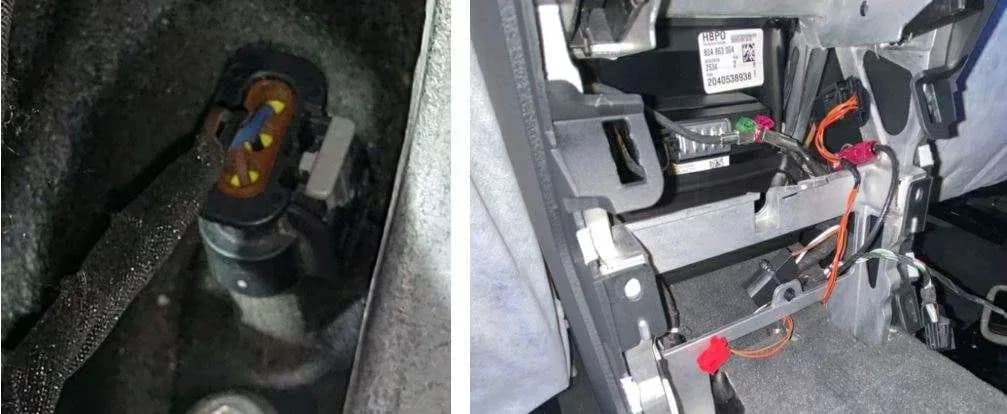
For example, a technician might find a FlexRay circuit with high resistance or a short circuit to ground, such as a damaged green FlexRay wire between specific control units (J743 Dual Clutch and J533 Data Bus on Board Diagnostic Interface) located under the driver's seat along the frame rail. Overlays may be used as a diagnostic aid to pinpoint such issues, including those affecting the Audi e-tron wiring harness.
Repair Procedure Summary
This TSB outlines specific repair procedures depending on the nature of the wiring damage:
- For root causes related to pins or coaxial connector ends: Technicians should retain approximately 10-20 mm of the original wire, where space allows, and repair the connection using the VAS1978B wiring harness repair set.
- For root causes related to high resistance or a short circuit in the wiring: Overlays can be used for diagnosis. The affected section of wire that was removed or found faulty should be retained. Faulty sections of the wire must be repaired using the VAS1978B tool.
Crucially, technicians are required to take detailed photos for accurate location and findings. These photos should include a perspective view (Figure 1), the original routing before disturbance (Figure 2), and a close-up of the damaged circuit (Figure 3). All photos must have a date stamp and VIN reference, and be taken with sufficient light.
Required Tools or Parts
To perform these wiring harness repairs and diagnostics, technicians will need specific tools:
- VAS 1978B: A specialized wiring harness repair set.
- VAS 6160 / VAS 6150: A VAS tester equipped with the current version of ODIS (Windows 10) for diagnostics and system checks.
Owner Action
If you experience a warning light or an electrical system malfunction in your 2016-2026 Audi, it is recommended to schedule an appointment with an authorized Audi service center. Technicians are trained to diagnose and address these issues following the detailed procedures outlined in TSB 2061976/4. When claiming wire repairs under warranty, specific PIDs (Process Identifiers) like PID 9709 (Central Wiring Harness), PID 9713 (Engine compartment wiring harness), PID 9732 (Door harness), PID 9757 (Seat harness), PID 9779 (Roof wiring harness), PID 9759 (Bumper harness), and PID 9781 (Transmission wiring harness) are used to differentiate which harness is affected. This ensures proper documentation for your Audi e-tron wiring harness or other Audi model's electrical system.
Galerie
3 Bilder
Frequently Asked Questions
- What is Audi TSB 2061976/4 about?
- Audi TSB 2061976/4 provides detailed instructions for technicians on how to properly diagnose, repair, and document wiring harness issues in various Audi models from 2016 to 2026, including the Audi e-tron wiring harness.
- What are the common symptoms of a wiring harness issue in an Audi?
- Owners may observe a warning light illuminated on the dashboard or experience a general malfunction within the vehicle's electrical system. These are indicators that a wiring issue might be present.
- What tools are required for Audi wiring harness repairs under this TSB?
- Technicians are required to use a specialized wiring harness repair set, VAS 1978B, and a VAS tester (VAS 6160 or VAS 6150) with the latest ODIS software for diagnosis and system checks.
- How do technicians document wiring harness repairs according to this TSB?
- Technicians must document the affected circuit, pin identification, circuit check values, and location of damage. They are also required to take specific photos—perspective, original routing, and close-up of the damage—with a date stamp and VIN reference.
- Which Audi models are covered by TSB 2061976/4?
- This TSB applies to a wide range of Audi models from model years 2016 through 2026, including the Audi e-tron, A3, S3, A4, S4, A5, A6, S6, A7, S7, A8, S8, Q3, Q5, SQ5, Q7, SQ7, Q8, SQ8, RS models, and e-tron GT variants.
Related Articles
2022 Audi e-tron Electrical System Problems: Complaints & TSBs
Owners of the 2022 Audi e-tron frequently report significant electrical system malfunctions, ranging from sudden power loss and charging hazards to software crashes. Braking issues and unexpected automatic emergency braking are also common concerns, alongside numerous technical service bulletins…
2022-2026 Audi Guided Fault Finding Reporting Obligation
Audi has issued Technical Service Bulletin TPI 2033392, also known as Transaction No. 2081531/1, regarding a reporting obligation for technicians when Guided Fault Finding produces an unexpected result. This TSB outlines the process for contacting Audi Product Support for diagnostic assistance.
2022-2026 Audi Infotainment System Complaints
Audi has released Technical Service Bulletin (TSB) 2081405/1 to address various customer complaints regarding infotainment systems in 2022-2026 Audi vehicles. This TSB helps technicians diagnose issues often caused by external media or mobile devices, rather than vehicle technology.
2018-2026 Audi Models Cracking Noise TSB 2061464/11
Audi Technical Service Bulletin 2061464/11 describes a cracking noise from the front or rear axle when changing direction in various 2018-2026 Audi models. The issue is due to stub axle movement and is resolved by bonding the stub axle to the wheel bearing with locking fluid.
2022-2026 Audi Parking Aid False Warnings TSB 2024323/13
Audi has released Technical Service Bulletin 2024323/13 to address customer complaints of false parking aid warnings. This bulletin details various environmental and vehicle-specific conditions that can cause the parking aid system to issue alerts even when no obstacles are present. It provides…
Leave a comment
Comments are moderated and may take a moment to appear. Only your first name and the initial of your last name are shown publicly.
Comments
Be the first to comment.