2021-2023 Audi Q3 Boost Pressure Sensor DTCs
Audi has identified a common issue causing the check engine light to illuminate in 2021-2023 Audi Q3 models, often linked to the boost pressure sensor and specific diagnostic trouble codes (DTCs) such as P010600.
 David Chen2021 Audi e-tron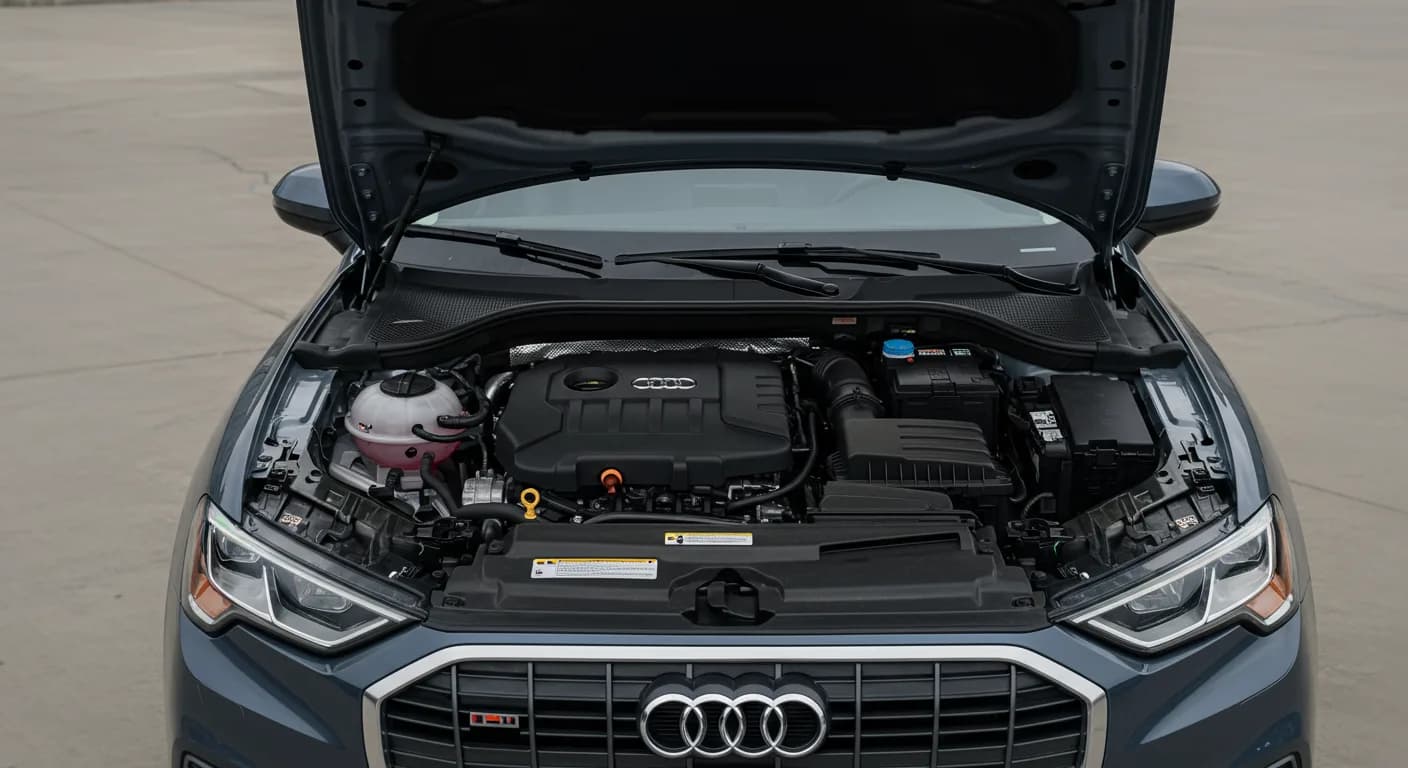
Gilt auch für
- Audi A3
- 2023
- Audi A4
- 2023
- Audi A5
- 2021–2023
- Audi A6
- 2021–2023
- Audi A7
- 2021–2023
- Audi e-tron
- 2022
- Audi Q3
- 2021–2023
- Audi Q5
- 2023
- Audi Q7
- 2021–2023
- Audi RS 3
- 2023
- Audi RS 5
- 2023
- Audi S4
- 2021–2023
- Audi S5
- 2021–2023
- Audi SQ5
- 2021–2023
▸ 8 weitere anzeigen▾ Weniger anzeigen
Audi has released an on-car analysis list for various models, highlighting several common issues reported by owners and technicians. Among these, a specific concern for the 2022 Audi Q3 involves the Audi Q3 boost pressure sensor, which can trigger the check engine light and specific diagnostic trouble codes.
This communication serves as an internal guide for Audi technicians, outlining initial diagnostic steps and documentation requirements for these issues. Owners of affected 2021-2023 Audi Q3 vehicles experiencing related symptoms should be aware of these potential problems.
Symptoms
Owners of affected Audi Q3 vehicles may notice the following primary symptom related to the boost pressure sensor:
- "Check engine lamp is on"
Fault Codes / DTCs
When the "Check engine lamp is on" symptom appears due to a boost pressure sensor issue, technicians may find one or more of the following Diagnostic Trouble Codes (DTCs) stored in the vehicle's computer:
| Code | Description |
|---|---|
| P010600 | Manifold Absolute Pressure/Barometric Pressure Sensor Range/Performance |
| P023600 | Turbocharger/Supercharger Boost Sensor 'A' Circuit Range/Performance |
| P023700 | Turbocharger/Supercharger Boost Sensor 'A' Circuit Low |
| P023800 | Turbocharger/Supercharger Boost Sensor 'A' Circuit High |
Diagnosis and Troubleshooting Steps
Audi's communication emphasizes thorough documentation and specific diagnostic procedures to accurately identify the root cause of the Audi Q3 boost pressure sensor issue. Technicians are advised to perform the following steps:
- Wiggle test harness: This procedure involves gently manipulating the wiring harness connected to the boost pressure sensor to check for intermittent electrical connections or loose wires that could cause the fault codes.
- Check pin fitment and pin drag: Inspecting the electrical pins for proper fitment and tension ensures a solid connection. Poor pin fitment or insufficient drag can lead to high resistance or intermittent contact, triggering DTCs.
- Check circuit resistance (if needed): Measuring the electrical resistance of the boost pressure sensor circuit helps identify open circuits, short circuits, or excessive resistance that might be preventing the sensor from functioning correctly.
- Photos of findings: Documenting all diagnostic findings with photographs is crucial for supporting the repair process and for communication with Audi technical support.
- Q3 Boost pressure sensor worksheet: Utilizing a dedicated worksheet ensures a structured and comprehensive diagnostic process, guiding technicians through all necessary checks specific to the Audi Q3 boost pressure sensor.
What Owners Should Do
If your 2021-2023 Audi Q3 displays a "Check engine lamp is on" warning, especially if accompanied by performance issues, it is advisable to have your vehicle inspected by an authorized Audi service center. Mentioning the potential Audi Q3 boost pressure sensor issue and the associated DTCs (P010600, P023600, P023700, P023800) can help technicians quickly narrow down the diagnosis. Ensure any repairs are documented and that your service center follows Audi's recommended diagnostic procedures.
Other Issues Covered by This Communication
This particular Audi manufacturer communication (NHTSA ID 10238198) is a broader analysis list that also addresses several other distinct issues across various Audi models and model years. These include:
- Coolant warning lamp issues in 2020-2021 Q3 models, where the coolant level appears full.
- Abnormal or no sound from the 3.0L engine sound generator in 2021-2023 models with the EA839 engine.
- Oil pan leaks identified in 2020-2023 Q3 vehicles.
- Belt noise originating from the starter generator in 2023 Q5 models.
- Detached USB trim panels in 2023 models.
- Noise from the front door trim panel in 2021-2022 e-tron Quattro / e-tron SB models.
- Noise from the front door speaker grill in 2021-2022 A5 models.
These additional topics highlight the comprehensive nature of Audi's internal communications regarding common vehicle concerns.
Source: NHTSA ID 10238198
Frequently Asked Questions
- What does a check engine light mean for my 2021-2023 Audi Q3?
- A check engine light in your 2021-2023 Audi Q3, especially if accompanied by DTCs like P010600, P023600, P023700, or P023800, often indicates a problem with the boost pressure sensor. This sensor is crucial for monitoring engine performance.
- What are the common DTCs associated with an Audi Q3 boost pressure sensor fault?
- The most common Diagnostic Trouble Codes (DTCs) linked to an Audi Q3 boost pressure sensor malfunction are P010600, P023600, P023700, and P023800. These codes point to issues with the sensor's circuit or its performance range.
- How do technicians diagnose an Audi Q3 boost pressure sensor problem?
- Audi technicians follow specific steps, including performing a wiggle test on the harness, checking pin fitment and drag, measuring circuit resistance, and documenting findings with photos. They also use a dedicated 'Q3 Boost pressure sensor worksheet' to guide the diagnostic process.
- Should I drive my Audi Q3 if the check engine light is on due to a boost pressure sensor issue?
- While a boost pressure sensor issue might not immediately immobilize your vehicle, it can affect engine performance and fuel efficiency. It's recommended to have your 2021-2023 Audi Q3 inspected by a qualified technician as soon as possible to prevent potential further damage or performance degradation.
Weitere Revisionen dieses TSB
- 2021-2024 Audi e-tron Door Panel Noise and Other Common Issues TSBP010600, P023600, P023700
- 2022-2024 Audi e-tron U046900 Belt Starter Generator DTCP010600, P023600, P023700
- 2021-2024 Audi USB Trim Detached and Other IssuesP010600, P023600, P023700
- 2020-2023 Audi Common Issues: Coolant, Noise, Airbag DTCsP010600, P023600, P023700
- 2021-2023 Audi Multi-Topic TSB: Noise, Warnings & DTCsP010600, P023600, P023700
- 2021-2022 Audi e-tron PDC Sensor Loose & Other FaultsP010600, P023600, P023700
- 2021-2022 Audi e-tron Door Panel Noise TSBP010600, P023600, P023700
- 2021 Audi MIL On: DTCs P023600 & P060600 in ECMP023600
Related Articles
2021 Audi e-tron Electrical Malfunction and Power Loss
A 2021 Audi e-tron owner reported a severe 'Electrical Malfunction' resulting in complete loss of power on the highway. The issue has persisted despite dealer attempts to fix it over five months, posing significant safety risks.
2021-2026 Audi UTR Troubleshooting & FAQs TSB 2081409/1
This Audi Technical Service Bulletin (TSB 2081409/1) provides comprehensive answers to frequently asked questions and troubleshooting steps for the Audi Universal Traffic Recorder (UTR) accessory, covering topics like SD card compatibility, video playback, Wi-Fi issues, and more.
2021-2025 Audi Emergency Call System Fault TSB
Audi has released Technical Service Bulletin 2059528/18 to address an "Emergency call function: malfunction! Function unavailable. Please contact service" warning, often accompanied by a red SOS LED and DTC B200000. This issue affects various 2021-2025 Audi models and is due to a software problem…
2021-2026 Audi Adaptive Light System Fault C12B3FA TSB
Audi has released Technical Service Bulletin 2054202/7 to address an intermittent 'Audi adaptive light: system fault' message and DTC C12B3FA in various 2021-2026 models. This TSB outlines diagnosis and resolution for driver assistance system malfunctions.
2021-2026 Audi Parking Aid False Warnings TSB 2024323/12
This Technical Service Bulletin (TSB 2024323/12) details diagnostic and repair procedures for 2021-2026 Audi vehicles experiencing false parking aid warnings. Learn about environmental factors, sensor checks, and proper installation to resolve issues like 'Parking aid does not work / warning is…
Leave a comment
Comments are moderated and may take a moment to appear. Only your first name and the initial of your last name are shown publicly.
Comments
Be the first to comment.