2021-2023 Audi Parking Aid DTC B107A16 Issue
Audi has issued TSB 2069678/1 for 2021-2023 models experiencing a non-functional parking aid and DTC B107A16. This issue is often a software misdiagnosis, requiring a simple DTC clear or software update.
 Marcus Weber2023 Audi e-tron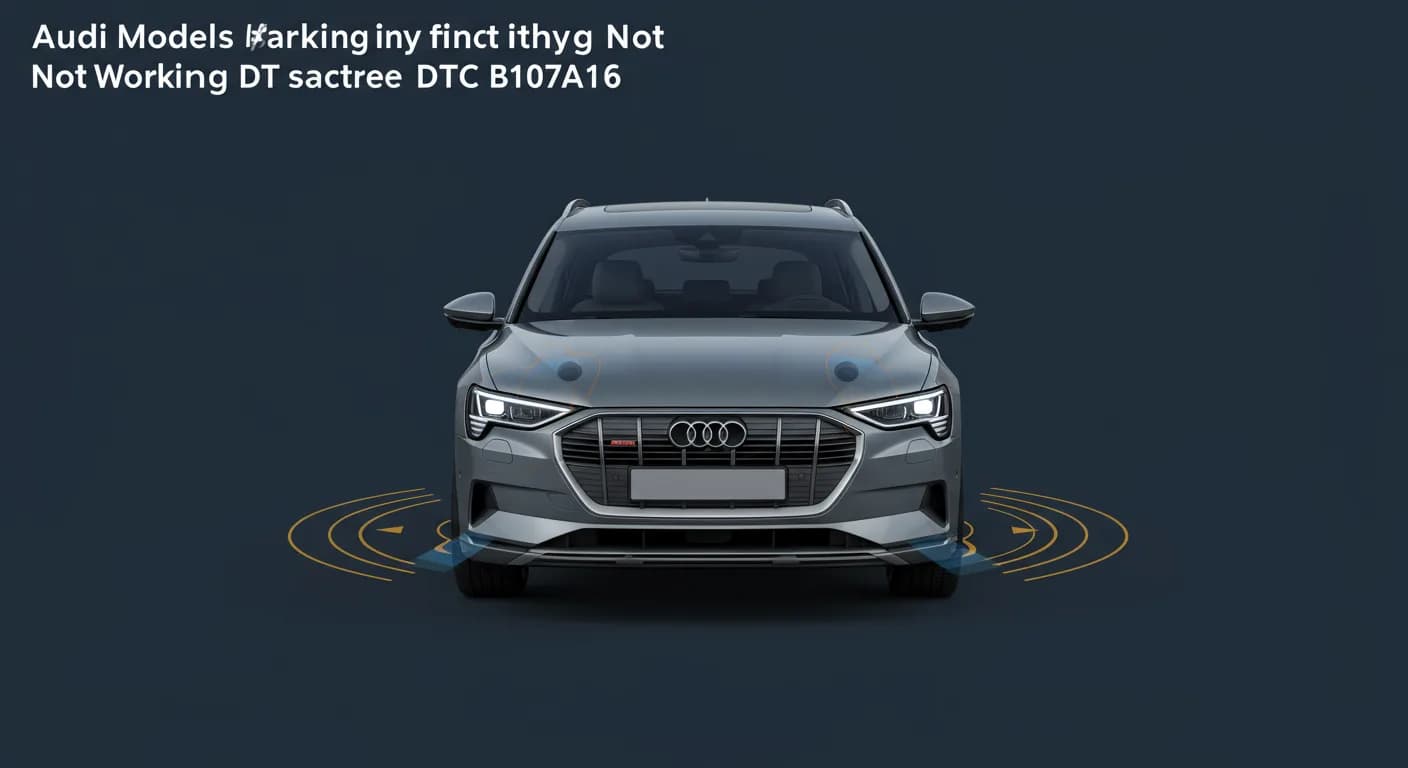
Gilt auch für
- Audi A6
- 2021–2023
- Audi A6 allroad
- 2021–2022
- Audi A7
- 2021–2023
- Audi A7 e
- 2021–2022
- Audi A8 L e
- 2021
- Audi e-tron
- 2021–2022
- Audi e-tron GT
- 2022–2023
- Audi Q7
- 2021–2023
- Audi Q8
- 2021–2023
- Audi RS 6 Avant
- 2021–2023
- Audi RS 7
- 2021–2023
- Audi RS e-tron GT
- 2022–2023
- Audi RS Q8
- 2021–2023
- Audi S6
- 2021–2023
- Audi S7
- 2021–2023
- Audi S8
- 2021–2023
- Audi SQ7
- 2021–2023
- Audi SQ8
- 2021–2023
▸ 12 weitere anzeigen▾ Weniger anzeigen
Audi has released Technical Service Bulletin (TSB) 2069678/1 to address a specific issue affecting the parking aid system in various 2021-2023 Audi models. This bulletin provides guidance for technicians when customers report that their parking aid is not functioning correctly and a specific diagnostic trouble code (DTC) is stored.
This TSB clarifies that the problem, often indicated by the Audi parking aid DTC B107A16, is typically not a hardware failure but rather a software misinterpretation. Understanding this can help owners avoid unnecessary repairs and ensure their vehicle receives the appropriate resolution.
Symptoms
Owners of affected Audi vehicles may notice that the "acoustic and optical parking aid does not work." This means the audible alerts and visual displays that assist with parking may be inactive or unresponsive, making parking maneuvers more challenging.
Fault Codes / DTCs
When the parking aid system malfunctions, a specific diagnostic trouble code (DTC) may be stored in the vehicle's driver assist systems control unit, identified as J1121 (address word 00A5). The relevant DTC is:
| Code | Description | Module | Symptom Number |
|---|---|---|---|
| B107A16 | Voltage supply for parking aid sensor, voltage too low | J1121 | 233474 |
This Audi parking aid DTC B107A16 indicates that the control unit is detecting a voltage supply issue to the parking aid sensors, even if the voltage is actually within normal operating parameters.
Technical Background
According to Audi, the underlying cause for the Audi parking aid DTC B107A16 is often a software-related misdiagnosis. This means the control unit erroneously interprets a normal condition as a low voltage supply, triggering the DTC and disabling the parking aid functionality. There is no actual electrical fault with the sensor voltage supply in these cases.
Important Warnings for Owners
Audi has provided specific instructions for technicians regarding this condition, which are crucial for owners to understand:
- "No repair is available at this time." This indicates that a physical repair or component replacement is generally not the solution for this specific DTC.
- "Do not perform any repairs. Any repairs for this concern may be denied." This warns against attempting to replace parts like parking aid sensors or the J1121 control unit, as these actions will likely not resolve the issue and may not be covered under warranty.
- "Instruct the customer that this condition is normal." This emphasizes that the presence of this DTC and the temporary non-functionality of the parking aid, under these specific circumstances, is considered an expected behavior due to the software misdiagnosis.
- "This TSB is informational only and not applicable to any Audi warranty." This means the TSB itself does not guarantee warranty coverage for diagnosis or resolution, although in practice, software updates or DTC clearing are often performed by dealers.
Repair Procedure Summary
For the Audi parking aid DTC B107A16, the resolution depends on the software version of the J1121 driver assist control unit:
- If the J1121 control unit's software is older than SW 0381: Technicians are instructed to perform a software update. This update is detailed in a separate Technical Service Bulletin, TSB 2069244.
- If the J1121 control unit's software is already SW 0381 or newer: The symptoms associated with the Audi parking aid DTC B107A16 should resolve themselves after an ignition cycle. In this scenario, the primary action is to erase the stored diagnostic trouble codes from the vehicle's memory.
No parts replacement is typically required for this issue, as it stems from a software interpretation rather than a hardware failure.
Owner Action
If your 2021-2023 Audi experiences the "acoustic and optical parking aid does not work" symptom and you suspect the Audi parking aid DTC B107A16, it is recommended to visit an authorized Audi service center. Inform them about the issue and mention TSB 2069678/1. The technicians will diagnose the vehicle, check the software version of the J1121 control unit, and perform the appropriate action, which will likely be a software update or simply clearing the DTCs.
Source: NHTSA ID 10233623
Frequently Asked Questions
- What does Audi parking aid DTC B107A16 mean?
- The DTC B107A16 in your Audi indicates "Voltage supply for parking aid sensor, voltage too low," which can cause the acoustic and optical parking aid to stop working. However, this is often a software misdiagnosis rather than an actual voltage problem.
- Is the Audi parking aid DTC B107A16 a serious problem?
- According to Audi TSB 2069678/1, this is often a software-related misdiagnosis in the J1121 control unit. No physical repair is typically needed, and the condition may be considered normal after diagnosis and a potential software update or DTC clearing.
- What should I do if my 2021-2023 Audi parking aid is not working?
- If your 2021-2023 Audi parking aid is not working, visit an authorized Audi service center. They will check the software version of the J1121 control unit and either erase the DTCs or perform a software update (TSB 2069244) if necessary, as outlined in TSB 2069678/1.
- Will Audi notify me about this Audi parking aid DTC B107A16 issue?
- This is a Technical Service Bulletin (TSB), not a recall. Audi typically does not notify owners directly for TSBs. If you experience the symptoms of a non-functional parking aid, you should proactively contact your dealer for diagnosis and resolution.
Weitere Revisionen dieses TSB
Related Articles
Should 2023 Audi e-tron Owners Worry? Recall & TSB Roundup
The 2023 Audi e-tron faces significant safety concerns, including recalls for potential brake pedal detachment and charging cable overheating. Owners have also reported serious issues like unintended acceleration and electrical system malfunctions. This guide covers all known problems and solutions.
2023 Audi e-tron Brake Pedal Recall
Audi has issued a recall (NHTSA ID: 26V240000, Audi Recall 46P7) for certain 2019-2024 E-Tron and 2020-2024 E-Tron Sportback vehicles, including the 2023 Audi e-tron. The recall addresses a potential issue where the brake pedal may detach from the brake booster, leading to a loss of brake function.
2015-2027 Audi Noise Diagnosis with Frequency Analysis App TSB
Audi has released Technical Service Bulletin 2051095/11 detailing the Audi Frequency Analysis app. This app helps technicians diagnose noise complaints more precisely across 2015-2027 Audi models. Learn how the app works, where to download it, and its features for effective vehicle noise analysis.
2023 Audi e-tron AC/DC Charging Not Possible TSB
This manufacturer communication (NHTSA ID 11031035) provides critical information for 2023 Audi e-tron owners facing issues with AC/DC charging. It specifically highlights problems linked to software version 00C6: 0093/3119, which can prevent the vehicle from charging.
2023-2025 Audi Rear Seat Reminder Message TSB 2074943/2
Audi Technical Service Bulletin 2074943/2 explains the instrument cluster message 'Please check rear seats and be aware of door safelock' in various 2023-2025 Audi models. This informational TSB details the rear occupant detection system designed to prevent children and pets from being left in…
Leave a comment
Comments are moderated and may take a moment to appear. Only your first name and the initial of your last name are shown publicly.
Comments
Be the first to comment.