2021-2023 Audi e-tron Ghost DTCs in HV Battery Charger ECU
This Technical Service Bulletin addresses various erroneous 'ghost' DTCs, such as B200000, P0CA400, P33E300, U15BF00, and U112100, that may appear in the high-voltage battery charger ECU of 2021-2023 Audi e-tron models. These codes are typically harmless and do not indicate a fault.
 Sarah Mitchell2023 Audi e-tron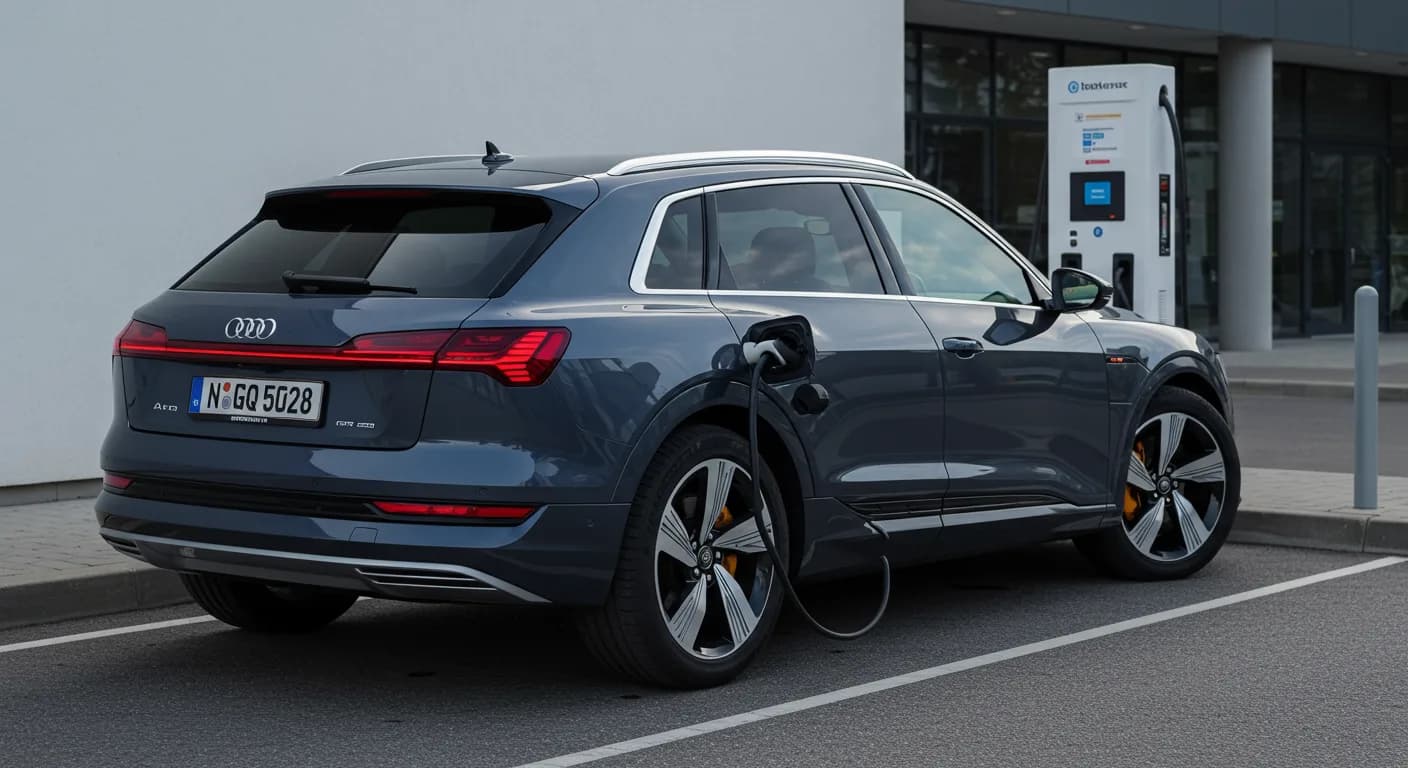
Gilt auch für
- Audi e-tron
- 2021–2022
Bulletin Information and Revision History
This Technical Service Bulletin (TSB) 93 22 61 2062631/2, issued on January 7, 2022, addresses various erroneous diagnostic trouble codes (DTCs) in the high-voltage battery charger control module (J1050) of specific Audi e-tron models. This bulletin supersedes the previous TSB Group 93 number 21-44, dated March 29, 2021, for reasons including updated model year coverage and additional DTCs.
The bulletin has undergone revisions:
- Revision 1 (March 29, 2021): Initial publication.
- Revision 2 (January 7, 2022): Revised the header to include additional model years and updated the condition description to include DTCs relevant to software levels 0081 and 0088.
Symptoms
Owners of 2021-2023 Audi e-tron vehicles may find various diagnostic trouble codes (DTCs) stored in the high-voltage battery charger control module (J1050) during routine diagnostic checks or pre-delivery inspections (PDI). These are identified as "ghost DTCs" because they do not correspond to an actual vehicle malfunction or customer concern. The presence of these Audi e-tron ghost DTCs does not indicate a problem with the charging system or any related components. Importantly, there are "No customer concerns" associated with these codes; they are typically discovered during diagnostic work.
Fault Codes / DTCs
The following DTCs with symptom codes may be stored in the high-voltage battery charger control module, J1050 (address word 00C6), depending on the software version installed. These codes are erroneous and should be disregarded unless accompanied by an actual customer complaint related to charging. These are the Audi e-tron ghost DTCs that do not require repair.
Vehicles with Software 0079 installed in J1050 (address word 00C6)
| DTC | Designation | Symptom Code |
|---|---|---|
| B1A8AF0 | Charge door 1 LIN actuator, path of movement fault | 3211268 |
| B194B13 | Charge flap 2 search illumination – open circuit | 3211295 |
| B200000 | Control module faulty | 1049088 |
| P0CA400 | Hybrid/High voltage battery load voltage too high | 14745862 |
| P1A1500 | Charging unit 2 function restriction | 14746766 |
| P31D100 | Charge socket A temperature sensor electrical error | 14750742 |
| P33E300 | Charge socket A, communication error | 2097664 |
| P178E00 | Function restriction due to excessive temperature | 14750734 |
| U15AC00 | Signal damping log malfunction | 3280913 |
| U15B500 | Quick battery charging (DC) – Charging station not active | 2097301 |
| U15BF00 | Intelligent charging function – faulty communication | 3276840, 3276846, 3276852 |
| U15C900 | Safety module (FuSi) function intervention | 13709330 |
| U112100 | Data bus missing message | 13705477, 13705501, 13705524, 13705553, 13706243 |
Vehicles with Software 0081 installed in J1050 (address word 00C6)
| DTC | Designation | Symptom Code |
|---|---|---|
| P0CA400 | Hybrid/High voltage battery load voltage too high | 14745862 |
| U112100 | Data bus missing message | 13705524, 13705553, 13706243, 13705484 |
| U15B500 | Quick battery charging (DC) | 2097301 |
| B200000 | Control module faulty | 1049088 |
| B194B13 | Charge flap 2 search illumination Open circuit | 3211295 |
| B192E13 | Charge flap 1 search illumination Open circuit | 3211292 |
| U15BF00 | Intelligent charging function Faulty communication | 3276840, 3276846, 3276852 |
| P178E00 | Function restriction due to excessive temperature | 14750734 |
| P33E300 | Charging socket A Communication fault | 2097664 |
| P31D100 | Charging socket A temperature sensor Electrical malfunction | 14750742 |
| U15C900 | Security module (FuSi) function intervention | 13709330 |
| U15AC00 | Signal damping log malfunction | 3280913 |
| B1A8AF0 | Charge door 1 LIN actuator, Path of movement fault | 3211268 |
Vehicles with Software 0088 installed in J1050 (address word 00C6)
| DTC | Designation | Symptom Code |
|---|---|---|
| P0D2800 | Battery charger Primary voltage too high | 14746125 |
| P33E500 | Quick battery charging (DC) Charge station initialization error | 2097287 |
| U15AD00 | Quick battery charging (DC) Charging station incompatible | 2097292 |
| C116300 | Development functions active | 14753057 |
| P0CA400 | Hybrid/High voltage battery load voltage too high | 14745862 |
| U15B500 | Quick battery charging (DC) Charging station not active | 2097301 |
| B200000 | Control module faulty | 1049088, 3276816 |
| U15BF00 | Intelligent charging function Faulty communication | 3276840 |
| U15AC00 | Signal damping log Fault | 3280899, 3280913 |
Technical Background
These Audi e-tron ghost DTCs are a result of a diagnosis issue within the software of the high-voltage battery charger control module, J1050 (address word 00C6). The software erroneously stores these codes even when no actual fault condition exists. This is a known condition and is considered normal vehicle operation. The bulletin explicitly states that these DTCs are "entered erroneously and can be ignored (so-called ghost DTCs)."
Important Warnings
Audi has issued specific instructions regarding these ghost DTCs to prevent unnecessary repairs and costs:
- "If there is a customer concern regarding charging, this TSB does not apply, and the vehicle must be repaired following Guided Fault Finding." This means if you are experiencing actual charging problems, a full diagnostic procedure is required, and these ghost DTCs should not be the focus.
- "Do not perform any repairs. Any repairs or part replacements for this concern may be denied." This is a crucial warning for both technicians and owners, emphasizing that no physical repair is needed for these specific codes.
- "This condition is normal." The presence of these codes alone does not indicate a fault.
- This Technical Service Bulletin (TSB 93 22 61 2062631/2) is "informational only and not applicable to any Audi Warranty." This implies that any diagnostic time or attempted repairs based solely on these ghost DTCs will not be covered under warranty.
Owner Action
If you own a 2021-2023 Audi e-tron and encounter any of the listed DTCs during a diagnostic scan, you should be aware that these are likely ghost codes. No repair is necessary for these specific codes if there are no actual charging-related symptoms or customer concerns. If you experience any real issues with charging your vehicle, such as the vehicle not charging or charging incorrectly, then a proper diagnostic procedure should be followed, as this TSB would not apply to an actual malfunction. Do not authorize any repairs or part replacements based solely on the presence of these Audi e-tron ghost DTCs.
Source: NHTSA ID 10207162
Frequently Asked Questions
- What does the Audi e-tron ghost DTC B200000 mean?
- The DTC B200000, designated as "Control module faulty," is one of the ghost DTCs that may appear in the high-voltage battery charger control module (J1050) of the 2021-2023 Audi e-tron. This code is erroneously stored due to a software issue and typically does not indicate an actual fault with the control module.
- Should I be concerned if my 2021-2023 Audi e-tron has DTC P0CA400?
- No, if you have no actual charging problems, the DTC P0CA400, or "Hybrid/High voltage battery load voltage too high," is considered a ghost DTC for the 2021-2023 Audi e-tron. This code is stored erroneously by the J1050 module software and does not require repair.
- What should I do if my Audi e-tron shows a 'Data bus missing message' (U112100)?
- The 'Data bus missing message' (U112100) is another ghost DTC that can appear in the 2021-2023 Audi e-tron's high-voltage battery charger control module. If there are no other symptoms or actual issues with your vehicle's data communication or charging, this code can be ignored as it is a known software anomaly.
- Does this TSB mean my Audi e-tron's battery charger is faulty?
- No, this Technical Service Bulletin (TSB 93 22 61 2062631/2) clarifies that the listed DTCs are erroneous and do not indicate a faulty high-voltage battery charger control module (J1050) or any other component. The codes are a result of a software diagnosis issue.
Weitere Revisionen dieses TSB
- 2021-2025 Audi Emergency Call System Fault TSBB200000
- 2025-2026 Audi A5, S5, A6 Door Handle Release TSBU112100
- 2022-2025 Audi e-tron Emergency Call System Fault TSBB200000
- 2025 Audi Q5 Software Update for Electrical System WarningsU112100
- 2023-2026 Audi Emergency Call System Fault B200000 TSBB200000
- 2022-2024 Audi A3, S3, RS 3 Exterior Lighting Warning TSBU112100
- 2025 Audi Q5 / SQ5 Software Update for Various Error MessagesU112100
- 2025 Audi A5 / A6 e-tron Exterior Door Handle Ejection TSBU112100
Related Articles
Should 2023 Audi e-tron Owners Worry? Recall & TSB Roundup
The 2023 Audi e-tron faces significant safety concerns, including recalls for potential brake pedal detachment and charging cable overheating. Owners have also reported serious issues like unintended acceleration and electrical system malfunctions. This guide covers all known problems and solutions.
2023 Audi e-tron Brake Pedal Recall
Audi has issued a recall (NHTSA ID: 26V240000, Audi Recall 46P7) for certain 2019-2024 E-Tron and 2020-2024 E-Tron Sportback vehicles, including the 2023 Audi e-tron. The recall addresses a potential issue where the brake pedal may detach from the brake booster, leading to a loss of brake function.
2015-2027 Audi Noise Diagnosis with Frequency Analysis App TSB
Audi has released Technical Service Bulletin 2051095/11 detailing the Audi Frequency Analysis app. This app helps technicians diagnose noise complaints more precisely across 2015-2027 Audi models. Learn how the app works, where to download it, and its features for effective vehicle noise analysis.
2023 Audi e-tron AC/DC Charging Not Possible TSB
This manufacturer communication (NHTSA ID 11031035) provides critical information for 2023 Audi e-tron owners facing issues with AC/DC charging. It specifically highlights problems linked to software version 00C6: 0093/3119, which can prevent the vehicle from charging.
2023-2025 Audi Rear Seat Reminder Message TSB 2074943/2
Audi Technical Service Bulletin 2074943/2 explains the instrument cluster message 'Please check rear seats and be aware of door safelock' in various 2023-2025 Audi models. This informational TSB details the rear occupant detection system designed to prevent children and pets from being left in…
Leave a comment
Comments are moderated and may take a moment to appear. Only your first name and the initial of your last name are shown publicly.
Comments
Be the first to comment.