2025 Audi A5 / A6 e-tron Exterior Door Handle Ejection TSB
Audi has released Technical Service Bulletin (TSB) 2079351/1 addressing instances where the exterior door handle mechanism on 2025 Audi A5 and A6 e-tron models ejects without apparent reason. This TSB outlines diagnostic trouble codes (DTCs) such as B1908F0 and U112100, and various technical…
 Marcus Weber2025 Audi A5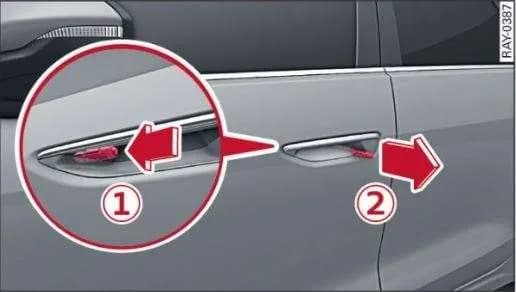
Also applies to
- Audi S5
- 2025
Owners of 2025 Audi A5 and A6 e-tron models may encounter an unexpected issue where the exterior door handle's manual release mechanism ejects without any apparent cause. This condition, often described as the "Audi A5 A6 e-tron exterior door handle ejection," is addressed by Audi Technical Service Bulletin (TSB) 2079351/1, released on September 29, 2025. This bulletin provides workshop information regarding the potential triggers and diagnostic steps for this specific concern.
Symptoms
The primary symptom reported by vehicle owners is the manual release mechanism for the exterior door handles ejecting unexpectedly. This can occur without any prior warning or incident, such as an accident. The TSB notes that the mechanism is ejected for no reason, as depicted in the Owner's Manual for manual release procedures. This can impact the overall functionality of the doors and their operation, as well as the vehicle's access control, start authorization, and anti-theft protection systems, specifically concerning the locking and unlocking of the vehicle. The issue is categorized internally by Audi as a functionality concern related to body attachments and installations, particularly the doors and their lids operation.
Figure 1 in the TSB visually illustrates the manual release mechanism for the door handles, showing the component in an ejected state, indicating the physical manifestation of the problem.
Fault Codes / DTCs
When the "Audi A5 A6 e-tron exterior door handle ejection" occurs, technicians may find specific diagnostic trouble codes (DTCs) logged in the vehicle's control units. These codes help pinpoint the electronic systems involved in the malfunction.
| Diagnostic Address | Diagnostic Trouble Code | Fault Symptom | Storage State |
|---|---|---|---|
| 00BB | B1908F0 | Crash response active | Intermittent |
| 0052 | B1908F0 | Crash response active | Intermittent |
| 0052 | B1908F0 | Crash response active | static |
| 0042 | B1908F0 | Crash response active | Intermittent |
| 00BC | B1908F0 | Crash response active | static |
| 00BB | B1908F0 | Crash response active | static |
| 0042 | B1908F0 | Crash response active | static |
| 00BC | B1908F0 | Crash response active | Intermittent |
| 0046 | U112100 | Data bus missing message - symptom: 86111 |
The B1908F0 code, indicating "Crash response active," is typically logged in the door control units with diagnostic addresses 0042 (Driver's door electronics), 0052 (Passenger's door electronics), 00BB (Rear driver's side door electronics), and 00BC (Rear passenger side door electronics). This code can be stored as either "Intermittent," meaning the fault occurred temporarily, or "static," indicating a persistent issue. The U112100 code, signifying a "Data bus missing message" with symptom 86111, may be found in the convenience system central module (diagnostic address 0046). This suggests a communication breakdown within the vehicle's network.
Technical Background and Diagnostic Conditions
Audi TSB 2079351/1 outlines several technical reasons, beyond those described in the Owner's Manual (such as an accident or intentional manual release), that can cause the "Audi A5 A6 e-tron exterior door handle ejection." These conditions often relate to electrical or communication issues within the vehicle's complex electronic systems:
- Vehicle battery discharged/weak: A low or failing vehicle battery can lead to various electrical anomalies, potentially affecting control unit operation and triggering unexpected system responses, including the door handle mechanism. Insufficient voltage can cause control units to malfunction or report erroneous data.
- Driver's door unlocked via emergency power supply at front bumper: If the driver's door is unlocked using an emergency power supply, it might create a transient condition that the system misinterprets, leading to the ejection. This specific action can disrupt the normal electronic sequence for door access.
- Missing signals from airbag (fallback function relating to crash detection): The airbag system plays a crucial role in crash detection and related safety functions. If signals from the airbag system are missing or erroneous, the vehicle's safety systems might enter a fallback mode. This mode could inadvertently trigger mechanisms like the door handle ejection, which is typically designed for post-crash access to the vehicle.
- Sudden interruption of a diagnostic session while terminal 15 is switched on: "Terminal 15" refers to the ignition being switched on, supplying power to various vehicle systems. If a diagnostic session with the vehicle's systems is abruptly interrupted while the ignition is on, it can leave control units in an unstable state, potentially causing errors and unexpected activations.
- Unplugging of control units involved in signal transmission while terminal 15 is activated: Disconnecting critical control units while the ignition is on can severely disrupt the vehicle's internal communication network. Control units such as the J1312 (control unit for drive system and running gear functions, HCP1), J1273 (central control unit for data bus communication, HCP5), J519 (onboard supply control unit, HCP4), the door control unit, and the exterior door handle itself are vital for proper door handle operation. Their sudden disconnection can lead to system errors and trigger the manual release mechanism.
- Implausible signal chain of verified messages when programming the VKMS (vehicle key management system): The Vehicle Key Management System (VKMS) is responsible for recognizing and authorizing vehicle keys. Issues during the programming of the VKMS, particularly if there are inconsistencies or implausible signals in the communication chain, can affect how the vehicle recognizes and authorizes access, potentially leading to the door handle mechanism being triggered.
Workshop activities, especially those involving the vehicle's electrical system or control units, can also inadvertently cause the manual release mechanisms to eject. Technicians are advised to review event memory entries logged around the time of the complaint for wiring-related issues or airbag signal message failures, which can provide further clues to the root cause.
Repair Procedure Summary
For the "Audi A5 A6 e-tron exterior door handle ejection" issue, Audi TSB 2079351/1 outlines a diagnostic approach rather than a specific repair for the mechanism itself. The procedure depends on whether other underlying causes are identified:
- Initial Assessment: Technicians should first check if any of the causes listed under the "Technical Background" section could have applied. This involves reviewing event memory entries logged in various diagnostic addresses at a date and time corresponding to the complaint. These entries may indicate wiring-related issues or airbag signal message failures.
- Addressing Underlying Causes: If there are indications that the issue may have occurred due to other causes (e.g., additional event memory entries pointing to specific system failures), technicians should work through these using standard workshop materials and diagnostic procedures to address those underlying issues.
- Re-inserting Pins (if no other cause): If, after thorough investigation, there are no other indications of underlying causes, or if the manual release mechanisms were triggered during a workshop visit, the procedure is straightforward: the pins for the manual release mechanism should be re-inserted. Owners can refer to their vehicle's Owner's Manual for instructions on how to perform this action. In this specific scenario, it is explicitly stated that it is not necessary to perform further checks on the manual release mechanisms.
Important Warranty Information
Owners should be aware of specific warranty limitations related to this issue, as detailed in Audi TSB 2079351/1. The bulletin explicitly states that:
- The reasons listed under the "Technical Background" section (such as a weak battery, emergency unlock scenarios, missing airbag signals, diagnostic session interruptions, unplugging active control units, or VKMS programming issues) are not a fault covered under warranty.
- Other causes, such as wiring failures or failures due to control units involved in transmitting signals, must be billed separately via the corresponding service number.
- It is not possible to bill for fault finding and/or component replacement under warranty via this TSB.
This means that if the issue stems from one of the technical conditions described in the TSB, the diagnosis and any necessary repairs or component replacements will likely not be covered under the standard vehicle warranty.
Source: NHTSA ID: 10255152
Frequently Asked Questions
- What does the B1908F0 fault code mean for my Audi A5 or A6 e-tron?
- The B1908F0 fault code, often found in the door electronics control units (0042, 0052, 00BB, 00BC), indicates 'Crash response active.' This suggests that the vehicle's system may have incorrectly detected a crash event or a related system malfunction, leading to the unexpected ejection of the exterior door handle's manual release mechanism.
- Is the unexpected exterior door handle ejection on my 2025 Audi A5 or A6 e-tron covered under warranty?
- According to Audi TSB 2079351/1, the specific reasons outlined in the 'Technical Background' section, such as a weak battery or certain system communication errors, are generally not considered a fault covered under warranty. Other causes, like wiring issues or control unit failures, must be billed separately, and fault finding or component replacement for these specific issues cannot be billed under warranty via this TSB.
- What should I do if my 2025 Audi A5 or A6 e-tron's exterior door handle ejects without reason?
- If your 2025 Audi A5 or A6 e-tron experiences an unexpected exterior door handle ejection, you should first attempt to re-insert the pins for the manual release mechanism, referring to your Owner's Manual for guidance. If the issue persists or if you suspect an underlying electrical or system problem, it is recommended to have your vehicle inspected by an authorized Audi service center to diagnose any associated fault codes like B1908F0 or U112100.
- Can a weak car battery cause the Audi A5 A6 e-tron exterior door handle ejection?
- Yes, Audi TSB 2079351/1 lists a discharged or weak vehicle battery as one of the potential technical reasons for the manual release mechanism of the exterior door handles to eject. A compromised power supply can lead to various electrical system malfunctions, which may include this specific issue by affecting control unit operation.
- What is the significance of DTC U112100 in relation to the door handle issue?
- DTC U112100, 'Data bus missing message,' when logged in the convenience system central module (diagnostic address 0046), indicates a communication problem within the vehicle's data network. This lack of proper communication can disrupt the normal operation of interconnected systems, potentially contributing to the unexpected Audi A5 A6 e-tron exterior door handle ejection.
Other revisions of this TSB
- 2025-2026 Audi A5, S5, A6 Door Handle Release TSBB1908F0, U112100
- 2025 Audi Q5 Software Update for Electrical System WarningsU112100
- 2022-2024 Audi A3, S3, RS 3 Exterior Lighting Warning TSBU112100
- 2025 Audi Q5 / SQ5 Software Update for Various Error MessagesU112100
- 2022-2024 Audi e-tron GT U112100 Suspension DTC TSBU112100
- 2022-2024 Audi e-tron GT DTCs U110E00, U110100, U112100U112100
- 2021-2024 Audi e-tron Ghost DTCs in HV Charger ECUU112100
- 2021-2025 Audi Air Suspension Malfunction Warning TSBU112100
Related Articles
2024-2025 Audi On-Car Analysis: Check Engine Light & DTCs
Audi's March 2025 On-Car Analysis list provides guidance for technicians on several issues affecting 2024-2025 Audi A3, Q5, and A5 models. These include check engine lights, vehicle sound malfunction warnings, and specific diagnostic trouble codes (DTCs) such as POE5E00 and P219500. The document…
2025-2026 Audi A5/Q5 Coolant Pump V188 Blocked P2BC100 TSB
Audi TSB 2080825/2 addresses the 'Coolant pump for charge air cooler, blocked' issue (DTC P2BC100) and 'Drive system: fault' message in 2025-2026 Audi A5 and Q5 models, often after extended stationary periods. It outlines diagnosis and repair steps.
2025 Audi A5/Q5/S5/SQ5: 'Position P Cannot Be Selected'
A Technical Service Bulletin (TSB 2080044/4) has been issued for certain 2025 Audi A5, Q5, S5, and SQ5 vehicles regarding an issue where 'Position P cannot be selected' and the vehicle cannot be locked. This condition is resolved with a software update.
2025 Audi A5/S5/Q5/SQ5 Software Update Flashing Issues
This technical service bulletin (TSB 2079692/5) from Audi addresses various issues encountered during the combined software update 03.10.00/C (28.13.01) KD2 for 2025 Audi A5, S5, Q5, and SQ5 models. It covers diagnostic errors, control module communication problems, and solutions for successful…
2025 Audi A5/Q5/S5/SQ5 Software Update TSB 2079690/8
Audi has released Technical Service Bulletin 2079690/8 for 2025 A5, Q5, S5, and SQ5 models. This TSB details a combined software update (00 Combined software update 03.10.00/C (28.13.01) KD2) that resolves various issues including navigation, connectivity, digital key functionality, and driving…
Leave a comment
Comments are moderated and may take a moment to appear. Only your first name and the initial of your last name are shown publicly.
Comments
Be the first to comment.