1992-2025 Toyota Wheel Film for Brake Rotor Rust Prevention
Toyota T-SB-0038-24 details the use of a protective wheel film to prevent brake rotor rust on new vehicles during transportation and storage. This bulletin provides instructions for dealers on when to retain and remove the film, especially for 1992-2025 Toyota vehicles.
 Marcus Weber2021 Toyota Camry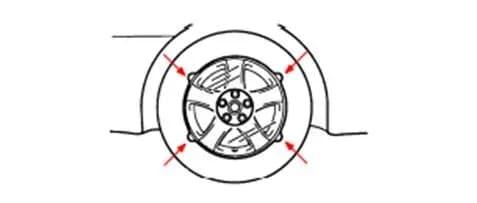
Also applies to
- Toyota 4Runner
- 2021–2024
- Toyota Avalon
- 2021–2022
- Toyota bZ4X
- 2023–2024
- Toyota C-HR
- 2021–2022
- Toyota Camry
- 2022–2024
- Toyota Corolla
- 2021–2024
- Toyota Corolla Cross
- 2022–2024
- Toyota Crown
- 2023–2025
- Toyota GR Corolla
- 2023–2024
- Toyota GR86
- 2022–2023
- Toyota Grand Highlander
- 2024
- Toyota Highlander
- 2021–2024
- Toyota Land Cruiser
- 2021–2022
- Toyota Mirai
- 2021–2024
- Toyota Prius
- 2021–2024
- Toyota RAV4
- 2021–2024
- Toyota Sequoia
- 2021–2022
- Toyota Supra
- 2021–2024
- Toyota Tacoma
- 2021–2024
- Toyota Tundra
- 2021–2024
- Toyota Venza
- 2021–2024
▸ Show 15 more▾ Show fewer
What is this TSB about?
Toyota Technical Service Bulletin T-SB-0038-24 outlines the use of a specialized wheel film designed to prevent brake rotor rust. This film replaces older cardboard anti-rust covers and is applied to new vehicles during transportation and storage. The primary goal is to shield the disc brake rotor from environmental elements and initial rust formation before the vehicle reaches the customer. This helps maintain the vehicle's aesthetic appeal and component integrity, preventing issues like Toyota Camry brake rotor rust before delivery.
Why this matters
Preventing initial rust on brake rotors is crucial for customer satisfaction and vehicle longevity. Even minor surface rust can be perceived negatively by new car buyers. By using this wheel film, Toyota aims to ensure that vehicles are delivered in pristine condition, free from cosmetic defects on critical components like brake rotors. This proactive measure helps avoid potential customer concerns related to Toyota Camry brake rotor rust or similar issues on other models.
Important Warnings for Dealers and Owners
This bulletin includes several key instructions and warnings to ensure the proper handling and removal of the wheel film:
- "Retain the wheel film on the disc wheel during vehicle display and storage."
- "If the vehicle will be stored after Pre-Delivery Service (PDS), do NOT remove the wheel film right away."
- "Remove the wheel film just prior to the delivery to customers."
- When warming the film for removal, "Do NOT overheat the film and wheel."
- If adhesive residue remains, "Do NOT use thinner to remove the adhesive residue."
Wheel Film Removal Instructions
Removing the wheel film is a straightforward process, but special care is needed, especially in cold conditions. The basic steps are:
- Firmly hold the outer end of the wheel film.
- Carefully pull OFF the wheel film.
If the ambient temperature is below 0°C (32°F), the film may tear during removal. To make the process easier and prevent tearing, it is recommended to warm the film above 0°C (32°F) using one of the following methods:
- Splash hot water on the wheel film.
- Warm the wheel film with a cotton cloth soaked in hot water.
- Warm the wheel film with a heat gun, being careful not to overheat the film or wheel.
- Warm the wheel film by an infrared heater (lamp) for paint, again, avoiding overheating.
- Warm the wheel film by a steam car wash.
- Park the vehicle indoors (e.g., in a garage) for an extended period.
If any adhesive residue is found on the disc wheel after removal, it should be cleaned with a soft cloth dipped in ethyl alcohol (ethanol). It is important not to use thinner for this purpose.
Film Disposal Instructions
The polyethylene film used for brake rotor protection should be disposed of according to local regulations. Toyota notes that polyethylene film will not generate harmful gases when burned.
Supersession Information
This Technical Service Bulletin, T-SB-0038-24, issued on April 19, 2024, completely supersedes Service Bulletin No. PD017-04. The previous bulletin is now considered obsolete, and any printed versions should be discarded. This update ensures that dealers and technicians have the most current information regarding brake rotor rust prevention and wheel film handling for all affected Toyota models, including those that might experience Toyota Camry brake rotor rust.
NHTSA ID 11003592
Frequently Asked Questions
- What is the purpose of the wheel film mentioned in Toyota T-SB-0038-24?
- The wheel film is used to prevent brake rotor rust from forming on 1992-2025 Toyota vehicles during transportation and storage, shielding the disc brake rotor from weather and initial rust before customer delivery.
- When should the wheel film be removed from my Toyota vehicle?
- The wheel film should be retained on the disc wheel during vehicle display and storage and removed just prior to the vehicle's delivery to the customer. If the vehicle is stored after Pre-Delivery Service, do not remove the film right away.
- What should I do if I find adhesive residue after removing the wheel film?
- If adhesive residue is found on the disc wheel, you should remove it with a soft cloth dipped in ethyl alcohol (ethanol). It is important not to use thinner to remove the adhesive residue, as stated in the TSB.
- Does this TSB apply to my Toyota Camry brake rotor rust problem?
- This TSB specifically addresses the prevention of initial brake rotor rust on new vehicles using wheel film. If you are experiencing existing brake rotor rust on your Toyota Camry, this TSB provides guidance on the film's application and removal, but not a repair for pre-existing rust.
Related Articles
2021 Toyota Camry Health Check: Common TSBs and Owner Concerns
While the 2021 Toyota Camry has no recalls or owner complaints, several manufacturer service bulletins address potential issues. Key concerns include engine coolant leaks, transmission whine, and Malfunction Indicator Lamp (MIL) illumination with reduced engine power, especially in cold weather.
2021-2026 Toyota Vehicles Musty Odor Remediation TSB
This Toyota Technical Service Bulletin (T-SB-0055-24 Rev2) addresses musty odors in 2021-2026 Toyota vehicles resulting from water intrusion. It outlines a dealer-performed remediation process, including inspection, cleaning, and ozone treatment.
2021 Toyota Camry Coolant Leak Customer Support Program
Toyota's Customer Support Program 24TE04 addresses a potential flow shut-off valve coolant leak in certain 2019-2021 Avalon, Camry, Corolla, Highlander, RAV4, Sienna, and Venza models. This leak can trigger an 'Engine Maintenance Required' warning or affect A/C function. Toyota will cover repairs…
2018-2021 Toyota Engine Maintenance Required TSB P268111 P268115
Toyota has issued Technical Service Bulletin T-SB-0112-24 Rev2 for certain 2018-2021 Toyota models that may display an "Engine Maintenance Required" message along with Diagnostic Trouble Codes P268111 or P268115. This bulletin outlines the procedure to address issues with the Engine Coolant Bypass…
2021-2022 Toyota MIL ON with DTCs P01201C, P210015
Toyota T-SB-0005-24 Rev2 addresses Malfunction Indicator Lamp (MIL) illumination and reduced engine power in 2021-2022 Toyota Avalon, Camry, and RAV4 vehicles. The issue is linked to specific throttle body DTCs (P01201C, P210015, P210019, P211172) occurring in freezing temperatures, requiring ECM…
Leave a comment
Comments are moderated and may take a moment to appear. Only your first name and the initial of your last name are shown publicly.
Comments
Be the first to comment.