2022-2026 Audi MIL On, Misfire, Lean Fuel System DTCs
Audi has released Technical Service Bulletin 01 24 48 2014753/13 to address issues causing the 'MIL on' light, misfires, and lean fuel system DTCs such as P0300 and P0171. This bulletin covers various Audi models from 2022-2026 and highlights fuel quality as a primary cause.
 David Chen2022 Audi e-tron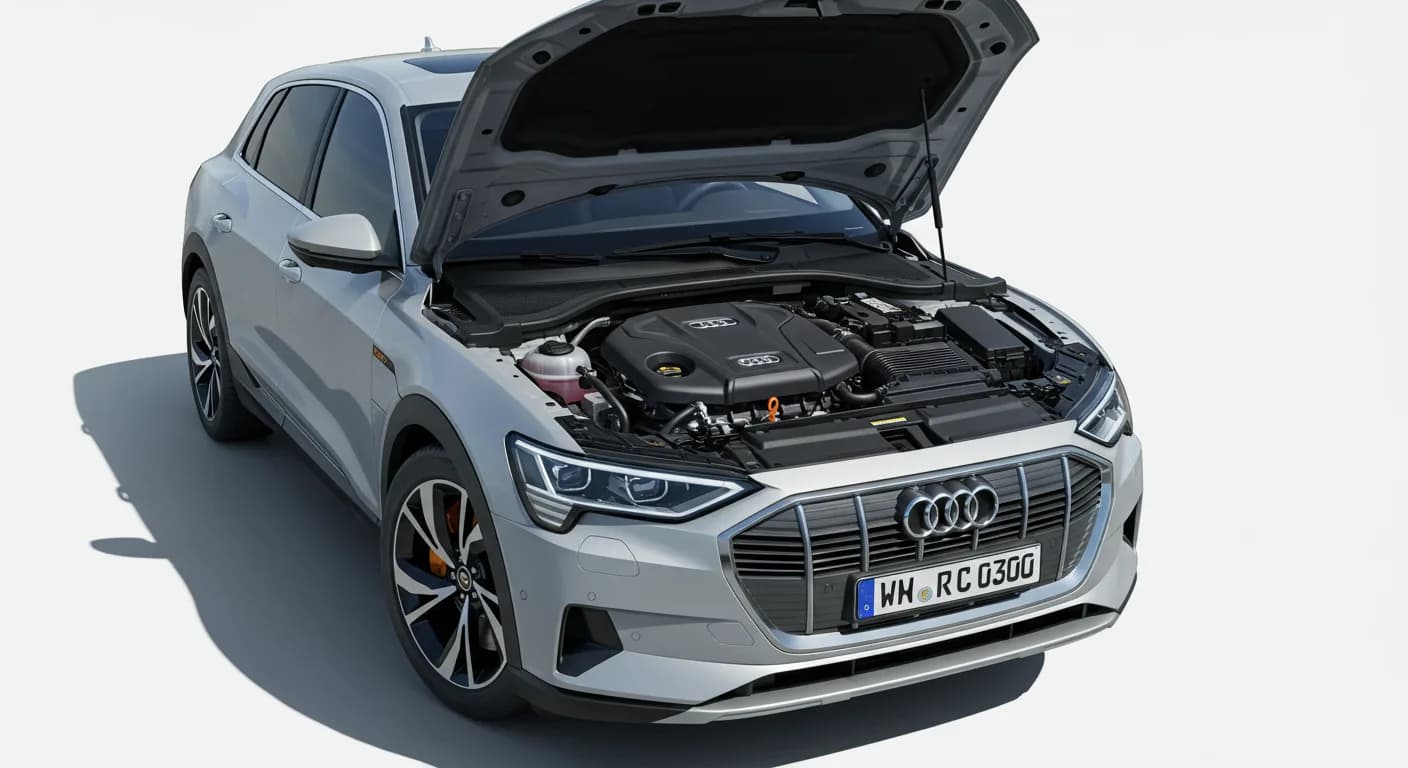
Also applies to
- Audi A3
- 2022–2025
- Audi A4
- 2021–2025
- Audi A4 allroad
- 2021–2025
- Audi A5
- 2021–2024
- Audi A6
- 2021–2025
- Audi A6 allroad
- 2021–2025
- Audi A7
- 2021–2025
- Audi A7 e
- 2021–2022
- Audi A8 L e
- 2021
- Audi e-tron
- 2021, 2023
- Audi e-tron GT
- 2022–2025
- Audi e-tron Sportback
- 2021–2022
- Audi Q3
- 2021–2025
- Audi Q5
- 2021–2025
- Audi Q5 e
- 2021, 2023, 2024, 2025
- Audi Q7
- 2021–2025
- Audi Q8
- 2021–2025
- Audi R8
- 2021–2023
- Audi RS 3
- 2022–2024
- Audi RS 5
- 2021–2024
- Audi RS 6 Avant
- 2021–2025
- Audi RS 7
- 2021–2025
- Audi RS e-tron GT
- 2022–2024
- Audi RS Q8
- 2021–2025
- Audi S e-tron GT
- 2026
- Audi S3
- 2022–2025
- Audi S4
- 2021–2025
- Audi S5
- 2021–2024
- Audi S6
- 2021–2025
- Audi S7
- 2021–2025
- Audi S8
- 2021–2025
- Audi SQ5
- 2021–2025
- Audi SQ7
- 2021–2025
- Audi SQ8
- 2021–2025
- Audi TT
- 2021–2023
- Audi TT RS
- 2021–2022
- Audi TTS
- 2021–2023
▸ Show 31 more▾ Show fewer
Symptoms
Owners of various Audi models from 2022-2026 may experience a range of symptoms related to fuel quality issues, often accompanied by the illumination of the Malfunction Indicator Lamp (MIL). These symptoms include:
- Excessive accumulation of deposits on intake valves, intake manifold, fuel injectors, and combustion chambers.
- The engine running rough after a cold start.
- Excessive engine cranking time.
- Hesitations while driving.
- Rough engine idle.
- Reduced engine performance.
- Poor fuel economy.
Fault Codes / DTCs
When these conditions are severe enough to illuminate the MIL, the Engine Control Module (ECM), specifically J623 (address word 0001), may store one or more of the following Diagnostic Trouble Codes (DTCs):
| Code | Description |
|---|---|
| P0300 | Random/Multiple Cylinder Misfire Detected |
| P030x | Specific Cylinder Misfire Detected |
| P0171 | System Too Lean (Bank 1) |
| P0174 | System Too Lean (Bank 2) |
| P1128 | Oxygen Sensor Heater Circuit Malfunction |
| P1130 | Oxygen Sensor Heater Circuit Malfunction |
| P1136 | Oxygen Sensor Heater Circuit Malfunction |
| P1138 | Oxygen Sensor Heater Circuit Malfunction |
| P219C00 | Air/Fuel Ratio Imbalance |
| P219D00 | Air/Fuel Ratio Imbalance |
| P219E00 | Air/Fuel Ratio Imbalance |
| P219F00 | Air/Fuel Ratio Imbalance |
| P21A000 | Air/Fuel Ratio Imbalance |
| P21A100 | Air/Fuel Ratio Imbalance |
Diagnosis / Trigger Conditions
This TSB, 01 24 48 2014753/13, identifies the primary cause of these issues as the use of contaminated gasoline or gasoline with a low content of deposit control additives. Contaminated gasoline may have a unique color and odor, contain undissolved water, sediments, or appear cloudy. Fuel lacking sufficient deposit control additives leads to carbon buildup on critical engine components.
For MY2016-MY2019 Audi vehicles equipped with the 3.0TFSI EVO (CREC) engine, specific deviations in fuel quality can lead to deposits forming in the injectors. These deposits can prevent proper injector closure, causing fuel to enter the intake manifold or cylinder after the engine is switched off, leading to an overly rich mixture upon subsequent starts.
Important Warnings
Audi has issued specific warnings regarding this issue:
- Do not replace injectors for this issue. The TSB explicitly states that replacing injectors will not resolve the problem, particularly for MY16-MY19 3.0TFSI EVO (CREC) equipped vehicles where deposits are the root cause.
- The use of gasoline additive G 001770A2 is not reimbursed under warranty. Owners should be aware that while this additive is recommended for treatment, its cost is not covered under warranty.
Repair Procedure Summary
The recommended repair focuses on addressing the fuel quality and deposit buildup. For general cases, Audi recommends using gasoline additive G 001770A2 to remove existing carbon deposits from injectors (MPI and FSI engines), combustion chambers (MPI and FSI engines), and intake valves (MPI engines only).
The additive should be mixed directly into a full fuel tank. The recommended ratio is 60 ml per 20 liters of gasoline, or 120 ml per 10 gallons of gasoline.
For MY2016-MY2019 3.0TFSI EVO (CREC) equipped vehicles, a specific additive, G 001780M3 (200 ml), should be used. This multi-purpose additive helps remove deposits from low- and high-pressure injectors and ensures their proper sealing. If the issue persists after using the additive, further diagnosis should be performed. For detailed instructions on removing carbon deposits from intake valves of FSI engines, refer to TSB 2019948, which addresses '01 MIL on (P0300 and/or P0301 - P0306 stored in ECM)'.
Required Parts
To address the conditions described in TSB 01 24 48 2014753/13, the following parts may be required:
- Gasoline Additive G 001770A2: For general carbon deposit removal.
- Gasoline Additive G 001780M3: Specifically for MY2016-MY2019 3.0TFSI EVO (CREC) engines.
- Fasteners, Bolts, Nuts, and Screws: As needed per the repair manual, referenced via ETKA/ELSA.
Owner Action
If your Audi is experiencing a 'MIL on' light, misfires, or lean fuel system DTCs, particularly a 2022 Audi e-tron with a P0300 code, it is recommended to first consider your fuel source. Switching to TOP TIER Detergent Gasoline can help prevent and reduce carbon deposits. If symptoms persist, consult with an authorized Audi service center. Be aware that the cost of gasoline additive G 001770A2 is not covered under warranty.
NHTSA ID: 11012476
Frequently Asked Questions
- What does the 'MIL on' light mean in my Audi with DTC P0300?
- The 'MIL on' light, often referred to as the Check Engine Light, combined with a P0300 DTC (Random/Multiple Cylinder Misfire Detected), indicates that your engine is experiencing misfires across multiple cylinders. According to Audi TSB 01 24 48 2014753/13, this can be due to contaminated gasoline or fuel lacking sufficient deposit control additives.
- Can poor gasoline quality cause my Audi to have a lean fuel system DTC like P0171?
- Yes, poor gasoline quality, including contaminated fuel or fuel with low deposit control additives, can lead to a lean fuel system condition. This can trigger DTCs such as P0171 (System Too Lean Bank 1) or P0174 (System Too Lean Bank 2), as detailed in Audi TSB 01 24 48 2014753/13.
- What should I do if my Audi 3.0TFSI EVO (CREC) engine is experiencing misfires and has a 'MIL on' light?
- For MY2016-MY2019 Audi vehicles with the 3.0TFSI EVO (CREC) engine, if you're experiencing misfires and a 'MIL on' light, Audi TSB 01 24 48 2014753/13 recommends using gasoline additive G 001780M3. It's important to note that you should not replace the injectors for this issue, as the problem is typically deposit-related.
- Is the fuel additive recommended by Audi covered under warranty?
- No, Audi TSB 01 24 48 2014753/13 explicitly states that the use of gasoline additive G 001770A2 is not reimbursed under warranty. Owners will be responsible for the cost of this additive.
- How can I prevent fuel quality issues from causing engine problems in my Audi?
- To prevent issues like the 'MIL on' light, misfires, and lean fuel system DTCs, Audi recommends consistently using TOP TIER Detergent Gasoline. This type of fuel contains higher levels of deposit control additives, which help keep your engine's fuel system clean and prevent carbon buildup.
Other revisions of this TSB
- 2023-2026 Audi MIL On and Engine DTCs TSB 2014753P219C00, P219D00, P219E00
Related Articles
2022 Audi e-tron Problems: Electrical System & Braking Concerns
The 2022 Audi e-tron has faced significant owner complaints regarding its electrical system, including sudden power loss and charging hazards, as well as various braking malfunctions. This profile details these issues and relevant service bulletins.
2022-2026 Audi Guided Fault Finding Reporting Obligation
Audi has issued Technical Service Bulletin TPI 2033392, also known as Transaction No. 2081531/1, regarding a reporting obligation for technicians when Guided Fault Finding produces an unexpected result. This TSB outlines the process for contacting Audi Product Support for diagnostic assistance.
2022-2026 Audi Infotainment System Complaints
Audi has released Technical Service Bulletin (TSB) 2081405/1 to address various customer complaints regarding infotainment systems in 2022-2026 Audi vehicles. This TSB helps technicians diagnose issues often caused by external media or mobile devices, rather than vehicle technology.
2018-2026 Audi Models Cracking Noise TSB 2061464/11
Audi Technical Service Bulletin 2061464/11 describes a cracking noise from the front or rear axle when changing direction in various 2018-2026 Audi models. The issue is due to stub axle movement and is resolved by bonding the stub axle to the wheel bearing with locking fluid.
2022-2026 Audi Parking Aid False Warnings TSB 2024323/13
Audi has released Technical Service Bulletin 2024323/13 to address customer complaints of false parking aid warnings. This bulletin details various environmental and vehicle-specific conditions that can cause the parking aid system to issue alerts even when no obstacles are present. It provides…
Leave a comment
Comments are moderated and may take a moment to appear. Only your first name and the initial of your last name are shown publicly.
Comments
Be the first to comment.