2021-2024 Audi 48V Battery Fault: DTC P0A7D00 Charging Issue
Audi has released Technical Service Bulletin 2067906/2 for 2021-2024 models experiencing a 48V battery fault and DTC P0A7D00. This TSB addresses vehicles where the 48V battery enters a low voltage protection state and won't accept a charge, detailing the necessary repair steps.
 David Chen2021 Audi e-tron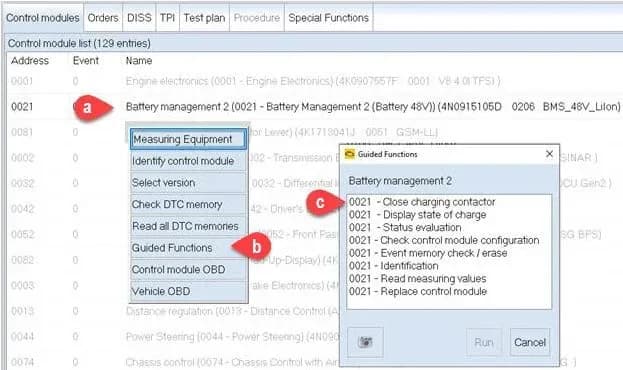
Also applies to
- Audi A3
- 2022–2024
- Audi A4
- 2021–2024
- Audi A4 allroad
- 2021–2022
- Audi A5
- 2021–2024
- Audi A6
- 2021–2024
- Audi A6 allroad
- 2021–2022
- Audi A7
- 2021–2024
- Audi A7 e
- 2021–2022
- Audi A8 L e
- 2021
- Audi e-tron
- 2022–2023
- Audi e-tron GT
- 2022–2024
- Audi Q3
- 2021–2024
- Audi Q5
- 2021, 2023, 2024
- Audi Q5 e
- 2024
- Audi Q7
- 2021–2024
- Audi Q8
- 2021–2024
- Audi R8
- 2021–2023
- Audi RS 3
- 2023–2024
- Audi RS 5
- 2021–2024
- Audi RS 6 Avant
- 2021–2024
- Audi RS 7
- 2021–2024
- Audi RS e-tron GT
- 2022–2024
- Audi RS Q8
- 2021–2024
- Audi S3
- 2022–2024
- Audi S4
- 2021–2024
- Audi S5
- 2021–2024
- Audi S6
- 2021–2024
- Audi S7
- 2021–2024
- Audi S8
- 2021, 2023, 2024
- Audi SQ5
- 2021–2024
- Audi SQ7
- 2021–2024
- Audi SQ8
- 2021–2022
- Audi TT
- 2021–2023
- Audi TT RS
- 2021–2022
- Audi TTS
- 2021–2023
▸ Show 29 more▾ Show fewer
Audi has issued Technical Service Bulletin (TSB) 2067906/2, superseding Group 17 number 22-20 dated September 13, 2022. This bulletin addresses a condition in 2021-2024 Audi vehicles equipped with a 48V battery where the battery enters a low voltage protection state and will not accept a charge. This issue is often accompanied by the diagnostic trouble code (DTC) P0A7D00, indicating a "Hybrid/EV Battery Pack State Of Charge Low."
Symptoms
Owners of affected 2021-2024 Audi vehicles may notice that their 48V battery is not charging. This is typically due to the battery entering a low voltage protection state, which prevents the battery from accepting any incoming charge. The primary indicator of this specific Audi 48V battery fault is the presence of the DTC P0A7D00.
Fault Codes / DTCs
The following diagnostic trouble code is associated with this 48V battery charging issue:
| Code | Description |
|---|---|
| P0A7D00 | Hybrid/EV Battery Pack State Of Charge Low |
Technical Background
When the 48V battery's state of charge drops below a predefined threshold, internal protection relays within the battery open. This action is a safety measure designed to protect the internal cells from falling below a safe minimum voltage limit. Once these relays are open, the battery cannot be charged until an appropriate adaptation channel is set within the battery management system to close them.
Important Warnings
Audi has provided critical instructions and warnings related to this repair procedure:
- 12V Charger Connection: The negative cable of the 12V charger must not be directly attached to the negative terminal post of the 12V battery. For the battery management system to properly read the incoming charge, the negative cable of the battery charger must be attached to the vehicle chassis, or a jump-start ground post.
- Adaptation Clearing Conditions: Several conditions will cause the 48V battery to clear the adaptation for the protection relay. Once cleared, and if the 48V battery has not sufficiently charged, the protection relay will reopen, making charging impossible until the adaptation is reset again. These conditions include:
- Opening or closing a door.
- Opening or closing the hood.
- Opening or closing the trunk.
- Pressing the Start/Stop ignition button (Ignition On / Off Status).
- Removing the Diagnostic Interface from the OBD2 port, or running any additional test plans.
- Removing the key from inside the vehicle.
- Charging Time: Charging the 48V battery takes significantly longer compared to charging a 12V battery. Under optimal conditions, technicians should plan for the charger to be active for a minimum of two hours.
Repair Procedure Summary
The repair for this Audi 48V battery fault involves a specific procedure performed by an authorized Audi service center. The process begins by connecting an approved 12V charger to the vehicle's 12V system. This charger must have a minimum continuous output of 50 amps, with 100 amps continuous being recommended. It's crucial to connect the negative charger cable to the vehicle chassis or a jump-start ground post, not directly to the 12V battery's negative terminal.
Once the charger is connected, all non-essential electrical consumers in the vehicle must be shut off. Technicians then use the ODIS Guided Fault Finding (GFF) system to run a specific test plan: "0021 – Close charging contactor." This test plan sets the adaptation necessary for the protection relays to close. It is vital not to exit the test plan until the adaptation is complete. The ODIS GFF navigation involves right-clicking on "Battery Management 2 (0021 – Battery Management 2 (Battery 48V))" (specifically identified as 4N0915105D 0206 BMS_48B_Lilon), selecting "Guided Functions," and then choosing "0021 - close charging contactor." After the adaptation is set, the ignition must be turned off, wait 10 seconds, and then turned back on. The 48V battery will only read the protection relay closed adaptation value when the ignition is turned on.
Required Tools or Parts
To perform this service, an approved 12V charger with a minimum output of 50 amps continuous (100 amps continuous recommended) is required. The procedure also utilizes the ODIS GFF diagnostic system.
Owner Action
If your 2021-2024 Audi is experiencing a 48V battery fault, particularly with DTC P0A7D00, it is recommended to schedule an appointment with an authorized Audi service center. The repair involves specialized equipment and diagnostic procedures that should only be performed by trained technicians. This TSB is for informational purposes and is not applicable to any Audi warranty.
Additional Information
This TSB references another document, TSB 2067937, titled "27 48V Reference: Diagnosis and system information," which may be necessary to complete the procedure. All part and service references in TSB 2067906 are subject to change, and technicians should always verify the latest information.
NHTSA ID: 10233378
Frequently Asked Questions
- What does DTC P0A7D00 mean for my Audi?
- DTC P0A7D00, or "Hybrid/EV Battery Pack State Of Charge Low," indicates that your Audi's 48V battery is in a low voltage protection state and is unable to accept a charge. This is a common Audi 48V battery fault.
- Why won't my Audi's 48V battery charge?
- Your Audi's 48V battery won't charge because its internal protection relays have opened to prevent damage when the battery's charge falls too low. These relays need a specific adaptation procedure to close again, allowing the battery to accept a charge.
- Can I charge the 48V battery myself if I have a charger?
- No, this is not a simple charging procedure. While a 12V charger is used, the negative cable must be connected to the vehicle chassis or a jump-start ground post, not directly to the 12V battery terminal. Crucially, a specialized diagnostic tool (ODIS GFF) is required to reset the battery's protection relays. It's best to have this Audi 48V battery fault addressed by an authorized Audi service center.
- How long does it take to charge the 48V battery after this repair?
- After the repair procedure to close the protection relays, charging the 48V battery takes significantly longer than a standard 12V battery. Under optimal conditions, the charger should remain active for a minimum of two hours to ensure a sufficient charge.
- What actions can accidentally clear the 48V battery's adaptation?
- Several actions can inadvertently clear the 48V battery's adaptation, causing the protection relays to reopen and prevent charging. These include opening or closing doors, the hood, or trunk, pressing the Start/Stop button, removing the diagnostic interface, or even removing the key from inside the vehicle.
Other revisions of this TSB
- 2021-2023 Audi 48V Electrical System Warning U046900 TSBP0A7D00
- 2021-2023 Audi 48V Electrical System Malfunction TSB 2058831/15P0A7D00
- 2022-2026 Audi e-tron DTC P0A7D00 InformationP0A7D00
- 2021-2023 Audi 48V Electrical System Malfunction DTC U046900 TSBP0A7D00
- 2021-2023 Audi 48V System Warning DTC U046900 TSBP0A7D00
- 2021-2024 Audi 48V Battery Charging Issue P0A7D00P0A7D00
- 2022-2024 Audi 48V Battery Charging DTC P0A7D00P0A7D00
- 2017-2024 Audi 48V Battery Charging DTC P0A7D00 TSBP0A7D00
Related Articles
2021 Audi e-tron Electrical Malfunction and Power Loss
A 2021 Audi e-tron owner reported a severe 'Electrical Malfunction' resulting in complete loss of power on the highway. The issue has persisted despite dealer attempts to fix it over five months, posing significant safety risks.
2021-2026 Audi UTR Troubleshooting & FAQs TSB 2081409/1
This Audi Technical Service Bulletin (TSB 2081409/1) provides comprehensive answers to frequently asked questions and troubleshooting steps for the Audi Universal Traffic Recorder (UTR) accessory, covering topics like SD card compatibility, video playback, Wi-Fi issues, and more.
2021-2025 Audi Emergency Call System Fault TSB
Audi has released Technical Service Bulletin 2059528/18 to address an "Emergency call function: malfunction! Function unavailable. Please contact service" warning, often accompanied by a red SOS LED and DTC B200000. This issue affects various 2021-2025 Audi models and is due to a software problem…
2021-2026 Audi Adaptive Light System Fault C12B3FA TSB
Audi has released Technical Service Bulletin 2054202/7 to address an intermittent 'Audi adaptive light: system fault' message and DTC C12B3FA in various 2021-2026 models. This TSB outlines diagnosis and resolution for driver assistance system malfunctions.
2021-2026 Audi Parking Aid False Warnings TSB 2024323/12
This Technical Service Bulletin (TSB 2024323/12) details diagnostic and repair procedures for 2021-2026 Audi vehicles experiencing false parking aid warnings. Learn about environmental factors, sensor checks, and proper installation to resolve issues like 'Parking aid does not work / warning is…
Leave a comment
Comments are moderated and may take a moment to appear. Only your first name and the initial of your last name are shown publicly.
Comments
Be the first to comment.