2022-2024 Audi 48V Battery Charging DTC P0A7D00
If your 2022-2024 Audi is displaying DTC P0A7D00 and the 48V battery won't charge, this TSB outlines the diagnostic and repair steps, emphasizing proper charging procedures and when not to replace the battery.
 Ahmet Topcu2022 Audi e-tron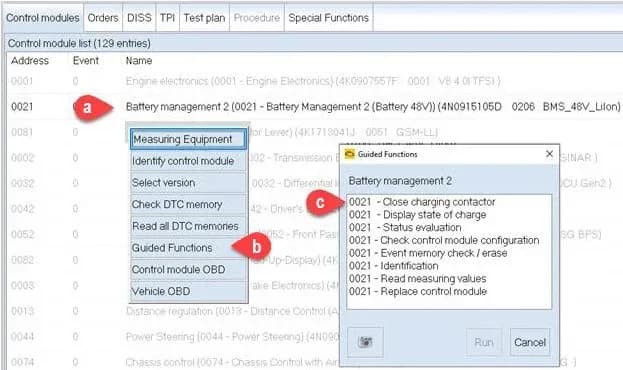
Also applies to
- Audi A3
- 2022–2024
- Audi A4
- 2021–2024
- Audi A4 allroad
- 2021–2024
- Audi A5
- 2021–2024
- Audi A6
- 2021–2024
- Audi A6 allroad
- 2021–2024
- Audi A7
- 2021–2024
- Audi A7 e
- 2021–2022
- Audi A8 L e
- 2021
- Audi e-tron
- 2021, 2023
- Audi e-tron GT
- 2022–2024
- Audi Q3
- 2021–2024
- Audi Q5
- 2021–2024
- Audi Q5 e
- 2024
- Audi Q7
- 2021–2024
- Audi Q8
- 2021–2024
- Audi R8
- 2021–2023
- Audi RS 3
- 2022–2024
- Audi RS 5
- 2021–2024
- Audi RS 6 Avant
- 2021–2024
- Audi RS 7
- 2021–2024
- Audi RS e-tron GT
- 2022–2024
- Audi RS Q8
- 2021–2024
- Audi S3
- 2022–2024
- Audi S4
- 2021–2024
- Audi S5
- 2021–2024
- Audi S6
- 2021–2024
- Audi S7
- 2021–2024
- Audi S8
- 2021–2024
- Audi SQ5
- 2021–2024
- Audi SQ7
- 2021–2024
- Audi SQ8
- 2021–2024
- Audi TT
- 2021–2023
- Audi TT RS
- 2021–2022
- Audi TTS
- 2021–2023
▸ Show 29 more▾ Show fewer
Symptoms
If your 2022-2024 Audi vehicle is experiencing issues with its 48V battery, you might notice that the battery is in a low voltage protection state and will not accept a charge. This condition is typically accompanied by a specific diagnostic trouble code (DTC).
Fault Codes / DTCs
The primary fault code associated with this issue is:
| Code | Description |
|---|---|
| P0A7D00 | Hybrid/EV Battery Pack State of Charge Low |
Another related DTC, P0B2900, indicates a defective battery or deep discharge, which is an important distinction for repair decisions.
Important Warnings for Owners
Owners should be aware of critical information regarding the 48V battery system:
- "48V Batteries must not be replaced and instead need to be recharged in such a case. Claims for erroneously replaced 48V batteries may be debited."
- "The 48V battery cannot be charged if the SoC of the 12V battery is above 60%!" If necessary, the 12V battery's state of charge (SoC) must be drained to between 40% and 60% by turning on the ignition for approximately 20 minutes or longer.
- "The negative cable of the 12V charger must not be directly attached to the negative terminal post of the 12V battery. For the battery management system to read the incoming charge, the negative cable of the battery charger must be attached to the vehicle chassis, or jump-start ground post."
- When performing the charging procedure, "do not exit the test plan once the adaptation has been set." Exiting prematurely can interrupt the process.
- "The 48V battery must only be replaced if a DTC regarding a defective Battery or deep discharge (P0B2900) is stored. Batteries replaced for merely a low charge (between 5% and 15%) may be debited."
- "Charging the 48V battery takes significantly longer in comparison to charging the 12V battery. Under optimal conditions, you should plan to have the charger active for a minimum of two hours."
Diagnosis / Trigger Conditions
The 48V battery enters a low voltage protection state when its state of charge (SoC) falls below a predetermined level. This triggers internal protection relays to open, safeguarding the internal cells from damage. The relays will not close again until a specific adaptation channel is set within the battery management system.
For the 48V battery to be charged via the 12V system, its SoC must be between 5% and 15%. The 12V battery's SoC must also be between 40% and 60%, which can be checked using the GFF diagnostic tool in the Data Bus On Board Diagnostic Interface control unit (-J533-, address word 0019).
Repair Procedure Summary
If your Audi 48V battery P0A7D00 code is present, the repair involves a specific charging procedure:
- Prepare the Vehicle: Ensure the 48V battery's SoC is between 5% and 15%, and the 12V battery's SoC is between 40% and 60%. If the 12V battery's SoC is too high, it must be drained by turning on the ignition.
- Connect Charger: Attach an approved 12V charger with a minimum continuous output of 100 amps to the vehicle's 12V system. Crucially, the negative charger cable must connect to the vehicle chassis or a jump-start ground post, not directly to the 12V battery's negative terminal.
- Reduce Electrical Load: Shut off all non-essential electrical consumers in the vehicle.
- Run Diagnostic Test Plan: Using the ODIS GFF diagnostic system, run test plan "0021 – Close charging contactor." This test plan sets the adaptation for the protection relay to close. It is vital not to exit this test plan until the adaptation is fully set.
- Confirm Adaptation: An automatic ignition cycle will occur, and a clicking noise should be audible, indicating that the battery contactors have closed. The protection relay closed adaptation value and 48V SoC value may only be visible when the ignition is turned on.
Several actions can clear the adaptation for the protection relay closed, causing the 48V battery to stop charging if not sufficiently charged. These include opening/closing the doors, hood, or trunk; cycling the ignition; removing the diagnostic interface; or removing the key from the vehicle.
Required Tools or Parts
To perform this repair, technicians will need:
- An approved 12V charger with a minimum continuous output of 100 amps.
- An ODIS GFF diagnostic tool to run the specific test plan.
Warranty Information
For warranty claims related to this issue, please use service number/damage code: 2704/0040, following existing Audi Warranty guidelines.
Revision History
This Technical Service Bulletin (TSB 2067906/3) was published on September 11, 2023. It supersedes previous versions for the following reasons:
- Revision 3 (September 11, 2023): Revised Technical Background (added SoC info), Revised Service (added preconditions and notes), and Revised Warranty (added service number/damage code).
- Revision 2 (March 27, 2023): Revised Service (added 100A charger recommendation). This version superseded Group 27 number 23-50 dated March 27, 2023.
- Revision 1 (September 13, 2022): Initial publication.
An additional Technical Service Bulletin, 2067937, titled "27 48V Reference: Diagnosis and system information," is necessary to complete this procedure.
Source: NHTSA ID: 10242930
Frequently Asked Questions
- What does the Audi P0A7D00 code mean?
- The P0A7D00 code in your Audi indicates a "Hybrid/EV Battery Pack State of Charge Low," meaning the 48V battery is in a low voltage protection state and will not accept a charge.
- Can I replace my 48V battery if I see the P0A7D00 code?
- No, Audi explicitly states that 48V batteries should not be replaced if the P0A7D00 code is present due to a low charge. Replacement is only recommended if a DTC like P0B2900 (defective battery or deep discharge) is stored. Incorrect replacements may be debited.
- How long does it take to charge an Audi 48V battery with this procedure?
- Under optimal conditions, you should plan for the charger to be active for a minimum of two hours when performing this specific 48V battery charging procedure.
- What are the conditions for charging the Audi 48V battery?
- For the 48V battery to be charged, its state of charge (SoC) must be between 5% and 15%. Additionally, the 12V battery's SoC must be maintained between 40% and 60% during the process.
Other revisions of this TSB
- 2021-2023 Audi 48V Electrical System Warning U046900 TSBP0A7D00, P0B2900
- 2021-2023 Audi 48V Electrical System Malfunction TSB 2058831/15P0A7D00, P0B2900
- 2022-2026 Audi e-tron DTC P0A7D00 InformationP0A7D00
- 2021-2023 Audi 48V Electrical System Malfunction DTC U046900 TSBP0A7D00
- 2021-2023 Audi 48V System Warning DTC U046900 TSBP0A7D00
- 2021-2024 Audi 48V Battery Charging Issue P0A7D00P0A7D00, P0B2900
- 2021-2024 Audi 48V Battery Fault: DTC P0A7D00 Charging IssueP0A7D00
- 2017-2024 Audi 48V Battery Charging DTC P0A7D00 TSBP0A7D00
Related Articles
2022 Audi e-tron Problems: Electrical System & Braking Concerns
The 2022 Audi e-tron has faced significant owner complaints regarding its electrical system, including sudden power loss and charging hazards, as well as various braking malfunctions. This profile details these issues and relevant service bulletins.
2022-2026 Audi Guided Fault Finding Reporting Obligation
Audi has issued Technical Service Bulletin TPI 2033392, also known as Transaction No. 2081531/1, regarding a reporting obligation for technicians when Guided Fault Finding produces an unexpected result. This TSB outlines the process for contacting Audi Product Support for diagnostic assistance.
2022-2026 Audi Infotainment System Complaints
Audi has released Technical Service Bulletin (TSB) 2081405/1 to address various customer complaints regarding infotainment systems in 2022-2026 Audi vehicles. This TSB helps technicians diagnose issues often caused by external media or mobile devices, rather than vehicle technology.
2018-2026 Audi Models Cracking Noise TSB 2061464/11
Audi Technical Service Bulletin 2061464/11 describes a cracking noise from the front or rear axle when changing direction in various 2018-2026 Audi models. The issue is due to stub axle movement and is resolved by bonding the stub axle to the wheel bearing with locking fluid.
2022-2026 Audi Parking Aid False Warnings TSB 2024323/13
Audi has released Technical Service Bulletin 2024323/13 to address customer complaints of false parking aid warnings. This bulletin details various environmental and vehicle-specific conditions that can cause the parking aid system to issue alerts even when no obstacles are present. It provides…
Leave a comment
Comments are moderated and may take a moment to appear. Only your first name and the initial of your last name are shown publicly.
Comments
Be the first to comment.