2023-2026 Audi Ceramic Brake Disc Cracks TSB
Audi has issued Technical Service Bulletin (TSB) 2077435/2 regarding cracks on the friction ring surface of ceramic brake discs in various 2023-2026 models. This TSB clarifies that these cracks are a normal manufacturing characteristic and do not impact brake system functionality, requiring no…
 Marcus Weber2023 Audi e-tron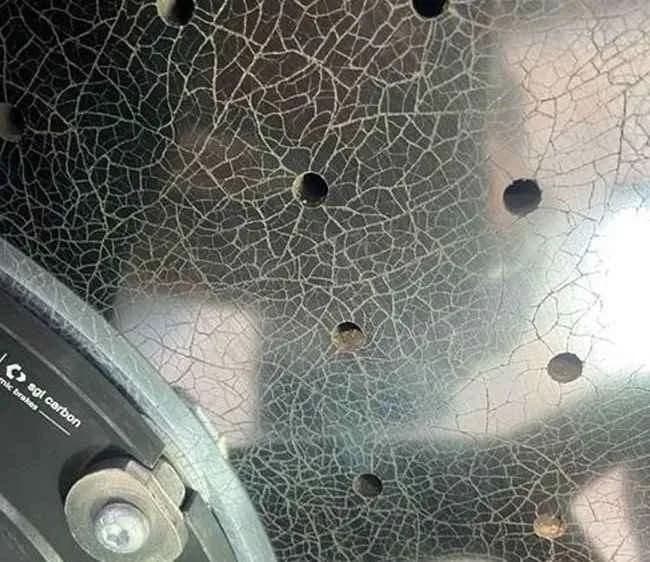
Şu araçlar için de geçerli
- Audi A3
- 2022–2026
- Audi A4
- 2022–2025
- Audi A4 allroad
- 2022–2025
- Audi A5
- 2022–2024
- Audi A6
- 2022–2025
- Audi A6 allroad
- 2022–2026
- Audi A7
- 2022–2025
- Audi A7 e
- 2022
- Audi e-tron
- 2022
- Audi e-tron GT
- 2022–2026
- Audi e-tron Sportback
- 2022
- Audi Q3
- 2022–2025
- Audi Q5
- 2022–2025
- Audi Q5 e
- 2023–2025
- Audi Q7
- 2022–2026
- Audi Q8
- 2022–2026
- Audi R8
- 2022–2023
- Audi RS 3
- 2022–2026
- Audi RS 5
- 2022–2024
- Audi RS 6 Avant
- 2022–2026
- Audi RS 7
- 2022–2026
- Audi RS e-tron GT
- 2022, 2023, 2024, 2026
- Audi RS Q8
- 2022–2026
- Audi S e-tron GT
- 2026
- Audi S3
- 2022–2026
- Audi S4
- 2022–2025
- Audi S5
- 2022–2024
- Audi S6
- 2022–2025
- Audi S7
- 2022–2025
- Audi S8
- 2022–2026
- Audi SQ5
- 2022–2025
- Audi SQ7
- 2022–2026
- Audi SQ8
- 2022–2026
- Audi TT
- 2022–2023
- Audi TT RS
- 2022
- Audi TTS
- 2022–2023
▸ 30 tane daha göster▾ Daha az göster
Owners of certain 2023-2026 Audi vehicles equipped with ceramic brake discs may notice cracks on the friction ring surface. This condition is addressed in Technical Service Bulletin (TSB) 2077435/2, released by Audi on October 21, 2025. This TSB provides important information regarding these observed cracks.
Symptoms
Owners might observe significant cracks on the surface of the friction ring of their ceramic brake discs. These cracks are visible upon inspection and may raise concerns about brake integrity.
Technical Background
Audi explains that the new generation of ceramic brake discs (CCB+) are prone to showing more significant cracks on the friction ring surface. These cracks form during the manufacturing process as the material cools. The friction ring surface contracts more than the base material, leading to these visible cracks. Importantly, these cracks are not an indication of significant thermal stresses or a functional defect.
What This Means for Owners
If you observe cracks on your 2023-2026 Audi e-tron ceramic brake cracks, or any other affected model, it's important to understand Audi's official stance. According to TSB 2077435/2, these cracks are considered a normal characteristic of the CCB+ brake discs. The functionality of the brake system is not affected by this condition, and there is no reason to replace parts. This TSB is informational only and does not apply to any Audi warranty claims for this specific characteristic.
Production Information
Audi notes that this characteristic is observed in several models from their respective production start dates or weeks:
- e-tron GT: From Start of Production (SOP).
- RSQ8: From week 48/2024.
- RS3: Planned from week 48/2025 onwards.
- New models: From 2025.
This information helps to clarify that the presence of Audi e-tron ceramic brake cracks and similar issues on other models is an expected outcome of the manufacturing process for these advanced brake systems.
Frequently Asked Questions
- Are the cracks on my Audi's ceramic brake discs a safety concern?
- No, according to Audi's TSB 2077435/2, the cracks on the friction ring surface of ceramic brake discs are a manufacturing characteristic and do not affect the functionality or safety of the brake system.
- Will Audi replace my cracked ceramic brake discs under warranty?
- Audi's TSB 2077435/2 states that this bulletin is informational only and does not apply to any Audi warranty. The cracks are considered a normal characteristic and do not warrant replacement.
- What causes the Audi e-tron ceramic brake cracks?
- The cracks are caused by the manufacturing process of the new generation ceramic brake discs (CCB+). They form as the material cools, due to the friction ring surface contracting more than the base material.
Related Articles
Should 2023 Audi e-tron Owners Worry? Recall & TSB Roundup
The 2023 Audi e-tron faces significant safety concerns, including recalls for potential brake pedal detachment and charging cable overheating. Owners have also reported serious issues like unintended acceleration and electrical system malfunctions. This guide covers all known problems and solutions.
2023 Audi e-tron Brake Pedal Recall
Audi has issued a recall (NHTSA ID: 26V240000, Audi Recall 46P7) for certain 2019-2024 E-Tron and 2020-2024 E-Tron Sportback vehicles, including the 2023 Audi e-tron. The recall addresses a potential issue where the brake pedal may detach from the brake booster, leading to a loss of brake function.
2015-2027 Audi Noise Diagnosis with Frequency Analysis App TSB
Audi has released Technical Service Bulletin 2051095/11 detailing the Audi Frequency Analysis app. This app helps technicians diagnose noise complaints more precisely across 2015-2027 Audi models. Learn how the app works, where to download it, and its features for effective vehicle noise analysis.
2023 Audi e-tron AC/DC Charging Not Possible TSB
This manufacturer communication (NHTSA ID 11031035) provides critical information for 2023 Audi e-tron owners facing issues with AC/DC charging. It specifically highlights problems linked to software version 00C6: 0093/3119, which can prevent the vehicle from charging.
2023-2025 Audi Rear Seat Reminder Message TSB 2074943/2
Audi Technical Service Bulletin 2074943/2 explains the instrument cluster message 'Please check rear seats and be aware of door safelock' in various 2023-2025 Audi models. This informational TSB details the rear occupant detection system designed to prevent children and pets from being left in…
Yorum bırakın
Yorumlar moderasyondan geçer ve görünmesi biraz zaman alabilir. Sadece adınız ve soyadınızın baş harfi herkese açık olarak gösterilir.
Yorumlar
İlk yorum sizden olsun.