2017-2025 Audi Creaking Noise During Braking or Steering TSB
Audi has released Technical Service Bulletin (TSB) 50 24 15 2062633/3 to address creaking noises heard when the vehicle body twists during braking or steering maneuvers in various 2017-2025 Audi models. This noise originates from the longitudinal member due to internal contact.
 Marcus Weber2023 Audi A5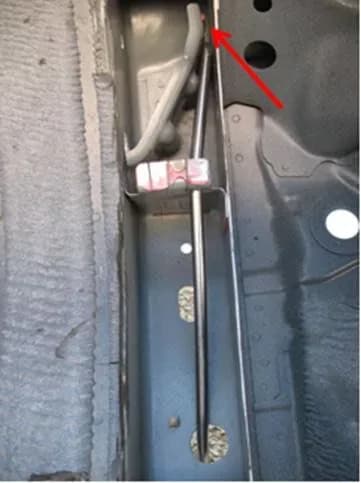
Şu araçlar için de geçerli
- Audi A4
- 2021–2024
- Audi A4 allroad
- 2021–2024
- Audi A5
- 2021, 2022, 2024
- Audi Q5
- 2021–2025
- Audi Q5 e
- 2021, 2023, 2024, 2025
- Audi RS 5
- 2021–2024
- Audi S4
- 2021–2024
- Audi S5
- 2021–2024
- Audi SQ5
- 2021–2025
▸ 3 tane daha göster▾ Daha az göster
Symptoms
Owners of affected 2017-2025 Audi models may experience specific Audi A5 creaking noise symptoms. The primary complaint is a "Creaking type noise is heard in the floor area." This noise typically occurs when the vehicle body twists, such as during strong braking or steering maneuvers. The sound is often localized to the footwell and the area under the seat.
Technical Background and Bulletin History
Audi Technical Service Bulletin (TSB) 50 24 15 2062633/3 explains that the creaking noise stems from an issue within the vehicle's longitudinal member. During cornering or hard braking maneuvers, the longitudinal member reinforcement plate 'P' can make contact with the threaded console 'T' at point 'U' (Figure 1, showing a cutaway view of the longitudinal member). This contact generates the audible creaking sound.
Audi has implemented an improved design for the longitudinal member assembly in production to prevent this issue in newer vehicles. This TSB, dated November 25, 2024, is Revision 3 and supersedes Technical Service Bulletin Group 50 number 23-12, dated March 17, 2023. The latest revision includes updates to the header (adding more models), service procedures (now requiring photo/video documentation), warranty labor operations, and changes to required parts and tools, specifically the cavity wax material. The previous Revision 2, also dated March 17, 2023, had added Model Year 2023 vehicles, updated warranty SRT information, and changed the cavity wax material.
Diagnosis and Trigger Conditions
Diagnosing the Audi A5 creaking noise involves reproducing the symptom under specific conditions. Technicians will perform a test drive, ideally with the customer, to identify the exact conditions under which the noise occurs and its origin point. If the noise is difficult to duplicate when the vehicle is cold, the technician may warm the longitudinal member and body area near the rear transverse link using a hot air blower set for an outlet temperature of approximately 550°C (1022 °F), warming the surface to about 65°C (149°F) (Figures 4 and 5 illustrate this warming process). After warming, the vehicle is allowed to cool to about 30°C (86°F) (Figure 6) and then test-driven again. Merely lowering the vehicle from a hoist after this warming process can sometimes trigger the noise.
Important Warnings
Owners and technicians should be aware of critical instructions outlined in the TSB:
- "As specified in the repair manual, it is necessary to replace all loosened subframe bolts at the conclusion of the entire repair."
- "If there is no change or elimination of the noise achieved during this diagnostic step, the repair in this TSB will not be effective and diagnosis must continue outside the scope of this repair procedure."
Repair Procedure Summary
The repair procedure outlined in TSB 50 24 15 2062633/3 involves several detailed steps to address the longitudinal member contact:
- Initial Test Drive: The technician will first duplicate the noise on a test drive, preferably with the customer, to clearly identify the conditions under which the creaking noise presents and its origin point. This confirms the noise is from the longitudinal member and that this TSB's repair will be effective.
- Subframe Bolt Loosening: Begin diagnosis by loosening the frontmost bolt on the subframe mounting by several turns, as shown in Figure 2. This bolt should not be removed entirely.
- Audible Cracking: In many cases, an audible 'cracking' noise may be heard during the process of loosening and tightening the subframe bolt (Figure 3).
- Underbody Trim Removal: With the symptom confirmed, remove the front middle underbody trim 'B', front underbody trim 'C', and the underbody trim 'D' (Figure 7).
- Accessing the Longitudinal Member: To gain access to the affected area inside the longitudinal member, unscrew the four sheet nut fasteners 'F' for the heat shield from their studs. Bend the heat shield slightly away from the longitudinal member (Figure 8). Remove grommet 'E'.
- Grommet Removal: Remove grommet 'H' from the longitudinal member (Figure 9).
- Bolt Replacement and Impact Protector Removal: Because bolt 'G' was loosened in the diagnosis process, it must be replaced. Replace bolt 'G' using the installation and tightening procedure found in ElsaPro. Remove the impact protector 'K' by prying out clip 'I' and detaching it from the longitudinal member (Figures 10 and 11).
- Identifying Access Holes: Shine a flashlight through the opening 'K' (where the impact protector was removed) to see the upper round hole 'M' in the longitudinal member reinforcement plate 'N' (Figure 13) when viewed through hole 'L' (the hole from grommet 'E'). Figure 12 shows the access for the improvised tool.
- Fabricating the Improvised Tool: An improvised tool is necessary for this modification. Obtain a steel rod 10mm in diameter and 50cm long. Grind the tip of one end into a chisel shape, with the grind length being 15mm +/-3mm on each side (Figure 14).
- Bending the Tool: Mount one end of the rod into a vice 11cm deep with the chisel shape parallel to the ground (Figure 15). A bend will be created 11cm deep from the chisel end (Figure 16). Bend the steel bar at the 11cm apex until a distance of 43mm +/- 3mm is created between the axis of the longer end of the rod and the axis of the shorter end of the rod at its tip (Figure 17). This distance must be measured and verified (Figure 18).
- Inserting the Tool: Insert the chisel end of the steel rod 'A' into the body opening 'L' in the longitudinal member (Figure 19). Feed the steel rod 'A' through hole 'M' (upper hole) in the reinforcement plate (Figure 20).
- Engaging the Chisel End: The chisel end of the steel rod must be fed far enough to engage the front reinforcement plate 'P' at point 'O' such that it is lodged into the gap between reinforcement plate 'P' and the wall of the longitudinal member 'R' (Figure 21). Figure 22 illustrates the correct steel rod positioning, and Figure 23 shows the chisel end properly engaged. Figure 24 shows an incorrect engagement.
- Creating a Gap: Using a marker, mark the point where the steel rod makes contact with the longitudinal member. Then, make a second mark 10mm - 15mm rearward of that contact point on the steel rod (Figure 25). Using a hammer, drive the steel rod a distance of 10mm (Figure 26). This action creates approximately a 3mm gap between reinforcement plate 'P' and the longitudinal member 'R', eliminating the contact point that causes the Audi A5 creaking noise (Figure 27).
- Corrosion Protection: All points that were contacted and/or struck during this process are likely to have had their corrosion protective layer compromised. Thoroughly coat all these areas with cavity wax (Figure 28). Cavity wax can be applied through the openings shown in Figure 28; the separation point in the longitudinal member can be accessed through hole 'S' (Figure 29).
- Reassembly and Final Test Drive: Reassemble the vehicle as per the repair manual. Perform a final test drive to confirm the elimination of the noise by duplicating the original driving conditions, ensuring the noise has been eliminated to the customer's satisfaction.
Required Tools or Parts
To perform this repair, the following parts and tools are specified:
- Cavity preservative: Part Number D 329215M2 (Quantity: 0.25)
- Hex head bolts: 02 per side (Refer to ETKA for specific part numbers)
- Improvised Tool: A custom-fabricated steel rod (10mm diameter, 50cm long) with a chisel tip (15mm +/-3mm grind length) and a specific bend (43mm +/- 3mm offset), as detailed in the repair procedure.
Owner Action
If your 2017-2025 Audi is experiencing a creaking noise during braking or steering, it is recommended to schedule an appointment with an authorized Audi dealer. Reference TSB 50 24 15 2062633/3 when discussing the issue. The dealer will perform the diagnostic and repair procedures as outlined in the bulletin. This TSB supersedes previous bulletin 23-12 dated March 17, 2023, which also addressed this issue.
Warranty Information
This repair is generally covered under warranty if the vehicle is still within its warranty period. The warranty claim details are as follows:
- Claim Type: If the vehicle is outside any warranty, this Technical Service Bulletin is informational only.
- Service Number: 5079
- Damage Code: 0010
- Labor Operations:
- Check longitudinal member: 5079 0199 (40 TU)
- Modify longitudinal member: 5079 4199 (100 TU)
- Cavity sealing: 5101 7501 (See SRT with associated operations)
- 3 Road tests prior to the service procedure: 0121 0199 (30 TU)
- Road test after the service procedure: 0121 0004 (10 TU)
- Claim Comment: As per TSB 2062633/3
All warranty claims must adhere to the Audi Warranty Policies and Procedures Manual.
Source: NHTSA ID 11011257
Galeri
28 görsel
Frequently Asked Questions
- What causes the creaking noise in my 2017-2025 Audi during braking or steering?
- The creaking noise, often described as an "Audi A5 creaking noise," is caused by contact between the longitudinal member reinforcement plate and a threaded console within the vehicle's body structure. This contact occurs when the vehicle body twists during maneuvers like braking or steering.
- How will an Audi dealer fix the creaking noise described in TSB 50 24 15 2062633/3?
- The repair involves a multi-step process. Technicians will diagnose the noise, remove underbody components, fabricate a special tool to create a precise 3mm gap within the longitudinal member, and then apply a cavity preservative (D 329215M2) to prevent future issues. The procedure also requires replacing any loosened subframe bolts.
- Is the repair for the longitudinal member creaking noise covered under warranty?
- Yes, if your 2017-2025 Audi is still within its factory warranty period, the repair for the creaking noise, as detailed in TSB 50 24 15 2062633/3, is typically covered. The TSB provides specific labor operation codes (e.g., Service Number 5079, Damage Code 0010) for warranty claims.
- What Audi models and years are affected by this creaking noise TSB?
- This TSB, 50 24 15 2062633/3, applies to various 2017-2025 Audi models, including the A4, A4 allroad, S4, A5, S5, RS 5, Q5, Q5 e quattro, and SQ5.
Related Articles
2016-2026 Audi Upper Link Rumbling Noise TSB
Audi Technical Service Bulletin 2060855/4 details a common complaint of rumbling, thumping, or chattering noises from the front suspension. This TSB provides diagnostic steps and a repair procedure for damaged upper link rubber mountings in various 2016-2026 Audi models.
2021-2026 Audi A4/A5/RS5/S5 Steering Parts Return Notice
Audi has issued Special Notice SM 26-2025, instructing dealers to return specific steering component part numbers produced within a defined date range. This measure ensures that only compliant parts are available for customer vehicles.
2021-2025 Audi Active Lane Assist Malfunction TSB
Audi has issued Technical Service Bulletin 2061932/10 for 2021-2025 A4, A5, S4, S5, RS 5, Q5, and SQ5 models. It addresses the 'Audi Active Lane Assist: fault!' message and DTC U112300, which can disable driver assistance features. The fix involves replacing the capacitive steering wheel.
2022-2025 Audi A5, S4, S5 Continental Tire Safety Recall
Audi has issued a safety recall (NHTSA 24T009, Audi recall code 44CT) for certain 2022-2025 A5, S4, and S5 models equipped with specific Continental ProContact GX AO tires. These tires may develop tread separation, increasing crash risk. Owners should have their tires inspected and replaced free…
2022-2024 Audi A4/A5/Q5 Lineup Engine ECU Faults P060C00 U041600
Audi has issued Technical Service Bulletin PSS 01 (2072710/4) for 2022-2024 A4, A5, and Q5 models experiencing an illuminated EPC light and 'Drive system: fault' message. This TSB addresses engine control unit software issues, noting DTCs P060C00 and U041600. A solution is expected Q2 2025.
Yorum bırakın
Yorumlar moderasyondan geçer ve görünmesi biraz zaman alabilir. Sadece adınız ve soyadınızın baş harfi herkese açık olarak gösterilir.
Yorumlar
İlk yorum sizden olsun.