2022-2024 Audi e-tron GT Brake Pedal Vibration TSB
Audi has released Technical Service Bulletin 2068205/5 for 2022-2024 e-tron GT and RS e-tron GT models experiencing brake pedal vibration or a "different" feel, often accompanied by DTC P05FF00. Learn about the cause and the recommended service.
 Sarah Mitchell2023 Audi RS e-tron GT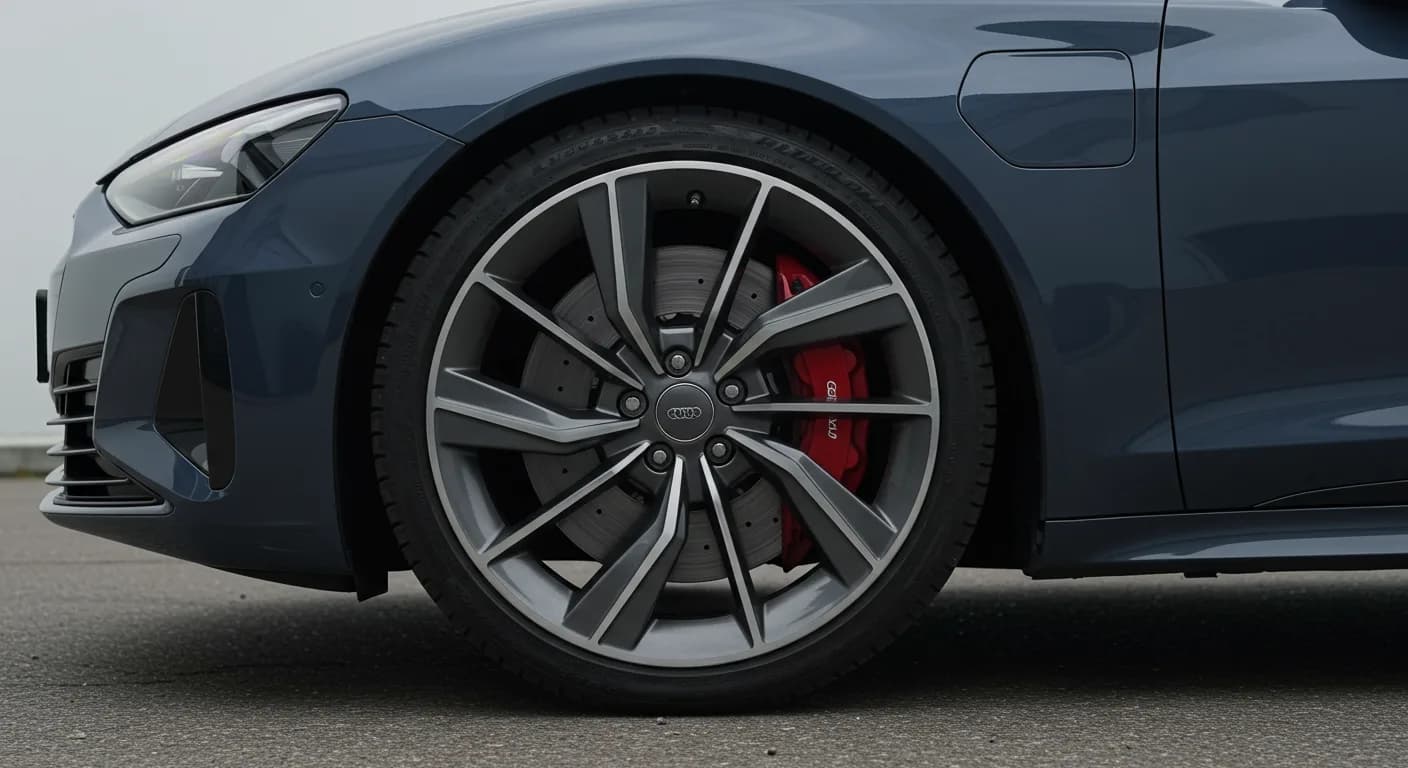
Si applica anche a
- Audi e-tron GT
- 2022–2024
- Audi RS e-tron GT
- 2022, 2024
Owners of 2022-2024 Audi e-tron GT and RS e-tron GT vehicles may experience a vibration or pulsation in the brake pedal, or a sensation that the brake response feels "different." This condition, which can occur during braking at low speeds, is addressed by Audi Technical Service Bulletin (TSB) 2068205/5. This bulletin, last revised on March 22, 2024, supersedes previous bulletin 23-23 dated April 18, 2023.
Symptoms
If you own a 2022-2024 Audi e-tron GT or RS e-tron GT, you might notice the following:
- "During braking at low speeds, a vibration/pulsation is felt at the brake pedal."
- "The brake response feels 'different'."
These symptoms indicate a potential issue with the brake system, leading to an Audi e-tron GT brake pedal vibration or an unusual feel.
Fault Codes / DTCs
When these symptoms are present, a workshop diagnosis may reveal a specific Diagnostic Trouble Code (DTC) stored in the ABS/ESC Control Module -J104- (address word 0003):
| Code | Description |
|---|---|
| P05FF00 | Brake pressure sensor / Sensor for brake pedal travel deviation |
Diagnosis and Trigger Conditions
The TSB indicates that the complaint of Audi e-tron GT brake pedal vibration can be reproduced during testing. The technical background highlights several characteristics of the e-tron GT brake system that contribute to these sensations.
New vehicles or those with recently changed brake pads require a "bedding-in routine." This process, which can take up to 1000 miles depending on driving style, involves brief deactivations of the recuperation function. The TSB notes that the bedding-in routine may not yet be complete.
Additionally, the vehicle features a "Brake refresh" function, which applies braking energy to mechanical brakes after the vehicle has been stationary for an extended period (12+ hours) to preserve friction values. A "Stiffness adaptation routine" also occurs during regenerative braking, where the control units learn the brake system's stiffness. This routine involves the brake pedal moving approximately 1 inch without activating the brake lights and takes about 10 seconds. It occurs during every charging procedure, provided brakes are not hot and the steering wheel is not significantly turned.
Pedal travel may also feel longer when maneuvering due to a smaller brake master cylinder designed to improve modulation during parking. The vehicle's system also fully opens both brake circuits at speeds below 12 mph to reduce noise, vibrations, and improve comfort, leading to longer pedal travel. Furthermore, ceramic and tungsten carbide brakes may exhibit inferior friction in wet or cold conditions compared to cast iron brakes, which can also affect pedal feel when switching from electric to hydraulic braking.
Repair Procedure Summary
The resolution for the Audi e-tron GT brake pedal vibration and related symptoms involves checking and potentially updating the ABS software, along with ensuring proper brake system routines are completed.
- Software Level Check: Technicians must check the ABS software level. If it is below version 190, they should review if the vehicle is included in Campaign 49A4 and proceed with the necessary software update.
- Bedding-in Routine: Ensure the brake bedding-in routine is fully completed. Once completed, the DTC P05FF00 should automatically clear from the ABS/ESC control unit. Further details on this are available in TSB 2063679.
- Customer Information: It is crucial for technicians to inform customers about the normal characteristics of the e-tron GT's brake system, including the "Brake refresh" and "Stiffness adaptation routine" functions, and that pedal travel may be longer during maneuvering. Owners should also be made aware of the potential for different friction values with ceramic/tungsten carbide brakes in certain weather conditions. The owner's manual can be referenced for this information.
- Final Software Update: If, after all these steps, the brake pedal travel still feels unsuitable, and the ABS control unit software is below version 190, an update should be performed.
Warranty Information
Warranty claims for this issue are generally covered for up to 48 months or 50,000 miles, whichever comes first, under claim type 110. If the vehicle is outside of warranty, this Technical Service Bulletin is for informational purposes only. The service number for this bulletin is 4708, with a damage code of 0011. Specific labor operations include bleeding the brake system (4701 0750), diagnostic time (GFF 0150 0000), and road tests before (0121 0002) and after (0121 0004) the service procedure.
What Owners Should Know
It is important for owners to understand that some perceived differences in brake feel, such as longer pedal travel during maneuvering, are inherent characteristics of the Audi e-tron GT's advanced brake system. The "Brake refresh" and "Stiffness adaptation routine" are normal functions designed to optimize brake performance and feel. However, if you experience persistent Audi e-tron GT brake pedal vibration or a significantly different brake response, especially if accompanied by a warning light, it is recommended to have your vehicle inspected by an authorized Audi service center.
NHTSA ID: 10252098
Frequently Asked Questions
- What causes the brake pedal vibration in my 2022-2024 Audi e-tron GT?
- The brake pedal vibration or 'different' feel in your Audi e-tron GT can be caused by several factors, including the brake system's bedding-in routine not being complete, specific brake system functions like 'Brake refresh' and 'Stiffness adaptation routine', or the need for an ABS software update. It is addressed by Audi TSB 2068205/5.
- What does DTC P05FF00 mean for my Audi e-tron GT?
- DTC P05FF00 indicates an issue with the 'Brake pressure sensor / Sensor for brake pedal travel deviation' in your Audi e-tron GT. This fault code is often associated with the brake pedal vibration or unusual feel described in TSB 2068205/5 and typically resolves once the brake bedding-in routine is completed or the ABS software is updated.
- Will the repair for the Audi e-tron GT brake pedal vibration be covered under warranty?
- Yes, if your 2022-2024 Audi e-tron GT or RS e-tron GT is within 48 months or 50,000 miles, the repair described in TSB 2068205/5 is generally covered under warranty. If your vehicle is outside this warranty period, the bulletin serves as informational guidance.
- What are the 'Brake refresh' and 'Stiffness adaptation routine' functions in my Audi e-tron GT?
- The 'Brake refresh' function helps maintain brake friction by applying energy to mechanical brakes after the vehicle has been stationary for over 12 hours. The 'Stiffness adaptation routine' helps the control units learn the brake system's stiffness during regenerative braking, involving a slight pedal movement. Both are normal operating characteristics of your Audi e-tron GT's brake system.
Altre revisioni di questo TSB
Related Articles
2022-2024 Audi e-tron GT / RS e-tron GT Door Paint Damage TSB
If your 2022-2024 Audi e-tron GT or RS e-tron GT has paint damage on the front door, it may be due to the door colliding with the wing panel trim. Technical Service Bulletin 2072290/2 describes the cause and repair procedure for this issue.
2022-2024 Audi e-tron GT Radiator Fan Stuck DTC P2B3000
Audi Technical Service Bulletin 2073599/4 details issues with radiator fans getting stuck (DTCs P2B3000, P2B3200) in 2022-2024 Audi e-tron GT and RS e-tron GT vehicles. This can lead to reduced heating, cooling, drive power, and charging capacity due to foreign objects.
2023 Audi e-tron GT Charging Port Door Not Opening TSB
Audi Technical Service Bulletin (TSB) 2070578/3 provides diagnostic and repair information for 2023 Audi e-tron GT and RS e-tron GT vehicles where the charging port door fails to open or close, or displays incorrect status messages. The issue is typically linked to a faulty charging port door…
2022-2024 Audi e-tron GT High-Voltage Charger Conversion TSB
Audi has issued Technical Service Bulletin (TSB) 11022683 for 2022-2024 e-tron GT and RS e-tron GT models. This bulletin provides information on converting the high-voltage battery charger from a 22kW to an 11kW configuration.
2023-2024 Audi e-tron GT High-Voltage Battery Software Update
Audi has released Technical Service Bulletin 931D, an update for the high-voltage battery diagnostic software in 2023-2024 e-tron GT and RS e-tron GT models. This update addresses potential irregularities indicated by a warning lamp in the instrument cluster.
Leave a comment
Comments are moderated and may take a moment to appear. Only your first name and the initial of your last name are shown publicly.
Comments
Be the first to comment.