2022-2023 Audi e-tron GT Brake Pedal Vibration TSB
Audi has released Technical Service Bulletin 2068205/2 for 2022-2023 e-tron GT and RS e-tron GT models experiencing brake pedal vibration or an unusual pedal feel at low speeds, often accompanied by DTC P05FF00.
 David Chen2022 Audi RS e-tron GT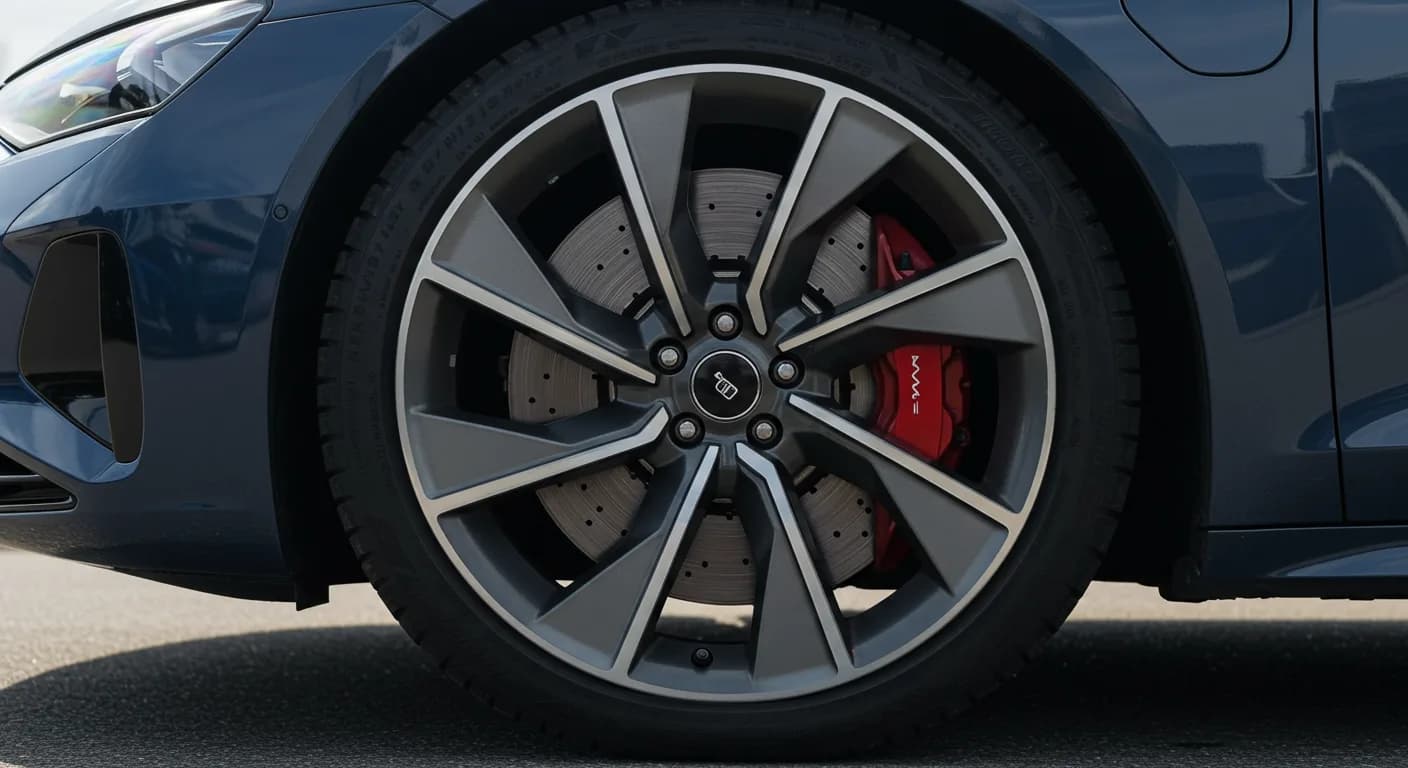
Also applies to
- Audi e-tron GT
- 2022–2023
- Audi RS e-tron GT
- 2023
Owners of 2022-2023 Audi e-tron GT and RS e-tron GT models may experience an Audi e-tron GT brake pedal vibration or an unusual pedal feel during low-speed braking. This condition is detailed in Audi Technical Service Bulletin (TSB) 2068205/2, which supersedes an earlier bulletin, 47 22-19, dated October 10, 2022.
Symptoms
If you own a 2022-2023 Audi e-tron GT or RS e-tron GT, you might notice specific symptoms related to the braking system. During braking at low speeds, you may feel a "vibration/pulsation is felt at the brake pedal" and/or the "brake pedal feels 'different'". This Audi e-tron GT brake pedal vibration can be a cause for concern and indicates a need for inspection.
Fault Codes / DTCs
When diagnosing this issue, a technician may find a specific Diagnostic Trouble Code (DTC) stored in the ABS/ESC Control Module -J104-.
| Code | Description | Module |
|---|---|---|
| P05FF00 | Brake pressure sensor / Sensor for brake pedal travel deviation | ABS/ESC Control Module -J104- |
Diagnosis and Trigger Conditions
To accurately diagnose the Audi e-tron GT brake pedal vibration, technicians will begin by reading the measured value for "Adaption value offset wheel brake stiffness" and uploading this log to GFF Paperless. This measurement helps determine the extent of the issue within the braking system.
Repair Procedure Summary
The repair procedure outlined in TSB 2068205/2 depends on the measured value of the "Adaption value offset wheel brake stiffness":
- Measure and Evaluate: The first step involves measuring the "Adaption value offset wheel brake stiffness." This value is crucial for determining the appropriate repair path.
- Conditional Component Replacement:
- If the measured value is above 5mm, the J104 ABS control unit must be replaced. Following the replacement, the brake system needs to be fully bled according to the ELSA workshop manual instructions for Chassis, Brake System, Hydraulic Components, and Hydraulic System Bleeding.
- If the measured value is below 5mm, only a full bleed of the brake system is required.
- Clear Fault Codes: After the necessary repairs, any stored DTCs in the J104 ABS/ESC control unit are cleared.
- Re-evaluation: The vehicle is then re-evaluated to ensure the vibration and unusual brake pedal feel have been resolved. If the complaint persists, the bleed procedure is repeated.
Important Warnings
For any complaints specifically related to noise, it is important to upload a video or audio file to DOC-IT, along with the vehicle's VIN number. This additional information can assist technicians in accurately diagnosing and resolving the issue.
Required Parts and Tools
Technicians should always consult their Parts Department and/or ETKA for the most current information regarding parts and bulletins. If the J104 ABS control unit needs replacement, a new hydraulic unit (quantity 01) will be required. Additionally, fasteners, bolts, nuts, and screws may be needed as per the repair manual.
Warranty Information
This repair is covered under warranty for vehicles up to 48 months or 50,000 miles, whichever comes first. If your vehicle falls outside of this warranty period, this Technical Service Bulletin serves as informational guidance only, and costs may apply. All warranty claims must adhere to the Audi Warranty Policies and Procedures Manual and are subject to review or audit by Audi Warranty.
NHTSA ID: 10226851
Frequently Asked Questions
- What causes the brake pedal vibration in Audi e-tron GT models?
- The brake pedal vibration or unusual feel in 2022-2023 Audi e-tron GT and RS e-tron GT models, particularly at low speeds, is often linked to an issue with the brake pressure sensor, which can trigger DTC P05FF00.
- What does DTC P05FF00 mean for my Audi e-tron GT?
- DTC P05FF00, when stored in the ABS/ESC Control Module -J104-, indicates a problem with the 'Brake pressure sensor / Sensor for brake pedal travel deviation'. This fault code is directly associated with the reported brake pedal vibration or 'different' feel.
- How is the Audi e-tron GT brake pedal vibration fixed?
- The repair involves measuring the 'Adaption value offset wheel brake stiffness'. Depending on this value, the J104 ABS control unit may be replaced, and the brake system will be bled. If the value is within specification, only a brake system bleed is performed, followed by clearing DTCs and re-evaluation.
- Is the repair for the Audi e-tron GT brake pedal vibration covered by warranty?
- Yes, this repair is covered under Audi's warranty for vehicles up to 48 months or 50,000 miles, whichever occurs first. If your vehicle is outside this period, the Technical Service Bulletin 2068205/2 provides informational guidance, but costs may apply.
Other revisions of this TSB
Related Articles
2022-2024 Audi e-tron GT High-Voltage Battery TSB
Audi TSB 2077772/2 addresses the replacement of the high-voltage battery assembly in 2022-2024 e-tron GT and RS e-tron GT vehicles, detailing required parts and procedures for technicians.
2022-2024 Audi e-tron GT Radiator Fan Stuck DTC P2B3000 P2B3200
Audi has issued Technical Service Bulletin 2073599/3 for 2022-2024 e-tron GT and RS e-tron GT models. This TSB addresses issues with the thermal management system, specifically radiator fan 1 and/or 2 getting stuck, which can lead to DTCs P2B3000 or P2B3200, reduced heating/cooling, and lower…
2022-2024 Audi e-tron GT Charging Issue TSB 2078782/3
Audi has released Technical Service Bulletin (TSB) 2078782/3 for 2022-2024 e-tron GT and RS e-tron GT models experiencing charging complaints or diagnostic trouble codes (DTCs). Due to a temporary shortage of 22 kW high-voltage battery chargers, this TSB outlines a procedure to replace it with an…
2022 Audi e-tron GT Charging Flap Status TSB 2079475/2
This Technical Service Bulletin (TSB) 2079475/2 addresses an issue in 2022 Audi e-tron GT and RS e-tron GT vehicles where the virtual cockpit incorrectly displays the charging flap as open, even when it is closed. This software update resolves the misleading warning messages.
2022 Audi e-tron GT Charging Flap Status Warning TSB
Audi Technical Service Bulletin 2079475/1 addresses an issue in 2022 Audi e-tron GT and RS e-tron GT vehicles where the virtual cockpit incorrectly displays the charging flap as open, even when it's closed. This software update resolves the misleading warning messages.
Leave a comment
Comments are moderated and may take a moment to appear. Only your first name and the initial of your last name are shown publicly.
Comments
Be the first to comment.