2022-2024 Audi e-tron GT Brake Pedal Vibration TSB 206847
Audi has released Technical Service Bulletin 206847 for 2022-2024 e-tron GT and RS e-tron GT models experiencing brake pedal vibration or a 'different' feel, often accompanied by diagnostic trouble code P05FF00. This TSB outlines the technical background and service recommendations.
 Ahmet Topcu2024 Audi RS e-tron GT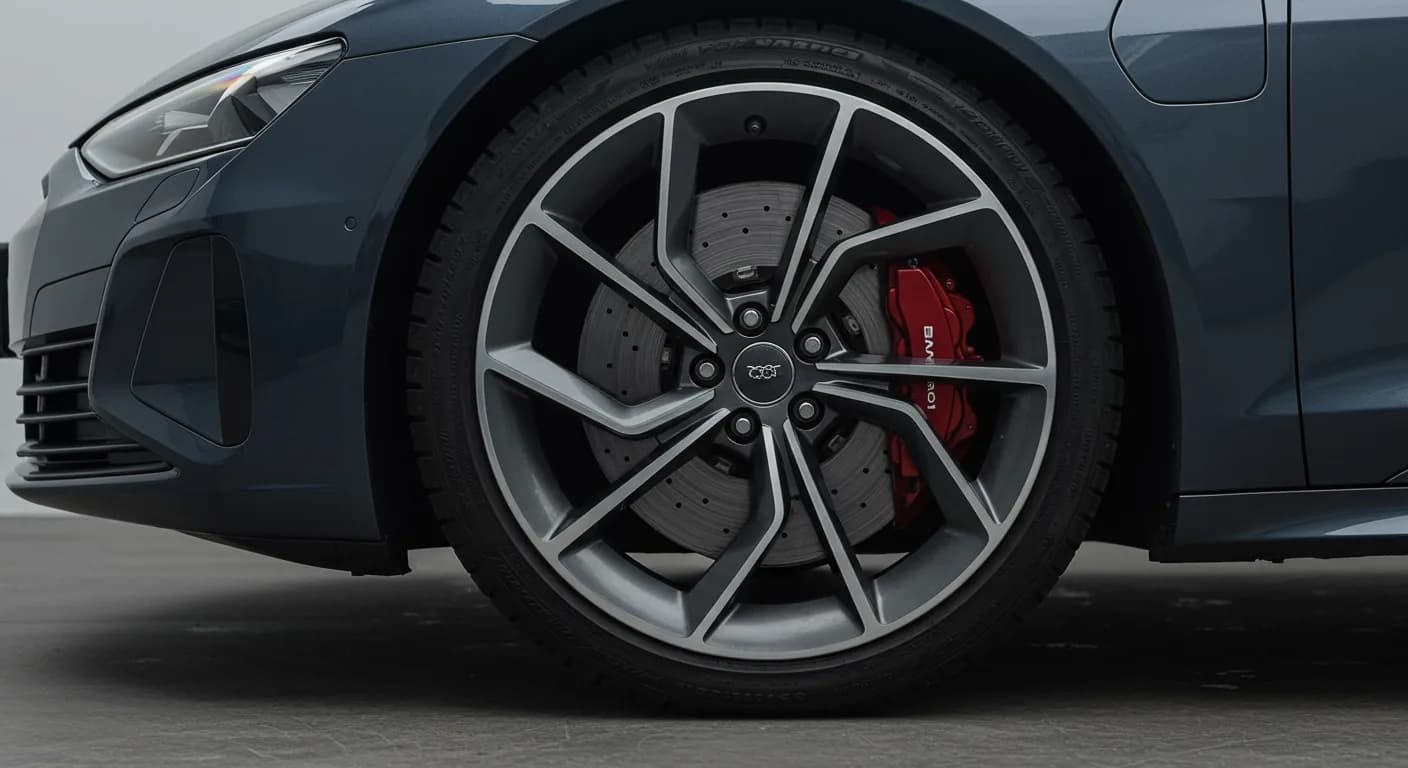
Also applies to
- Audi e-tron GT
- 2022–2024
- Audi RS e-tron GT
- 2022–2023
Bulletin Revision History
Technical Service Bulletin 206847, also identified as 47 23 23 2068205/4, was issued on April 18, 2023. This bulletin supersedes Technical Service Bulletin Group 47 number 22-22 dated December 19, 2022. The latest revision, version 4, included revised service and technical background, revised procedure, and an added model year to the header. Previous revisions on December 19, 2022 (version 3) and November 8, 2022 (version 2) also revised service procedures, warranty information, and added parts and tools.
Symptoms
Owners of 2022-2024 Audi e-tron GT and RS e-tron GT vehicles may experience specific brake system symptoms, including Audi e-tron GT brake pedal vibration. These symptoms are typically reported as:
- During braking at low speeds, a "vibration/pulsation is felt at the brake pedal."
- The "brake response feels 'different'."
This sensation can occur if the vehicle transitions between electric and hydraulic braking, leading to a different pedal feel even if the applied pressure is consistent.
Fault Codes / DTCs
During workshop diagnosis, the following Diagnostic Trouble Code (DTC) may be stored in the ABS/ESC Control Module -J104- (address word 0003):
| Code | Description |
|---|---|
| P05FF00 | Brake pressure sensor / Sensor for brake pedal travel deviation |
Technical Background
The Audi e-tron GT brake system incorporates several unique functions that can influence brake pedal feel. These include a 'bedding-in routine' for new brake pads, a 'brake refresh' function, and a 'stiffness adaptation routine'.
- Bedding-in routine: New brakes require bedding-in, which the vehicle performs by briefly deactivating the recuperation function. This process can take up to 1,000 miles, depending on driving style.
- Brake refresh function: This function maintains brake friction by applying 500 kJ of braking energy to the mechanical brakes after the vehicle has been stationary for over 12 hours. Recuperation is briefly deactivated during this process.
- Stiffness adaptation routine: During regenerative braking, the system blends electric and hydraulic braking. To ensure smooth blending, the ABS/ESC control unit learns the stiffness of the wheel brakes. This routine involves the electromechanical brake servo building and releasing pressure, causing the brake pedal to move approximately 1 inch. This routine is performed during every charging procedure, takes about 10 seconds, and does not activate the brake lights.
Additionally, the e-tron GT features a smaller brake master cylinder for improved modulation during parking, which can result in generally longer pedal travel when maneuvering. Both brake circuits also open fully at speeds below 12 mph to reduce noise and vibrations, contributing to longer pedal travel. Ceramic brakes may also exhibit inferior friction in wet and cold conditions compared to cast iron brakes.
Repair Procedure Summary
The service procedure for addressing the Audi e-tron GT brake pedal vibration involves several steps to ensure proper brake system function and customer understanding:
- Bedding-in Routine: Ensure the brake system's bedding-in routine is complete. Once finished, the relevant event memory entry in the ABS/ESC control unit is automatically deleted. For more details, refer to TSB 2063679.
- Customer Information: Inform the customer about the 'brake refresh' function and other vehicle characteristics, including potentially longer pedal travel during maneuvering and the characteristics of ceramic/tungsten carbide brakes in wet/cold conditions.
- Owner's Manual: Advise the customer to consult the "Brakes" chapter of their Owner's Manual if needed.
- Diagnostic Steps (if pedal travel remains unsuitable):
- Read out the measured value "Adaptation value offset wheel brake stiffness" and upload the ODIS protocol to the GFF database.
- Run the ODIS test plan "0023 - Brake booster / bleed brakes."
- Charge the vehicle for at least 60 seconds to ensure the stiffness adaptation routine is performed. Afterward, read out the measured value again and upload the protocol to the GFF database.
Audi is also preparing a new software version for the ABS/ESC control unit to address this issue.
Important Warnings
Owners and technicians should be aware of specific conditions that affect the brake system's adaptation routines:
- "No adaptation procedure is accepted if the brakes are hot or the steering wheel is turned significantly out of the center position."
- "The adaptation procedure is only performed if the temperature of the brake discs is <100°C (212° F) and the temperature of the brake calipers is <55°C (131° F)."
- If your vehicle is outside of the specified warranty period, "this Technical Service Bulletin is informational only," meaning repairs may not be covered.
Warranty Information
Warranty claims for this issue fall under Claim Type 110. Coverage is provided for up to 48 months or 50,000 miles, whichever comes first. If the vehicle is outside of this warranty period, the Technical Service Bulletin serves as informational guidance only.
The service number associated with this bulletin is 4708, with a damage code of 0011. Labor operations include:
- Bleed brake system: 4701 0750
- Diagnostic Time (GFF): 0150 0000 (Max 70 TU)
- Road test prior to service: 0121 0002 (10 TU)
- Road test after service: 0121 0004 (10 TU)
All warranty claims must adhere to the Audi Warranty Policies and Procedures Manual, and are subject to review or audit by Audi Warranty. All part and service references in TSB 2068205 are subject to change.
NHTSA ID: 10235472
Frequently Asked Questions
- What causes the brake pedal vibration in my 2022-2024 Audi e-tron GT?
- The Audi Technical Service Bulletin (TSB) 206847 indicates that brake pedal vibration or a 'different' pedal feel at low speeds can be related to the brake system's bedding-in routine, 'brake refresh' function, or 'stiffness adaptation routine'. It can also be influenced by the characteristics of ceramic or tungsten carbide brakes in certain conditions.
- What is DTC P05FF00 and how is it related to my brakes?
- DTC P05FF00, which stands for 'Brake pressure sensor / Sensor for brake pedal travel deviation', is a diagnostic trouble code that may be stored in the ABS/ESC Control Module -J104-. This code is directly linked to the symptoms of brake pedal vibration and an altered pedal feel in affected Audi e-tron GT models, as outlined in TSB 206847.
- Is there a fix for the 2022-2024 Audi e-tron GT brake pedal vibration?
- Yes, Audi TSB 206847 provides a service procedure. This includes ensuring the brake system's bedding-in routine is complete, informing the customer about specific brake system characteristics, and potentially performing diagnostic steps like reading 'Adaptation value offset wheel brake stiffness' and running ODIS test plan '0023 - Brake booster / bleed brakes'. A new software version for the ABS/ESC control unit is also being prepared.
- Will the repair for the Audi e-tron GT brake pedal vibration be covered under warranty?
- According to TSB 206847, warranty claims for this issue are covered for up to 48 months or 50,000 miles, whichever comes first. If your vehicle is outside of this warranty period, the Technical Service Bulletin is informational only, and any repairs may not be covered.
Other revisions of this TSB
Related Articles
2022-2024 Audi e-tron GT Scraping/Knocking Noise TSB 2073030/2
Owners of 2022-2024 Audi e-tron GT and RS e-tron GT models may hear scraping or knocking noises from the front wheel housing. Audi Technical Service Bulletin 2073030/2 identifies the cause as dirt and debris accumulating around the radiator fans and provides a cleaning solution.
2024 Audi e-tron GT MyAudi App Charging & Climate Fault
This Technical Service Bulletin (TSB) 2075406/2 addresses an issue where 2024 Audi e-tron GT and RS e-tron GT owners cannot set air conditioning, charging timers, or charging locations using the myAudi app, resulting in error code BFF.4002. Audi has resolved this problem with a backend software…
2022-2025 Audi e-tron GT Power System Fault P000000 TSB
Audi has issued TSB 2080377/1 for 2022-2025 e-tron GT and RS e-tron GT models concerning a yellow or red instrument cluster warning fault. This issue is often accompanied by DTC P000000 in the hybrid battery manager, indicating an on-board power system fault.
2024-2025 Audi e-tron GT Electrical System Fault TSB
A Technical Service Bulletin (TSB 2080127/1) has been issued for 2024-2025 Audi e-tron GT and RS e-tron GT models regarding a 'Electrical system: fault' warning message. This issue prevents driving and is resolved by a software update.
2024-2025 Audi e-tron GT MMI Emergency Call Fault TSB 2079980/1
Audi has released Technical Service Bulletin (TSB) 2079980/1 to address various MMI function problems and an 'Emergency call fault' message that may appear in 2024-2025 e-tron GT and RS e-tron GT vehicles. This software update targets the MIB3 system and related control units.
Leave a comment
Comments are moderated and may take a moment to appear. Only your first name and the initial of your last name are shown publicly.
Comments
Be the first to comment.