2023-2026 Audi MIL On and Engine DTCs TSB 2014753
Audi has issued Technical Service Bulletin 2014753/13 addressing illumination of the Malfunction Indicator Lamp (MIL) accompanied by Diagnostic Trouble Codes (DTCs) related to misfires, air/fuel ratio imbalance, or a lean fuel system. This issue, affecting various 2023-2026 Audi models, is often…
 Ahmet Topcu2023 Audi e-tron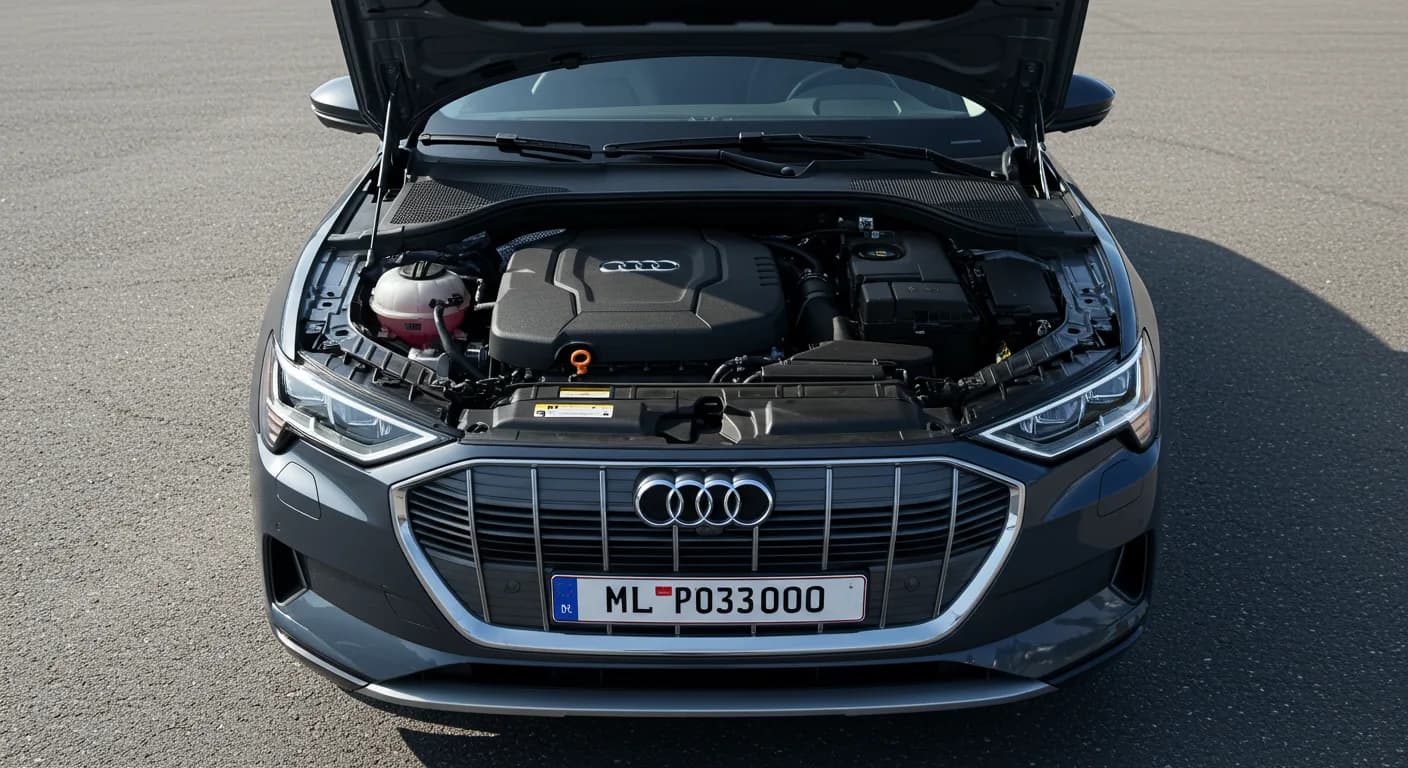
Si applica anche a
- Audi A3
- 2022–2025
- Audi A4
- 2021–2025
- Audi A4 allroad
- 2021–2025
- Audi A5
- 2021–2024
- Audi A6
- 2021–2025
- Audi A6 allroad
- 2021–2025
- Audi A7
- 2021–2025
- Audi A7 e
- 2021–2022
- Audi A8 L e
- 2021
- Audi e-tron
- 2021–2022
- Audi e-tron GT
- 2022–2025
- Audi e-tron Sportback
- 2021–2022
- Audi Q3
- 2021–2025
- Audi Q5
- 2021–2025
- Audi Q5 e
- 2021, 2023, 2024, 2025
- Audi Q7
- 2021–2025
- Audi Q8
- 2021–2025
- Audi R8
- 2021–2023
- Audi RS 3
- 2022–2024
- Audi RS 5
- 2021–2024
- Audi RS 6 Avant
- 2021–2025
- Audi RS 7
- 2021–2025
- Audi RS e-tron GT
- 2022–2024
- Audi RS Q8
- 2021–2025
- Audi S e-tron GT
- 2026
- Audi S3
- 2022–2025
- Audi S4
- 2021–2025
- Audi S5
- 2021–2024
- Audi S6
- 2021–2025
- Audi S7
- 2021–2025
- Audi S8
- 2021–2025
- Audi SQ5
- 2021–2025
- Audi SQ7
- 2021–2025
- Audi SQ8
- 2021–2025
- Audi TT
- 2021–2023
- Audi TT RS
- 2021–2022
- Audi TTS
- 2021–2023
▸ Mostra altri 31▾ Mostra meno
Audi has released Technical Service Bulletin (TSB) 01 24 48 2014753/13 to address common engine performance issues. These include the Malfunction Indicator Lamp (MIL) illuminating and the Engine Control Module (ECM), J623, storing various Diagnostic Trouble Codes (DTCs) related to misfires, air/fuel ratio imbalance, or a lean fuel system. This bulletin supersedes an earlier version, 23-41, and provides updated information on diagnosis and repair.
The primary cause identified for these conditions is the use of contaminated gasoline or fuel lacking sufficient deposit control additives. This can lead to excessive carbon buildup and affect engine operation.
Symptoms
Owners may notice several symptoms if their vehicle is affected by poor fuel quality or deposit buildup. These conditions can range from subtle performance changes to more significant operational issues, potentially triggering the Audi e-tron MIL P030000.
Common symptoms include:
- Excessive accumulation of deposits on intake valves, intake manifold, fuel injectors, and combustion chambers.
- Engine running rough after a cold start.
- Excessive engine cranking time.
- Hesitations while driving.
- Rough engine idle.
- Reduced engine performance.
- Poor fuel economy.
Fault Codes / DTCs
When these conditions become severe, the Malfunction Indicator Lamp (MIL) may illuminate, and the Engine Control Module (ECM), J623, will store specific Diagnostic Trouble Codes (DTCs). These codes indicate the nature of the engine's concern.
| Code Category | Example DTCs |
|---|---|
| Misfires | P0300, P030x |
| Lean Fuel System | P0171, P0174, P1128, P1130, P1136, P1138 |
| Air/Fuel Ratio Imbalance | P219C00, P219D00, P219E00, P219F00, P21A000, P21A100 |
Diagnosis / Trigger Conditions
The root cause for these issues is often related to the quality of gasoline used. Contaminated gasoline or fuel with a low content of deposit control additives can lead to carbon buildup. For MY16-MY19 3.0TFSI EVO (CREC) equipped vehicles, specific fuel quality deviations can cause deposits in injectors, leading to a rich mixture after shutdown and difficult starts. It is important to note that for this specific issue, injectors should not be replaced initially.
Contaminated gasoline may have a unique color or odor, contain undissolved water, sediments, or appear cloudy. Gasoline with low deposit control additives simply lacks the necessary components to prevent carbon buildup effectively.
Repair Procedure Summary
The repair procedure focuses on addressing the fuel quality and deposit buildup. For MY16-MY19 3.0TFSI EVO (CREC) vehicles, a multi-purpose gasoline additive should be used first to remove deposits from injectors. If the issue persists after using the additive, further diagnosis is required.
For general carbon deposit removal, gasoline additive G 001770A2 can be used. This additive helps clean deposits from injectors (MPI and FSI engines), combustion chambers (MPI and FSI engines), and intake valves (MPI engines only). The additive should be mixed directly into a full fuel tank at a ratio of 60 ml per 20 liters of gasoline (or 120 ml per 10 gallons).
Specifically for MY16-MY19 3.0TFSI EVO (CREC) equipped vehicles, additive G 001780M3 (200 ml) should be used. For intake valve carbon deposits in FSI engines, TSB 2019948 (01 MIL on, P0300 and/or P0301 - P0306 stored in ECM) provides additional guidance.
Required Tools or Parts
To address the conditions described in this TSB, specific gasoline additives are recommended:
- G 001770A2: Gasoline additive for general carbon deposit removal.
- G 001780M3: Specific additive for MY16-MY19 3.0TFSI EVO (CREC) vehicles.
Any additional fasteners, bolts, nuts, and screws required for repair procedures should be referenced in ETKA/ELSA.
Owner Action
If you are experiencing the MIL on, misfires, or other symptoms described, particularly the Audi e-tron MIL P030000, it is recommended to take action to improve fuel quality. Consider changing your gasoline source if you suspect contamination. Audi strongly recommends using TOP TIER Detergent Gasoline, which is designed to provide improved deposit control performance. Retailers in the USA providing TOP TIER gasoline include 76 Stations, Aloha Petroleum, Chevron, Conoco, Holiday Stationstores, Inc., Kwik Trip / Kwik Star, MFA Oil Co., Mileage Stations, Mobil, Texaco, Ohana Fuels, Tri-Par Oil Co., Phillips 66, U.S. Oil, Road Ranger, Severson Oil, and Shell. An up-to-date list can be found at www.toptiergas.com.
It is important to note that this TSB is informational. The use of gasoline additive G 001770A2 is generally not reimbursed under warranty. If symptoms persist after using high-quality fuel and recommended additives, consult an authorized Audi service center for further diagnosis.
NHTSA ID: 11012476
Frequently Asked Questions
- What does an Audi MIL on with DTC P030000 mean?
- An Audi Malfunction Indicator Lamp (MIL) illuminated with a DTC like P030000 typically indicates a misfire detected in the engine. This is often linked to poor fuel quality or excessive carbon deposits, as described in Audi TSB 01 24 48 2014753/13.
- Can poor gasoline quality cause my Audi to have a 'Check Engine' light?
- Yes, poor gasoline quality, such as contaminated fuel or fuel with insufficient deposit control additives, can lead to carbon buildup and engine issues that trigger the 'Check Engine' light (MIL) and store various DTCs related to misfires or lean fuel conditions.
- What should I do if my Audi has a lean fuel system DTC like P0171?
- If your Audi has a lean fuel system DTC such as P0171, it's recommended to first ensure you are using TOP TIER Detergent Gasoline. For specific engine types (MY16-MY19 3.0TFSI EVO CREC), an Audi-specified additive like G 001780M3 may be recommended. If the issue persists, consult an Audi service center for diagnosis.
- Are fuel additives covered under Audi's warranty for these issues?
- According to Audi TSB 01 24 48 2014753/13, the use of gasoline additive G 001770A2 is generally not reimbursed under warranty. This TSB is primarily informational, guiding technicians and owners on how to address fuel-related engine performance concerns.
Altre revisioni di questo TSB
- 2022-2026 Audi MIL On, Misfire, Lean Fuel System DTCsP219C00, P219D00, P219E00
- 2021-2022 Audi 4.0 TFSI Misfire Valve Spring TSBP030000
- 2021 Audi V8 TFSI P030000 Misfire & Cylinder CorrosionP030000
Related Articles
Should 2023 Audi e-tron Owners Worry? Recall & TSB Roundup
The 2023 Audi e-tron faces significant safety concerns, including recalls for potential brake pedal detachment and charging cable overheating. Owners have also reported serious issues like unintended acceleration and electrical system malfunctions. This guide covers all known problems and solutions.
2023 Audi e-tron Brake Pedal Recall
Audi has issued a recall (NHTSA ID: 26V240000, Audi Recall 46P7) for certain 2019-2024 E-Tron and 2020-2024 E-Tron Sportback vehicles, including the 2023 Audi e-tron. The recall addresses a potential issue where the brake pedal may detach from the brake booster, leading to a loss of brake function.
2015-2027 Audi Noise Diagnosis with Frequency Analysis App TSB
Audi has released Technical Service Bulletin 2051095/11 detailing the Audi Frequency Analysis app. This app helps technicians diagnose noise complaints more precisely across 2015-2027 Audi models. Learn how the app works, where to download it, and its features for effective vehicle noise analysis.
2023 Audi e-tron AC/DC Charging Not Possible TSB
This manufacturer communication (NHTSA ID 11031035) provides critical information for 2023 Audi e-tron owners facing issues with AC/DC charging. It specifically highlights problems linked to software version 00C6: 0093/3119, which can prevent the vehicle from charging.
2023-2025 Audi Rear Seat Reminder Message TSB 2074943/2
Audi Technical Service Bulletin 2074943/2 explains the instrument cluster message 'Please check rear seats and be aware of door safelock' in various 2023-2025 Audi models. This informational TSB details the rear occupant detection system designed to prevent children and pets from being left in…
Leave a comment
Comments are moderated and may take a moment to appear. Only your first name and the initial of your last name are shown publicly.
Comments
Be the first to comment.