2023-2025 Jeep/RAM Horn Sound Weak or Inoperative TSB S2423000027
Experiencing a weak, off-tone, inoperative, or intermittent horn in your 2023-2025 Jeep or RAM? Technical Service Bulletin S2423000027 addresses these horn sound issues, providing diagnostic steps for technicians to identify and resolve the root cause.
 David Chen2023 Jeep Wrangler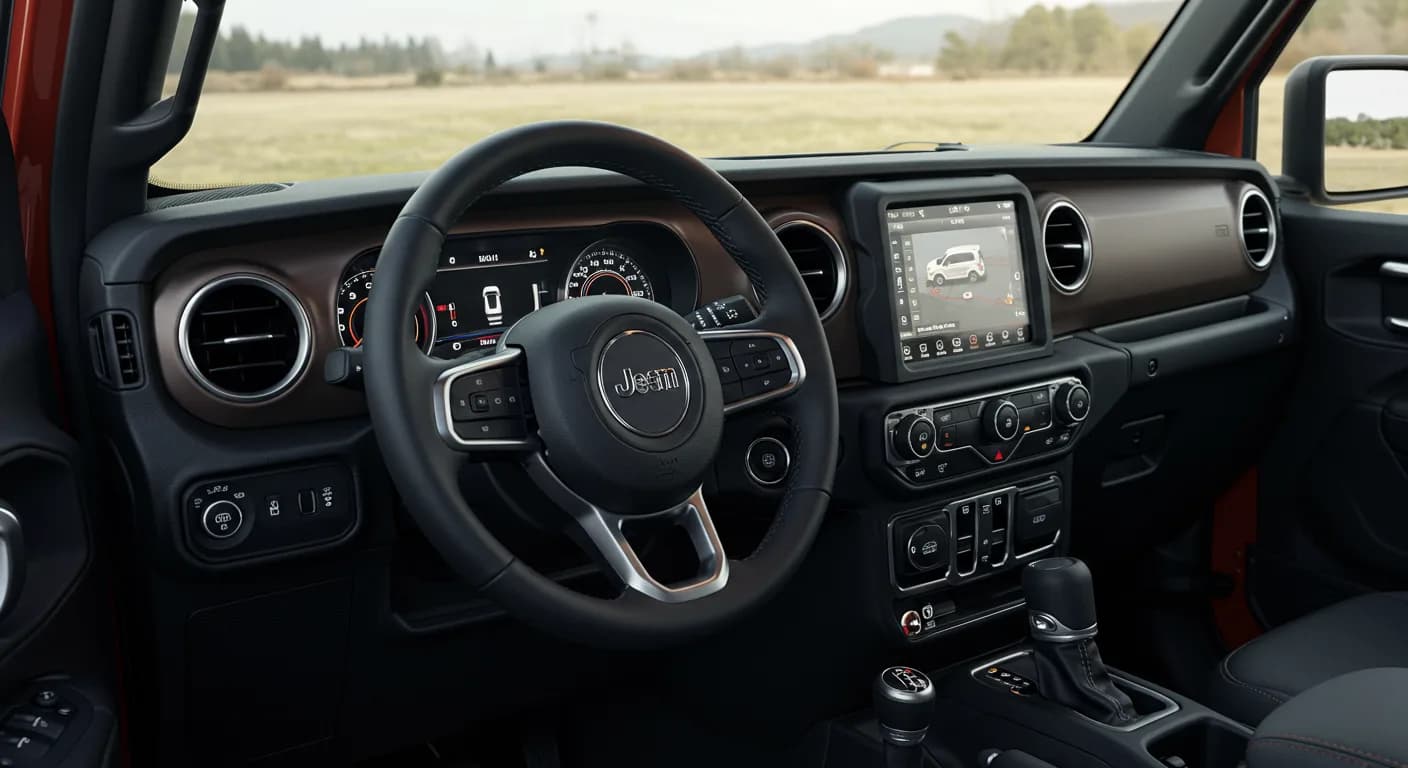
Gilt auch für
- Jeep Gladiator
- 2023–2025
- Jeep Grand Wagoneer
- 2023–2025
- Jeep Wagoneer
- 2023–2025
- Jeep Wrangler
- 2024–2025
- Ram 2500
- 2023–2025
- Ram 3500
- 2023–2025
- Ram 4500
- 2023–2025
- Ram 5500
- 2023–2025
▸ 2 weitere anzeigen▾ Weniger anzeigen
Symptoms
Owners of 2023-2025 Jeep and RAM vehicles may experience issues with their vehicle's horn, specifically reporting that the "Horn Sound Is Weak, Off Tone, Inoperative, Or Intermittent". This means the horn might not sound as loud as it should, have an unusual tone, not work at all, or only work sometimes. These symptoms directly impact vehicle safety by reducing the effectiveness of the horn as a warning device.
Diagnosis and Initial Checks
When a Jeep RAM horn sound issue is reported, technicians are advised to begin by recording any Diagnostic Trouble Codes (DTCs) and performing initial diagnostics. A critical first step involves verifying the integrity of the 20A fuse located in the Power Distribution Center (PDC). The correct fuse number varies by model:
- For DT models: Fuse F40 or F57
- For DJ, D2, DD, DP models: Fuse F42
- For JL, JT models: Fuse F91
- For WS models: Fuse F66 The fuse must be fully inserted and making proper connection. Technicians should also ensure both the low and high note horns sound correctly. If the horn sound is weak or abnormal, further investigation is required.
Repair Procedure Summary
Technical Service Bulletin S2423000027 outlines a detailed diagnostic and repair process for technicians.
Horn Bench Testing: After turning off the ignition, technicians disconnect the horns and test them using a terminal test kit. The horns should operate between 9.3V and 16V, ideally at 13V, with a maximum current draw of 6 amps for a single horn or 12 amps for dual horns. It's important to note that low battery voltage can cause horn tones to weaken. If a horn is found to be inoperative during this test, it should be replaced.
Harness and Connector Inspection: If the horns pass the bench test, the next step involves disconnecting all harness connectors from the Power Distribution Center (PDC), Body Control Module (BCM), or Steering Column Control Module (SCCM) for the circuit under test. Technicians must thoroughly inspect these connectors, components, and terminals for issues such as improper installation, damaged connector locks, corrosion, signs of water intrusion, bent terminals, overheating (indicated by discolored terminals), or terminals pushed into the connector cavity. A terminal drag test is also performed to check for proper tension.
DTC Clearance and Re-evaluation: After reconnecting all harness connectors, any existing DTCs are cleared using a scan tool. The vehicle is then operated under the conditions that initially triggered the horn issue, and current DTCs are re-checked. If BCM or SCCM-related DTCs are still present, the affected assembly (PDC, BCM, or SCCM) should be replaced, followed by a Body Test.
Clock Spring and Horn Switch Check: If the horn sounds intermittently while turning or driving, the Clock Spring in the SCCM should be checked for a possible short circuit, assuming the wiring is in good condition. The horn switch itself, which is integrated into the Driver Airbag (DAB) and is non-repairable, must also be verified for proper operation. If the horn switch is faulty or damaged, the entire DAB assembly needs replacement. Technicians should refer to service instructions "08 - Electrical / 8H - Horn / SWITCH, Horn / Diagnosis and Testing" for detailed guidance.
Circuit Voltage and Continuity Testing: As a final step, with the ignition on, technicians use a Digital Volt-Ohm Meter to measure voltage from the PDC relay output to the horn, while an assistant presses the horn button. Ground at the BCM low current relay coil harness connectors is also checked.
- If voltage is present, the circuit is checked and repaired for a voltage short.
- If no voltage is present, the PDC harness is inspected for open circuits or connection issues.
- If there is continuity to ground, the circuit is checked and repaired for a ground short.
- If there is no continuity to ground, the BCM harness connections are checked for issues.
Required Tools or Parts
For proper diagnosis and repair, technicians are advised to use Test Lead Kit 2064100081 for probing terminals. This kit helps prevent damage to pins during testing.
Owner Action
If your 2023-2025 Jeep or RAM vehicle exhibits a Jeep RAM horn sound that is weak, off-tone, inoperative, or intermittent, it is recommended to schedule an appointment with an authorized dealership. Technicians will follow the procedures outlined in TSB S2423000027 to accurately diagnose and resolve the problem. This communication does not authorize warranty repairs, so discuss potential costs with your service advisor.
NHTSA Source Citation
NHTSA ID: 11015602
Frequently Asked Questions
- What are the common horn issues addressed by TSB S2423000027?
- TSB S2423000027 addresses conditions where the horn sound is weak, off-tone, inoperative, or intermittent in 2023-2025 Jeep and RAM vehicles.
- How do technicians diagnose a weak or inoperative horn?
- Technicians follow a multi-step diagnostic process, including checking fuses (like F40, F57, F42, F91, F66), bench testing the horns, inspecting wiring harnesses and connectors, checking for DTCs, and performing voltage and continuity tests on the horn circuit.
- Can a faulty horn switch cause these problems?
- Yes, a faulty horn switch can cause horn issues. The horn switch is part of the Driver Airbag (DAB) assembly, and if it's found to be defective, the entire DAB unit must be replaced as the switch is not repairable separately.
- What should I do if my Jeep or RAM horn is not working correctly?
- If your 2023-2025 Jeep or RAM vehicle experiences a weak, off-tone, inoperative, or intermittent horn, you should take it to an authorized dealership for diagnosis and repair according to TSB S2423000027.
Related Articles
2023 Jeep Wrangler Problems: Recalls & Service Bulletins
The 2023 Jeep Wrangler faces a significant recall for its defrost system, potentially reducing driver visibility. Owners may also encounter engine misfire DTCs, heated steering wheel issues, and various other concerns addressed by numerous service bulletins. This guide details known problems and…
2023 Jeep Wrangler Misfire DTCs PCM Software Update
A Technical Service Bulletin (TSB 18-048-26) addresses Malfunction Indicator Lamp (MIL) illumination and various misfire Diagnostic Trouble Codes (DTCs) in 2023 Jeep Wrangler vehicles. Symptoms include rough idle, engine miss, and noisy valvetrain, all caused by PCM software. The fix involves…
2023 Jeep Wrangler PCM Update for MIL & Misfire DTCs
Jeep has released TSB 18-046-26 for 2023 Wrangler models experiencing Malfunction Indicator Lamp (MIL) illumination, various misfire DTCs (P0300-P0306), rough idle, or a "Service Transmission" message. The fix involves a Powertrain Control Module (PCM) software update to improve engine performance…
2023 Jeep Wrangler Heated Steering Wheel Not Working TSB 08-120-26
Owners of 2023 Jeep Wrangler vehicles may experience a heated steering wheel that does not get hot enough or fails to work. Technical Service Bulletin (TSB) 08-120-26 provides a software update for the Comfort Seat Wheel Module (CSWM) to resolve this issue.
2023 Jeep Wrangler Heated Steering Wheel Not Working TSB
Owners of 2023 Jeep Wrangler vehicles with heated steering wheels may experience the steering wheel not heating up sufficiently or not working at all. Technical Service Bulletin (TSB) 08-120-26 provides a software update for the Comfort Seat Wheel Module (CSWM) to resolve this issue.
Leave a comment
Comments are moderated and may take a moment to appear. Only your first name and the initial of your last name are shown publicly.
Comments
Be the first to comment.