2021-2026 Audi e-tron: Delayed DC Charging Start TSB
Audi Technical Service Bulletin 93 24 73 2074616/1 addresses customer concerns about a delayed start to DC charging in e-tron models. The TSB clarifies that a 30-90 second (or longer) initialization period is normal for high-power DC charging due to communication and safety checks, and is not a…
 David Chen2022 Audi e-tron
Gilt auch für
- Audi e-tron
- 2021, 2023
- Audi e-tron GT
- 2022–2025
- Audi e-tron Sportback
- 2021–2022
- Audi RS e-tron GT
- 2022–2024
- Audi S e-tron GT
- 2026
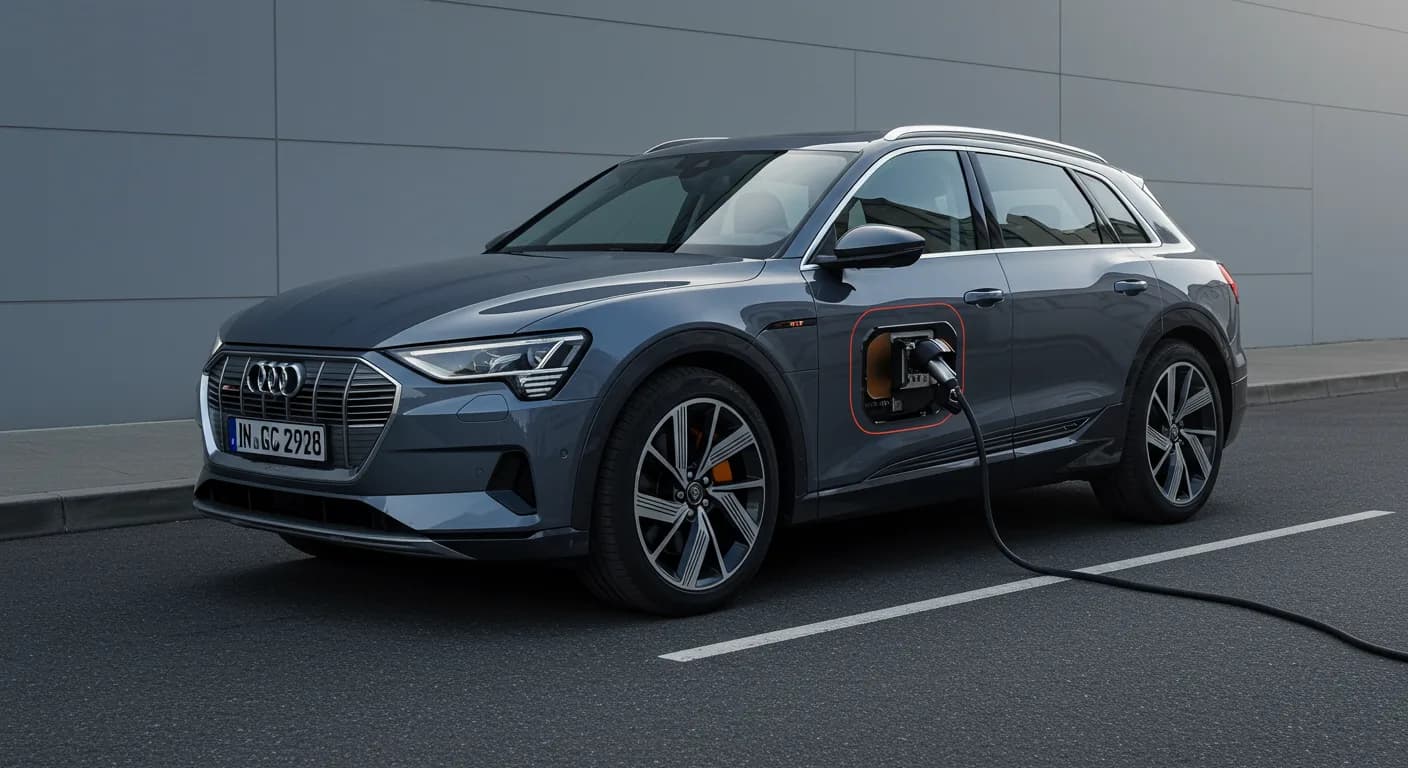
Audi has issued Technical Service Bulletin (TSB) 93 24 73 2074616/1 to address customer inquiries regarding a perceived issue with Audi e-tron delayed DC charging. This bulletin clarifies that a delay in the start of direct current (DC) charging is a normal operational characteristic of these vehicles, not a fault. The information provided aims to inform owners and technicians that such delays are expected and do not indicate a malfunction.
Symptoms
Owners of affected Audi e-tron models may notice that DC charging sometimes starts too slowly. The time taken for DC charging to start varies, leading to concerns about the charging system's functionality. This perceived Audi e-tron delayed DC charging is the primary symptom reported by customers.
Why This Happens
The TSB explains that when performing DC charging, especially at high power levels, it is normal for 30 to 90 seconds to elapse between connecting the charging connector and the start of energy flow. This initialization period can sometimes extend to over one minute. The delay is due to essential communication between the vehicle and the charging station, which includes necessary safety checks like insulation measurement, ensuring a secure and efficient charging process.
Important Information for Owners
Audi emphasizes that customers should be informed that the initialization process time can vary based on the charging station manufacturer and the selected charging power. Higher charging power generally leads to a longer initialization period. Additionally, vehicles with a low state of charge might experience slightly longer delays.
Crucially, Audi states: "Please inform the customer that the time taken for this initialization process may vary depending on the charging station manufacturer. The selected charging power also has an influence on this. The general rule: The higher the charging power is, the longer the initialization process will take. The initialization process may also take slightly longer for vehicles with a low state of charge. Depending on the charging station manufacturer, the initialization process may take as long as over one minute. This is neither a malfunction nor a fault on the vehicle or charging station."
No Fault Codes or Repair Needed
Workshop findings indicate that no relevant diagnostic trouble codes (DTCs) are logged when this condition occurs. This further supports the conclusion that the Audi e-tron delayed DC charging is not a fault. Since this is considered normal operation, there is no production solution or specific service procedure required to address this characteristic. The TSB 93 24 73 2074616/1 is informational only and does not apply to any Audi Warranty claims.
NHTSA ID 11005953
This information is based on Audi Technical Service Bulletin 93 24 73 2074616/1, documented under NHTSA ID 11005953.
Frequently Asked Questions
- Is a delayed DC charging start normal for my 2021-2026 Audi e-tron?
- Yes, according to Audi Technical Service Bulletin 93 24 73 2074616/1, a delay of 30-90 seconds or even over one minute for DC charging to begin is considered normal operation. This is due to communication and safety checks between the vehicle and the charging station.
- Will my dealer fix the 'delayed start of DC charging' under warranty?
- No, this condition is not considered a malfunction or a fault, and therefore, it is not applicable to any Audi Warranty. TSB 93 24 73 2074616/1 is informational only and does not outline a repair procedure.
- What causes the delay in DC charging for Audi e-tron models?
- The delay is caused by the necessary initialization process, which involves communication between your Audi e-tron and the charging station. This process includes safety checks, such as insulation measurement, and can be influenced by the charging power level and the vehicle's state of charge.
- Are there any fault codes associated with the Audi e-tron delayed DC charging?
- No, workshop findings indicate that no relevant diagnostic trouble codes (DTCs) are logged when owners experience a delayed start to DC charging. This absence of fault codes further confirms that the condition is normal operating behavior.
Related Articles
2022 Audi e-tron Electrical System Problems: Complaints & TSBs
Owners of the 2022 Audi e-tron frequently report significant electrical system malfunctions, ranging from sudden power loss and charging hazards to software crashes. Braking issues and unexpected automatic emergency braking are also common concerns, alongside numerous technical service bulletins…
2022-2026 Audi Guided Fault Finding Reporting Obligation
Audi has issued Technical Service Bulletin TPI 2033392, also known as Transaction No. 2081531/1, regarding a reporting obligation for technicians when Guided Fault Finding produces an unexpected result. This TSB outlines the process for contacting Audi Product Support for diagnostic assistance.
2022-2026 Audi Infotainment System Complaints
Audi has released Technical Service Bulletin (TSB) 2081405/1 to address various customer complaints regarding infotainment systems in 2022-2026 Audi vehicles. This TSB helps technicians diagnose issues often caused by external media or mobile devices, rather than vehicle technology.
2018-2026 Audi Models Cracking Noise TSB 2061464/11
Audi Technical Service Bulletin 2061464/11 describes a cracking noise from the front or rear axle when changing direction in various 2018-2026 Audi models. The issue is due to stub axle movement and is resolved by bonding the stub axle to the wheel bearing with locking fluid.
2022-2026 Audi Parking Aid False Warnings TSB 2024323/13
Audi has released Technical Service Bulletin 2024323/13 to address customer complaints of false parking aid warnings. This bulletin details various environmental and vehicle-specific conditions that can cause the parking aid system to issue alerts even when no obstacles are present. It provides…
Leave a comment
Comments are moderated and may take a moment to appear. Only your first name and the initial of your last name are shown publicly.
Comments
Be the first to comment.