2019-2021 Audi e-tron, Q3, Q8 Sunroof Water Leak TSB
A Technical Service Bulletin (TSB 2056944/7) has been issued for 2019-2021 Audi e-tron, Q3, and Q8 models addressing water leaks from the sunroof area. Owners may notice a water drip from the headliner. The TSB details inspection and repair procedures for drain hoses, seals, glass panels, and wind…
 Sarah Mitchell2021 Audi e-tron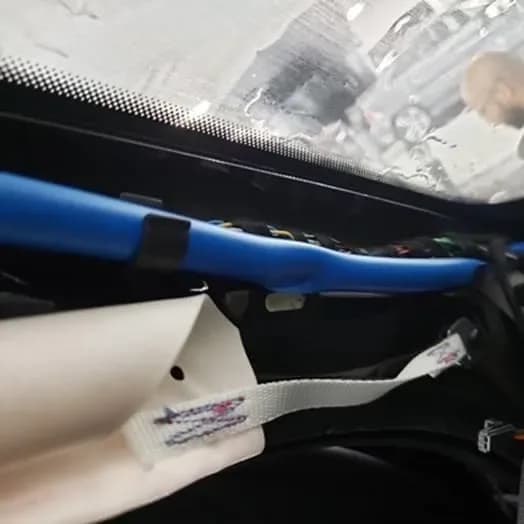
Gilt auch für
- Audi Q3
- 2021
- Audi Q8
- 2021
Owners of 2019-2021 Audi e-tron, Q3, and Q8 vehicles may experience a concerning issue: a "water drip from the headliner area." This problem, which can indicate water intrusion from the sunroof system, is addressed by Audi Technical Service Bulletin (TSB) 2056944/7, issued on September 22, 2021. This bulletin supersedes an earlier TSB, 60 21-50, dated March 2, 2021, and provides updated procedures for diagnosis and repair.
Revision History
This Technical Service Bulletin has undergone several revisions to refine the diagnostic and repair process:
- Revision 7 (September 22, 2021): Revised Warranty information, adding a labor operation for plenum cover removal and reinstallation, and updating Standard Repair Times (SRTs).
- Revision 6 (March 2, 2021): Clarified the Technical Background regarding possible problems and updated the drain hose check. The Production Solution was clarified, and a note was added to the Service section regarding unnecessary part replacement. Specific labor operations for all checks were also added to the Warranty section.
- Revision 5 (November 3, 2020): Modified the work procedure in the Service section and added a labor operation to the Warranty section.
Symptoms
The primary symptom reported by owners is a visible "water drip from the headliner area." This is depicted in Figure 1 of the TSB, showing water intrusion near the headliner. This can occur when the vehicle is stationary or driving, especially after exposure to rain, a car wash, or standing water on the roof. The water may leak into the cabin, particularly if the sunroof is opened or vented while wet.
Any possible water drip may not appear immediately but rather after a driving period, as water travels to the underside of the headliner area. This can happen due to slow migration of water along the wind deflector hinge arms and potential entry into the stowage area for the wind deflector. It's important to note that this stowage area is explicitly labeled as "Stowage area for wind deflector - NOT WATER TIGHT - NO DRAINAGE" in Figure 6, indicating it does not provide water drainage away from the vehicle. Figure 5 illustrates the front sunroof opening with drainage exposed, while Figure 7 provides a diagram of the sunroof water channeling, highlighting areas of designed drainage versus no drainage.
Diagnosis / Trigger Conditions
Audi's TSB identifies several potential root causes for the Audi e-tron sunroof water leak and similar issues in other models. A comprehensive inspection of the sunroof system is required to pinpoint the exact source of the leak. Technicians will check the following areas:
- Sunroof Drain Hoses or Outlet Valves: These can become obstructed by debris, or be kinked or pinched, preventing proper water drainage. Figure 2 shows an example of a sunroof drain hose pinched by pillar trim.
- Roof Opening Seal: The seal around the sunroof opening may be detached, malformed, or damaged. Figure 3 illustrates a detached and malformed roof opening seal.
- Glass Sunroof Panels: Poor adjustment of the front and rear glass sunroof panels can lead to leaks. Figure 4 provides a diagram for checking the adjustment axes of the sunroof glass panels.
- Sunroof Frame: Water can enter the sunroof frame and bypass normal drainage channels, especially if the sunroof is open or vented when wet.
Important Warnings
Audi emphasizes that it is not necessary to replace the sunroof frame unless there is actual damage found, such as a crack in the drainage structure or a hole. If damage to the sunroof frame is found, the area must be clearly marked. Sunroof frames replaced due to damage will be requested for return to Audi of America (AoA) for analysis. The TSB notes that a complete leak test of the sunroof frame will be conducted during analysis. If this test reveals no water leak in the sunroof frame, including the marked damaged area, the sunroof frame will be returned, and the claim for its replacement will be debited. If no structural damage is identified, technicians should proceed with other repair steps outlined in the bulletin. This guidance helps prevent unnecessary and costly part replacements.
Repair Procedure Summary
The repair process involves a multi-step approach to address all potential leak sources. Audi stresses that all possible root causes must be fully addressed, and any necessary repairs completed before releasing the vehicle.
- Inspect and Clean Drain Hoses: Technicians will use the VAS6620 Sunroof Drain Snake to follow the cleaning procedure for sunroof water drain hoses as described in ElsaPro. Any obstruction other than debris, such as a kinked or pinched drain hose, will be apparent after this check. If a hose is pinched or kinked, the damaged drain hose(s) or valve(s) must be replaced.
- Inspect and Replace Roof Opening Seal: The entire perimeter of the roof opening seal will be inspected for detachment, malformation, or damage. Any compromised seals will be replaced.
- Adjust Glass Sunroof Panels: If, after dimensional measurements, the sunroof glass panels are found to be poorly adjusted, they will be realigned.
- Inspect Sunroof Frame: The sunroof frame will be inspected for damage like cracks or holes. If no structural damage is found, the frame is not replaced.
- Wind Deflector Inspection: The front sunroof panel is opened completely to locate the mounting points for the sunroof wind deflector (Figure 8). A design change has been implemented for the wind deflector to enhance water flow and drainage. Technicians will inspect the wind deflector area (Figure 9). The redesigned wind deflector features small tabs cast into its structure. If the vehicle has the older wind deflector design, it must be replaced with the redesigned version, ensuring the replacement contains these tabs.
- Clean Sunroof Frame Area: The sunroof frame area (Figure 10) must be thoroughly cleaned using a primer applicator D 009 500 25 (or equivalent) and D 009 401 04 all purpose cleaner (or equivalent surface preparation solvent). The area must be free of lubricant or contaminants and completely dry.
- Apply Butyl Adhesive/Sealing Cord: Two 25mm strips of AKL 450 005 05 Butyl adhesive/sealing cord are cut and firmly pressed into the grooves shown in Figure 11. Both channels must be completely filled with the butyl cord.
- Modify Sunroof Glass Panel: A modification is made to the sunroof glass panel (Figure 12) by bonding two small pads to the front corners just inside the rubber 'skirt'. This creates a gap between the 'skirt' and the sunroof mechanism, preventing water contact and potential breaching of water channels.
- Prepare Glass Panel 'Skirt': The inside surface of the glass panel 'skirt' is cleaned using D 009 401 04 all purpose cleaner (or equivalent) and a clean, dry cloth (Figure 13).
- Apply Bonding Agent: D 355 205 A2 Bonding Agent (or equivalent adhesion promoter) is applied using a primer applicator D 009 500 25 (or equivalent), and allowed to thoroughly dry (Figure 14).
- Prepare Packing Pads: Two 10mm x 10mm pads are cut from 251 201 525 packing (Figure 15).
- Bond Packing Pads: Each 10mm x 10mm pad is bonded to the front areas of the sunroof glass panel 'skirt' with precise positioning from the inside (Figure 16).
- Ensure Adhesion: A 3356 roller tool (or equivalent) is used to apply firm pressure (~50 Nm) to the newly adhered pads, enhancing the strength of adhesion (Figure 17).
Required Tools or Parts
To perform the repairs, technicians may require the following specialized tools and parts:
- VAS6620 Sunroof Drain Snake
- 3356 Roller Tool
- D 00940104 All Purpose Cleaner (or equivalent surface preparation solvent) - Quantity: 0.2
- D 355205A2 Bonding Agent (or equivalent adhesion promoter) - Quantity: 0.2
- D 00950025 Primer Applicator (or equivalent) - Quantity: 0.2
- AKL45000505 Butyl Adhesive / Sealing Cord - Quantity: 0.1
- 251201525 Packing - Quantity: 0.5
- Roof opening perimeter seal:
- 83A877459 or 83A877459A (for Audi e-tron quattro, e-tron Sportback, and Q3) - Quantity: 01
- 4M0877459C (for Q8) - Quantity: 01
- Front sunroof water drain hoses:
- 4KE877201 (for Audi e-tron quattro and e-tron Sportback) - Quantity: 02
- 4M8877201 (for Q8) - Quantity: 02
- 83A877201 or 83A877201A (for Q3) - Quantity: 02
- Rear sunroof water drain hoses:
- 4KE877203 or 4KE877203A (for Audi e-tron quattro) - Quantity: 02
- 4K4877203 (for Audi e-tron Sportback) - Quantity: 02
- 4M8877204 (Right rear for Q8) - Quantity: 01
- 4M8877203 (Left rear for Q8) - Quantity: 01
- 83A877204 or 83A877204A (Right rear for Q3) - Quantity: 01
- 83A877203 or 83A877203A (Left rear for Q3) - Quantity: 01
- 4M8877651 Wind Deflector - Quantity: 01
- Fasteners, Bolts, Nuts, and Screws: As needed per the Repair Manual (See ETKA/ELSA).
Warranty Information
This TSB outlines warranty coverage for the repairs. Claims are typically covered for up to 48 months or 50,000 miles, whichever comes first. For Audi Certified Pre-Owned (CPO) vehicles, the claim type is G10, requiring owner verification. If a vehicle is outside of these warranty parameters, this Technical Service Bulletin serves as informational guidance only. The Service Number for this issue is 6039, and the Damage Code is 0050.
Various labor operations are specified with associated time units (TU):
- Sunroof water drains check:
- 6048 0250 (for Q8, Audi e-tron quattro, and Audi e-tron sportback) - See SRT for associated operations.
- 6048 0251 (for Q3) - See SRT for associated operations.
- Headliner loosen and fasten:
- 7084 0950 (for Q3) - See SRT for associated operations.
- 7084 0900 (for Audi e-tron quattro, e-tron sportback, and Q8) - See SRT for associated operations.
- Cover (Plenum) remove and reinstall: 8522 1900 (All) - See SRT for associated operations.
- Sunroof drain hose(s) replacement: 6048 0299 (All) - 10 TU (per hose).
- Sunroof opening perimeter seal inspection: 6042 5599 (All) - 10 TU.
- Front glass tilting roof panel remove and reinstall: 6039 1900 (for Q8, Audi e-tron quattro, and e-tron sportback) - See SRT for associated operations.
- Roof opening perimeter seal remove and reinstall:
- 6042 1950 (for Q8, Audi e-tron quattro, and e-tron sportback) - See SRT for associated operations.
- 6042 1902 (for Q3) - See SRT for associated operations.
- Check sunroof panel adjustment - front and rear: 6041 1999 (All) - 10 TU.
- Check sunroof wind deflector version: 6033 1999 (All) - 5 TU.
- Replace the sunroof wind deflector: 6033 1900 (All) - See SRT for associated operations.
- Perform sunroof frame and front glass panel modifications: 6039 1599 - 50 TU.
- Front glass tilting roof panel adjust: 6039 1500 (All) - See SRT for associated operations.
- Rear glass panel adjust: 6041 1500 (All) - See SRT for associated operations.
- Diagnostic Time GFF: 0150 0000 - 10 TU.
- Road test prior to the service procedure: 0121 0002 - 10 TU.
- Road test after the service procedure: 0121 0004 - 10 TU.
All warranty claims must adhere to the Audi Warranty Policies and Procedures Manual, and claims are subject to review or audit by Audi Warranty.
NHTSA ID: 10201544
Galerie
11 Bilder
Frequently Asked Questions
- What is TSB 2056944/7 about?
- TSB 2056944/7 addresses water entry into the cabin from the sunroof area in certain 2019-2021 Audi e-tron, Q3, and Q8 models. It provides detailed diagnostic and repair instructions for technicians to fix the issue, specifically targeting the **Audi e-tron sunroof water leak**.
- What are the common signs of a sunroof water leak in my Audi?
- The most common sign is a "water drip from the headliner area." This indicates that water is entering the cabin from the sunroof system, often after rain, a car wash, or when the sunroof is open while wet. Water may also appear after driving, migrating from the wind deflector area.
- Will my Audi sunroof water leak repair be covered under warranty?
- Repairs related to this TSB are typically covered under Audi's warranty for up to 48 months or 50,000 miles. For Certified Pre-Owned vehicles, specific CPO warranty guidelines apply. If your vehicle is outside of warranty, the TSB serves as informational guidance.
- What specific parts or areas are inspected for the sunroof water leak?
- Technicians will inspect sunroof drain hoses and outlet valves (using the VAS6620 Sunroof Drain Snake), the roof opening seal, the adjustment of glass sunroof panels, the sunroof frame for damage, and the wind deflector area, which is noted as not being water-tight.
- Is it always necessary to replace the sunroof frame if there's a leak?
- No, the TSB explicitly states that it is not necessary to replace the sunroof frame unless actual damage, such as a crack or hole in the drainage structure, is found. If no structural damage is present after a leak test, the frame will not be replaced, and the claim for replacement will be debited.
Related Articles
2021 Audi e-tron Electrical Malfunction and Power Loss
A 2021 Audi e-tron owner reported a severe 'Electrical Malfunction' resulting in complete loss of power on the highway. The issue has persisted despite dealer attempts to fix it over five months, posing significant safety risks.
2021-2026 Audi UTR Troubleshooting & FAQs TSB 2081409/1
This Audi Technical Service Bulletin (TSB 2081409/1) provides comprehensive answers to frequently asked questions and troubleshooting steps for the Audi Universal Traffic Recorder (UTR) accessory, covering topics like SD card compatibility, video playback, Wi-Fi issues, and more.
2021-2025 Audi Emergency Call System Fault TSB
Audi has released Technical Service Bulletin 2059528/18 to address an "Emergency call function: malfunction! Function unavailable. Please contact service" warning, often accompanied by a red SOS LED and DTC B200000. This issue affects various 2021-2025 Audi models and is due to a software problem…
2021-2026 Audi Adaptive Light System Fault C12B3FA TSB
Audi has released Technical Service Bulletin 2054202/7 to address an intermittent 'Audi adaptive light: system fault' message and DTC C12B3FA in various 2021-2026 models. This TSB outlines diagnosis and resolution for driver assistance system malfunctions.
2021-2026 Audi Parking Aid False Warnings TSB 2024323/12
This Technical Service Bulletin (TSB 2024323/12) details diagnostic and repair procedures for 2021-2026 Audi vehicles experiencing false parking aid warnings. Learn about environmental factors, sensor checks, and proper installation to resolve issues like 'Parking aid does not work / warning is…
Leave a comment
Comments are moderated and may take a moment to appear. Only your first name and the initial of your last name are shown publicly.
Comments
Be the first to comment.