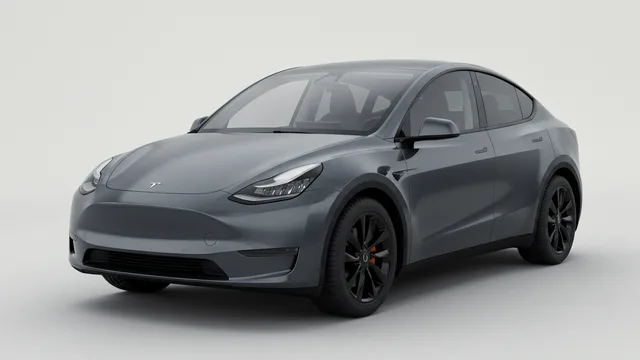
Tesla, Inc. (Tesla) is recalling certain 2017-2023 Model 3 and 2020-2023 Model Y vehicles. The headlight low beams may be too bright and exceed the maximum light output. As such, these vehicles fail to comply with the requirements of Federal Motor Vehicle Safety Standard (FMVSS) number 108, "Lamps, Reflective Devices, and Associated Equipment."
Tesla, Inc. (Tesla) is recalling certain 2017, 2021-2023 Model 3, 2020-2023 Model Y, 2021-2023 Model S, and Model X vehicles operating software version 2026.8.6. The rearview camera image may be delayed when the vehicle is placed in reverse. As such, these vehicles fail to comply with the requirements of Federal Motor Vehicle Safety Standard number 111, "Rear Visibility."
Tesla, Inc. (Tesla) is recalling certain 2024 Cybertruck, 2017-2025 Model 3, and 2020-2025 Model Y vehicles. The tire pressure monitoring system (TPMS) warning light may not remain illuminated between drive cycles, failing to warn the driver of low tire pressure. As such, these vehicles fail to comply with the requirements of Federal Motor Vehicle Safety Standard number 138, "Tire Pressure Monitoring Systems."
Tesla, Inc. (Tesla) is recalling certain 2021-2024 Model 3, Model S, Model X, and 2020-2024 Model Y vehicles. The hood latch assembly may fail to detect an unlatched hood condition after the hood has been opened.
Tesla, Inc. (Tesla) is recalling certain 2012-2024 Model S, 2015-2024 Model X, 2017-2023 Model 3, and 2020-2023 Model Y vehicles. In the event of an unbelted driver, the seat belt warning light and audible chime may not activate as intended. As such, these vehicles fail to comply with the requirements of Federal Motor Vehicle Safety Standard number 208, "Occupant Crash Protection."

The 2021 Tesla Model Y has been subject to numerous recalls addressing critical safety concerns, including suspension fractures, camera cable defects, and software issues affecting driver assistance systems and pedestrian warnings. While no owner complaints or federal investigations have been…
Tesla has released Service Bulletin SB-24-17-005 R1 for 2021-2023 Model S, Model X, and Model Y vehicles. This bulletin addresses a condition where the interior camera's performance for driver attentiveness detection is reduced in low-light conditions, requiring camera replacement.
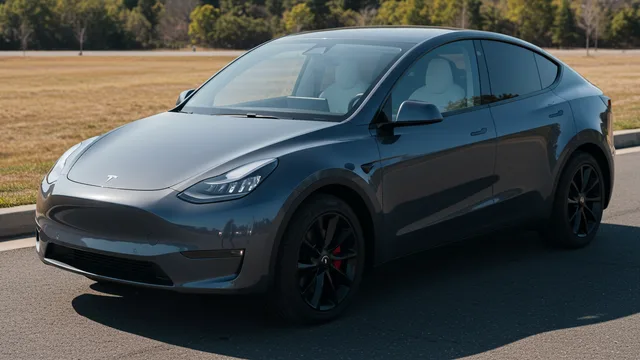
Tesla Model Y vehicles do not come with a physical owner's manual. Instead, all owner's manual content is integrated into the vehicle's software and displayed on the touchscreen, customized to your specific vehicle configuration and software version.
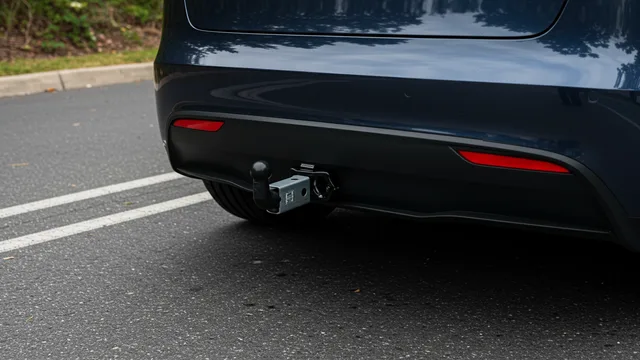
A manufacturer communication indicates that certain 2021-2022 Tesla Model Y vehicles, specifically those that underwent a tow hitch retrofit in service, might need a replacement LH Body Controller Module.
This article details Manufacturer Communication 10252959, a Technical Service Bulletin (TSB) from Tesla regarding the Owner's Manual for 2021-2024 Model Y vehicles. It provides essential information for owners seeking updates or clarifications on their vehicle's documentation.
This technical service bulletin (TSB) for the 2021-2024 Tesla Model Y, identified by NHTSA ID 10252953, pertains to the vehicle's Owner's Manual. It highlights the importance of this essential documentation for understanding your vehicle's features and operation.
Tesla Model Y vehicles from 2021-2023 do not come with a physical owner's manual. Instead, all owner's manual content is integrated into the vehicle's software and displayed on the touchscreen, tailored to the specific vehicle configuration and software version.
This manufacturer communication (NHTSA ID 10247837) clarifies that 2021-2023 Tesla Model Y vehicles do not come with a physical owner's manual. Instead, all content is integrated into the vehicle's software and displayed on the touchscreen, customized to your specific vehicle configuration.
This document provides essential information regarding the owner's manual for 2021-2023 Tesla Model Y vehicles. Tesla integrates all owner's manual content directly into the vehicle's software, accessible via the touchscreen, with content tailored to each specific vehicle's configuration.
Tesla Model Y vehicles from 2021-2023 do not come with a physical owner's manual. Instead, the complete Tesla Model Y owner's manual is integrated into the vehicle's software and accessible via the touchscreen, displaying content relevant to your specific configuration and software version.
Tesla Model Y vehicles from 2021-2023 do not come with a physical owner's manual. Instead, all relevant owner's manual content is integrated into the vehicle's software and displayed on the touchscreen, as detailed in NHTSA Manufacturer Communication 10238122.
Some 2021 Tesla Model Y vehicles may display "braking and stability control related alerts" on the instrument cluster and touchscreen during power-on. This issue stems from a missing hydraulic control unit (HCU) wake-up wire. A simple vehicle power cycle can typically resolve these Tesla Model Y…
On XXX (4:59 PM and 5:47 PM) and XXX (7:49 AM), while driving, my 2021 Tesla Model Y (approx. 41,500 miles) displayed "Steering assist reduced" (UI_a020), each followed within about a minute by "Lane Departure Avoidance unavailable" (APP_w264). [Add if true: The steering felt noticeably heavier when the alert appeared.] The vehicle's 12V system tested healthy in Service Mode (13.32 V, DC-DC output normal). Tesla Service ([XXX]; service SV02F94980) diagnosed an Electronic Power Assisted Steering (EPAS) rack motor control error with limited power output from overheat or overload protection. On XXX, at 41,788 miles, Tesla replaced the steering gear (part 1188832-00-B), along with the front lower compliance and lateral links, and performed an alignment. I paid $4,522.27 out of pocket; Tesla declined goodwill. Losing power steering assist while driving is a safety hazard. The failed rack belongs to the same Mando-manufactured family (XXX) named in recall 25V-092 and investigation EA24001, which covered only 2023 Model 3 and Model Y. NHTSA's complaint database shows a growing number of 2021 Model Y complaints describing the same UI_a020 alert and the same rack replacement, many filed in 2026. I ask NHTSA to evaluate whether the defect and remedy should extend to 2021 Model Y vehicles. Invoice attached. INFORMATION REDACTED PURSUANT TO THE FREEDOM OF INFORMATION ACT (FOIA), 5 U.S.C. 552(B)(6)
No injuries · No fire · No crash
My 2021 Tesla Model Y (Autopilot Hardware 3) had a malfunction of its camera system and automatic windshield wipers after an over-the-air software update. The update was version 2026.38.5.1, which included FSD (Supervised) v14.3 Lite, and it installed on Oct 17. The vehicle had no problems with these systems before the update. After the update, the rearview camera did not display when shifting into reverse, the passenger side rear camera feeds stopped working, the automatic wipers did not activate in rain. Tesla’s automatic wipers depend on the vehicle’s cameras rather than a separate rain sensor, so both failures point to the camera or Autopilot computer system. Safety risk: Without a working rearview camera, I could not reliably see pedestrians, children, or objects behind the vehicle when reversing. Without working automatic wipers, visibility in rain depended entirely on manual control. Camera-dependent safety features such as automatic emergency braking and lane departure warning may also have been affected. The problem first appeared immediately after the 2026.38.5.1 update. I went to the Tesla service center and they are charging an exorbitant to even diagnose the issue ($265 per issue). Current status: On Oct 26, Tesla installed a newer update, 2026.38.5.11. However, the problem persists. The passenger side rear camera briefly worked before going dark again.
No injuries · No fire · No crash
On XXX, at approximately 10:21 PM, my wife was driving our 2021 Tesla Model Y at low speed (about 7 mph) through the front roundabout of a school in [XXX]. She reports that the vehicle then accelerated rapidly on its own to approximately 35 mph and struck a fence and a tree. She states she did not command this acceleration and attempted to slow the vehicle. The airbags deployed and the vehicle was totaled. She was evaluated at an emergency room and released with no serious injuries. We obtained Tesla's Incident Data Report for the crash. Tesla's data indicates the accelerator pedal was applied up to 100% in the final seconds, which the driver disputes. The data also shows the accelerator reading remained at approximately 90-100% for several minutes AFTER the impact, while the vehicle was stationary and unoccupied, and when the vehicle was inspected two days later the accelerator pedal was found sitting in a depressed position. The floor mat was flat and clear of the pedals. I am filing this complaint to document the incident for NHTSA's pattern review, including the post-crash pedal condition. The complete Tesla data package (incident report, full data export, event data recorder file, and camera recordings) is preserved and available to investigators on request. INFORMATION REDACTED PURSUANT TO THE FREEDOM OF INFORMATION ACT (FOIA), 5 U.S.C. 552(B)(6)
On [XXX], between approximately [XXX] and [XXX] AM, I was driving my 2021 Tesla Model Y Long Range (VIN: [XXX]) with Full Self-Driving (Supervised) engaged, software version v14.3 Lite, on the southbound [XXX] frontage road at [XXX]. The road has five lanes in my direction, and only the leftmost lane is a left-turn lane. I was in the third lane from the left, and the navigation route required a left turn onto [XXX] at the upcoming intersection. FSD waited until the last moment to change lanes. The light turned red before it could complete the lane change, and the vehicle stopped straddling two lanes, still not in the left-turn lane. I expected FSD to continue straight and reroute. Instead, when the light turned green, the vehicle cut across the leftmost lane and drove up onto the median, apparently attempting to cross over it to complete the left turn. The other side of the median is oncoming traffic. There were two poles with city signs on the median, and the vehicle struck them. I took over immediately, but the collision had already occurred. No other vehicles or people were involved, and no one was injured. My vehicle sustained severe front-end damage, including a detached front bumper, a deformed left fender, and a shattered windshield. FSD/Autopilot features are no longer functioning. The vehicle did not automatically contact emergency services; I called the police myself. The incident was reported to the police (report #[XXX]) and to my insurance company, Progressive (claim #[XXX]). Tesla has contacted me to investigate. I have preserved the dashcam footage. Prior to this incident, I had also experienced repeated FSD issues after a software update in July 2026, including phantom braking and the vehicle suddenly stopping and freezing at intersections, requiring manual takeover. INFORMATION REDACTED PURSUANT TO THE FREEDOM OF INFORMATION ACT (FOIA), 5 U.S.C. 552(B)(6)
Subject: Front suspension failure and wheel detachment — 2021 Tesla Model Y Vehicle: 2021 Tesla Model Y VIN: [XXX] My wife's 2021 Tesla Model Y experienced a serious failure involving the front-right suspension, resulting in the wheel detaching from the vehicle. Following the incident, we observed a disconnected suspension arm at its mounting point and recovered a loose fastener. We understand that another fastener associated with the connection was already missing. We have photographs documenting the detached suspension connection and the recovered fastener. We are concerned that this failure may involve a safety-related defect in the front suspension mounting hardware. We request that NHTSA investigate whether this incident is related to recall 21V-835 / Tesla campaign SB-21-31-003, or any other suspension defect or recall affecting this vehicle. Please review this incident for potential safety implications for other vehicles and determine whether further investigation is warranted. We can provide photographs, the failed hardware, repair records, and additional details about the circumstances of the incident. INFORMATION REDACTED PURSUANT TO THE FREEDOM OF INFORMATION ACT (FOIA), 5 U.S.C. 552(B)(6)
No injuries · No fire · No crash