Tesla, Inc. (Tesla) is recalling certain 2023 Model 3 and Model Y vehicles operating software prior to 2023.38.4. The printed circuit board for the electronic power steering assist may experience an overstress condition, causing a loss of power steering assist when the vehicle reaches a stop and then accelerates again.
Tesla, Inc. (Tesla) is recalling certain 2024 Cybertruck, 2017-2025 Model 3, and 2020-2025 Model Y vehicles. The tire pressure monitoring system (TPMS) warning light may not remain illuminated between drive cycles, failing to warn the driver of low tire pressure. As such, these vehicles fail to comply with the requirements of Federal Motor Vehicle Safety Standard number 138, "Tire Pressure Monitoring Systems."
Tesla, Inc. (Tesla) is recalling certain 2021-2024 Model 3, Model S, Model X, and 2020-2024 Model Y vehicles. The hood latch assembly may fail to detect an unlatched hood condition after the hood has been opened.
Tesla, Inc. (Tesla) is recalling certain 2012-2024 Model S, 2015-2024 Model X, 2017-2023 Model 3, and 2020-2023 Model Y vehicles. In the event of an unbelted driver, the seat belt warning light and audible chime may not activate as intended. As such, these vehicles fail to comply with the requirements of Federal Motor Vehicle Safety Standard number 208, "Occupant Crash Protection."
Tesla, Inc. (Tesla) is recalling certain 2012-2023 Model S, 2016-2024 Model X, 2017-2023 Model 3, 2019-2024 Model Y, and 2024 Cybertruck vehicles. An incorrect font size is displayed on the instrument panel for the Brake, Park, and Antilock Brake System (ABS) warning lights. As such, these vehicles fail to comply with the requirements of Federal Motor Vehicle Safety Standard number 105, "Hydraulic and Electric Brake Systems" and 135, "Light Vehicle Brake Systems."

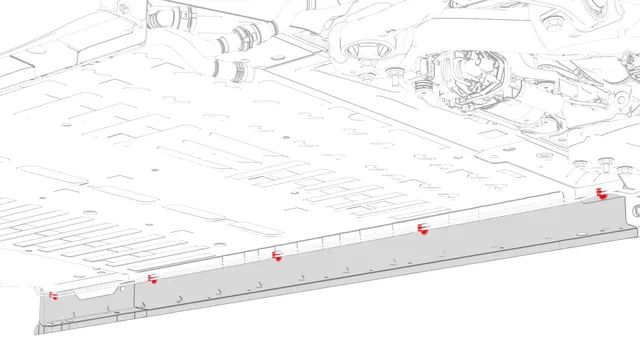
Tesla has issued Service Bulletin SB-26-33-001 for 2021-2023 Model 3 vehicles experiencing brake line corrosion, which can lead to brake fluid loss and a 'low brake fluid alert.' This bulletin outlines the inspection and replacement of corroded brake lines with new, corrosion-resistant parts.
Tesla provides owner's manual content digitally, integrated into the vehicle's software and accessible via the touchscreen. This ensures the manual is always current and relevant to your specific vehicle configuration and software version, replacing traditional physical copies.
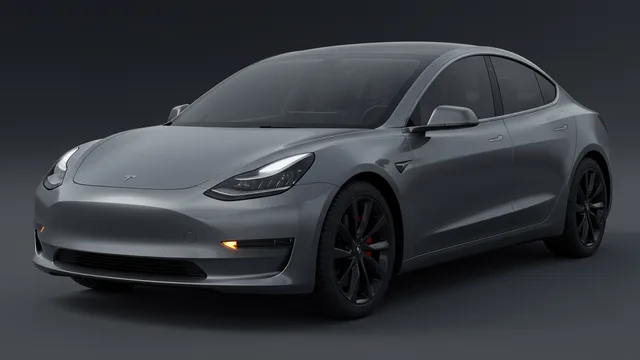
This article details the comprehensive digital owner's manual for 2021-2024 Tesla Model 3, Model S, Model X, and Model Y vehicles. Tesla provides all owner's manual content integrated into the vehicle's software, tailored to your specific configuration and software version.
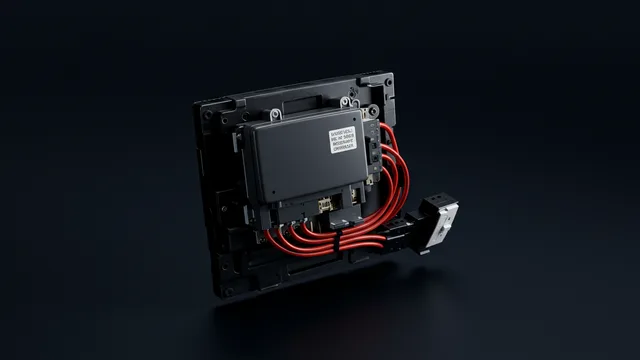
Tesla Service Bulletin SB-24-16-005 addresses a defective High Voltage Controller in 2023-2024 Model 3 and Model Y vehicles. This issue can prevent the vehicle from entering drive mode or cause a graceful power-off, requiring controller replacement.
Tesla vehicles, including the 2021-2024 Model 3, S, X, and Y, do not come with a physical owner's manual. Instead, all owner's manual content is integrated into the vehicle's software and accessible via the touchscreen, customized to your specific vehicle configuration and software version.
Tesla vehicles from 2021-2024, including Model 3, S, X, and Y, do not come with a physical owner's manual. Instead, all manual content is integrated into the vehicle's software, dynamically displayed on the touchscreen based on configuration and software version.
Tesla vehicles from 2021-2024, including the Model 3, S, X, and Y, feature integrated digital owner's manuals accessible via the vehicle's touchscreen. NHTSA document 11008783 provides a comprehensive PDF version of this dynamic content.
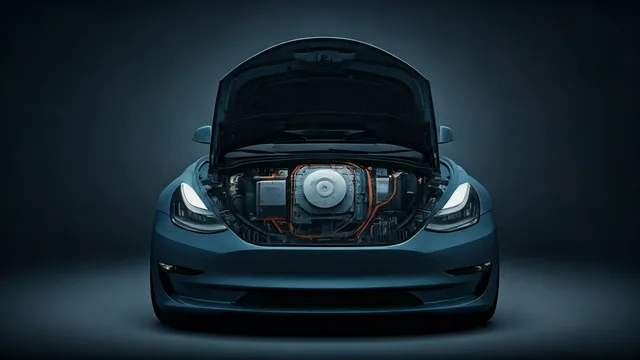
Tesla Service Bulletin SB-24-16-005 addresses a defective High Voltage Controller in 2023-2024 Model 3 and Model Y vehicles. This issue can prevent the vehicle from entering drive mode or cause a graceful power-off, requiring controller replacement.
Tesla vehicles from 2021-2024, including Model 3, S, X, and Y, feature integrated digital owner's manuals accessible via the touchscreen. This communication (NHTSA ID 11008781) clarifies that physical copies are not provided and content is dynamic, adapting to your vehicle's configuration and…
Tesla vehicles from 2021-2024, including Model 3, Model S, Model X, and Model Y, feature an integrated digital owner's manual accessible via the vehicle's touchscreen. This comprehensive guide adapts to your specific car's configuration and software version, providing real-time information and…
Tesla has issued Service Bulletin SB-24-16-005 for 2023-2024 Model 3 and Model Y vehicles regarding a defective High Voltage Controller. This component can prevent the vehicle from entering drive mode or cause a graceful power-off, requiring replacement.
Tesla vehicles from 2021-2024, including Model 3, S, X, and Y, provide owner's manual content directly through the vehicle's touchscreen. This digital approach ensures personalized, up-to-date information, replacing traditional physical manuals. Learn how to navigate your Tesla owner's manual.
On XXX at around 3:30 PM EST, I was driving my 2023 Tesla Model 3 on [XXX] about 10 miles outside of [XXX]. I had the adaptive cruise control set at 75 mph. I was driving in the right lane of the two available lanes of travel in that direction. I noticed an unattended car on the right shoulder about a 1/4 mile up the road and continued my drive as normal. The car was at least 5' to 6' off the highway. As i got about 30 yards from the car, my car suddenly slammed on the brakes automatically, which forced me to react in a corrective manner. Thankfully there was nobody behind me or the severity of the braking would have likely caused a rear end collision. To my understanding, this phantom braking is a known issue with Teslas, so I wanted to document my experience to add to the record. INFORMATION REDACTED PURSUANT TO THE FREEDOM OF INFORMATION ACT (FOIA), 5 U.S.C. 552(B)(6)
No injuries · No fire · No crash
On 8/24/2026 at approximately 12:02pm, my 2023 Model 3 was parked in my assigned space in a covered apartment carport, with a concrete support pillar approximately one to two feet from the passenger side. I entered a destination and activated FSD (Supervised) from Park, a Tesla-designed feature. Vehicle telemetry recorded in the dashcam clips shows FSD shifted into Drive, activated the right turn signal, turned the steering wheel to near full right lock, and accelerated to 3 mph, contacting the pillar with the passenger mirror and front door approximately 1.5 seconds after first movement. No accelerator or brake input was recorded from me before the collision. I applied the brake within one second of the impact beginning, and FSD disengaged. The pillar was within view of the vehicle's side cameras throughout. No warning was given. Damage to the passenger door; no injuries. Dashcam video with telemetry overlay and photos available.
I am writing to report several safety incidents that occurred while using Full Self-Driving (FSD) mode on my 2023 Model 3. Below are the details of the specific behaviors observed: - Right turn on red almost crashed into an oncoming car from the left - Hard emergency brake due to a bird that was in the opposite lane - Additional emergency brake around 10 seconds later for no reason - Running a red light by more than a second
No injuries · No fire · No crash
Two separate incidents occurred on July 10th and July 12th 2026 involving adaptive cruise control. While adaptive cruise control was engaged my car slammed on the brakes for no reason. There was nothing in the roadway to cause abrupt braking. The second time it occurred my car was close to being rear ended by a vehicle driving behind me. I took the car which is still under warranty to Tesla who confirmed there is a known firmware issue. No time frame was provided as to when the issue will be fixed.
No injuries · No fire · No crash
Whilst driving on highways which feature multiple speed limits - eg. 70 cars, 65 Trucks, 60 Buses. If full self driving more or when in adaptive cruise control - the car systems fail to recognize the restriction linked to the lower speed limits. As a result, you can be driving on Full Self Drive at 75mpm, the car sees a 65 followed by a 60 speed limit (neither applicable to cars), but the car brakes hard dropping the speed from 75 to 62 almost instantly and, on more than one occasion, a closely following car has almost collided with me. Until such time as the Tesla system can recognize the 'sub text' on a speed limit - the FSD and Adaptive cruise should not be certified. I also drive a BMW i4 and this reads all signs correctly, only applying those applicable to a car to the vehicle.
No injuries · No fire · No crash