2021-2024 Tesla Model 3 Digital Owner's Manual Information
This article details the comprehensive digital owner's manual for 2021-2024 Tesla Model 3, Model S, Model X, and Model Y vehicles. Tesla provides all owner's manual content integrated into the vehicle's software, tailored to your specific configuration and software version.
 David Chen2023 Tesla Model 3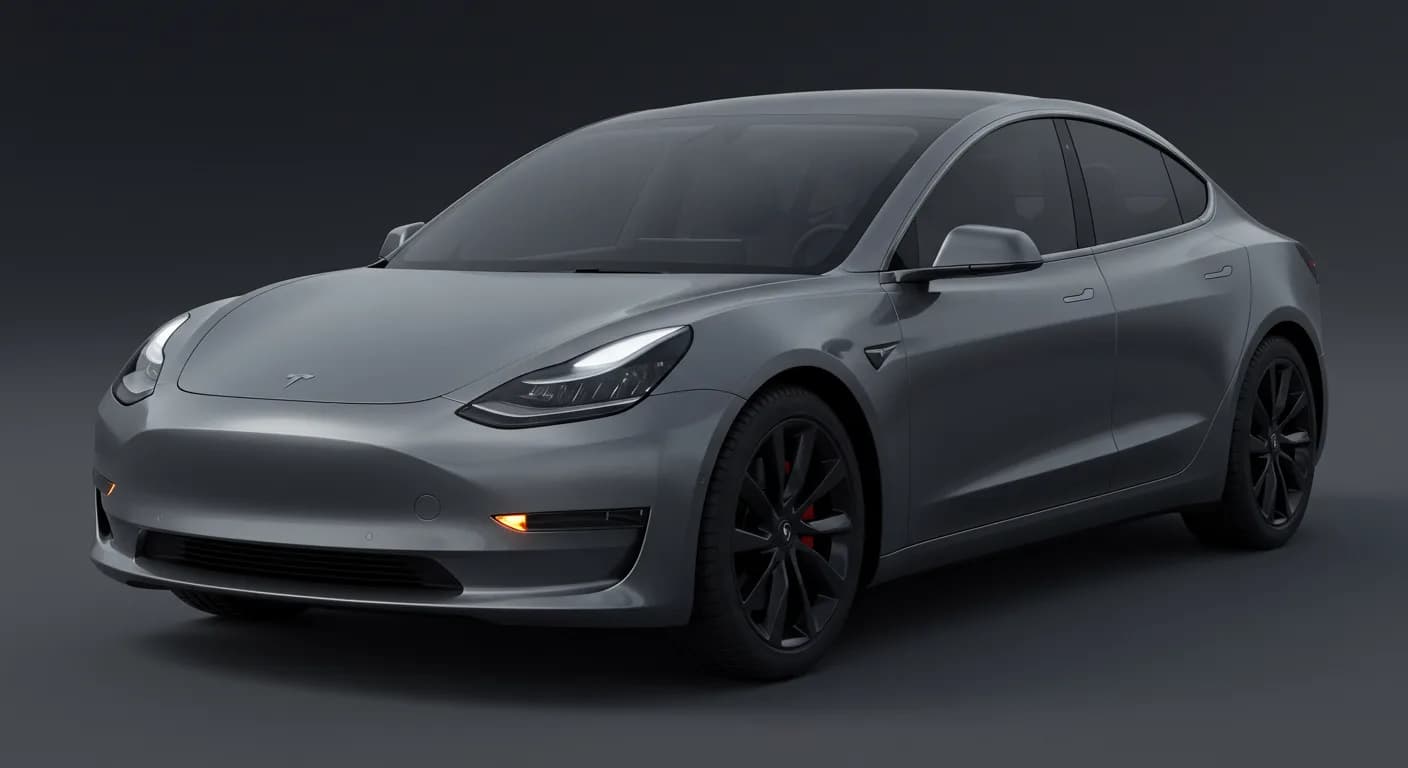
Gilt auch für
- Tesla Model 3
- 2021, 2022, 2024
- Tesla Model S
- 2021–2024
- Tesla Model X
- 2021–2024
- Tesla Model Y
- 2021–2024
Tesla vehicles, including the 2021-2024 Model 3, Model S, Model X, and Model Y, do not come with a traditional physical owner's manual. Instead, all essential owner information is seamlessly integrated into the vehicle's software and accessible directly through the touchscreen. This digital approach ensures that the information presented to the driver is always the most current and relevant to their specific vehicle's configuration and installed software version. For comprehensive reference, a full PDF compilation of this content is made available, identified by NHTSA ID 11008829, serving as the best available representative copy of the owner's manual content.
Understanding Your Digital Owner's Manual
The digital owner's manual within your Tesla is a dynamic resource. Unlike a static printed book, the content displayed on your vehicle's touchscreen adapts to your specific model, features, and software updates. This means that if your vehicle has a particular option, like a specific Autopilot hardware version or a unique interior configuration, the manual will highlight and explain those features. Conversely, information irrelevant to your vehicle will not be shown, streamlining the user experience. The PDF document associated with NHTSA ID 11008829 encapsulates the entirety of this potential content, offering a complete reference for all possible configurations and software versions across the affected 2021-2024 Tesla Model 3, Model S, Model X, and Model Y lineup.
This adaptive delivery method ensures that owners always have access to the most accurate and up-to-date information for their vehicle. It covers everything from basic operations to advanced features, maintenance schedules, and troubleshooting tips. The ability to search within the digital manual on the touchscreen also makes finding specific information quicker and more efficient than flipping through pages of a physical book. Understanding the structure and content of your Tesla Model 3 owner's manual is crucial for maximizing your vehicle's potential and ensuring safe operation.
Key Sections of the Tesla Owner's Manual
The comprehensive Tesla Model 3 owner's manual (and for other models) is structured to provide detailed guidance on every aspect of vehicle ownership. While the in-vehicle version customizes what you see, the full PDF (NHTSA ID 11008829) contains all possible sections. Here's a breakdown of the typical content you would find:
Vehicle Controls and Features
This section provides an in-depth guide to all physical and digital controls within your Tesla. It covers the operation of the steering wheel controls, including the left scroll wheel for media volume and track selection, and the right scroll wheel for adjusting speed, following distance, or activating voice commands. Detailed explanations are provided for the stalk functions, such as the left stalk for turn signals, high beams, and windshield wipers, and the right stalk for gear selection (Drive, Reverse, Park) and Autopilot activation.
The touchscreen interface is extensively covered, outlining how to navigate menus, adjust vehicle settings, control climate, manage media, and access various applications. Owners will find instructions for using the key card to unlock and start the vehicle, setting up a phone key for seamless entry, and accessing the front trunk (frunk) and rear trunk. Information on adjusting the power seats, side mirrors, and steering wheel position is also included, ensuring a comfortable and personalized driving experience. The manual also details the operation of the flush exterior door handles, which present themselves upon approach or with a key signal.
Driving and Autopilot Systems
This part of the manual focuses on the driving experience, from starting and stopping the vehicle to utilizing advanced driver-assistance systems. It details gear selection, different driving modes such as "Chill" for a smoother acceleration and "Standard" for full performance. The functionality of regenerative braking is explained, highlighting how it recovers energy and slows the vehicle when the accelerator pedal is released.
A significant portion is dedicated to Autopilot features, including "Traffic-Aware Cruise Control" for maintaining a set speed and following distance, and "Autosteer" for steering within a clearly marked lane. More advanced features like "Navigate on Autopilot" for guidance from on-ramp to off-ramp, "Summon" for moving the vehicle short distances remotely, and "Auto Park" for automatic parallel or perpendicular parking are also explained. The manual provides critical information on the capabilities and limitations of these systems, emphasizing the driver's responsibility to remain attentive and prepared to take control. It explicitly states: "Autopilot features are for convenience and should not be used as a substitute for driver vigilance." Other safety features like "Lane Departure Avoidance," "Emergency Lane Departure Avoidance," and "Blind Spot Collision Warning" are also explained, complete with operational guidelines and warnings to enhance driver awareness.
Charging and Battery Care
Crucial for electric vehicle owners, this section of the Tesla Model 3 owner's manual covers everything related to charging. It details home charging solutions, including the Tesla Wall Connector for faster charging and the Mobile Connector for charging from standard outlets with various adapters. Public charging options, such as the Tesla Supercharger network for rapid charging on long trips and Destination Chargers at various locations, are also explained.
Owners will find guidance on the charging port operation, including how to open it from the touchscreen, mobile app, or by pressing the charging cable button. Battery care tips for maximizing longevity, such as maintaining a daily charge limit and avoiding frequent deep discharges, are provided. Range estimation considerations, factors affecting range, and specific considerations for charging in cold weather to optimize performance are also covered. Important safety warnings regarding proper charging practices, handling high-voltage components, and avoiding charging in unsafe conditions are prominently featured to ensure user safety. For example, the manual warns: "Charging Interrupted: Check Connection" if an issue occurs, and "High Voltage System Warning: Do Not Touch" in case of system faults.
Safety and Emergency Procedures
Safety is paramount, and this section provides vital information on the vehicle's safety systems and what to do in emergency situations. It covers the airbag system, proper seatbelt use for all occupants, and detailed instructions for installing and securing child safety seats using both the LATCH (Lower Anchors and Tethers for Children) system and seatbelt routing.
Information on the emergency call system (eCall), tire pressure monitoring system (TPMS), and the functionality of the brake system, including anti-lock brakes (ABS) and electronic stability control (ESC), is included. The manual also outlines emergency lane keeping, the pedestrian warning system (which emits a sound at low speeds), and procedures for dealing with flat tires, including the use of a tire repair kit. Instructions for jump-starting the 12V battery and performing an emergency door release in case of power loss are critical for owner safety. It also contains critical warnings such as "Brake System Fault: Service Required" or "Airbag System Fault: Contact Service Immediately" to alert drivers to potential issues.
Maintenance and Service
This section outlines the recommended maintenance schedule and procedures to keep your Tesla in optimal condition. It emphasizes routine checks that owners can perform, such as monitoring tire pressure (with a common warning being "Tire Pressure Warning: Check Tires"), checking windshield washer fluid levels, and inspecting wiper blades. Cleaning procedures for both the interior and exterior of the vehicle are detailed, including recommendations for washing, waxing, and caring for various surfaces.
The manual also discusses software updates, which are delivered over-the-air (OTA) to enhance features and improve vehicle performance. It explains how to check for and install these updates. While the owner's manual provides general maintenance guidelines, it clarifies that specific repair procedures, diagnostic trouble codes (DTCs), part numbers, special tools, or software calibration codes are typically for authorized service centers and are not included for owner-level repairs. Owners are advised to contact Tesla Service for any complex maintenance or repair needs.
Specifications and Capacities
This comprehensive section provides detailed technical specifications for the vehicle. It includes general vehicle dimensions such as length, width, height, and wheelbase, as well as curb weight and gross vehicle weight ratings. Information on towing capacity, if applicable to the specific model and configuration, is also provided. Owners can find details on fluid types and capacities, including brake fluid, coolant, and windshield washer fluid. Tire specifications, such as recommended tire sizes, pressures, and load ratings, are listed to ensure proper tire maintenance and safety. This section serves as a valuable reference for understanding the physical and operational limits of the vehicle.
Troubleshooting and Warning Indicators
This section is dedicated to helping owners understand and address common issues or warning messages that may appear on the touchscreen. It describes various warning lights and messages, such as "Autopilot Unavailable," "Power Reduced," or "Service Required: Contact Tesla Service," explaining their meaning and the recommended course of action. For example, if the message "Charging Port Open: Close Before Driving" appears, the manual advises to ensure the charging port door is fully closed.
The manual guides owners through basic troubleshooting steps for minor issues, such as infotainment system resets or connectivity problems. It clarifies that while the vehicle's system may generate internal diagnostic trouble codes (DTCs) for service technicians, these codes are not typically displayed to the owner nor are they listed in the owner's manual. Instead, the manual focuses on actionable messages and indicators that empower owners to understand their vehicle's status and when professional service is needed.
Warranty Information
The owner's manual includes a general overview of the vehicle's warranty coverage. This typically details the Basic Vehicle Limited Warranty, the Battery Limited Warranty, and the Drive Unit Limited Warranty, specifying their respective durations and mileage limits. It outlines what is covered under warranty, such as defects in materials or workmanship, and what conditions might void the warranty, like unauthorized modifications or misuse.
It is important to note that specific warranty claim types, service numbers, damage codes, labor operations, or time units are internal to Tesla's service operations and are not provided in the owner's manual. Owners are advised to refer to their specific warranty documentation provided at the time of purchase or contact Tesla Service for detailed information regarding warranty claims and coverage.
Important Warnings and Disclaimers
The Tesla Model 3 owner's manual contains critical warnings and disclaimers designed to ensure safe operation and prevent damage. Owners are explicitly cautioned about the limitations of Autopilot and other driver-assistance features, reiterating that these systems are not autonomous and require active driver supervision. The manual states, "Do NOT rely on Autopilot features to determine if a lane is clear, or if a lane change is safe."
Regarding charging, warnings include "Do NOT use damaged charging equipment" and instructions to "Park outside" and contact service if a "High Voltage Battery System Fault" is displayed, indicating a potential fire risk. The manual also advises against modifying the vehicle's high-voltage system or attempting repairs on high-voltage components, as this "will not resolve" issues and poses severe safety risks. Furthermore, it clarifies that "Tesla is NOT notifying consumers" of minor software updates that do not impact safety or regulatory compliance, meaning owners should regularly check for and install available updates. It also emphasizes that "Vehicles cannot be delivered until the Update is completed" if a critical software update is pending, ensuring all new vehicles meet current standards.
Source Citation
This information is derived from the comprehensive digital owner's manual content made available by Tesla, as documented under NHTSA ID 11008829.
Frequently Asked Questions
- How do I access the owner's manual for my Tesla Model 3?
- You can access the owner's manual directly through your Tesla Model 3's touchscreen. The content is integrated into the vehicle's software and is tailored to your specific configuration and software version. A comprehensive PDF version, encompassing all possible content, is also available via NHTSA ID 11008829.
- Does my 2021-2024 Tesla Model 3 come with a physical owner's manual?
- No, Tesla vehicles from 2021-2024, including the Model 3, Model S, Model X, and Model Y, do not include a physical owner's manual. All owner's manual content is provided digitally through the vehicle's touchscreen and through a comprehensive PDF document (NHTSA ID 11008829).
- What kind of information can I find in the digital Tesla Model 3 owner's manual?
- The digital Tesla Model 3 owner's manual covers a wide range of topics, including vehicle controls, driving and Autopilot systems, charging and battery care, safety features, emergency procedures, maintenance schedules, and vehicle specifications. It provides detailed instructions and warnings relevant to operating and maintaining your Tesla.
- Why is the owner's manual content different on my Tesla's touchscreen compared to the full PDF?
- The owner's manual content on your Tesla's touchscreen is dynamically generated to show only the information relevant to your specific vehicle's configuration and current software version. The full PDF, referenced by NHTSA ID 11008829, contains all possible owner's manual content for all configurations and software versions across the 2021-2024 Model 3, Model S, Model X, and Model Y lineup.
- What should I do if I see a 'Brake System Fault: Service Required' message?
- If you see a message like "Brake System Fault: Service Required" on your Tesla's touchscreen, the owner's manual advises contacting Tesla Service immediately. This indicates a potential issue with the braking system that requires professional attention to ensure your safety.
Related Articles
2021-2023 Tesla Model 3 Brake Line Corrosion & Fluid Loss
Tesla has issued Service Bulletin SB-26-33-001 for 2021-2023 Model 3 vehicles experiencing brake line corrosion, which can lead to brake fluid loss and a 'low brake fluid alert.' This bulletin outlines the inspection and replacement of corroded brake lines with new, corrosion-resistant parts.
2021-2024 Tesla Model 3 Digital Owner's Manual Access
Tesla provides owner's manual content digitally, integrated into the vehicle's software and accessible via the touchscreen. This ensures the manual is always current and relevant to your specific vehicle configuration and software version, replacing traditional physical copies.
2023-2024 Tesla Model 3/Y High Voltage Controller Issue
Tesla Service Bulletin SB-24-16-005 addresses a defective High Voltage Controller in 2023-2024 Model 3 and Model Y vehicles. This issue can prevent the vehicle from entering drive mode or cause a graceful power-off, requiring controller replacement.
2021-2024 Tesla Model 3/S/X/Y Digital Owner's Manual Access
Tesla vehicles, including the 2021-2024 Model 3, S, X, and Y, do not come with a physical owner's manual. Instead, all owner's manual content is integrated into the vehicle's software and accessible via the touchscreen, customized to your specific vehicle configuration and software version.
2021-2024 Tesla Model 3/S/X/Y Digital Owner's Manual Content
Tesla vehicles from 2021-2024, including Model 3, S, X, and Y, do not come with a physical owner's manual. Instead, all manual content is integrated into the vehicle's software, dynamically displayed on the touchscreen based on configuration and software version.
Leave a comment
Comments are moderated and may take a moment to appear. Only your first name and the initial of your last name are shown publicly.
Comments
Be the first to comment.