Hyundai Motor America (Hyundai) is recalling certain 2022-2024 IONIQ 5, 2023-2025 IONIQ 6, Genesis GV60, Genesis GV70 "Electrified," and Genesis G80 "Electrified" vehicles. The Integrated Charging Control Unit (ICCU) may become damaged and stop charging the 12-volt battery, which can result in a loss of drive power.
Hyundai Motor America (Hyundai) is recalling certain 2022-2024 IONIQ 5, 2023-2024 IONIQ 6, Genesis GV60, Genesis GV70 "Electrified," and Genesis G80 "Electrified" vehicles. The Integrated Charging Control Unit (ICCU) may become damaged and stop charging the 12-Volt battery, which can result in a loss of drive power.
Hyundai Motor America (Hyundai) is recalling certain 2022 Ioniq 5 vehicles. A software error in the Shifter Control Unit (SCU) may disengage the parking mechanism, which can allow the vehicle to rollaway.

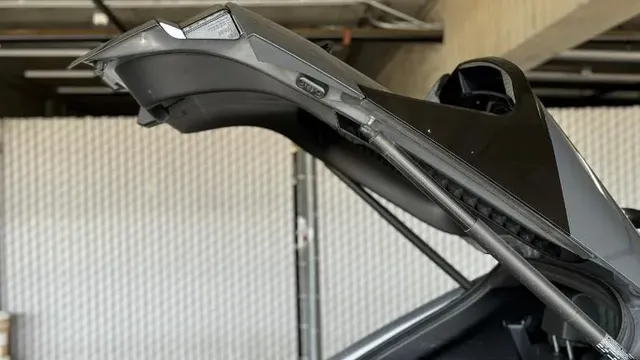
Hyundai has released Technical Service Bulletin (TSB) 24-BD-012H-1 to address rattle and friction noises emanating from the tailgate of certain 2022-2025 Hyundai Ioniq 5 and Ioniq 5 N vehicles. This bulletin outlines a procedure to adjust the gap between the tailgate and the vehicle body.
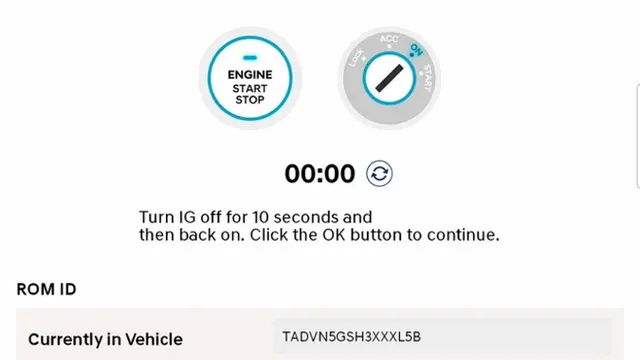
Hyundai TSB 24-01-051H-1 details a software update for the Vehicle Charging Management System (VCMS) in 2022-2024 Ioniq 5, 2023-2024 Ioniq 6, and 2024-2025 Kona Electric vehicles. This update resolves issues with interrupted Level 2 charging or reduced charging speeds.
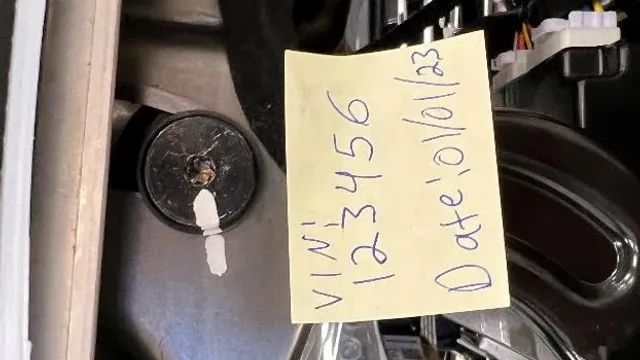
Hyundai has released Technical Service Bulletin 24-BD-006H to address a condition where the front driver's seat in certain 2022 Ioniq 5 vehicles exhibits minor play during acceleration or braking. The repair involves replacing seat track bolts and initializing the power seat module.
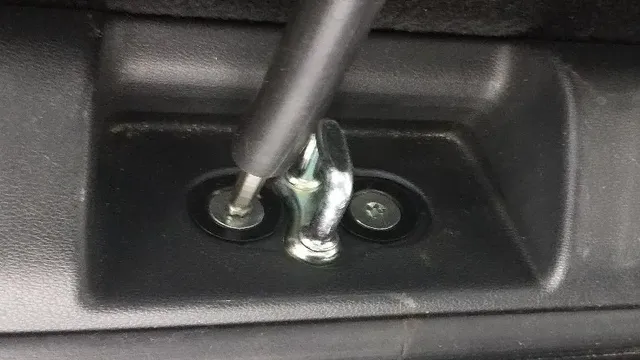
Hyundai has released Technical Service Bulletin 23-BD-006H-1 to address a common tailgate rattle noise in 2022-2023 Ioniq 5 vehicles. The repair involves installing washer pads and adjusting the tailgate striker.
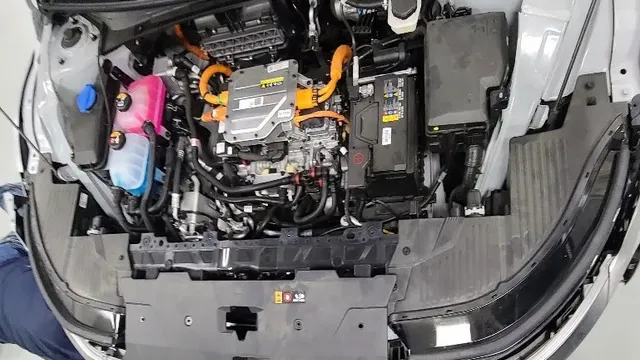
Hyundai has issued Technical Service Bulletin 23-01-075H to address Active Air Flap (AAF) actuator issues in certain 2022 Ioniq 5 vehicles. Owners may experience AAF warning signs and diagnostic trouble code U028400, indicating a problem with the air flap's operation.
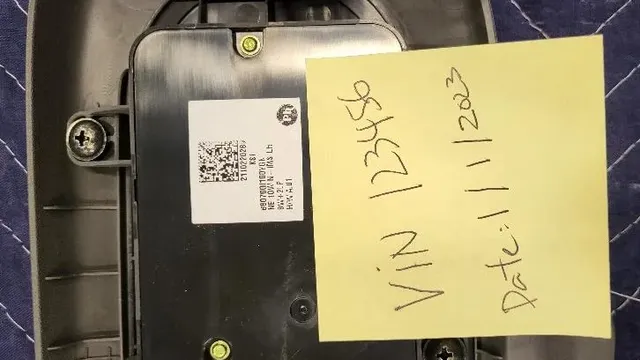
Some 2022 Hyundai Ioniq 5 vehicles may experience an inoperative front left (driver) power seat due to interference with the power seat switch wiring harness. Hyundai Technical Service Bulletin 23-01-066H details the replacement of the power seat switch and wiring revision.
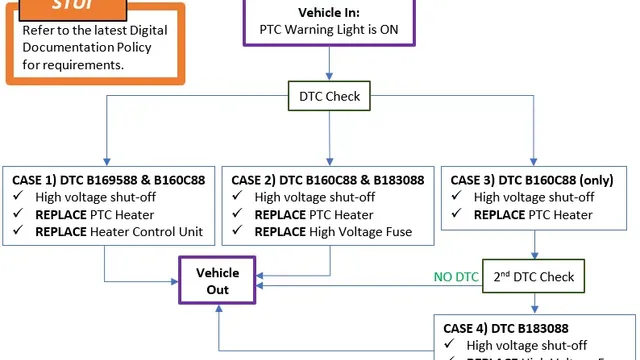
Hyundai Technical Service Bulletin 23-HA-002H details inspection and repair procedures for inoperative heater or air conditioning in 2022-2023 Ioniq 5 vehicles, addressing Diagnostic Trouble Codes B169588, B160C88, and B183088.
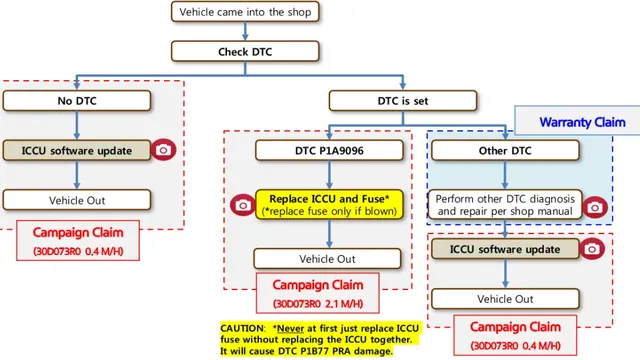
Hyundai has issued Service Campaign 997 to address a condition in 2022-2023 Ioniq 5 and Ioniq 6 vehicles where low 12V auxiliary battery charging can occur due to an Intelligent Charging Control Unit (ICCU) fault, setting DTC P1A9096. This can lead to reduced power mode and critical dashboard…
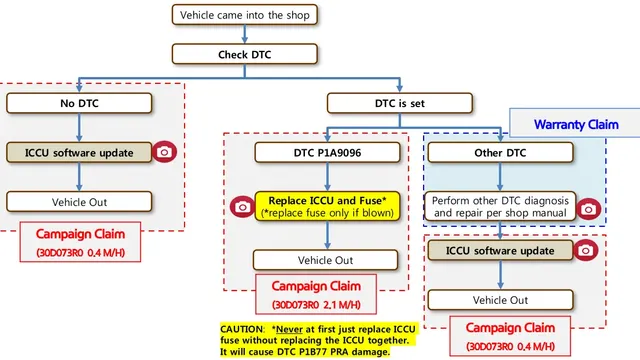
Hyundai has issued Technical Service Bulletin 23-01-060H (Service Campaign 997) for 2022-2023 Ioniq 5 and 2023 Ioniq 6 vehicles. This TSB addresses a condition where a low 12V auxiliary battery charging issue, indicated by DTC P1A9096, can lead to reduced power and warning messages.
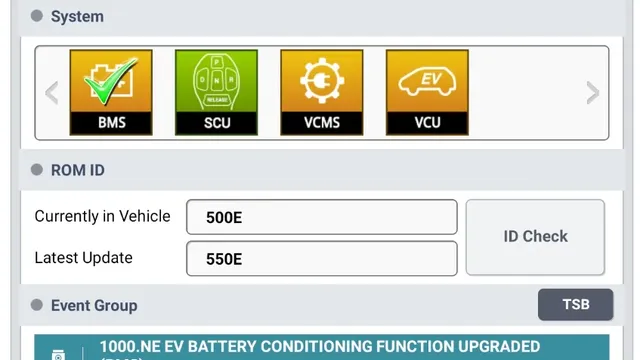
Hyundai has released Service Campaign T9Q (TSB 23-01-017H-1) for 2022 Ioniq 5 AWD models to improve cold weather DC charging performance. This involves Battery Management System (BMS) and Audio Video Navigation (AVN) software updates.
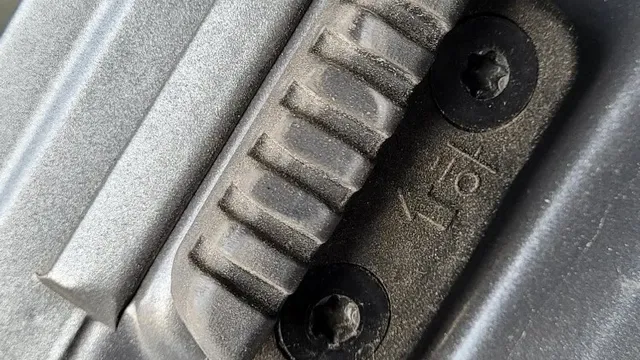
Hyundai has issued Technical Service Bulletin (TSB) 23-BD-006H to address a tailgate rattle noise in 2022-2023 Ioniq 5 vehicles. The repair involves installing washer pads and adjusting the tailgate striker.
Hyundai Service Campaign T9Q (TSB 23-01-017H) addresses cold DC charging performance in 2022 Ioniq 5 AWD models by adding a Battery Conditioning function through software updates.
The Integrated Charging Control Unit (ICCU) has failed repeatedly on this vehicle. It has been replaced three times by Haselwood Hyundai dealer since the vehicle was purchased new in 2021. Dates: 9/8/2023, 12/19/2024, 9/30/2025 at approximately 17k, 35k, and 50k miles. Each failure presents the same way: the ICCU stops charging the 12V battery from the high-voltage pack, the 12V drains, and warning messages appear on the dash: Check Electric Vehicle System. The vehicle then loses power or will not start and becomes inoperable [on numerous occasions the vehicle lost power/would not start at, leaving family occupants stranded. The vehicle also required jump starts on at least 25 occasions. Safety risk: an ICCU failure can disable the vehicle without meaningful warning. A loss of 12V power affects power steering assist, braking assist, hazard lights, and airbag readiness, and has left us stranded away from home as the car has to be jumped every time. Each failure was diagnosed and confirmed by a Hyundai dealer, which replaced the ICCU under warranty. Repair orders documenting all three replacements are available on request; the replaced units were retained by the dealer. The vehicle remains available for inspection. Despite three replacements, including under the ICCU recall and the extended warranty coverage Hyundai issued, the defect has recurred, which suggests the replacement units share the same defect as the original.
No injuries · No fire · No crash
The Integrated Charging Control Unit (ICCU) in my 2022 Hyundai IONIQ 5 failed while the vehicle was charging. The vehicle had been connected to a Level 1 charger for a multi-day charging session when it unexpectedly stopped charging before reaching the selected charge limit. After the failure, the vehicle could no longer successfully charge using either Level 1 or Level 2 charging. When connected to a charger, the vehicle would initially appear to begin charging, but charging would then stop and the dashboard would display an electrical-system warning instructing me to inspect the vehicle’s electrical system. There was no warning or indication of an impending ICCU failure before this occurred. This created a significant reliability and safety concern because the vehicle effectively lost its ability to AC charge. Had I driven to a destination expecting to recharge there without realizing the charging system had failed, I could have been stranded without sufficient range to continue driving. I brought the vehicle to a Hyundai dealership, where technicians diagnosed the problem as an ICCU failure. The dealership subsequently replaced the ICCU. My vehicle had previously received Hyundai’s ICCU-related software campaign/recall update. Despite having that update performed, the ICCU later failed and required physical replacement. I am submitting this complaint because the prior software remedy did not prevent the ICCU failure experienced by my vehicle.
No injuries · No fire · No crash
We had a previous issue with our 12V battery not charging, which totally bricked the whole car. Hyundai updated the charge management system software under the active recalls and tested the 12V battery, which after it was fully charged they said was fine. Now (a few months outside our warranty period for the 12v battery), our car was bricked again and was so dead that we could not even start it/charge the battery with a jump start kit. We were stranded on the side of the road (where we had parked for an event we were attending) and the next day Hyundai towed the car to the nearest dealer (3 hours away). It took a week for them to even look at our car and diagnose it. When they did, they said the 12v battery had "just died" because "it was old". There were zero warnings about the 12v battery not charging before it died. There were zero DTC codes. They refused to replace the battery under any warranty/the previous recall and we ended up paying out of pocket. The more concerning thing is that they claimed "nothing is wrong with the charge management system" which is clearly not the case. Even older 12V batteries don't just die after leaving them for a few hours - especially to be SO dead that they can't even be revived. I no longer feel safe driving the vehicle anywhere that I can't get a cab ride - who knows when it will just decide to stop working?
No injuries · No fire · No crash
This report is an addendum to report 11762283 that was made yesterday. The vehicle allows driving with the rear liftgate ajar, however under some circumstances it engages the EPB when the vehicle comes to a stop while the gear state is still Drive. The gear state of the car remains in Drive when the EPB engages. This presents the driver with the choice, in the middle of the road and possibly in the middle of an intersection, of either exiting the vehicle and rearranging contents of the vehicle to allow the rear liftgate to close, or activating the accelerator to continue driving with the traction motor overpowering clamped EPB. Neither option is safe. I have attempted to reproduce this unsafe state of the vehicle and was successful in one case and unsuccessful in another. My hypothesis for the differentiating factor is the top speed reached prior to decelerating to a stop: in the first case, 13mph, and in the second, 15mph. I have attached a single frame from one of two videos, of the successful case. The instrument display shows gear state is Drive, the car is moving, high torque is being applied by the traction motors (but typically the screen center shows ADAS state, and there is no indication of instantaneous traction torque), and the EPB is engaged. The car is in the middle of an intersection at the time.
No injuries · No fire · No crash
After coming to a stop at a stop sign, and while the gear state was in Drive, the vehicle auto-applied the electronic parking brake because the tailgate was ajar. Gear state remained in Drive. Upon accelerator input, the parking brake did not release, and the vehicle delivered propulsion torque overcoming the parking brake. As a result, the vehicle accelerated and drove several blocks with the rear brakes fully clamped, which was only effectively indicated by a smell and smoke emitted from the rear wheel wells. An irritating repetitive audio and large flashing visual alert in the display cluster indicating the tailgate state distracted from any additional indications that may have been displayed. That distracting indication was continuously active from when gear state was first switched to Drive and did not correlate with EPB engagement.
No injuries · No fire · No crash