2021-2022 Toyota Vehicles: Paint Stains After Rapgard Removal
Some 2021-2022 Toyota vehicles may exhibit paint stains after the removal of Rapgard protective film. These stains, often mistaken for clear coat damage, are usually caused by moisture trapped under wrinkles in the film. A specific repair procedure is outlined to address this condition.
 Sarah Mitchell2021 Toyota Camry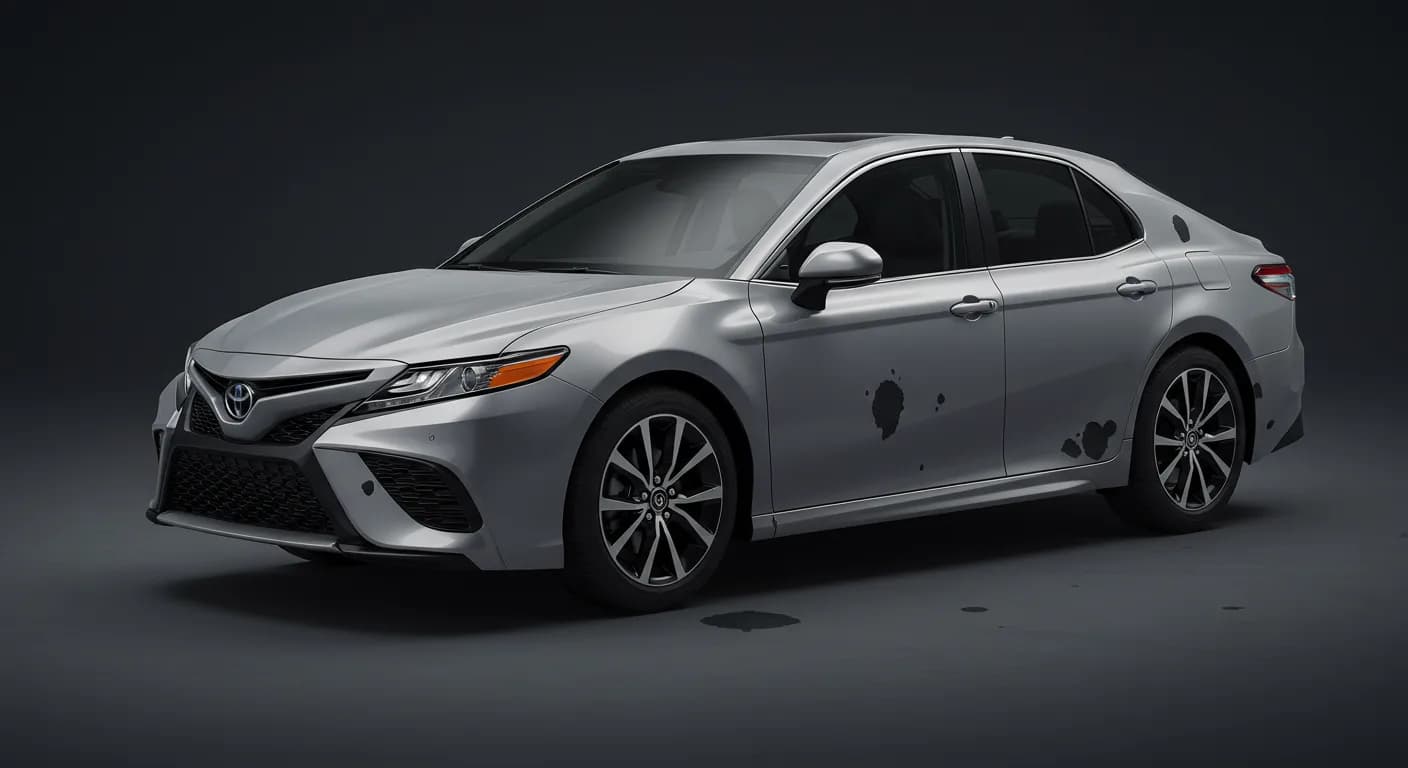
Si applica anche a
- Toyota 4Runner
- 2021–2022
- Toyota Avalon
- 2021–2022
- Toyota C-HR
- 2021–2022
- Toyota Camry
- 2022
- Toyota Corolla
- 2021–2022
- Toyota Highlander
- 2021–2022
- Toyota Land Cruiser
- 2021
- Toyota Mirai
- 2021–2022
- Toyota Prius
- 2021–2022
- Toyota RAV4
- 2021–2022
- Toyota Sequoia
- 2021–2022
- Toyota Tacoma
- 2021–2022
- Toyota Tundra
- 2021–2022
- Toyota Venza
- 2021
▸ Mostra altri 8▾ Mostra meno
Symptoms of Rapgard Paint Stains
Owners of certain 2021-2022 Toyota vehicles may notice paint stains on their car's exterior after the Rapgard protective film has been removed. These stains often appear to be under the clear coat, which can be misleading. The actual cause is typically moisture that gets trapped under wrinkles in the Rapgard film. This trapped moisture can then stain the paint, particularly on horizontal surfaces such as the hood, roof, and trunk of the vehicle. These Toyota Camry paint stains are a cosmetic issue resulting from the protective film.
Diagnosis and Trigger Conditions
The primary condition for these paint stains to appear is the removal of the Rapgard protective film. The issue is exacerbated when the film has wrinkles, allowing water to become trapped underneath. This condition is more prevalent on horizontal surfaces of the vehicle where water might pool or remain for longer periods. If you observe paint discoloration or staining on your 2021-2022 Toyota after the protective film was taken off, it is likely related to this issue.
Repair Procedure Summary
Toyota has issued TSB 10208995 to address these paint stains. The bulletin outlines a specific repair procedure for technicians to follow. While the detailed steps are not publicly available, the procedure aims to effectively remove the stains caused by trapped moisture under the Rapgard film without damaging the vehicle's paint finish. Owners experiencing these Toyota Camry paint stains should consult their authorized Toyota dealer for the appropriate repair.
Owner Action
If you own a 2021-2022 Toyota vehicle and notice paint stains after the removal of the Rapgard protective film, it is recommended to contact your local Toyota dealership. Explain the symptoms you are observing, specifically mentioning paint stains on horizontal surfaces. The dealership will be able to diagnose the issue according to TSB 10208995 and perform the necessary repair. This issue is typically addressed under warranty as a manufacturing defect related to the pre-delivery protective film.
Source: NHTSA TSB ID 10208995.
Frequently Asked Questions
- What are Rapgard paint stains on Toyota vehicles?
- Rapgard paint stains are discolorations that can appear on the exterior paint of certain 2021-2022 Toyota vehicles after the protective Rapgard film has been removed. They are typically caused by moisture getting trapped under wrinkles in the film, leading to staining, especially on horizontal surfaces.
- Which Toyota models are affected by the Rapgard paint stain issue?
- This issue, detailed in TSB 10208995, affects various 2021-2022 Toyota models, including the Camry, Prius, Tundra, Highlander, RAV4, and others. Owners of these vehicles should check for paint stains after film removal.
- How can I get rid of Toyota Camry paint stains caused by Rapgard?
- If your Toyota Camry exhibits paint stains after Rapgard removal, you should contact an authorized Toyota dealership. They have a specific repair procedure outlined in TSB 10208995 to address these stains effectively.
- Is the repair for Rapgard paint stains covered by warranty?
- Typically, issues like Rapgard paint stains that stem from a manufacturing or pre-delivery process are covered under the vehicle's warranty. It is best to confirm coverage with your Toyota dealership when scheduling the repair.
Related Articles
2021 Toyota Camry Health Check: Common TSBs and Owner Concerns
While the 2021 Toyota Camry has no recalls or owner complaints, several manufacturer service bulletins address potential issues. Key concerns include engine coolant leaks, transmission whine, and Malfunction Indicator Lamp (MIL) illumination with reduced engine power, especially in cold weather.
2021-2026 Toyota Vehicles Musty Odor Remediation TSB
This Toyota Technical Service Bulletin (T-SB-0055-24 Rev2) addresses musty odors in 2021-2026 Toyota vehicles resulting from water intrusion. It outlines a dealer-performed remediation process, including inspection, cleaning, and ozone treatment.
2021 Toyota Camry Coolant Leak Customer Support Program
Toyota's Customer Support Program 24TE04 addresses a potential flow shut-off valve coolant leak in certain 2019-2021 Avalon, Camry, Corolla, Highlander, RAV4, Sienna, and Venza models. This leak can trigger an 'Engine Maintenance Required' warning or affect A/C function. Toyota will cover repairs…
2018-2021 Toyota Engine Maintenance Required TSB P268111 P268115
Toyota has issued Technical Service Bulletin T-SB-0112-24 Rev2 for certain 2018-2021 Toyota models that may display an "Engine Maintenance Required" message along with Diagnostic Trouble Codes P268111 or P268115. This bulletin outlines the procedure to address issues with the Engine Coolant Bypass…
2021-2022 Toyota MIL ON with DTCs P01201C, P210015
Toyota T-SB-0005-24 Rev2 addresses Malfunction Indicator Lamp (MIL) illumination and reduced engine power in 2021-2022 Toyota Avalon, Camry, and RAV4 vehicles. The issue is linked to specific throttle body DTCs (P01201C, P210015, P210019, P211172) occurring in freezing temperatures, requiring ECM…
Leave a comment
Comments are moderated and may take a moment to appear. Only your first name and the initial of your last name are shown publicly.
Comments
Be the first to comment.