2024 Jeep Wrangler PCM Updates for MIL and DTCs
This technical service bulletin (TSB 18-011-25 REV. B) details diagnostic and repair procedures for 2024 Jeep Wrangler vehicles equipped with the 2.0L I4 DOHC DI Turbo Engine. It addresses Malfunction Indicator Lamp (MIL) illumination, various Diagnostic Trouble Codes (DTCs), and potential…
 Marcus Weber2024 Jeep Wrangler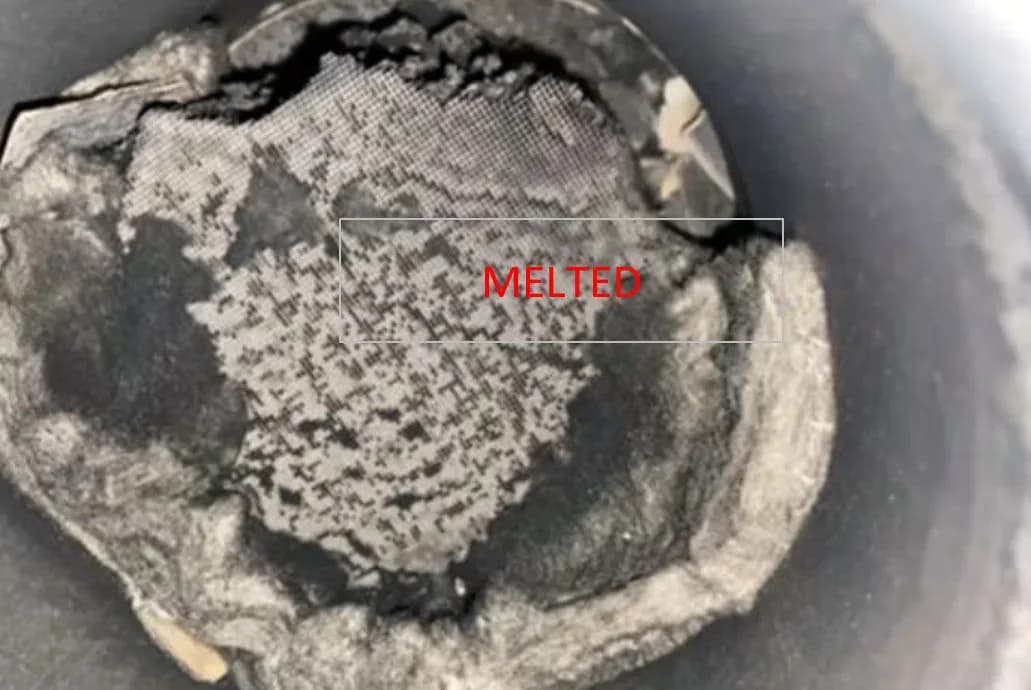
This Technical Service Bulletin (TSB) 18-011-25 REV. B, issued on August 1, 2025, addresses various performance issues and software enhancements for the 2024 Jeep Wrangler. Specifically, it applies to vehicles equipped with the 2.0L I4 DOHC DI Turbo Engine with Engine Stop/Start (Sales Code EC1). This bulletin supersedes TSB 18-011-25 REV. A, dated July 25, 2025, and includes an additional market for applicability.
Owners of affected 2024 Jeep Wrangler vehicles may notice a Malfunction Indicator Lamp (MIL) illumination on their dashboard. This TSB outlines the diagnostic and repair procedures for several related Diagnostic Trouble Codes (DTCs) and other potential symptoms, ultimately aiming to resolve these issues through potential component replacement and crucial Jeep Wrangler PCM updates.
Symptoms
Customers may experience a Malfunction Indicator Lamp (MIL) illumination, indicating a problem with the vehicle's emissions or engine system. In addition to the MIL, specific Diagnostic Trouble Codes (DTCs) may be set. Owners might also encounter a "no crank/no start condition," preventing the vehicle from starting.
Furthermore, this bulletin includes a software enhancement for "Smart charge change: Battery life improvements," which aims to optimize battery longevity and performance.
Fault Codes / DTCs
If your vehicle exhibits a Malfunction Indicator Lamp (MIL) illumination, one or more of the following DTCs may be present:
| Code | Description |
|---|---|
| P0133 | O2 Sensor 1/1 Slow response |
| P2453 | Particulate Filter Pressure Sensor “A” Circuit Range/Performance |
| P245F | Particulate Filter Pressure Sensor “B” Circuit Range/Performance |
| P0420 | Catalyst System Efficiency Below Threshold Bank 1 |
| P0017 | Crankshaft/camshaft Timing Misalignment - Bank 1 Sensor 2 |
| P000A | Bank 1 Camshaft 1 Position Slow Response |
| P219A | Bank 1 Air-fuel Ratio Imbalance |
Diagnosis
To diagnose these issues, technicians will use a scan tool like wiTECH with the appropriate diagnostic procedures available in DealerCONNECT/Service Library. The process involves verifying that all related systems are functioning correctly. If any DTCs or symptoms other than those listed in this bulletin are present, they must be addressed first. If the customer describes any of the symptoms mentioned, the repair procedure outlined in TSB 18-011-25 REV. B should be followed.
Repair Procedure Summary
The repair process for these Jeep Wrangler PCM updates and related issues involves several key steps:
- PCM Scan: Scan the Powertrain Control Module (PCM) for DTCs. Depending on the specific DTCs (P0017/P000A, P219A, P0420), different diagnostic paths are followed.
- Engine Oil Inspection: Check for metallic debris contamination in the engine oil. If contaminated, the engine oil and filter must be replaced.
- Oil Control Valve (OCV) Inspection: Remove and inspect both Oil Control Valves (OCVs) for torn screens. Figure 1 illustrates an OCV filter in good condition, while Figure 2 shows a torn OCV filter. If OCV screens are torn, the OCVs, engine oil, and filter must be replaced.
- PCM Software Level Check: Verify if the PCM has the latest available software. If not, the PCM must be reprogrammed. If the software is already current, further diagnostic procedures related to the specific DTCs (P000A, P0017, P219A) are performed.
- Oxygen Sensor (O2) and Catalytic Converter Inspection: For DTC P0420, check for other O2 sensor DTCs. If present, follow specific diagnostic procedures. If not, remove the Upstream Oxygen Sensor and use a borescope to inspect the catalytic converter for internal melting, cracking, or a "brain pattern." Figure 3 shows a melted catalyst, and Figure 4 depicts a brain pattern. If the catalytic converter is damaged, it must be replaced.
- PCM Reprogramming: Reprogram the PCM with the latest software. This step is critical for applying the necessary Jeep Wrangler PCM updates.
- DTC Clearance and Test Drive: Clear any DTCs that may have been set during reprogramming. Then, test drive the vehicle to ensure the DTC SET conditions are no longer met and the issue is resolved.
Required Tools or Parts
Special tools and specific parts may be required for this repair:
- Tools:
- wiTECH or Equivalent diagnostic tool
- Borescope
- Wrench, Camshaft Holding (Ref. No. 2050800090)
- Spare Parts (as needed):
- 05048148AE: Valve, Oil Control (Intake/Exhaust)
- 68629623AA: Converter, Catalytic - Front
- 68381406AC: Gasket, Turbocharger To Catalytic Converter (Mica Ring Gasket)
- 04892339BE: Filter, Engine Oil
- 05166241PA: Oil, Engine
- 05048234AB: Gasket - Cylinder Head Cover
- 68153921AA: Coolant
- 68377814AA: Sealer-RTV Gray (25KG RTV Container)
- 68409465AA: Sealer-RTV Gray (310ML RTV Container)
Important Warnings
- Battery Charger: When reprogramming the PCM, it is crucial to install a battery charger to maintain battery voltage between 13.2 and 13.5 volts. Do not allow the charging voltage to exceed 13.5 volts during the flash process.
- Flash Interruption: If the flash process is interrupted or aborted for any reason, it must be restarted.
- SA Market: For vehicles in the SA market only, it is not necessary to send DID-I or DID-A after applying this TSB.
Owner Action
If your 2024 Jeep Wrangler is experiencing a Malfunction Indicator Lamp (MIL) illumination, a "no crank/no start condition," or any of the listed DTCs, it is recommended to schedule an appointment with an authorized Jeep service center. This bulletin indicates that the repair is reimbursable under warranty provisions. The technicians will follow the procedures outlined in TSB 18-011-25 REV. B to diagnose and address the issue, including performing any necessary Jeep Wrangler PCM updates or component replacements.
Source: NHTSA ID: 11021563
Gallery
5 images
Frequently Asked Questions
- What does TSB 18-011-25 REV. B address for my 2024 Jeep Wrangler?
- TSB 18-011-25 REV. B addresses issues causing the Malfunction Indicator Lamp (MIL) to illuminate, various Diagnostic Trouble Codes (DTCs) such as P0133, P0420, and P219A, and potential no-start conditions in 2024 Jeep Wrangler models with the 2.0L I4 DOHC DI Turbo Engine. It also includes a software enhancement for battery life improvements.
- What are the common symptoms of the issues covered by this TSB?
- The most common symptoms include the Malfunction Indicator Lamp (MIL) being on, specific DTCs like P0133 (O2 Sensor 1/1 Slow response) or P0017 (Crankshaft/camshaft Timing Misalignment), and in some cases, a "no crank/no start condition" for your 2024 Jeep Wrangler.
- Will I have to pay for the repairs outlined in TSB 18-011-25 REV. B?
- No, the repairs and Jeep Wrangler PCM updates described in TSB 18-011-25 REV. B are reimbursable under the provisions of your vehicle's warranty. You should contact your authorized Jeep dealership for service.
- What components might need to be replaced as part of this TSB?
- Depending on the diagnosis, the repair may involve replacing Oil Control Valves (OCVs), the Catalytic Converter, and reprogramming the Powertrain Control Module (PCM) with the latest software. Engine oil and filter replacement may also be necessary if contamination is found.
Related Articles
2024 Jeep Wrangler Problems: Recalls, Complaints & TSBs
The 2024 Jeep Wrangler has faced four safety recalls, primarily concerning exterior lighting and airbag deployment. While no owner complaints or federal investigations have been reported, twenty manufacturer service bulletins address various issues from engine performance and electrical glitches…
2024-2026 Jeep, Ram, Dodge Cylinder Head Bolt Inspection
Mopar has issued a Quality Inspection Request (QIR) concerning cylinder head cover bolts, part number 04893799AJ, for various 2024-2026 Jeep, Ram, and Dodge models. Dealers are instructed to identify and quarantine suspect bolts with a chamfered flange.
2024 Jeep Wrangler PCM Update for Misfire & O2 Sensor DTCs
A Technical Service Bulletin (TSB 18-003-26 REV. A) has been issued for the 2024 Jeep Wrangler to address various engine performance issues, including misfires, rough idle, and O2 sensor fault codes. This update involves reprogramming the Powertrain Control Module (PCM).
2021-2026 Jeep Wrangler / Gladiator Wind Noise TSB S2623000018
This technical service bulletin, S2623000018, addresses "Wind Noise From Hard Top Freedom Panels Near Rear View Mirror While Driving" in 2021-2026 Jeep Wrangler and Gladiator models, detailing a diagnostic and repair procedure involving the header seal.
2024 Jeep Wrangler Heated Steering Wheel Not Working TSB
If your 2024 Jeep Wrangler's heated steering wheel isn't working or isn't warm enough, Technical Service Bulletin (TSB) 08-121-26 from Stellantis outlines a software update for the Comfort Seat Wheel Module (CSWM) to resolve the issue.
Leave a comment
Comments are moderated and may take a moment to appear. Only your first name and the initial of your last name are shown publicly.
Comments
Be the first to comment.