2017-2021 Audi Models Hard Brake Pedal No-Start TSB 2055646/3
Audi has issued Technical Service Bulletin 47 22 12 2055646/3 for various 2017-2021 models, addressing a hard brake pedal and no-start condition. This TSB outlines the diagnosis and replacement of the vacuum hose with a non-return valve and pressure sensor.
 Sarah Mitchell2021 Audi Q8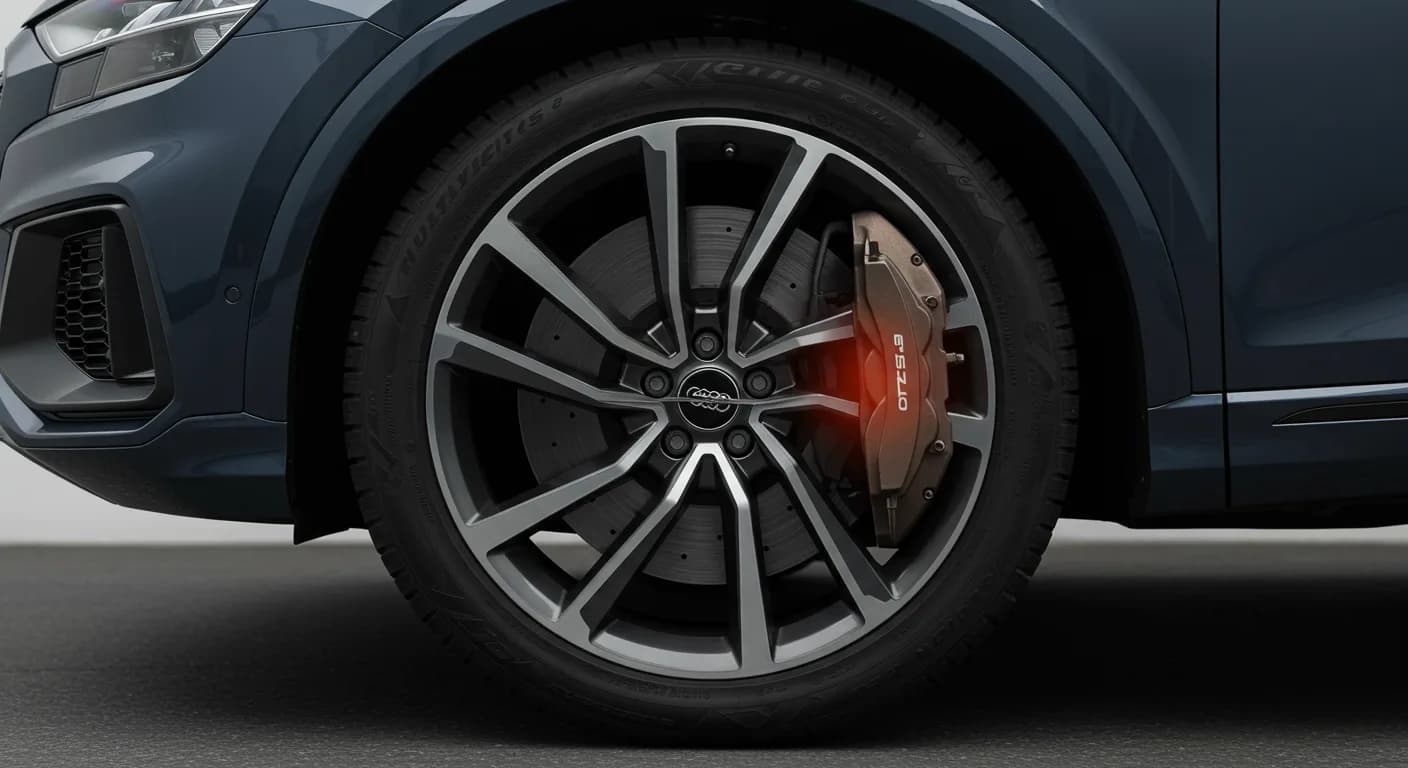
Also applies to
- Audi A4
- 2021
- Audi A4 allroad
- 2021
- Audi A5
- 2021
- Audi A6
- 2021
- Audi A6 allroad
- 2021
- Audi A7
- 2021
- Audi A8 L e
- 2021
- Audi Q5
- 2021
- Audi Q7
- 2021
- Audi RS 5
- 2021
- Audi RS 6 Avant
- 2021
- Audi RS 7
- 2021
- Audi RS Q8
- 2021
- Audi S5
- 2021
- Audi S6
- 2021
- Audi S7
- 2021
- Audi SQ5
- 2021
- Audi SQ7
- 2021
- Audi SQ8
- 2021
▸ Show 13 more▾ Show fewer
Revision History
This Technical Service Bulletin, 47 22 12 2055646/3, was initially published on July 17, 2019, as Revision 1. It was subsequently revised on February 18, 2021, as Revision 2, which included updates to the title, header (adding models), service instructions (adding Elsa location), and additional information (adding references). The current Revision 3, dated June 9, 2022, includes a revised warranty table. This bulletin supersedes Technical Service Bulletin Group 47 number 21-08, dated February 25, 2021.
Symptoms
Owners of affected 2017-2021 Audi models, including the 2021 Audi Q8, may notice a specific issue: after a short stationary period, the vehicle "sporadically does not start" and there is a "hard brake pedal concern." This means the brake pedal feels stiff and difficult to depress when attempting to start the engine.
Technical Background
The root cause of the 2021 Audi Q8 hard brake pedal and no-start condition is linked to the brake servo system. Dirt particles can accumulate in the non-return valve located within the vacuum hose for the brake servo. This contamination prevents the vacuum from being properly maintained within the brake servo when the vehicle is parked.
Normally, the brake servo should maintain a vacuum of 600 to 950 mbar. However, with a faulty non-return valve, the vacuum can drop by up to 400 mbar within 12 hours, depending on factors like the vehicle's parking position (e.g., on a slope) or user behavior. When the vacuum is insufficient, the usual brake force required to activate the brake light switch for start authorization is not met, leading to the no-start issue.
Repair Procedure Summary
To address the hard brake pedal and no-start condition described in TSB 47 22 12 2055646/3, technicians are instructed to replace the component identified as the "vacuum hose with non-return valve and pressure sensor – G608." This procedure must be performed according to the detailed instructions found in the Elsa Repair Manual, specifically within the "Brake System >> 47 Hydraulic Components >> Vacuum System" section.
Required Parts and Tools
For this repair, the primary part required is the "vacuum hose with non-return valve and pressure sensor." A quantity of one (01) of this part is needed. Additionally, any necessary fasteners, bolts, nuts, and screws should be replaced as needed per the repair manual. Technicians should always consult their Parts Department and/or ETKA for the latest information and part bulletins, and ETKA/ELSA for specific part numbers and quantities of fasteners.
Warranty Information
This repair is generally covered under warranty. The applicable Claim Type is 110 for vehicles up to 48 months or 50,000 miles. For Audi Certified Pre-Owned (CPO) vehicles, Claim Type G10 applies, requiring verification of the owner. The Service Number for this operation is 4777, and the Damage Code is 0010.
Labor operations and their associated time units (TU) include:
- Vacuum hose remove + reinstall: 4777 1950 (See SRT with associated operations)
- Brace remove + reinstall: 4086 1999 (50 TU, only if installed in the vehicle)
- Cowl panel trim remove + reinstall: 6644 19XX (See SRT with associated operations)
All warranty claims must be submitted in accordance with the Audi Warranty Policies and Procedures Manual and are subject to review or audit by Audi Warranty.
Important Warnings
If your vehicle is outside of any applicable warranty coverage, this Technical Service Bulletin is informational only. The repair costs in such cases would typically be the owner's responsibility.
Owner Action
If you experience a 2021 Audi Q8 hard brake pedal and no-start condition or any of the symptoms described in this TSB, it is recommended to contact an authorized Audi dealer. They can diagnose the issue and perform the necessary repair using the guidelines provided in TSB 47 22 12 2055646/3.
NHTSA ID: 10220676
Frequently Asked Questions
- What causes the hard brake pedal and no-start condition in my 2017-2021 Audi?
- The hard brake pedal and no-start condition in your Audi is typically caused by dirt particles affecting the non-return valve within the vacuum hose for the brake servo, leading to a loss of vacuum in the system. This prevents the brake light switch from authorizing engine start, as detailed in TSB 47 22 12 2055646/3.
- Which Audi models and years are affected by TSB 47 22 12 2055646/3?
- Technical Service Bulletin 47 22 12 2055646/3 primarily addresses various Audi models from 2017 to 2021, including the A4, A5, A6, A7, A8, Q5, Q7, Q8, RS 5, RS 6, RS 7, S5, S6, S7, SQ5, SQ7, and SQ8, among others.
- How is the hard brake pedal no-start issue resolved according to TSB 47 22 12 2055646/3?
- The repair involves replacing the specific component identified as the 'vacuum hose with non-return valve and pressure sensor – G608'. This procedure is performed by authorized Audi technicians following instructions in the Elsa Repair Manual.
- Is this repair covered under warranty?
- Yes, this repair is generally covered under the New Vehicle Limited Warranty for up to 48 months or 50,000 miles, whichever comes first. It is also covered for Audi Certified Pre-Owned (CPO) vehicles under specific conditions. If your vehicle is outside of warranty, the TSB serves as informational guidance, and costs may apply.
- What should I do if my Audi has a hard brake pedal and won't start?
- If you experience a hard brake pedal and no-start condition in your 2017-2021 Audi, you should contact your authorized Audi dealer. They can diagnose the issue and perform the necessary repair as outlined in TSB 47 22 12 2055646/3.
Related Articles
2021-2025 Audi Engine Control Module Software Update 53ZC
Audi has issued an update to its Engine Control Module (ECM) software campaign 53ZC / WARR EXT – U82, dated March 20, 2026. This dealer communication indicates that additional vehicles have been added to the affected chart for this important software update. Owners of 2021-2025 Audi Q8, A7, A6…
2021-2025 Audi Fuel System DTCs P014800 and P008700
Audi Technical Service Bulletin (TSB) 2079461/3 details diagnostic and repair procedures for 2021-2025 Audi vehicles experiencing a 'MIL light on' or 'limp-home function' due to fuel system DTCs P014800 or P008700. This bulletin guides technicians on diagnosing and potentially replacing the…
2021-2025 Audi Black Trim Discoloration TSB
Audi has issued Technical Service Bulletin 2078651/4 to address red, purple, gray, or metallic discoloration on black exterior trim strips in 2021-2025 Audi models. This TSB explains the cause (paint UV resistance issue) and outlines the replacement procedure for affected components.
2021 Audi Virtual Cockpit Display Fault TSB 2078439/2
Audi TSB 2078439/2 addresses issues with the virtual cockpit display in 2021 A6, A7, A8, Q7, Q8 models, including a black screen or "Instrument cluster: fault" message, often accompanied by DTC B200049.
2021-2026 Audi TFSI Engine Oil Leak TSB 2053278/10
Audi has released Technical Service Bulletin 2053278/10 to address oil leaks from the cylinder head on 2.9 and 3.0 TFSI engines in various 2021-2026 models. Learn about symptoms, diagnosis, and the recommended repair process.
Leave a comment
Comments are moderated and may take a moment to appear. Only your first name and the initial of your last name are shown publicly.
Comments
Be the first to comment.