2021-2026 Audi TFSI Engine Oil Leak TSB 2053278/10
Audi has released Technical Service Bulletin 2053278/10 to address oil leaks from the cylinder head on 2.9 and 3.0 TFSI engines in various 2021-2026 models. Learn about symptoms, diagnosis, and the recommended repair process.
 Marcus Weber2021 Audi Q8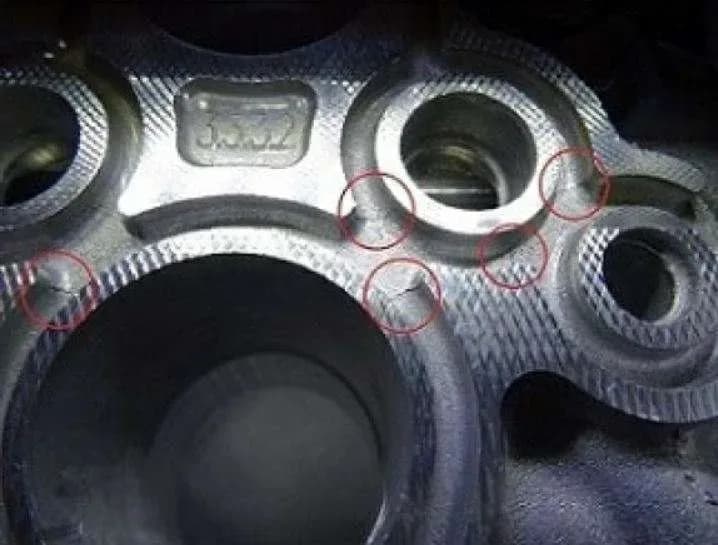
Also applies to
- Audi A6
- 2021–2025
- Audi A6 allroad
- 2021–2026
- Audi A7
- 2021–2025
- Audi A8 L e
- 2021
- Audi Q7
- 2021–2025
- Audi Q8
- 2022–2025
- Audi RS 5
- 2021–2024
- Audi S4
- 2021–2025
- Audi S5
- 2021–2024
- Audi S6
- 2021–2025
- Audi S7
- 2021–2025
- Audi SQ5
- 2021–2025
▸ Show 6 more▾ Show fewer
Revision History
Audi Technical Service Bulletin 2053278/10 is the latest revision addressing this issue. Previous revisions include:
- Revision 10: Updated the header to include additional model years, revised the technical background with updated verbiage, and updated the warranty information with new labor operations.
- Revision 9 (July 14, 2023): Revised warranty information, specifically updating labor operations.
- Revision 8 (June 25, 2021): Also revised warranty information, updating labor operations.
Symptoms of an Audi TFSI Oil Leak
Owners of affected 2021-2026 Audi vehicles with 2.9 or 3.0 TFSI engines may observe several indicators of an oil leak. These include visible oil loss in the area around the engine compartment, particularly towards the front end and underbody of the vehicle. Drivers might also receive an "oil level warning (too low)" message on their dashboard, indicating a significant drop in engine oil. Additionally, a distinct and often unpleasant "smell coming from the engine compartment" is a common complaint.
Workshop Findings
When technicians investigate these symptoms, they typically find evidence of oil leaks in specific areas. Common workshop findings include leaks around the cylinder head cover, the valve cover, and the cylinder head itself. Leaks may also be observed around the fuel injectors or originating from the Audi valvelift system actuator.
Technical Background
Audi Technical Service Bulletin 2053278/10 identifies the underlying cause of this Audi TFSI oil leak as casting residue or particles. These residues are a byproduct of the manufacturing process and can accumulate in the sealing groove situated between the cylinder head cover and the cylinder head. Their presence compromises the integrity of the seal, leading to oil seepage over time.
Production Solution
Audi has implemented improved production processes to address the root cause of the casting residue issue. Vehicles manufactured from April 1, 2025, onwards are expected to incorporate these changes, which should prevent the recurrence of this specific type of oil leak.
Important Warnings
Diagnosis and Repair Procedure Summary
Audi Technical Service Bulletin 2053278/10 outlines a comprehensive, multi-step process for accurately diagnosing and effectively repairing oil leaks originating from the cylinder head on affected 2.9 and 3.0 TFSI engines. This detailed procedure ensures that technicians can pinpoint the exact source of the Audi TFSI oil leak and apply the correct remedy, preventing misdiagnosis and repeat repairs.
Step 1: Initial Access The process begins by removing the engine compartment cover and the heat shield located beneath it to gain access to the engine components.
Step 2: Remove Upper Noise Insulation Next, technicians must remove the upper noise insulation of the affected cylinder bank. Figure 1 in the TSB, titled "Removing the upper noise insulation," visually guides technicians through this step, illustrating components such as the "Obere Geräuschdämpfung" (upper noise insulation), "Untere Geräuschdämpfung" (lower noise insulation), and the "Zylinderkopfhaube" (cylinder head cover).
Step 3: Inspect Audi Valvelift System Actuator A critical diagnostic step involves removing the Audi valvelift system actuator from the affected cylinder. The presence of a substantial quantity of oil below this actuator is a key indicator. Figure 2, titled "Oil in the Audi valve lift system," provides a clear visual example of what a significant oil accumulation looks like in this area. If such oil is found, it strongly suggests that the leak originates from the O-ring seal of the Audi valvelift system actuator itself. In these specific cases, Audi mandates a precise documentation process: technicians must take clear photographs of the oil under the actuator. These photos are required to include the vehicle's VIN and the date, must not be edited, and should be in focus with adequate lighting, though high resolution is not deemed necessary. These images are then to be uploaded into the DOC-IT system alongside the repair order. The prescribed repair for this specific leak involves replacing the Audi valvelift system actuator with a new O-ring, thoroughly cleaning the engine compartment to remove all traces of oil, and, if the noise insulation has become saturated with oil, replacing it. Conversely, if, after removing the Audi valvelift system actuator, no substantial quantity of oil is observed underneath it, the diagnostic process continues to investigate other potential leak sources.
Step 4: Remove Lower Noise Insulation If the leak is not found at the valvelift system actuator, technicians proceed to remove the lower noise insulation.
Step 5: Locate Affected Cylinder The next phase of diagnosis involves visually locating the affected cylinder. Technicians are advised that oil should typically have gathered in the area surrounding the fuel injector of the leaking cylinder, and the noise insulation in that vicinity would also likely be soaked in oil. Figure 3, "Locating the affected cylinder," assists in this identification process by showing the typical appearance of an affected area with oil accumulation near the injector.
Step 6: Remove Cylinder Head Cover and Seal Once the affected cylinder is identified, the cylinder head cover and its associated seal are carefully removed. Figure 4, "Remove the cylinder head cover and gasket," illustrates this step, highlighting the "Zylinderkopfhaube" (cylinder head cover) and its gasket.
Step 7: Inspect and Clean Gasket Groove A pivotal part of the repair, especially given the technical background of manufacturing casting residues, is the meticulous inspection of the gasket groove within the cylinder head cover. Technicians must look for any casting residues or particles that could be compromising the seal. Figure 5, "Before the repair," provides a visual reference of what the gasket groove might look like prior to cleaning, potentially showing these residues. Any identified residues must be removed using a suitable tool, such as a small flat screwdriver. Audi issues a critical "NOTICE" at this stage, emphasizing: "Make sure not to damage the seal groove!" This warning underscores the importance of precision and care to ensure the integrity of the sealing surface. Figure 6, "After the repair," depicts the appearance of the cleaned gasket groove after residue removal.
Step 8: Reassembly and Final Cleaning The final stage of the repair involves reassembly with new components and thorough cleaning. A new seal is installed to ensure a proper, leak-free connection. The camshaft cover is then re-assembled. A comprehensive cleaning of the entire engine compartment is performed to remove any remaining oil residue. Furthermore, if any noise insulation was found to be full of oil during the diagnostic or repair process, it must be replaced to prevent future issues or odors. This meticulous approach ensures that the Audi TFSI oil leak is fully resolved and the engine compartment is restored to a clean condition.
Required Parts and Tools
To perform the repairs outlined in TSB 2053278/10, technicians will need various components and materials:
- Fasteners, Bolts, Nuts, and Screws: As needed per the Repair Manual, sourced via ETKA (Electronic Parts Catalog) and ELSA (Electronic Service Information System).
- Solenoid valve (if applicable): Part number 06M906048F, quantity 01.
- Coolant concentrate 1.5L (if applicable): Part number G 12E050S0, quantity 02.
Warranty Information
Warranty claims related to this Audi TFSI oil leak are processed in accordance with the Audi Warranty Policies and Procedures Manual. The Technical Service Bulletin 2053278/10 provides specific Service Numbers and Damage Codes for submitting claims. The claim comment should state: "As per TSB 2053278/10."
Service Numbers:
- 1580: Used when the oil leak is identified in the area of the injector.
- 1551: Used when the oil leak originates from the Audi valvelift system actuator.
Damage Codes:
- 0050: To be used in conjunction with Service Number 1580.
- 0010: To be used in conjunction with Service Number 1551.
Labor Operations:
- For leaks in the cam actuator area: Labor operations 1583 19XX or 1551 19XX are used for the removal and installation of the cam actuator. Refer to the Service Repair Time (SRT) system for associated operations.
- For leaks in the injector area: Labor operations 1503 19XX or 1503 20XX are designated for the removal and installation of the camshaft housing. Refer to the SRT system for associated operations.
- Additional operation for cam actuator leak: Labor operation 2612 1999 (40 TU) covers the cleaning of the engine, heat shield, and upper noise insulation when the leak is in the cam actuator area.
It is important to note that if the vehicle falls outside its warranty period, this Technical Service Bulletin serves as informational guidance only, and repair costs may not be covered by Audi. All warranty claims are subject to review or audit by Audi Warranty.
Additional Information
All parts and service references provided in this TSB (2053278) are subject to change and/or removal. This document is copyrighted by ©2025 Audi of America, Inc. and may not be reproduced, stored, or transmitted in any form without express written permission.
NHTSA ID: 11023735
Gallery
5 images
Frequently Asked Questions
- What are the common signs of an Audi TFSI oil leak?
- Owners might notice oil loss around the engine compartment, a low oil level warning message ("oil level warning (too low)"), or a distinct "smell coming from the engine compartment".
- What causes the oil leak in 2.9 and 3.0 TFSI Audi engines?
- According to TSB 2053278/10, the primary causes are manufacturing casting residues in the cylinder head cover's sealing groove or a faulty O-ring seal on the Audi valvelift system actuator.
- Will Audi notify me about this oil leak issue?
- This is a Technical Service Bulletin (TSB), not a recall. Audi typically does not notify owners directly about TSBs. If you experience symptoms of an **Audi TFSI oil leak**, you should contact your authorized Audi dealer for diagnosis and repair.
- Can I replace the Audi valvelift system actuator O-ring myself if I find a leak?
- Audi explicitly warns: "Do not replace the Audi valvelift system actuator(s) with an O-ring seal when the leak has been determined to be around the area of the injector(s)." Accurate diagnosis by a qualified technician is crucial to ensure the correct repair is performed and to avoid unnecessary part replacement.
- What are the Audi Service Numbers for this repair?
- The TSB specifies Service Number 1580 for injector area leaks and Service Number 1551 for Audi valvelift system actuator leaks, with corresponding Damage Codes 0050 and 0010 respectively. Specific labor operations like 1583 19XX, 1551 19XX, 1503 19XX, 1503 20XX, and 2612 1999 are also detailed for warranty claims.
Related Articles
2021-2025 Audi Engine Control Module Software Update 53ZC
Audi has issued an update to its Engine Control Module (ECM) software campaign 53ZC / WARR EXT – U82, dated March 20, 2026. This dealer communication indicates that additional vehicles have been added to the affected chart for this important software update. Owners of 2021-2025 Audi Q8, A7, A6…
2021-2025 Audi Fuel System DTCs P014800 and P008700
Audi Technical Service Bulletin (TSB) 2079461/3 details diagnostic and repair procedures for 2021-2025 Audi vehicles experiencing a 'MIL light on' or 'limp-home function' due to fuel system DTCs P014800 or P008700. This bulletin guides technicians on diagnosing and potentially replacing the…
2021-2025 Audi Black Trim Discoloration TSB
Audi has issued Technical Service Bulletin 2078651/4 to address red, purple, gray, or metallic discoloration on black exterior trim strips in 2021-2025 Audi models. This TSB explains the cause (paint UV resistance issue) and outlines the replacement procedure for affected components.
2021 Audi Virtual Cockpit Display Fault TSB 2078439/2
Audi TSB 2078439/2 addresses issues with the virtual cockpit display in 2021 A6, A7, A8, Q7, Q8 models, including a black screen or "Instrument cluster: fault" message, often accompanied by DTC B200049.
2021-2026 Audi Q7/Q8 Steering Noises TSB 2070913/2
Audi has released Technical Service Bulletin (TSB) 2070913/2 to address squeaking and vibrating noises originating from the steering and intermediate steering shaft in 2021-2026 Audi Q7, Q8, SQ7, SQ8, and RS Q8 models. This TSB outlines a specific repair procedure.
Leave a comment
Comments are moderated and may take a moment to appear. Only your first name and the initial of your last name are shown publicly.
Comments
Be the first to comment.