2022-2026 Audi Ceramic Brake Disc Cracks TSB 2077435/1
Audi Technical Service Bulletin 2077435/1 provides information regarding the appearance of cracks on the friction ring surface of ceramic brake discs in 2022-2026 Audi models. This TSB clarifies that these cracks are a normal production characteristic and do not affect brake functionality.
 Marcus Weber2022 Audi e-tron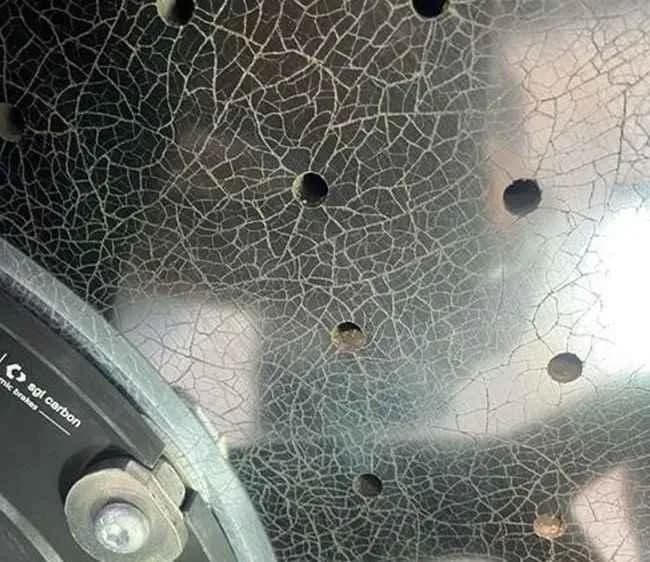
También aplica a
- Audi A3
- 2022–2025
- Audi A4
- 2022–2025
- Audi A4 allroad
- 2022–2025
- Audi A5
- 2022–2024
- Audi A6
- 2022–2025
- Audi A6 allroad
- 2022–2025
- Audi A7
- 2022–2025
- Audi A7 e
- 2022
- Audi e-tron
- 2023
- Audi e-tron GT
- 2022–2025
- Audi e-tron Sportback
- 2022
- Audi Q3
- 2022–2025
- Audi Q5
- 2022–2025
- Audi Q5 e
- 2023–2025
- Audi Q7
- 2022–2025
- Audi Q8
- 2022–2025
- Audi R8
- 2022–2023
- Audi RS 3
- 2022–2024
- Audi RS 5
- 2022–2024
- Audi RS 6 Avant
- 2022–2025
- Audi RS 7
- 2022–2025
- Audi RS e-tron GT
- 2022–2024
- Audi RS Q8
- 2022–2025
- Audi S e-tron GT
- 2026
- Audi S3
- 2022–2025
- Audi S4
- 2022–2025
- Audi S5
- 2022–2024
- Audi S6
- 2022–2025
- Audi S7
- 2022–2025
- Audi S8
- 2022–2025
- Audi SQ5
- 2022–2025
- Audi SQ7
- 2022–2025
- Audi SQ8
- 2022–2025
- Audi TT
- 2022–2023
- Audi TT RS
- 2022
- Audi TTS
- 2022–2023
▸ Mostrar 30 más▾ Mostrar menos
Audi has released Technical Service Bulletin (TSB) 2077435/1 to address the appearance of cracks on the friction ring surface of ceramic brake discs in various 2022-2026 Audi models. This bulletin clarifies that these Audi ceramic brake cracks are a normal characteristic of the manufacturing process and do not indicate a fault or compromise the vehicle's braking performance.
Symptoms
Owners of affected Audi vehicles may observe:
- "Significant cracks on surface of the friction ring"
- Visible cracking or a cracked/broken appearance on the brake rotor component.
- Concerns about wear or material detaching from the brake rotor surface.
These observations typically relate to the visual appearance of the ceramic brake discs rather than a change in braking feel or performance.
Technical Background
According to Audi, the new generation of ceramic brake discs (CCB+) are designed with a specific material composition. During the production process, as the material cools, the friction ring surface contracts at a different rate than the base material. This differential contraction leads to the formation of these characteristic cracks on the surface of the friction ring.
Workshop findings confirm that while these cracks are present, there is no indication of significant thermal stresses that would suggest a functional issue. The presence of these Audi ceramic brake cracks is an inherent result of the material's properties and manufacturing method.
Important Warnings for Owners
This TSB provides crucial information for owners regarding Audi ceramic brake cracks:
- "No measures required." This means there is no repair or corrective action necessary for these cracks.
- "The functionality of the brake system is not affected by this." The presence of these cracks does not compromise the safety or performance of your vehicle's braking system.
- "There is no reason to replace parts." Owners should not be advised to replace ceramic brake discs solely due to the appearance of these cracks.
This bulletin is informational only and is not applicable to any Audi Warranty claims for this specific condition.
Owner Action
If you observe cracks on the ceramic brake discs of your 2022-2026 Audi vehicle, it is important to understand that, per Audi's TSB 2077435/1, this is considered a normal characteristic and does not require repair or replacement. The functionality of your brake system remains unaffected.
If you have concerns or notice any changes in your vehicle's braking performance, it is always recommended to consult with an authorized Audi service center. They can perform a thorough inspection to rule out any other potential issues.
Frequently Asked Questions
- Are cracks on my 2022-2026 Audi's ceramic brake discs normal?
- Yes, according to Audi Technical Service Bulletin 2077435/1, the appearance of "significant cracks on surface of the friction ring" on ceramic brake discs is a normal characteristic resulting from the manufacturing process of the new generation CCB+ discs.
- Do these Audi ceramic brake cracks affect my vehicle's braking performance?
- No, Audi TSB 2077435/1 explicitly states that the functionality of the brake system is not affected by these cracks. They are a cosmetic characteristic and do not compromise safety or performance.
- Should I replace my Audi's ceramic brake discs if I see cracks?
- No, the TSB advises that "there is no reason to replace parts" solely due to these cracks. They are not considered a defect requiring repair or replacement under warranty.
Related Articles
2022 Audi e-tron Problems: Electrical System & Braking Concerns
The 2022 Audi e-tron has faced significant owner complaints regarding its electrical system, including sudden power loss and charging hazards, as well as various braking malfunctions. This profile details these issues and relevant service bulletins.
2022-2026 Audi Guided Fault Finding Reporting Obligation
Audi has issued Technical Service Bulletin TPI 2033392, also known as Transaction No. 2081531/1, regarding a reporting obligation for technicians when Guided Fault Finding produces an unexpected result. This TSB outlines the process for contacting Audi Product Support for diagnostic assistance.
2022-2026 Audi Infotainment System Complaints
Audi has released Technical Service Bulletin (TSB) 2081405/1 to address various customer complaints regarding infotainment systems in 2022-2026 Audi vehicles. This TSB helps technicians diagnose issues often caused by external media or mobile devices, rather than vehicle technology.
2018-2026 Audi Models Cracking Noise TSB 2061464/11
Audi Technical Service Bulletin 2061464/11 describes a cracking noise from the front or rear axle when changing direction in various 2018-2026 Audi models. The issue is due to stub axle movement and is resolved by bonding the stub axle to the wheel bearing with locking fluid.
2022-2026 Audi Parking Aid False Warnings TSB 2024323/13
Audi has released Technical Service Bulletin 2024323/13 to address customer complaints of false parking aid warnings. This bulletin details various environmental and vehicle-specific conditions that can cause the parking aid system to issue alerts even when no obstacles are present. It provides…
Leave a comment
Comments are moderated and may take a moment to appear. Only your first name and the initial of your last name are shown publicly.
Comments
Be the first to comment.