2020-2022 Audi A/C Not Cooling: DTC P053000, P251500 TSB
Audi has issued Technical Service Bulletin 87 24 75 2068460/6 for various 2020-2022 models, including the Audi e-tron, addressing air conditioning systems that do not cool. This issue is often accompanied by diagnostic trouble codes P053000 and P251500, indicating electrical faults with the…
 Ahmet Topcu2022 Audi e-tron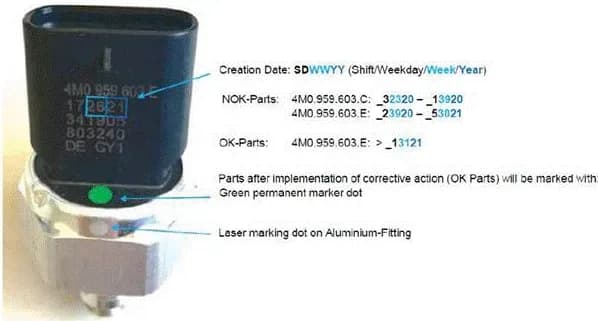
Also applies to
- Audi A6
- 2021–2022
- Audi A6 allroad
- 2021–2022
- Audi A7
- 2021–2022
- Audi A7 e
- 2021–2022
- Audi A8 L e
- 2021
- Audi e-tron
- 2021
- Audi e-tron GT
- 2022
- Audi e-tron Sportback
- 2021–2022
- Audi Q5
- 2021–2022
- Audi Q5 e
- 2021
- Audi Q7
- 2021–2022
- Audi Q8
- 2021–2022
- Audi RS 6 Avant
- 2021–2022
- Audi RS 7
- 2021–2022
- Audi RS e-tron GT
- 2022
- Audi RS Q8
- 2021–2022
- Audi S6
- 2021–2022
- Audi S7
- 2021–2022
- Audi S8
- 2021–2022
- Audi SQ5
- 2021–2022
- Audi SQ7
- 2021–2022
- Audi SQ8
- 2021–2022
▸ Show 16 more▾ Show fewer
Audi has released Technical Service Bulletin (TSB) 87 24 75 2068460/6 to address a common issue where the air conditioning system in certain 2020-2022 Audi models, including the Audi e-tron, fails to cool the cabin effectively. This condition may be intermittent.
This TSB, issued on May 10, 2024, supersedes previous bulletin Group 87 number 23-55 dated October 2, 2023. The update includes revised service information regarding sensor interchangeability and corrected warranty SRTs (Standard Repair Times).
Symptoms
Owners may notice that the air conditioning system does not cool the cabin as expected. This cooling issue can occur intermittently, making it difficult to diagnose without proper tools.
Fault Codes / DTCs
When the air conditioning system does not cool, one or both of the following Diagnostic Trouble Codes (DTCs) may be stored in the Thermal management control unit, J1024 (address word 00C5):
| Code | Description |
|---|---|
| P053000 | Air conditioning system pressure sensor electrical fault |
| P251500 | Refrigerant pressure sensor 2 electrical fault |
Diagnosis
To diagnose this issue, technicians should first confirm the symptom of the air conditioning not cooling. Next, they will check the Thermal management control unit (J1024) for the presence of DTC P053000 or P251500. The underlying cause is often a failure of the sensor electronics, leading to a loss of pressure evaluation.
The TSB specifically identifies pressure sensors with base part number 4M0959603 and a build date before Calendar Week 31, 2021, as being at issue. These sensors are designated as G395 or G826 depending on their location in the refrigerant circuit. An improved sensor has since been implemented in production.
Important Warnings
Sensor Identification
The presence of a green dot on the sensor connector housing is not the sole definitive indicator of an improved sensor. While the green dot was initially applied in production for improved sensors, this practice was not continued indefinitely. Technicians must always check the sensor's build date, as this is the conclusive confirmation of its status.
Sensor Interchangeability
Pressure sensors with different part number indexes are not interchangeable. When replacing pressure sensors, all sensors being replaced must belong to the same part number index (e.g., all 'E' index or all 'J' index). Mixing different part number indexes will result in a LIN communication conflict.
Repair Procedure Summary
The repair involves inspecting and potentially replacing the air conditioning pressure sensors. If the vehicle exhibits the described symptoms and DTCs, all pressure sensors in the refrigerant circuit with base part number 4M0959603 and a build date before Calendar Week 31, 2021, should be inspected and/or replaced. Each affected model may have between one and three of these sensors installed in various positions within the low- or high-pressure sides of the refrigerant circuit.
Technicians will inspect the markings on the sensor to determine if it has been previously replaced with an improved version produced after Calendar Week 31, 2021. A sensor with an 'E' index produced after Calendar Week 31, 2021, that has a laser marking on the aluminum housing (with or without a green dot) is considered the improved type and does not require replacement.
Required Parts
The improved part number for the pressure and temperature sensor is 4M0959603E. Depending on the vehicle, 1 to 3 of these sensors may be required.
Owner Action
If you own a 2020-2022 Audi model and are experiencing issues with your air conditioning not cooling, especially if accompanied by DTC P053000 or P251500, you should schedule an appointment with an authorized Audi dealer. This repair is typically covered under warranty for vehicles up to 48 months or 50,000 miles, or for CPO (Certified Pre-Owned) vehicles. If your vehicle is outside of warranty, this TSB serves as informational guidance.
Source: NHTSA ID 11002147
Gallery
2 images
Frequently Asked Questions
- What does Audi TSB 87 24 75 2068460/6 address?
- Audi TSB 87 24 75 2068460/6 addresses a condition in certain 2020-2022 Audi models, including the Audi e-tron, where the air conditioning system does not cool the cabin. This issue is often linked to diagnostic trouble codes P053000 and P251500.
- What are the common fault codes associated with the Audi A/C not cooling issue?
- The most common diagnostic trouble codes (DTCs) associated with the air conditioning not cooling issue are P053000, indicating an "Air conditioning system pressure sensor electrical fault," and P251500, which points to a "Refrigerant pressure sensor 2 electrical fault."
- How can I tell if my Audi's A/C pressure sensor needs replacement?
- Your Audi's A/C pressure sensor may need replacement if it has base part number 4M0959603 and its build date is before Calendar Week 31, 2021. A qualified technician will need to inspect the sensor markings and build date to confirm this, as a green dot on the sensor is not a definitive indicator of the improved part.
- Is the repair for DTC P053000 or P251500 covered under warranty?
- Yes, for most vehicles, the repair outlined in TSB 87 24 75 2068460/6 is covered under warranty for up to 48 months or 50,000 miles. It is also covered for CPO (Certified Pre-Owned) vehicles. It's best to confirm your specific warranty coverage with an authorized Audi dealer.
Other revisions of this TSB
- 2021-2022 Audi e-tron A/C Not Cooling DTCs P053000 P251500P053000, P251500
- 2020-2022 Audi AC Not Cooling: DTCs P053000, P251500P053000, P251500
- 2021-2022 Audi A/C Not Cooling: DTC P053000, P251500 TSBP053000, P251500
- 2021-2022 Audi AC Not Cooling P053000 P251500P053000, P251500
- 2021-2022 Audi AC Not Cooling TSB P053000 P251500P053000, P251500
- 2020-2022 Audi AC Not Cooling: DTC P053000, P251500P053000, P251500
- 2021-2022 Audi AC Not Cooling with DTC P053000 P251500P053000, P251500
Related Articles
2022 Audi e-tron Problems: Electrical System & Braking Concerns
The 2022 Audi e-tron has faced significant owner complaints regarding its electrical system, including sudden power loss and charging hazards, as well as various braking malfunctions. This profile details these issues and relevant service bulletins.
2022-2026 Audi Guided Fault Finding Reporting Obligation
Audi has issued Technical Service Bulletin TPI 2033392, also known as Transaction No. 2081531/1, regarding a reporting obligation for technicians when Guided Fault Finding produces an unexpected result. This TSB outlines the process for contacting Audi Product Support for diagnostic assistance.
2022-2026 Audi Infotainment System Complaints
Audi has released Technical Service Bulletin (TSB) 2081405/1 to address various customer complaints regarding infotainment systems in 2022-2026 Audi vehicles. This TSB helps technicians diagnose issues often caused by external media or mobile devices, rather than vehicle technology.
2018-2026 Audi Models Cracking Noise TSB 2061464/11
Audi Technical Service Bulletin 2061464/11 describes a cracking noise from the front or rear axle when changing direction in various 2018-2026 Audi models. The issue is due to stub axle movement and is resolved by bonding the stub axle to the wheel bearing with locking fluid.
2022-2026 Audi Parking Aid False Warnings TSB 2024323/13
Audi has released Technical Service Bulletin 2024323/13 to address customer complaints of false parking aid warnings. This bulletin details various environmental and vehicle-specific conditions that can cause the parking aid system to issue alerts even when no obstacles are present. It provides…
Leave a comment
Comments are moderated and may take a moment to appear. Only your first name and the initial of your last name are shown publicly.
Comments
Be the first to comment.