2022 Audi e-tron GT SSP 684: Technical Overview
This self-study program (SSP 684) provides an in-depth technical overview of the 2022 Audi e-tron GT (type F8), covering its innovative body structure, electric drive systems, power transmission, running gear, high-voltage battery, and advanced driver assistance features.
 David Chen2022 Audi e-tron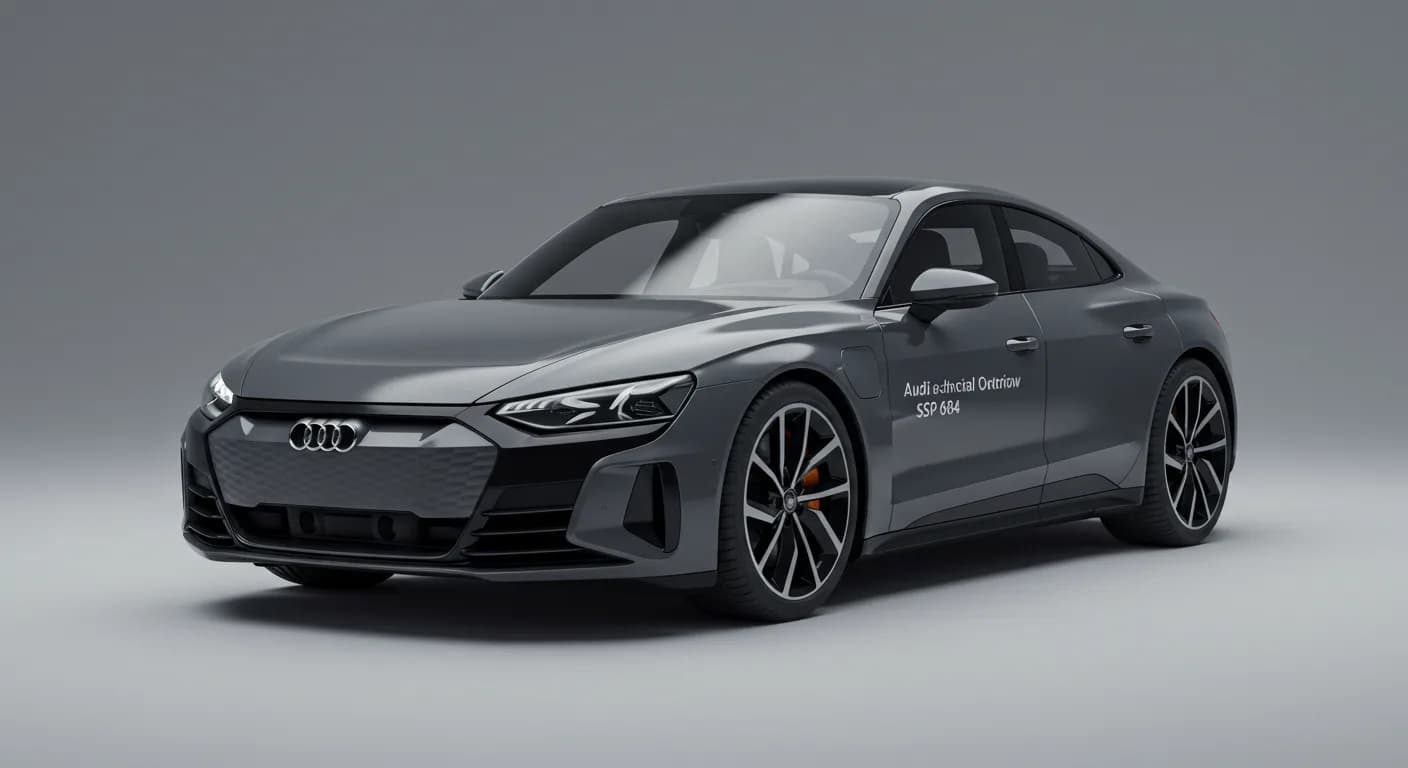
This self-study program (SSP 684) offers an in-depth technical overview of the 2022 Audi e-tron GT (type F8), a fully electric, high-performance Gran Turismo. This document serves as a foundational reference for technicians, detailing the innovative design and functionality of various vehicle systems. It covers everything from the body structure and electric drive to advanced driver assistance systems and thermal management, providing crucial insights into the engineering behind the Audi e-tron GT SSP 684.
Introduction to the Audi e-tron GT
The Audi e-tron GT is designed as a high-performance electric vehicle, combining sporty aesthetics with daily practicality. It features a 100% electric quattro drive, torque vectoring, and four-wheel steering for dynamic handling and grip. High-power charging at up to 270 kW with an 800-Volt electrical system allows for rapid charging, adding approximately 60 miles (100 km) of range in about five minutes. The vehicle is the first Audi Battery Electric Vehicle (BEV) with a flat-floor architecture, contributing to a low center of gravity and enhanced aerodynamics.
Product Highlights
Key features include sophisticated active aerodynamics with controllable air inlets and a variable rear spoiler, optimizing drag and range. The drive system utilizes permanently excited synchronous motors for powerful quattro drive. The optional three-chamber air suspension, two-speed rear transmission, and torque vectoring further enhance both comfort and sporty driving dynamics.
Body Structure and Materials
The Audi e-tron GT (type F8) employs a modern composite construction using various materials to reduce weight while ensuring stringent safety standards. The body structure primarily consists of cold-formed and hot-formed steel panels, aluminum extrusions, and aluminum castings. Aluminum panels are used for the outer skin components, including the front fenders, doors, hood, rear lid, and side panels.
Joining Techniques
Various joining techniques are utilized in the multi-material body, such as resistance spot welding for steel, MIG/MAG welding, laser welding for aluminum, friction element welding, semi-tubular punch riveting, bonding, flow-drill screws, seaming, and clinching.
Underbody Structure and High-Voltage Battery Integration
The high-voltage battery AX2 is fully integrated into the vehicle's floor structure using a battery frame, which enhances body rigidity, particularly in safety-critical areas. An aluminum underbody guard, bolted and bonded to the battery frame, protects the high-voltage battery from damage from below. If the battery frame is damaged, it must be replaced.
Power Units and Drive System
The e-tron GT features permanently excited synchronous motors on both front and rear axles. The power electronics, responsible for converting electric energy, are integrated into the cooling circuit to manage heat. The front axle's power electronics (J1234) can process up to 300 amperes, while the rear axle's (J1235) can handle up to 600 amperes.
Electric Drive Motor Characteristics
| Characteristic | Front Axle (EBGA) | Rear Axle (e-tron GT - EBFA) | Rear Axle (RS e-tron GT - EBEA) |
|---|---|---|---|
| Continuous Power Output (at 8000 rpm) | 80 kW | 120 kW | 170 kW |
| Peak Power Output (at 8000/10000 rpm) | 175 kW | 320 kW | 335 kW |
| Torque (at up to 5500/5000/5900 rpm for 4 sec) | 300 Nm (221 lb-ft) | 340 Nm (251 lb-ft) | 550 Nm (406 lb-ft) |
Electric Drive Cooling System
Coolant flows through the electric drive motors and power electronics, which are integrated into the electric powertrain's coolant circuit. The coolant is first directed to the power electronics to dissipate high heat levels, then flows through the stator cooling jacket. On the rear axle, coolant also passes through the two-speed transmission unit. Only G12evo coolant must be used in the Audi e-tron GT.
Power Transmission
The Audi e-tron GT (type F8) utilizes two types of transmissions: a single-speed transmission (OMG) for the front axle and a two-speed transmission (OME) for the rear axle. The motor control unit J623 regulates drive torque via the power electronics and controls the two-speed transmission OME.
Shift Matrix Overview
The transmission system employs a complex shift matrix involving a dog clutch and a multi-plate clutch to manage gear changes, recuperation, and parking lock functions. For instance, in Drive R (reverse), the dog clutch is engaged, and the multi-plate clutch is disengaged, allowing torque transfer via the sun gear blocked by the dog clutch. In Drive D2 (second gear), both the multi-plate clutch and planetary gear set are blocked, enabling freewheel operation. The system ensures smooth transitions between driving states and recuperation modes, with specific conditions for engaging and disengaging clutches.
Gearbox Warning and Indicator Lamps
Owners should be aware of specific warnings related to the gearbox:
- If the red transmission warning lamp appears in the instrument cluster, the driver is instructed "not to drive any further."
- If the yellow transmission indicator lamp appears in the instrument cluster, it is generally possible to continue driving the vehicle. A corresponding driver message informs the driver of what to do.
Oil Temperature and Clutch Slip Measures
The motor control unit J623 monitors gearbox oil temperature and clutch slip to protect components and ensure proper function. The following measures and messages are triggered based on conditions:
Oil Temperature Measures and Displays
| Oil Temperature | Measure | Displays/Messages |
|---|---|---|
| > 110 °C (230 °F) | Torque of electric drive motor reduced. Launch control not available. | "Gearbox overheating: please adapt driving style." |
| > 120 °C (248 °F) | Additionally, forced shift into 2nd gear with downshifting prohibited. | "Gearbox overheating: please adapt driving style." |
| > 130 °C (266 °F) | Maximum speed reduced additionally. | "Gearbox overheating: please stop vehicle." |
Clutch Slip Measures and Displays
| Clutch Slip | Measure | Displays/Messages |
|---|---|---|
| Sporadic | Torque of electric drive motor reduced. | "Gearbox malfunction: you can continue driving" |
| Constant | Torque of electric drive motor reduced. Additionally: Forced shift back into 1st gear and therefore reduced maximum speed; upshifting prohibited. No parking lock function. | "Gearbox malfunction: you can continue driving", "Vehicle may roll away! P cannot be selected. Please apply parking brake" |
Running Gear and Suspension
The running gear components in the Audi e-tron GT and RS e-tron GT are largely identical, with key differences noted specifically. The vehicle features a steel spring running gear with electronic damping control as standard, with adaptive air suspension available as an option. The four-wheel steering system is an optional feature. Lightweight construction is a priority, with main axle components made of aluminum. The running gear control unit J775 coordinates all running gear systems.
Adaptive Air Suspension
The adaptive air suspension system utilizes air springs with three separate air chambers, allowing for different air spring volumes and spring rates. This enables the suspension to adapt quickly to various driving conditions, from comfortable settings to dynamic, high-speed performance. Four separate sensors detect the acceleration of unsprung masses for increased precision.
Air Spring Volume Features
| Volume | Feature |
|---|---|
| Volume 1 + volume 2 + volume 3 | Highest volume, lowest spring rate, most comfortable setting |
| Volume 1 + volume 2 | Medium volume |
| Volume 1 + volume 3 | Small volume, high spring rate, dynamic setting |
| Volume 1 | Smallest volume, highest spring rate, most dynamic setting |
Electrics and Electronics
The 2022 Audi e-tron GT introduces a lithium iron phosphate (LiFePO4) battery as its 12-Volt power supply, replacing the traditional lead-acid battery. This battery offers advantages such as lighter weight (approximately 50% less than an AGM battery), increased recuperation capacity, reduced space requirements (20% less volume), and a significantly longer service life (2.5 times longer, 7 times higher cycle stability). The 12V LiFePO4 battery has a nominal voltage of 13.2V and a capacity of 40 Ah.
High-Voltage System
The high-voltage battery AX2 is centrally located and supports the body structure. It consists of 33 battery modules, totaling 396 cells, with a nominal voltage of 726V and an energy content of 93 kWh. The maximum charging capacity is 270 kW. Safety regulations are paramount when working with the high-voltage system, which can be active even when the vehicle is parked and locked. Technicians must always de-energize the system according to test plans and be qualified staff.
Bus Systems Used
The Audi e-tron GT utilizes a variety of bus systems for communication between control units:
| Bus System | Method | Data Transfer Rate |
|---|---|---|
| Convenience CAN | Electrical bus system | 500 kbit/s |
| Convenience CAN 2 | Electrical bus system | 500 kbit/s |
| Extended CAN | Electrical bus system | 500 kbit/s |
| Hybrid CAN | Electrical bus system | 500 kbit/s |
| Dash panel insert CAN | Electrical bus system | 500 kbit/s |
| Infotainment CAN | Electrical bus system | 500 kbit/s |
| Connect CAN | Electrical bus system | 500 kbit/s |
| Diagnostics CAN | Electrical bus system | 500 kbit/s |
| Information electronics 1 CAN | Electrical bus system | 500 kbit/s |
| FlexRay | Electrical bus system | 10 Mbit/s |
| MOST bus | Fibre optic bus system | 150 Mbit/s |
| LIN bus | Electrical single wire bus system | 20 kbit/s |
| Sub-bus systems | Electrical bus system | 500 kbit/s |
| Ethernet | Electrical bus system | 100 Mbit/s |
Infotainment and Audi Connect
The Audi e-tron GT features the third generation of the modular infotainment matrix (MIB3) system, with MMI navigation plus (7UG) as the standard. Key features include:
- 10.1-inch MMI touch display (1540 x 720 pixels)
- Audi virtual cockpit plus, 12.3-inch (959)
- 3D navigation system on SSD (7UG)
- FM radio, DAB digital radio, and Sirius XM (QV3)
- Connected radio (Internet radio) and HD radio
- Audi smartphone interface (IU1)
- Two rear USB-C sockets (UF8)
- Audi sound system (9VD) and Bluetooth interface (9ZX)
- Audi connect emergency call & service (IW3) and infotainment plus (IT3)
The standard Audi sound system (9VD) includes 10 loudspeakers with a 150 W output. The optional Bang & Olufsen Premium Sound System with 3D sound (9VS) offers 16 loudspeakers and a 710 W output.
Safety and Driver Assistance Systems
The driver assist systems in the Audi e-tron GT are based on the MLBevo2 platform, sharing architecture with models like the Audi A8 (type 4N) and Q7 (type 4M). The central control unit is the driver assist systems control unit J1121 (zFAS). Standard equipment includes cruise control with speed limiter, lane departure warning, parking system plus, pre sense basic, and pre sense front.
Park Assist Plus and Remote Park Assist Plus
The park assist plus system (requiring J1121 version C) provides enhanced parking assistance by taking full control of steering, acceleration, braking, and transmission changes. It uses 12 sixth-generation ultrasonic sensors (G203-G206, G252-G255, G568-G569, G716-G717) and four overhead view cameras (R243-R246) for detailed environmental information. The remote park assist plus extends this functionality, allowing control via a smartphone app from outside the vehicle, particularly useful in tight parking spaces.
Servicing, Inspection & Roadside Assistance
Service intervals are displayed based on mileage and/or time, with the instrument cluster showing remaining days before service is due. The service interval display must be reset using the vehicle diagnostic tester. The Audi e-tron GT SSP 684 also details diagnostic functions available via address words 0001 (Engine electronics J623) and 0032 (Lock electronics J647), covering functions like renewing control units, adapting sensors, and checking configurations.
Important Warnings for Owners
Owners of the 2022 Audi e-tron GT should be aware of several critical warnings detailed in the SSP 684:
- "The high-voltage system of an Audi e-tron GT may be active even though the vehicle is parked and locked." Always exercise caution around the vehicle's high-voltage components.
- "The vehicle cannot be operated if the 12 V LiFePo4 battery is discharged. The Audi e-tron GT must NOT be used to jump-start other vehicles!" This prevents damage to the 12V battery and other vehicle systems.
- "It is not permitted to 'miss out' service events." Adhering to maintenance schedules is crucial for vehicle longevity and safety.
- "The vehicle must not be towed or push-started." Special transport methods are required for the e-tron GT.
- "If the red transmission warning lamp appears in the instrument cluster, the driver is instructed not to drive any further." This indicates a critical issue requiring immediate attention.
- "If the yellow transmission indicator lamp appears in the instrument cluster, it is generally possible to continue driving the vehicle. A corresponding driver message informs the driver of what to do." Pay attention to these messages and follow instructions.
- "Alternating voltage of 25 Volts and above and direct voltage of 60 Volts and above are hazardous to human beings." Always observe safety instructions when dealing with electrical systems.
- "Always de-energise the system according to the test plan in the vehicle diagnostic tester. The high-voltage system must only be de-energised and worked on by qualified staff." High-voltage work requires specialized training and procedures.
Source: NHTSA ID: 10190946
Frequently Asked Questions
- What is the primary purpose of Audi e-tron GT SSP 684?
- The Audi e-tron GT SSP 684 is a self-study program designed to provide technicians with a comprehensive technical overview of the 2022 Audi e-tron GT (type F8), detailing its design, function, and components across various vehicle systems.
- What should I do if my 2022 Audi e-tron GT displays a "Gearbox: fault. Safely stop vehicle" message?
- If your 2022 Audi e-tron GT displays a "Gearbox: fault. Safely stop vehicle" message, it indicates a significant issue. The SSP 684 advises that if the red transmission warning lamp appears, you should not drive any further and seek immediate service.
- Can I jump-start other vehicles with my 2022 Audi e-tron GT?
- No, the SSP 684 explicitly states that the "Audi e-tron GT must NOT be used to jump-start other vehicles!" This is to prevent damage to its 12V LiFePO4 battery and other electrical systems.
- What are the key advantages of the 12V LiFePO4 battery in the Audi e-tron GT?
- The 12V LiFePO4 battery in the Audi e-tron GT offers several advantages, including approximately 50% lighter weight, increased recuperation capacity, 20% less space required, and a significantly longer service life compared to traditional lead-acid batteries.
- How does the park assist plus system work in the Audi e-tron GT?
- The park assist plus system in the Audi e-tron GT takes full control of steering, acceleration, braking, and transmission changes to guide the vehicle into parking spaces. It uses 12 ultrasonic sensors and four overhead view cameras to gather detailed environmental information, as described in the Audi e-tron GT SSP 684.
Related Articles
2022 Audi e-tron Problems: Electrical System & Braking Concerns
The 2022 Audi e-tron has faced significant owner complaints regarding its electrical system, including sudden power loss and charging hazards, as well as various braking malfunctions. This profile details these issues and relevant service bulletins.
2022-2026 Audi Guided Fault Finding Reporting Obligation
Audi has issued Technical Service Bulletin TPI 2033392, also known as Transaction No. 2081531/1, regarding a reporting obligation for technicians when Guided Fault Finding produces an unexpected result. This TSB outlines the process for contacting Audi Product Support for diagnostic assistance.
2022-2026 Audi Infotainment System Complaints
Audi has released Technical Service Bulletin (TSB) 2081405/1 to address various customer complaints regarding infotainment systems in 2022-2026 Audi vehicles. This TSB helps technicians diagnose issues often caused by external media or mobile devices, rather than vehicle technology.
2018-2026 Audi Models Cracking Noise TSB 2061464/11
Audi Technical Service Bulletin 2061464/11 describes a cracking noise from the front or rear axle when changing direction in various 2018-2026 Audi models. The issue is due to stub axle movement and is resolved by bonding the stub axle to the wheel bearing with locking fluid.
2022-2026 Audi Parking Aid False Warnings TSB 2024323/13
Audi has released Technical Service Bulletin 2024323/13 to address customer complaints of false parking aid warnings. This bulletin details various environmental and vehicle-specific conditions that can cause the parking aid system to issue alerts even when no obstacles are present. It provides…
Leave a comment
Comments are moderated and may take a moment to appear. Only your first name and the initial of your last name are shown publicly.
Comments
Be the first to comment.