2025 Audi A5, Q5 PPE/PPC Repair Authorization TSB
Audi has issued Technical Service Bulletin 2079798/1, detailing the mandatory repair authorization process for all 2025 Audi A5, A6 e-tron, Q5, and Q6 PPE/PPC vehicles. This TSB guides technicians on using the 'Ask AI' system to obtain necessary approvals for repairs.
 Sarah Mitchell2025 Audi A5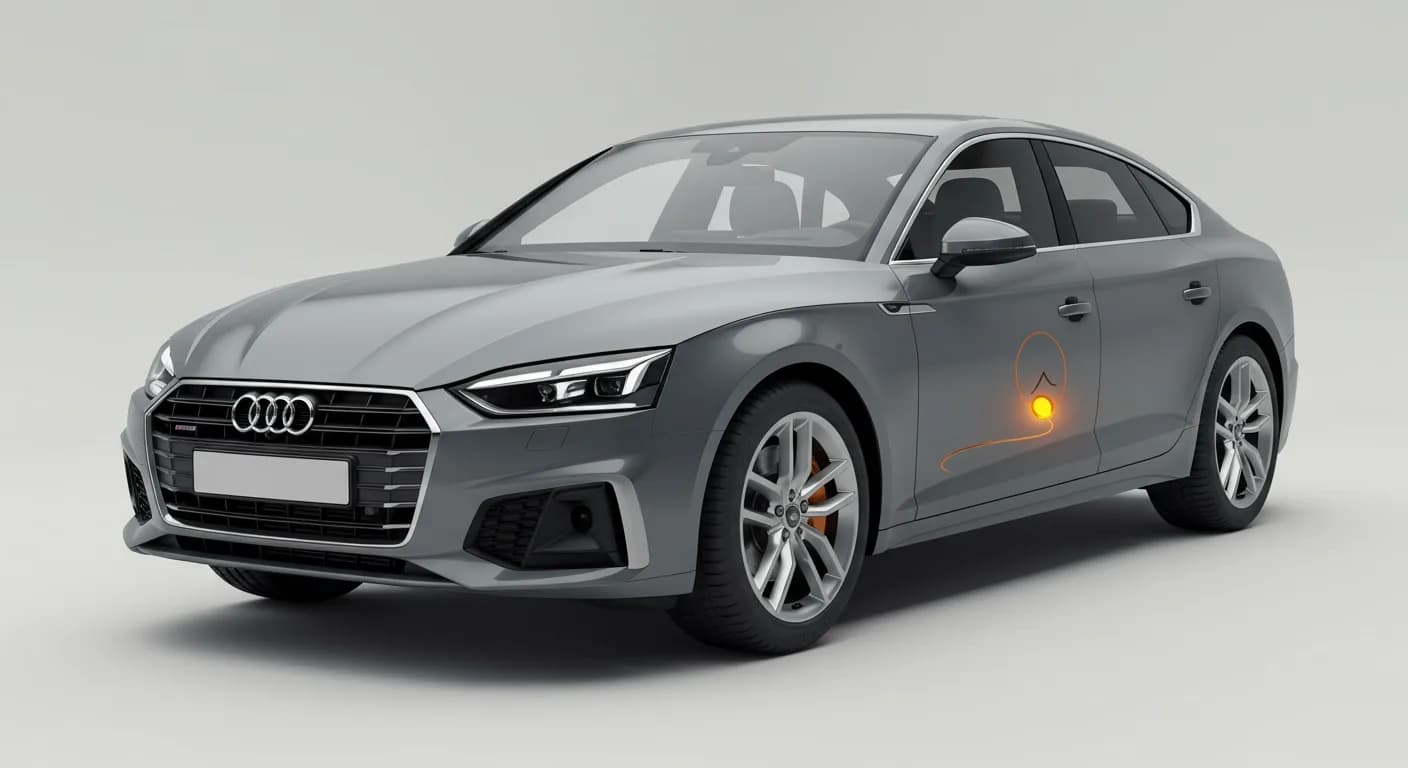
Also applies to
- Audi Q5
- 2025
- Audi S5
- 2025
- Audi SQ5
- 2025
Audi has released Technical Service Bulletin (TSB) 2079798/1, a crucial document outlining the mandatory repair authorization process for specific 2025 Audi PPE/PPC platform vehicles. This TSB is not about a specific fault or repair, but rather a procedural guide for dealer technicians to follow when servicing these advanced models. The process ensures that all repairs on these vehicles receive the necessary oversight and approval, leveraging Audi's diagnostic and support systems.
This mandatory authorization applies to all repairs performed on the affected vehicles. It is a critical step designed to streamline complex diagnostics and ensure that the most up-to-date information and solutions are utilized by service centers. Owners of a 2025 Audi A5 manufacturer_communication should be aware of this process as it impacts how their vehicle's service needs are addressed.
Important Warnings for Owners and Technicians
Audi TSB 2079798/1 includes several key advisories that are important for both service personnel and vehicle owners to understand:
- Not for Routine Services: This Repair Authorization process is explicitly not to be followed for routine maintenance services, Pre-Delivery Inspections (PDI), or when simply entering a VIN into the PSS Database. It is specifically for repair scenarios.
- Warranty Information: This TSB is informational only and is not applicable to any Audi Warranty. This means the TSB itself does not dictate warranty coverage, which is determined by standard warranty policies.
- Parts Delays: If required parts do not arrive within two business days, technicians are instructed to update the associated TAC/WEB ticket with the parts sales document number or red order information. This ensures tracking and communication regarding repair timelines.
- Ticket Closure: All Technical Assistance Center (TAC)/WEB tickets must be closed promptly once the repair is completed. This administrative step is crucial for record-keeping and process integrity.
The Mandatory Repair Authorization Process
For any repair on the specified 2025 Audi PPE/PPC vehicles, technicians must follow a structured authorization process. This process is designed to ensure that complex issues are correctly diagnosed and resolved, leveraging Audi's centralized support systems. The steps are mandatory and apply even if another Technical Service Bulletin is relevant to the repair.
Initial Steps and Diagnosis
- Verify Customer Concern: The technician's first step is to thoroughly verify the customer's reported concern and identify any warnings that were present at the time of the issue. Taking photos or videos of the warnings is recommended to aid in documentation.
- Begin GFF Diagnosis: Technicians must initiate a General Guided Fault Finding (GFF) diagnosis. This systematic diagnostic approach helps pinpoint the root cause of the problem. Crucially, technicians are instructed not to remove any parts or disconnect electrical connections before contacting the Technical Assistance Center (TAC). This precaution prevents potential damage or misdiagnosis and ensures the integrity of the diagnostic process.
Engaging with Audi's Support Systems
- Utilize Elsa2Go or ElsaPro and "Ask AI": The next critical step involves entering the vehicle's VIN into Audi's workshop information systems, Elsa2Go or ElsaPro. From there, technicians navigate to the ATA/VTA section and click the "Ask AI" button. "Ask AI" is an intelligent diagnostic assistant that helps guide technicians through troubleshooting. Once engaged, the technician must accurately enter the customer's concern and any related Diagnostic Trouble Codes (DTCs) into the system.
Repair Authorization Scenarios
The process diverges based on whether "Ask AI" provides a clear repair solution or diagnostic steps:
Scenario 1: "Ask AI" Provides a Repair Solution
If "Ask AI" successfully identifies a repair solution or provides clear diagnostic instructions, the technician proceeds as follows:
- Create a WEB Ticket: Click the "Create ticket" button to open a new WEB ticket.
- Select Concern Type: Choose "PPC & PPE Repair Authorization" as the concern type.
- Submit Information: Enter the customer's concern and the solution provided by "Ask AI" into the ticket, then submit it.
- Proceed with Repairs: In this scenario, TAC authorization is not required to begin the necessary vehicle repairs immediately. Technicians must keep the case updated with the repair status and any back-ordered parts.
- Close Ticket: After the repair is completed, the TAC ticket must be closed.
Scenario 2: "Ask AI" Does Not Provide a Solution
If "Ask AI" does not offer a repair solution or clear diagnostic steps, a more detailed interaction with the Technical Assistance Center is required:
- Create a WEB Ticket: Similar to Scenario 1, create a new WEB ticket and select "PPC & PPE Repair Authorization" as the concern type.
- Detailed Concern Description: Provide a comprehensive description of the customer's concern, noting whether the issue can be consistently duplicated.
- Attach Diagnostic Data: Attach the Collection Services Diagnosis Log along with any photos or recordings captured during the initial verification.
- Provide Contact Information: Include the technician's cell phone number and email address for direct communication.
- Submit Ticket and Await Instructions: Submit the ticket. If repair instructions are not received within one business day, the technician may proceed with necessary repairs. Notifications regarding WEB ticket updates are sent via email, though direct phone calls are also an option.
- Close Ticket: Once the repair is complete, the TAC ticket must be closed.
Importance of "Ask AI"
Audi emphasizes the continuous use of "Ask AI" for every case involving these vehicles. The system is regularly updated with the latest information, ensuring that technicians have access to the most current knowledge for diagnosis and repair. This commitment to an evolving knowledge base helps maintain the high standards of service for the 2025 Audi A5 manufacturer_communication and other PPE/PPC models.
This process, identified by TSB 2079798/1, highlights Audi's proactive approach to managing the service and repair of its advanced vehicle platforms, ensuring that even the most complex issues are addressed with expert guidance and thorough documentation.
Source: NHTSA ID: 11025318
Frequently Asked Questions
- What is Audi TSB 2079798/1 about?
- Audi Technical Service Bulletin 2079798/1 outlines a mandatory repair authorization process for specific 2025 Audi PPE/PPC platform vehicles. It details the steps technicians must follow to diagnose and repair issues, often involving Audi's 'Ask AI' system and Technical Assistance Center (TAC).
- Which Audi vehicles are affected by this repair authorization?
- This repair authorization applies to 2025 Audi A5 (FU), A6 e-tron (GH), Q5 (GU), and Q6 (GF) vehicles. This includes models like the Audi A5, S5, Q5, and SQ5 from the 2025 model year.
- What does 'PPE/PPC' mean in the context of this TSB?
- PPE/PPC refers to Audi's vehicle platforms: Premium Platform Electric (PPE) and Premium Platform Combustion (PPC). These are advanced architectures for Audi's latest generation of vehicles, requiring specific diagnostic and repair protocols outlined in the TSB.
- What should I expect if my 2025 Audi A5 needs a repair covered by this authorization?
- If your 2025 Audi A5 manufacturer_communication requires a repair under this TSB, your technician will follow a specific process involving Audi's diagnostic systems like Elsa2Go/ElsaPro and the 'Ask AI' tool. This ensures a thorough and authorized repair, though it might add a step to the diagnostic timeline before physical repairs begin.
- Does this TSB affect my Audi's warranty?
- No, Audi TSB 2079798/1 is informational only and explicitly states that it is not applicable to any Audi Warranty. Warranty coverage for repairs will be determined by your standard Audi warranty terms and conditions.
Related Articles
2024-2025 Audi On-Car Analysis: Check Engine Light & DTCs
Audi's March 2025 On-Car Analysis list provides guidance for technicians on several issues affecting 2024-2025 Audi A3, Q5, and A5 models. These include check engine lights, vehicle sound malfunction warnings, and specific diagnostic trouble codes (DTCs) such as POE5E00 and P219500. The document…
2025-2026 Audi A5/Q5 Coolant Pump V188 Blocked P2BC100 TSB
Audi TSB 2080825/2 addresses the 'Coolant pump for charge air cooler, blocked' issue (DTC P2BC100) and 'Drive system: fault' message in 2025-2026 Audi A5 and Q5 models, often after extended stationary periods. It outlines diagnosis and repair steps.
2025 Audi A5/Q5/S5/SQ5: 'Position P Cannot Be Selected'
A Technical Service Bulletin (TSB 2080044/4) has been issued for certain 2025 Audi A5, Q5, S5, and SQ5 vehicles regarding an issue where 'Position P cannot be selected' and the vehicle cannot be locked. This condition is resolved with a software update.
2025 Audi A5/S5/Q5/SQ5 Software Update Flashing Issues
This technical service bulletin (TSB 2079692/5) from Audi addresses various issues encountered during the combined software update 03.10.00/C (28.13.01) KD2 for 2025 Audi A5, S5, Q5, and SQ5 models. It covers diagnostic errors, control module communication problems, and solutions for successful…
2025 Audi A5/Q5/S5/SQ5 Software Update TSB 2079690/8
Audi has released Technical Service Bulletin 2079690/8 for 2025 A5, Q5, S5, and SQ5 models. This TSB details a combined software update (00 Combined software update 03.10.00/C (28.13.01) KD2) that resolves various issues including navigation, connectivity, digital key functionality, and driving…
Leave a comment
Comments are moderated and may take a moment to appear. Only your first name and the initial of your last name are shown publicly.
Comments
Be the first to comment.