2021-2025 Audi Door Lock Malfunction TSB 2079747/1
Audi Technical Service Bulletin (TSB) 2079747/1 details common complaints regarding front and rear door locks across various 2021-2025 Audi models. This TSB provides diagnostic steps and repair procedures for issues like doors not opening, central locking system malfunction indicators, and…
 Sarah Mitchell2025 Audi Q8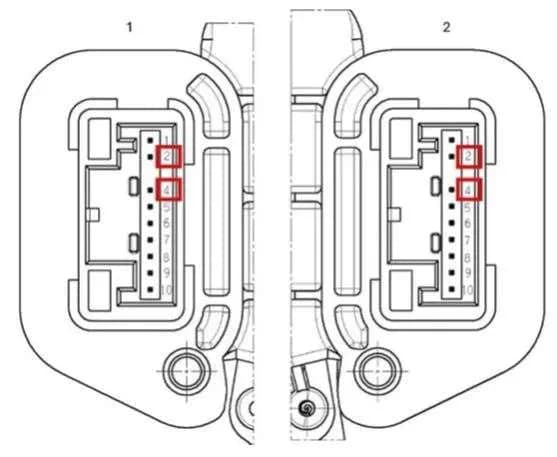
Şu araçlar için de geçerli
- Audi A5
- 2025
- Audi A6
- 2021–2025
- Audi A6 allroad
- 2021–2025
- Audi A7
- 2021–2025
- Audi A7 e
- 2021–2022
- Audi A8 L e
- 2021
- Audi e-tron GT
- 2022–2025
- Audi Q5
- 2025
- Audi Q8
- 2021–2024
- Audi RS 6 Avant
- 2021–2025
- Audi RS 7
- 2021–2025
- Audi RS e-tron GT
- 2022–2024
- Audi RS Q8
- 2021–2025
- Audi S e-tron GT
- 2026
- Audi S5
- 2025
- Audi S6
- 2021–2025
- Audi S7
- 2021–2025
- Audi S8
- 2021–2025
- Audi SQ5
- 2025
- Audi SQ8
- 2021–2025
▸ 14 tane daha göster▾ Daha az göster
Owners of 2021-2025 Audi vehicles may experience issues with their front or rear door locks, including doors that cannot be opened from either the outside or the inside. These issues are often accompanied by messages related to the door system, such as a "central locking system malfunction indicator" displayed on the instrument cluster. While the vehicle may still be locked, it might be possible to open a door without using a key.
This Technical Service Bulletin (TSB) 2079747/1 from Audi provides comprehensive guidance for technicians to diagnose and resolve these door lock complaints, ensuring proper functionality and addressing the root cause of the Audi door lock malfunction.
Symptoms of an Audi Door Lock Malfunction
The primary symptom reported by owners is that "Front or rear door cannot be opened from the outside or the inside." This can be a significant inconvenience and a safety concern. Additionally, drivers might observe "Messages related to the front or rear doors (e.g. regarding the exit warning system or central locking system) are displayed." The vehicle might be locked, but it is still possible to open a door without using a key.
Workshop findings confirm that the "Door locks do not work" as expected. These complaints indicate a problem with the door lock mechanism or its control system, leading to a general Audi door lock malfunction.
Diagnostic Trouble Codes (DTCs)
When an Audi door lock malfunction occurs, specific Diagnostic Trouble Codes (DTCs) may be logged in the vehicle's event memory. These codes help technicians pinpoint the exact nature of the problem. The TSB lists the following DTCs:
| Diagnostic Address | Diagnostic Trouble Code | Fault Symptom | Storage State |
|---|---|---|---|
| 0042 - Driver's door electronics | B122B13 | Central locking motors Open circuit | static |
| 0042 - Driver's door electronics | B14FF29 | Motor for child safety lock implausible signal | intermittent |
| 0042 - Driver's door electronics | B122D29 | Lock unit for central locking implausible signal | static |
| 00BC - Rear passenger side door electronics | B122D29 | Lock unit for central locking implausible signal | static |
| 0042 - Driver's door electronics | B122B13 | Central locking motors Open circuit | intermittent |
| 00BB - Rear drivers side door electronics | B14FF29 | Motor for child safety lock implausible signal | intermittent |
| 00BC - Rear passenger side door electronics | B14FF29 | Motor for child safety lock implausible signal | intermittent |
| 0052 - Passenger's door electronics | B122D29 | Lock unit for central locking implausible signal | intermittent |
| 00BC - Rear passenger side door electronics | B122D29 | Lock unit for central locking implausible signal | intermittent |
| 0042 - Driver's door electronics | B122D29 | Lock unit for central locking implausible signal | intermittent |
| 00BB - Rear drivers side door electronics | B122D29 | Lock unit for central locking implausible signal | static |
| 0052 - Passenger's door electronics | B122B13 | Central locking motors Open circuit | static |
| 0052 - Passenger's door electronics | B122B13 | Central locking motors Open circuit | intermittent |
| 0052 - Passenger's door electronics | B122D29 | Lock unit for central locking implausible signal | static |
| 00BB - Rear drivers side door electronics | B14FF29 | Motor for child safety lock implausible signal | static |
| 00BB - Rear drivers side door electronics | B122D29 | Lock unit for central locking implausible signal | intermittent |
| 0042 - Driver's door electronics | B14FF29 | Motor for child safety lock implausible signal | static |
| 00BC - Rear passenger side door electronics | B14FF29 | Motor for child safety lock implausible signal | static |
These DTCs indicate issues ranging from open circuits in the central locking motors to implausible signals from the child safety lock motor or the main lock unit. The storage state can be either static (persistent) or intermittent.
Understanding the Door Lock System
Audi's door lock system is sophisticated, relying on a combination of electronic and mechanical components. When a door handle (interior or exterior) is used, the action is transmitted electrically to the door control unit via a microswitch. This microswitch then activates an electric motor within the door lock; this motor releases the rotary latch and thus opens the door lock. This means that the door can be opened with very little effort.
For mechanical backup, two Bowden cables are still fitted, providing a mechanical connection between the door lock and the interior/exterior door handle (applicable to vehicles with mechanical exterior door handles). To open the door via this mechanical connection (e.g., in the event of messages or manual release if a microswitch or control motor fails), the interior door handle must be pulled out much further than the normal angle, specifically twice. In the event of a complaint, it is only possible to open the door using the exterior handle after the lock cylinder or the interior handle has been activated.
Audi notes that the door lock manufacturing process has been optimized.
Important Warnings and Owner Information
Audi emphasizes that some perceived door lock issues might stem from incorrect operation rather than a component failure. Before any repairs, technicians are advised to clarify the complaint with the customer and explain the door lock's operating concept, potentially referencing the Owner's Manual.
Owners of vehicles equipped with a mechanical exterior door handle and convenience key (sensor on the door handle, as shown in Figure 1) should be aware of specific operational nuances to prevent incorrect operation:
- When locking the vehicle: To lock the vehicle, close the door and touch the sensor on the door handle once. "Do not take hold of the door handle when doing so, otherwise the vehicle will not be locked." Once the doors have been locked, they cannot be opened immediately. This allows checking that the doors are properly closed.
- When opening the doors: "When opening the doors, care must be taken not to touch the sensor on the exterior door handle at the same time (e.g. with the thumb), as otherwise the vehicle will be locked again -> incorrect operation by the user."
Figure 1 in the TSB illustrates the touch sensor on the mechanical exterior door handle.
Furthermore, regarding warranty claims, Audi states: "Replacing parts or attempting repairs without taking this TSB into account will not fix the problem. Unjustified work/replacement parts will be charged back. In this case, invoicing under warranty is not permitted." This underscores the importance of proper diagnosis according to TSB 2079747/1. An SoST film on the subject of the operating concept / incorrect operation / messages is available for reference.
Diagnosis and Repair Procedure Summary
Addressing an Audi door lock malfunction involves a systematic diagnostic and repair process:
1. Door Lock Function and Operating Concept
Technicians should first determine if the complaint is due to incorrect operation. This involves clarifying the details with the customer to narrow down the cause. The event memory entries listed can also occur with specific usage profiles:
- Is the interior door handle pulled too quickly or pulled past the end stop? This can result in messages or faults without there being a problem with the door lock.
- Does the door open if you pull the interior handle twice? Does the door then open again if the exterior handle is used? If so, there is no fault in the door lock.
Technicians should also consult the Owner's Manual, Workshop Manual, and Guided Fault Finding (GFF) for corresponding information.
2. Check and Diagnosis of the Door Lock
For every complaint, technicians must read out the event memory in the control unit and erase entries as appropriate. They should then check whether any event memory entries for the affected door are still logged. After erasing, switch the ignition off and on again, open and close the door, and then re-check the event memory. If entries persist, or if the door cannot be opened/closed in the usual way, proceed to "Resistance measurement at door lock."
Resistance Measurement at Door Lock
This procedure involves measuring the resistance on the installed door lock between pin 2 and pin 4 using a multimeter. To do this, the lock must be in temporary crash redundancy mode. This mode is initiated by removing the connector from the lock and firmly pulling the interior door handle twice.
Figure 2 in the TSB illustrates the connector for the door lock, showing the pin locations. Part 1 shows the connector for the right door lock, and Part 2 shows the connector for the left door lock.
Expected acceptable resistance values are:
- Temporary crash redundancy (TCR) (without operating door handles): 1000 ohms. If the value is not 1000 ohms, the interior door handle should be pulled twice again as far as the stop, and the measurement repeated.
- Switch for interior door handle (IDH) + TCR (operating interior door handle only): 382 ohms.
- For vehicles with curved door handles (e.g., Q6 e-tron and Q5 type GU) only:
- Switch for exterior door handle (EDH) + TCR (operating exterior door handle only): 212 ohms.
- IDH + EDH + TCR (operating interior and exterior door handles simultaneously): 158 ohms.
All measurements have a tolerance of +/- 1%. After the initial measurement, technicians should close the door, open it again, and repeat the measurement. Instead of 1000 ohms for TCR, an OL (open load) should now be measured.
If the results differ from the expected values and are outside the measurement tolerance range, the affected door lock should be replaced. If the results correspond to the expected values, the lock wiring should be checked according to Guided Fault Finding and the current flow diagram, then proceed to point 3.
3. Mechanical Check of Components
This step involves checking the mechanical Bowden cables at the door lock and at the interior/exterior door handle for any damage or irregularities (e.g., twisting, incorrect routing, traces of water or ice, stiffness). Technicians should compare the length of the Bowden cable to another vehicle if necessary and replace the affected component if needed. The door setting should also be checked for ease of movement and correct closing, and adjusted if necessary.
Important Note: "Only perform the following check for vehicle models listed in TSB 2060196:" Technicians must also check whether the exterior door handle returns to its flush original position (rest position) after it is operated. If it does not, they should modify or replace the door handle according to TSB 2060196, titled "57 Exterior door handles do not return to the zero position."
Warranty Information
For vehicles still under warranty, repairs related to this Audi door lock malfunction should be covered. The Claim Type for this TSB is informational only if the vehicle is outside of any warranty. The Damage Code associated with these repairs is 0040. Various labor operations are specified, each with a service number and estimated labor units (TU):
| Labor Operations | Service Number | Time Units (TU) |
|---|---|---|
| Check 1-4 door handles | 5711 0199 | 10 TU |
| Remove and install front door trim | 7059 1900 | See SRT with associated operations |
| Remove and install 2 front door trims | 7059 2000 | See SRT with associated operations |
| Check 1 front Bowden cable and wiring | 5719 0199 | 10 TU + 7059 1900 |
| Check 2 front Bowden cables and wiring | 5719 0299 | 20 TU + 7059 2000 |
| Measure 1 front door lock | 5717 0399 | 5 TU + 7059 1900 |
| Measure 2 front door locks | 5717 0499 | 10 TU + 7059 2000 |
| Remove and install front door lock | 5717 19xx | See SRT with associated operations |
| Remove and install 2 front door locks | 5717 2099 | 50 TU + 7059 2000 |
| Q8 e-tron, e-tron: Remove and install 2 front door locks | 5717 2099 | 120 TU + 7059 2000 |
| A7: Remove and install 2 front door locks | 5717 2099 | 170 TU + 7059 2000 |
| Remove and install rear door trim | 7073 1900 | See SRT with associated operations |
| Remove and install 2 rear door trims | 7073 2000 | See SRT with associated operations |
| Check 1 rear Bowden cable and wiring | 5819 0199 | 10 TU + 7073 1900 |
| Check 2 rear Bowden cables and wiring | 5819 0299 | 20 TU + 7073 2000 |
| Measure 1 rear door lock | 5817 0399 | 5 TU + 7073 1900 |
| Measure 2 rear door locks | 5817 0499 | 10 TU + 7073 2000 |
| Remove and install rear door lock | 5817 19xx | See SRT with associated operations |
| Remove and install 2 rear door locks | 5817 2099 | 50 TU + 7073 2000 |
| Charge battery | 2706 8950 | See SRT with associated operations |
| GFF / Guided Functions | 0150 0060 | Labor according to the diagnostic log |
All warranty claims must adhere to the Audi Warranty Policies and Procedures Manual and are subject to review or audit by Audi Warranty. Claims submitted for work not performed according to this TSB, or for unjustified parts replacement, may be charged back.
NHTSA ID: 11025358
Frequently Asked Questions
- What does an Audi door lock malfunction mean for my vehicle?
- An Audi door lock malfunction means your front or rear doors may not open from the inside or outside, and you might see a 'central locking system malfunction indicator' on your dashboard. This issue is addressed by Audi TSB 2079747/1.
- What are the common DTCs associated with an Audi door lock malfunction?
- Common Diagnostic Trouble Codes (DTCs) related to an Audi door lock malfunction include B122B13 (Central locking motors Open circuit), B14FF29 (Motor for child safety lock implausible signal), and B122D29 (Lock unit for central locking implausible signal).
- Can I fix an Audi door lock malfunction myself?
- Diagnosing and repairing an Audi door lock malfunction requires specific diagnostic steps, including resistance measurements and mechanical checks outlined in TSB 2079747/1. It is recommended to have a qualified Audi technician perform these repairs, especially given the warning that 'Replacing parts or attempting repairs without taking this TSB into account will not fix the problem.'
- Are there any specific actions I should avoid when operating my Audi's door handles?
- Yes, for vehicles with a mechanical exterior door handle and convenience key, Audi advises against holding the door handle when locking, as the vehicle may not lock. When opening, avoid touching the sensor on the exterior handle simultaneously, as this can relock the vehicle.
- What is the purpose of TSB 2079747/1?
- TSB 2079747/1 provides technicians with detailed procedures to diagnose and repair various complaints related to front and rear door locks in 2021-2025 Audi models. It helps ensure correct diagnosis and repair, preventing unnecessary part replacements for an Audi door lock malfunction.
Bu TSB'nin diğer revizyonları
- 2025-2026 Audi A5/S5/A6 Door Cannot Be Opened TSBB122D29
- 2025 Audi Q5/SQ5 Door Won't Open from Outside TSBB122D29
- 2025 Audi Q5/SQ5 Door Cannot Be Opened From OutsideB122D29
- 2025-2026 Audi A5, S5, A6 Door Lock Malfunction TSB 2079919/2B122D29
- 2025 Audi Q5 Door Cannot Be Opened From Outside TSB 2079914/1B122D29
- 2025-2026 Audi A5/S5/A6 Door Won't Open DTC B122D29B122D29
- 2022-2026 Audi Door Lock Malfunction TSB 2063236/11B122B13, B14FF29, B122D29
- 2021-2026 Audi Door Lock Complaints TSB 2063236/10B122B13, B14FF29, B122D29
Related Articles
2024-2026 Audi MMI Weather Widget 'An error has occurred' TSB
Audi Technical Service Bulletin 2081500/1 addresses the 'An error has occurred' message on the MMI weather widget in 2024-2026 Audi models. This issue typically indicates a missing data plan for the Audi Application Store.
2018-2026 Audi V6 TFSI Drive System Malfunction TSB
Audi Technical Service Bulletin 2081342/1 addresses a "Drive system fault active in instrument cluster" message and associated knock sensor DTCs (P032700, P033200, P032800, P033300) in 2018-2026 V6 TFSI models. This issue is often caused by temporary moisture absorption in the knock sensor housing.
2024-2026 Audi Q8 48V Starter Generator DTCs P0A1A00 P19F800
Audi has released Technical Service Bulletin (TSB) 2076994/7 to address issues with the 48V starter generator (BSG) in 2024-2026 Audi Q8, A6, A7, Q7, and A6 allroad models equipped with MHEV. Owners may experience an illuminated engine warning lamp and various diagnostic trouble codes (DTCs)…
2025 Audi Q8 Bluetooth/Smartphone Interface Connection TSB
Audi Technical Service Bulletin 2079837/2 addresses customer complaints regarding slow or interrupted Bluetooth and Audi smartphone interface connections in 2025 Audi models, including the Q8. The issue stems from a software fault in the emergency call module control unit (DA 0075). The…
2023-2025 Audi On-Car Analysis List for Technicians
Audi's TSB 2066297 outlines an on-car analysis list for technicians, addressing common concerns such as the 48V battery cooling fan DTC P0A8200, B&O extendable tweeter operational issues, and PPE/PPC vehicle time synchronization problems for 2023-2025 Audi models.
Yorum bırakın
Yorumlar moderasyondan geçer ve görünmesi biraz zaman alabilir. Sadece adınız ve soyadınızın baş harfi herkese açık olarak gösterilir.
Yorumlar
İlk yorum sizden olsun.