2023-2026 Audi AC Not Working: Compressor Leak TSB
Audi Technical Service Bulletin 2080034/1 details a common issue where the air conditioning system in 2023-2026 Audi vehicles may not work or have insufficient output due to a refrigerant leak from the AC compressor. This bulletin outlines diagnosis and repair.
 Ahmet Topcu2023 Audi e-tron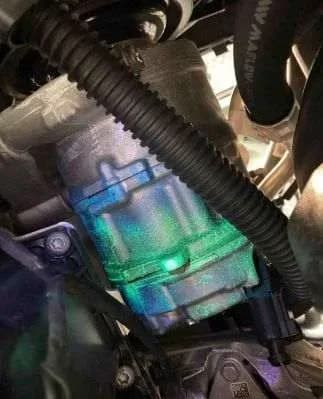
Şu araçlar için de geçerli
- Audi A3
- 2022–2026
- Audi A4
- 2022–2025
- Audi A4 allroad
- 2022–2025
- Audi A5
- 2022–2024
- Audi A6
- 2022–2025
- Audi A6 allroad
- 2022–2026
- Audi A7
- 2022–2025
- Audi A7 e
- 2022
- Audi e-tron
- 2022
- Audi e-tron GT
- 2022–2026
- Audi e-tron Sportback
- 2022
- Audi Q3
- 2022–2025
- Audi Q5
- 2022–2025
- Audi Q5 e
- 2023–2025
- Audi Q7
- 2022–2026
- Audi Q8
- 2022–2026
- Audi R8
- 2022–2023
- Audi RS 3
- 2022–2026
- Audi RS 5
- 2022–2024
- Audi RS 6 Avant
- 2022–2026
- Audi RS 7
- 2022–2026
- Audi RS e-tron GT
- 2022, 2023, 2024, 2026
- Audi RS Q8
- 2022–2026
- Audi S3
- 2022–2026
- Audi S4
- 2022–2025
- Audi S5
- 2022–2024
- Audi S6
- 2022–2025
- Audi S7
- 2022–2025
- Audi S8
- 2022–2026
- Audi SQ5
- 2022–2025
- Audi SQ7
- 2022–2026
- Audi SQ8
- 2022–2026
- Audi TT
- 2022–2023
- Audi TT RS
- 2022
- Audi TTS
- 2022–2023
▸ 29 tane daha göster▾ Daha az göster
Audi has released Technical Service Bulletin (TSB) 2080034/1 to address complaints of the air conditioning system not working or providing insufficient cooling in various 2023-2026 Audi models. This bulletin specifically points to a refrigerant leak originating from the air conditioner compressor as the root cause of the problem. Owners experiencing a diminished cooling performance or a complete failure of their AC system should be aware of this common issue.
The TSB, released on November 20, 2025, provides guidance for technicians to diagnose and repair the Audi e-tron AC leak and other affected models. It highlights the importance of proper inspection and seal replacement to restore the air conditioning system's functionality.
Symptoms of AC Compressor Leak
Owners of affected Audi vehicles may notice several indicators that suggest a problem with their air conditioning system, potentially due to an AC compressor leak. The primary symptoms include:
- Air conditioning not working: The system fails to blow cold air entirely.
- AC output is insufficient: The air conditioning blows air that is not as cold as expected, or the cooling performance is noticeably weaker.
- Lack of refrigerant in the system: This is a workshop finding, but it directly results in the above symptoms.
- Oil residue on the air conditioner compressor and connecting lines: This is a visual sign of a leak, often made more apparent if a UV tracer dye was previously added to the system during a prior service visit.
Diagnosis of the AC Refrigerant Leak
When diagnosing an Audi e-tron AC leak, technicians will first confirm the customer's complaint regarding the air conditioning performance. A key step in the diagnostic process is to reproduce the issue in the workshop, which often leads to the discovery of a significant lack of refrigerant within the AC system.
Further investigation involves a visual inspection of the air conditioner compressor and its connecting lines. Technicians will look for any signs of oil residue, which is a strong indicator of a refrigerant leak. If a UV tracer dye was previously introduced into the system, the leak point, particularly around the compressor, will be clearly visible under UV light, as illustrated in the TSB's Figure 1, showing an air conditioner compressor with UV tracer in the air conditioning system.
Repair Procedure Summary
The repair procedure outlined in TSB 2080034/1 focuses on addressing the refrigerant leak at its source. The primary step involves replacing the seals on the air conditioner line connections. This must be done before considering the replacement of the entire refrigerant line or the air conditioner compressor itself.
During the seal replacement, technicians are instructed to carefully inspect the connections and coupling points on the air conditioner compressor for any damage around the seal, such as scoring on the connector block. Such damage could compromise the integrity of new seals. After replacing the seals, the system must be re-checked for leaks. If leaks persist, individual components like the air conditioner compressor and connecting lines must be inspected more thoroughly for leaks and replaced as per the instructions in the Audi Workshop Manual. The labor operations associated with this repair include "Drain and fill refrigerant" (code 8703 17XX) and "Air conditioner checked" (code 8701 01XX).
Warranty Information
For vehicles still under warranty, claims for this repair must adhere to the Audi Warranty Policies and Procedures Manual. All claims are subject to review and audit by Audi Warranty. The TSB specifies a Claim Type of "As per TSB 2080034/1" and a Damage Code of "0050", with a Service Number of "87XX". It is important to note that if the vehicle is outside of any warranty period, this Technical Service Bulletin serves as informational guidance only, and repair costs would typically be the owner's responsibility.
Important Documentation for Service
For warranty claims related to this Audi e-tron AC leak or similar issues, proper documentation is crucial. When billing for the repair, service centers are required to attach photos that clearly illustrate the complaint. These images or videos must include the vehicle's VIN and the date, must not be edited, should be in focus with sufficient lighting, and do not require high resolution. Additionally, technicians should mark the precise location of the problem to assist parts analysis. It is also essential to ensure that the photo documentation does not inadvertently show any personal information, such as people's faces, license plates, or customer data.
NHTSA ID: 11026275
Frequently Asked Questions
- What are the common symptoms of an AC compressor leak in my 2023-2026 Audi?
- Common symptoms include the air conditioning system not working at all, or providing insufficient cooling. Technicians may also find a lack of refrigerant in the system and visible oil residue on the air conditioner compressor or connecting lines, especially if a UV tracer has been used.
- How is an AC compressor leak diagnosed in Audi vehicles according to TSB 2080034/1?
- Diagnosis involves confirming the AC malfunction, identifying a lack of refrigerant, and visually inspecting the air conditioner compressor and its lines for oil residue. If a UV tracer was previously added, the leak point will glow under UV light, making it easier to pinpoint the exact location of the leak.
- What is the repair procedure for an Audi AC leak as described in TSB 2080034/1?
- The primary repair involves replacing the seals on the air conditioner line connections. Technicians will also check for damage around these seals. If leaks persist after seal replacement, the refrigerant line or the air conditioner compressor itself may need to be replaced, following the detailed instructions in the Audi Workshop Manual.
- Is the repair for an AC compressor leak covered under warranty?
- Yes, if your 2023-2026 Audi is still within its warranty period, the repair for an AC compressor leak, as outlined in TSB 2080034/1, should be covered. However, all warranty claims are subject to review and must comply with Audi's warranty policies.
Related Articles
Should 2023 Audi e-tron Owners Worry? Recall & TSB Roundup
The 2023 Audi e-tron faces significant safety concerns, including recalls for potential brake pedal detachment and charging cable overheating. Owners have also reported serious issues like unintended acceleration and electrical system malfunctions. This guide covers all known problems and solutions.
2023 Audi e-tron Brake Pedal Recall
Audi has issued a recall (NHTSA ID: 26V240000, Audi Recall 46P7) for certain 2019-2024 E-Tron and 2020-2024 E-Tron Sportback vehicles, including the 2023 Audi e-tron. The recall addresses a potential issue where the brake pedal may detach from the brake booster, leading to a loss of brake function.
2015-2027 Audi Noise Diagnosis with Frequency Analysis App TSB
Audi has released Technical Service Bulletin 2051095/11 detailing the Audi Frequency Analysis app. This app helps technicians diagnose noise complaints more precisely across 2015-2027 Audi models. Learn how the app works, where to download it, and its features for effective vehicle noise analysis.
2023 Audi e-tron AC/DC Charging Not Possible TSB
This manufacturer communication (NHTSA ID 11031035) provides critical information for 2023 Audi e-tron owners facing issues with AC/DC charging. It specifically highlights problems linked to software version 00C6: 0093/3119, which can prevent the vehicle from charging.
2023-2025 Audi Rear Seat Reminder Message TSB 2074943/2
Audi Technical Service Bulletin 2074943/2 explains the instrument cluster message 'Please check rear seats and be aware of door safelock' in various 2023-2025 Audi models. This informational TSB details the rear occupant detection system designed to prevent children and pets from being left in…
Yorum bırakın
Yorumlar moderasyondan geçer ve görünmesi biraz zaman alabilir. Sadece adınız ve soyadınızın baş harfi herkese açık olarak gösterilir.
Yorumlar
İlk yorum sizden olsun.