2015-2026 Audi Windshield Streaking TSB 2020552/14
If your 2015-2026 Audi windshield appears streaky, has a snakeskin appearance, or feels rough, Technical Service Bulletin 2020552/14 outlines a specific cleaning procedure to remove industrial fallout and road grime. This TSB is informational and not covered by warranty.
 Sarah Mitchell2021 Audi e-tron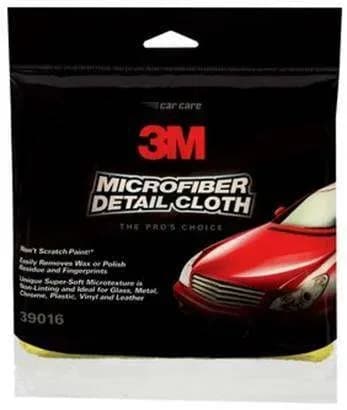
Şu araçlar için de geçerli
- Audi A3
- 2022–2026
- Audi A4
- 2021–2025
- Audi A4 allroad
- 2021–2025
- Audi A5
- 2021–2024
- Audi A6
- 2021–2025
- Audi A6 allroad
- 2021–2026
- Audi A7
- 2021–2025
- Audi A7 e
- 2021–2022
- Audi A8 L e
- 2021
- Audi e-tron
- 2022–2023
- Audi e-tron GT
- 2022–2026
- Audi e-tron Sportback
- 2021–2022
- Audi Q3
- 2021–2025
- Audi Q5
- 2021–2025
- Audi Q5 e
- 2021, 2023, 2024, 2025
- Audi Q7
- 2021–2026
- Audi Q8
- 2021–2026
- Audi R8
- 2021–2023
- Audi RS 3
- 2022–2026
- Audi RS 5
- 2021–2024
- Audi RS 6 Avant
- 2021–2026
- Audi RS 7
- 2021–2026
- Audi RS e-tron GT
- 2022, 2023, 2024, 2026
- Audi RS Q8
- 2021–2026
- Audi S e-tron GT
- 2026
- Audi S3
- 2022–2026
- Audi S4
- 2021–2025
- Audi S5
- 2021–2024
- Audi S6
- 2021–2025
- Audi S7
- 2021–2025
- Audi S8
- 2021–2026
- Audi SQ5
- 2021–2025
- Audi SQ7
- 2021–2026
- Audi SQ8
- 2021–2026
- Audi TT
- 2021–2023
- Audi TT RS
- 2021–2022
- Audi TTS
- 2021–2023
▸ 31 tane daha göster▾ Daha az göster
Revision History
Technical Service Bulletin 2020552/14 has undergone several revisions to update its scope and details:
- Revision 14: The most recent revision, with no specific date provided, revised the header to include model year 2026.
- Revision 13: Dated November 22, 2024, this revision updated the header by removing model years 2010–2014, adding model year 2025, and refining model codes.
- Revision 12: Dated July 20, 2023, this revision also updated the header to include model year 2024.
Symptoms and Complaint Types
Owners of affected 2015-2026 Audi vehicles may notice their windshield streaking, exhibiting a "snakeskin appearance," or feeling rough to the touch. These conditions are often linked to specific complaints related to exterior glass and wiper system functionality, indicating a need for thorough exterior glass cleaning to address the underlying cause of Audi windshield streaking. The TSB identifies various complaint types and their associated positions on the vehicle:
- Vehicle Front: Complaints include the vehicle areas appearing "crooked" on both the right and left sides, suggesting a visual distortion or misalignment related to the glass surface.
- Wiping Pattern Irregularity: The wiper/washer system control operation may exhibit an "irregular" wiping pattern, affecting the left front, front, right front, and rear sections of the windshield.
- Damaged Wiper Blades: Wiper blades themselves may be reported as "damaged" on the right, left, and left front positions, potentially contributing to poor wiping performance.
- Contamination: The windshield crossmember, entire vehicle areas, and window frame/windshield frame may show signs of "contamination" or appear "dirty."
These issues collectively contribute to poor visibility and an unsatisfactory driving experience.
Technical Background
The primary cause of the streaky or rough windshield condition, leading to Audi windshield streaking, is the accumulation of residue from industrial fallout and normal road dirt and grime on the glass surfaces. This buildup can be persistent and difficult to remove with standard cleaning methods, requiring a specialized approach to restore clarity and smoothness. The TSB notes that there is no specific production solution applicable to prevent this accumulation.
Important Warnings and Owner Advisories
This Technical Service Bulletin (TSB) 2020552/14 includes several critical advisories for both technicians and owners to ensure proper resolution and manage expectations:
- Warranty Claims for Wiper Blades: The cleaning procedure outlined in this TSB must be performed and verified before any wiper blade replacement. All warranty claims for wiper blade replacement will be rejected if a defect is not found after this cleaning process. This emphasizes that the issue is typically surface contamination, not a faulty wiper blade.
- Product Usage: Do not use the 3M™ Glass Polishing Compound to clean the wiper blades themselves; it is intended solely for the glass surface.
- Warranty Coverage: This TSB is informational only and is not applicable to any Audi Warranty. Owners should be aware that any costs associated with this cleaning procedure will not be covered by Audi's standard warranty.
- Drying Time: Drying time for the cleaning compound is dependent on ambient temperatures. If temperatures are 60°F (15°C) or lower, expect the drying time to extend significantly, requiring patience to achieve optimal results.
Repair Procedure Summary
To effectively address the Audi windshield streaking and rough surface, a comprehensive 10-step exterior glass cleaning process is recommended, as detailed in TSB 2020552/14. This procedure aims to remove stubborn residue and restore windshield clarity.
- Initial Wash and Dry: Begin by thoroughly washing and drying all affected exterior glass surfaces of the vehicle. This removes loose dirt and prepares the surface for deeper cleaning.
- Wiper Service Position: Place the windshield wipers into their service position. This step, illustrated in Figure 1 of the TSB, ensures that the wipers are moved away from the windshield surface, providing unobstructed access for cleaning.
- Wiper Blade Cleaning: Using a household glass cleaner, such as Windex® or 3M™ Glass Cleaner, carefully clean any residue from the wiper blades themselves. Figure 2 provides a visual guide for this step, showing the proper technique for cleaning the blades.
- Prepare Polishing Compound: Shake the bottle of 3M™ Glass Polishing Compound (Part No. 60150) thoroughly to ensure the product is evenly mixed. Figure 3 shows the product container, highlighting the importance of proper preparation.
- Apply Polishing Compound: Apply the glass polishing compound directly to the outside of the windshield, covering both the driver and passenger sides. Figure 4 demonstrates the proper application pattern, typically in a wavy or serpentine line across the glass.
- Vigorous Cleaning: Use a clean, dry microfiber cloth, specifically a 3M™ Microfiber Detail Cloth - Yellow (Part No. 39016), to vigorously clean the windshield. Employ long, horizontal strokes as shown in Figure 6, ensuring even coverage and pressure. It is crucial to take care and avoid applying the product to the window trim, as illustrated by Figure 5 which displays the recommended detailing cloths.
- Allow Drying: Let the compound dry on the windshield until a fine film layer, or haze, forms on the glass. The TSB notes that drying time is influenced by ambient temperatures, with cooler temperatures (60°F or 15°C and below) extending the required drying period.
- Rinse Windshield: Use a garden hose to thoroughly rinse the windshield. This step is critical for removing the dried compound. Additionally, rinse off any product that may have inadvertently come into contact with the trim, as depicted in Figure 7.
- Final Dry and Buff: With a fresh, clean, and dry microfiber cloth, dry and buff the glass until it achieves a clean, streak-free shine. Figure 8 illustrates this final drying step, aiming for a perfectly clear finish.
- Trim Wipe-Down: Dampen a separate microfiber cloth with warm water, wring it out, and use it to meticulously wipe off any remaining residue that may have made contact with the trim or rubber seals around the windshield. This ensures no product is left behind to cause future issues.
This detailed process aims to eliminate the underlying causes of Audi windshield streaking and restore optimal visibility and glass clarity.
Required Tools and Parts
To perform the exterior glass cleaning procedure outlined in TSB 2020552/14, the following specific parts are required. These items are essential for effectively removing industrial fallout and grime from the windshield:
| Part Number | Part Description | Quantity |
|---|---|---|
| 60150 | 3M™ Glass Polishing Compound | 01 |
| 39016 | 3M™ Microfiber Detail Cloth - Yellow | 01 |
These items should be ordered through the Audi Top Service Supplies & Touch Up Paint eStore, or checked with your Parts Department and/or ETKA for the latest information and availability.
Owner Action
If you are experiencing Audi windshield streaking or a rough, snakeskin-like texture on your windshield, it is recommended to consult with an authorized Audi service center. While this TSB provides a clear procedure, it is an informational document and the service is not covered under warranty. Discuss the symptoms with your technician and refer to TSB 2020552/14 to ensure the correct cleaning procedure is followed before considering any wiper blade replacements. Attempting to replace wiper blades without addressing the underlying glass contamination may not resolve the issue and could lead to rejected warranty claims.
Source: NHTSA ID 11025322
Galeri
8 görsel
Frequently Asked Questions
- What causes the streaky or rough windshield on my 2015-2026 Audi?
- According to TSB 2020552/14, the primary cause of your Audi windshield streaking or feeling rough is the accumulation of residue from industrial fallout, road dirt, and grime on the glass surface.
- Is the repair for Audi windshield streaking covered by warranty?
- No, Technical Service Bulletin 2020552/14 explicitly states that it is informational only and not applicable to any Audi Warranty. Any costs associated with this glass cleaning procedure will not be covered.
- Can I simply replace my wiper blades if my Audi windshield is streaky?
- TSB 2020552/14 warns that the detailed cleaning procedure must be performed and verified before replacing wiper blades. All warranty claims for wiper blade replacement will be rejected if a defect is not found after the cleaning process, as the issue is likely due to surface contamination rather than faulty blades.
- What specific products are recommended in TSB 2020552/14 for cleaning the windshield?
- TSB 2020552/14 recommends using 3M™ Glass Polishing Compound (Part No. 60150) and a 3M™ Microfiber Detail Cloth - Yellow (Part No. 39016), along with a household glass cleaner like Windex® or 3M™ Glass Cleaner for the wiper blades.
- What should I do if my Audi windshield is contaminated or has an irregular wiping pattern?
- If your 2015-2026 Audi windshield shows signs of contamination, streaking, or an irregular wiping pattern, it is recommended to have the exterior glass cleaning procedure outlined in TSB 2020552/14 performed by an authorized Audi service center to restore clarity and proper wiper function.
Related Articles
2021 Audi e-tron Electrical Malfunction and Power Loss
A 2021 Audi e-tron owner reported a severe 'Electrical Malfunction' resulting in complete loss of power on the highway. The issue has persisted despite dealer attempts to fix it over five months, posing significant safety risks.
2021-2026 Audi UTR Troubleshooting & FAQs TSB 2081409/1
This Audi Technical Service Bulletin (TSB 2081409/1) provides comprehensive answers to frequently asked questions and troubleshooting steps for the Audi Universal Traffic Recorder (UTR) accessory, covering topics like SD card compatibility, video playback, Wi-Fi issues, and more.
2021-2025 Audi Emergency Call System Fault TSB
Audi has released Technical Service Bulletin 2059528/18 to address an "Emergency call function: malfunction! Function unavailable. Please contact service" warning, often accompanied by a red SOS LED and DTC B200000. This issue affects various 2021-2025 Audi models and is due to a software problem…
2021-2026 Audi Adaptive Light System Fault C12B3FA TSB
Audi has released Technical Service Bulletin 2054202/7 to address an intermittent 'Audi adaptive light: system fault' message and DTC C12B3FA in various 2021-2026 models. This TSB outlines diagnosis and resolution for driver assistance system malfunctions.
2021-2026 Audi Parking Aid False Warnings TSB 2024323/12
This Technical Service Bulletin (TSB 2024323/12) details diagnostic and repair procedures for 2021-2026 Audi vehicles experiencing false parking aid warnings. Learn about environmental factors, sensor checks, and proper installation to resolve issues like 'Parking aid does not work / warning is…
Yorum bırakın
Yorumlar moderasyondan geçer ve görünmesi biraz zaman alabilir. Sadece adınız ve soyadınızın baş harfi herkese açık olarak gösterilir.
Yorumlar
İlk yorum sizden olsun.