2022-2026 Audi Door Lock Malfunction TSB 2063236/11
This Technical Service Bulletin (TSB 2063236/11) addresses various complaints related to front or rear door lock malfunctions in 2022-2026 Audi vehicles. Owners may experience doors that cannot be opened, central locking messages, or specific diagnostic trouble codes (DTCs) B122D29, B14FF29, or…
 Ahmet Topcu2022 Audi e-tron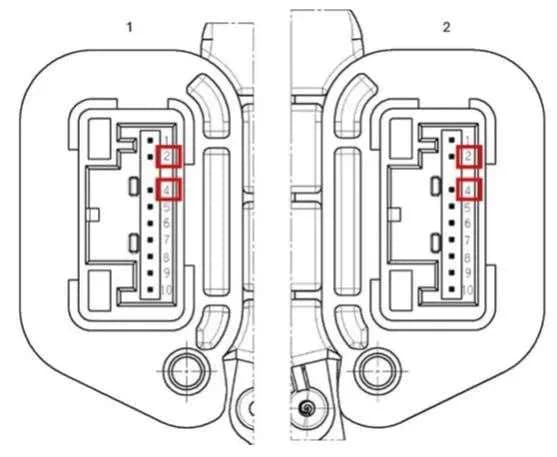
Şu araçlar için de geçerli
- Audi A5
- 2025
- Audi A6
- 2021–2025
- Audi A6 allroad
- 2021–2025
- Audi A7
- 2021–2025
- Audi A7 e
- 2021–2022
- Audi A8 L e
- 2021
- Audi e-tron
- 2021, 2023
- Audi e-tron GT
- 2022–2025
- Audi e-tron Sportback
- 2021–2022
- Audi Q5
- 2025
- Audi Q8
- 2021–2025
- Audi RS 6 Avant
- 2021–2025
- Audi RS 7
- 2021–2025
- Audi RS e-tron GT
- 2022–2024
- Audi RS Q8
- 2021–2024
- Audi S e-tron GT
- 2026
- Audi S5
- 2025
- Audi S6
- 2021–2025
- Audi S7
- 2021–2025
- Audi S8
- 2021–2025
- Audi SQ5
- 2025
- Audi SQ8
- 2021–2025
▸ 16 tane daha göster▾ Daha az göster
Owners of certain 2022-2026 Audi vehicles may encounter an Audi door lock malfunction, leading to difficulties opening doors or receiving warning messages. This technical service bulletin (TSB 2063236/11) provides comprehensive guidance for diagnosing and resolving these issues, which are often accompanied by specific diagnostic trouble codes.
Symptoms
Vehicle owners might observe one or more of the following symptoms related to a door lock malfunction:
- Front or rear doors (on either side) cannot be opened from the outside or the inside.
- Warning messages appear, such as those for the exit warning system or central locking, concerning the front or rear doors.
- The vehicle appears locked, but a door can still be opened without using the key.
- General failure of door locks to operate correctly.
Fault Codes / DTCs
When a door lock malfunction occurs, the vehicle's control unit may log specific diagnostic trouble codes (DTCs). These codes help technicians pinpoint the nature of the problem.
| Code | Description | Module |
|---|---|---|
| B122D29 | Lock unit for central locking Implausible signal | Rear drivers side door electronics, Passenger's door electronics, Driver's door electronics, Rear passenger side door electronics |
| B14FF29 | Motor for child safety lock Implausible signal | Rear drivers side door electronics, Rear passenger side door electronics, Driver's door electronics |
| B122B13 | Central locking motors Open circuit | Passenger's door electronics, Driver's door electronics |
Technical Background
The door lock system in these Audi vehicles utilizes a microswitch to transmit an electrical signal to the door control unit when the interior or exterior handle is pulled. This signal activates an electric motor within the door lock, which then releases the rotary latch, allowing the door to open with minimal effort. For safety and redundancy, two Bowden cables provide a mechanical connection to the door lock. If the microswitch or control motor fails, the door can still be opened by pulling the interior handle twice or by using the exterior handle after activating the lock cylinder or interior handle.
Diagnosis and Repair Procedure Summary
Addressing an Audi door lock malfunction typically involves a systematic diagnostic approach. Technicians should first rule out incorrect operation by the customer, such as pulling the interior handle too quickly or inadvertently touching the convenience key sensor while locking or unlocking the vehicle. It's important to explain proper door operation to the customer, referencing the Owner's Manual if necessary.
Next, the vehicle's event memory entries should be read and cleared. If DTCs B122D29, B14FF29, or B122B13 reappear after cycling the ignition and operating the door, further diagnostics are required.
A critical step is performing a resistance measurement on the installed door lock between pins 2 and 4 using a multimeter. This measurement must be done while the lock is in temporary crash redundancy (TCR) mode, which is initiated by disconnecting the connector and firmly pulling the interior door handle twice. The expected acceptable resistance values are:
- Temporary crash redundancy (TCR) (without operating door handles): 1000 ohms
- IDH + TCR (operating interior door handle only): 382 ohms
- For vehicles with curved door handles (e.g., Q6 e-tron and Q5 type GU):
- EDH + TCR (operating exterior door handle only): 212 ohms
- IDH + EDH + TCR (operating interior and exterior door handles simultaneously): 158 ohms
There is a measurement tolerance of +/- 1% for all values. If the measured resistance falls outside this range, the affected door lock should be replaced. If the values are within specification, the technician should proceed to check the lock wiring according to the Guided Fault Finding system and the current flow diagram.
A mechanical check of components is also necessary. This involves inspecting the Bowden cables for any damage, incorrect routing, or stiffness. The exterior door handle should also be checked to ensure it returns to its flush original position after operation, as detailed in TSB 2060196. If any mechanical issues are found, the affected components should be replaced.
Production Solution
Audi has optimized the door lock manufacturing process. This indicates that newer vehicles produced after this optimization may be less likely to experience these specific door lock malfunctions.
Owner Action
If you are experiencing an Audi door lock malfunction or any of the symptoms described, it is recommended to schedule an appointment with an authorized Audi service center. They have access to the full Technical Service Bulletin 2063236/11 and the necessary diagnostic tools and procedures to accurately identify and resolve the issue. While this bulletin is informational for vehicles outside of warranty, repairs for in-warranty vehicles would typically be covered.
Source: NHTSA ID: 11025252
Galeri
1 görsel
Frequently Asked Questions
- What are the common symptoms of an Audi door lock malfunction?
- Common symptoms include doors that cannot be opened from the inside or outside, central locking warning messages, or the ability to open a seemingly locked door without a key. These issues are detailed in TSB 2063236/11.
- Which Audi models are affected by TSB 2063236/11?
- Technical Service Bulletin 2063236/11 applies to various 2022-2026 Audi models, including the e-tron, A6, A7, A8, Q5, Q8, and their performance variants like the RS and S models. A full list is available in the TSB document.
- What do DTCs B122D29, B14FF29, and B122B13 indicate?
- These diagnostic trouble codes point to specific issues within the door lock system. B122D29 indicates an 'Implausible signal' from the central locking lock unit, B14FF29 indicates an 'Implausible signal' from the child safety lock motor, and B122B13 signifies an 'Open circuit' in the central locking motors. All suggest a problem with the door lock mechanism or its electrical components.
- Can I diagnose an Audi door lock malfunction myself?
- While the TSB outlines detailed diagnostic steps, including resistance measurements, these procedures require specialized tools like a multimeter and knowledge of specific pin configurations and expected values. It's best to have an authorized Audi service center perform the diagnosis and repair to ensure accuracy and proper resolution.
- Is this door lock issue covered under warranty?
- If your vehicle is still under warranty, repairs related to this door lock malfunction would typically be covered. For vehicles outside of warranty, this Technical Service Bulletin serves as informational guidance, and repair costs would likely be the owner's responsibility. Always consult your Audi dealer for specific warranty coverage details.
Bu TSB'nin diğer revizyonları
- 2025-2026 Audi A5/S5/A6 Door Cannot Be Opened TSBB122D29
- 2025 Audi Q5/SQ5 Door Won't Open from Outside TSBB122D29
- 2025 Audi Q5/SQ5 Door Cannot Be Opened From OutsideB122D29
- 2025-2026 Audi A5, S5, A6 Door Lock Malfunction TSB 2079919/2B122D29
- 2025-2026 Audi A5/S5/A6 Door Won't Open DTC B122D29B122D29
- 2025 Audi Q5 Door Cannot Be Opened From Outside TSB 2079914/1B122D29
- 2021-2025 Audi Door Lock Malfunction TSB 2079747/1B122D29, B14FF29, B122B13
- 2021-2025 Audi Door Lock Malfunction TSB 2063236/10B122D29, B14FF29, B122B13
Related Articles
2022 Audi e-tron Problems: Electrical System & Braking Concerns
The 2022 Audi e-tron has faced significant owner complaints regarding its electrical system, including sudden power loss and charging hazards, as well as various braking malfunctions. This profile details these issues and relevant service bulletins.
2022-2026 Audi Guided Fault Finding Reporting Obligation
Audi has issued Technical Service Bulletin TPI 2033392, also known as Transaction No. 2081531/1, regarding a reporting obligation for technicians when Guided Fault Finding produces an unexpected result. This TSB outlines the process for contacting Audi Product Support for diagnostic assistance.
2022-2026 Audi Infotainment System Complaints
Audi has released Technical Service Bulletin (TSB) 2081405/1 to address various customer complaints regarding infotainment systems in 2022-2026 Audi vehicles. This TSB helps technicians diagnose issues often caused by external media or mobile devices, rather than vehicle technology.
2018-2026 Audi Models Cracking Noise TSB 2061464/11
Audi Technical Service Bulletin 2061464/11 describes a cracking noise from the front or rear axle when changing direction in various 2018-2026 Audi models. The issue is due to stub axle movement and is resolved by bonding the stub axle to the wheel bearing with locking fluid.
2022-2026 Audi Parking Aid False Warnings TSB 2024323/13
Audi has released Technical Service Bulletin 2024323/13 to address customer complaints of false parking aid warnings. This bulletin details various environmental and vehicle-specific conditions that can cause the parking aid system to issue alerts even when no obstacles are present. It provides…
Yorum bırakın
Yorumlar moderasyondan geçer ve görünmesi biraz zaman alabilir. Sadece adınız ve soyadınızın baş harfi herkese açık olarak gösterilir.
Yorumlar
İlk yorum sizden olsun.